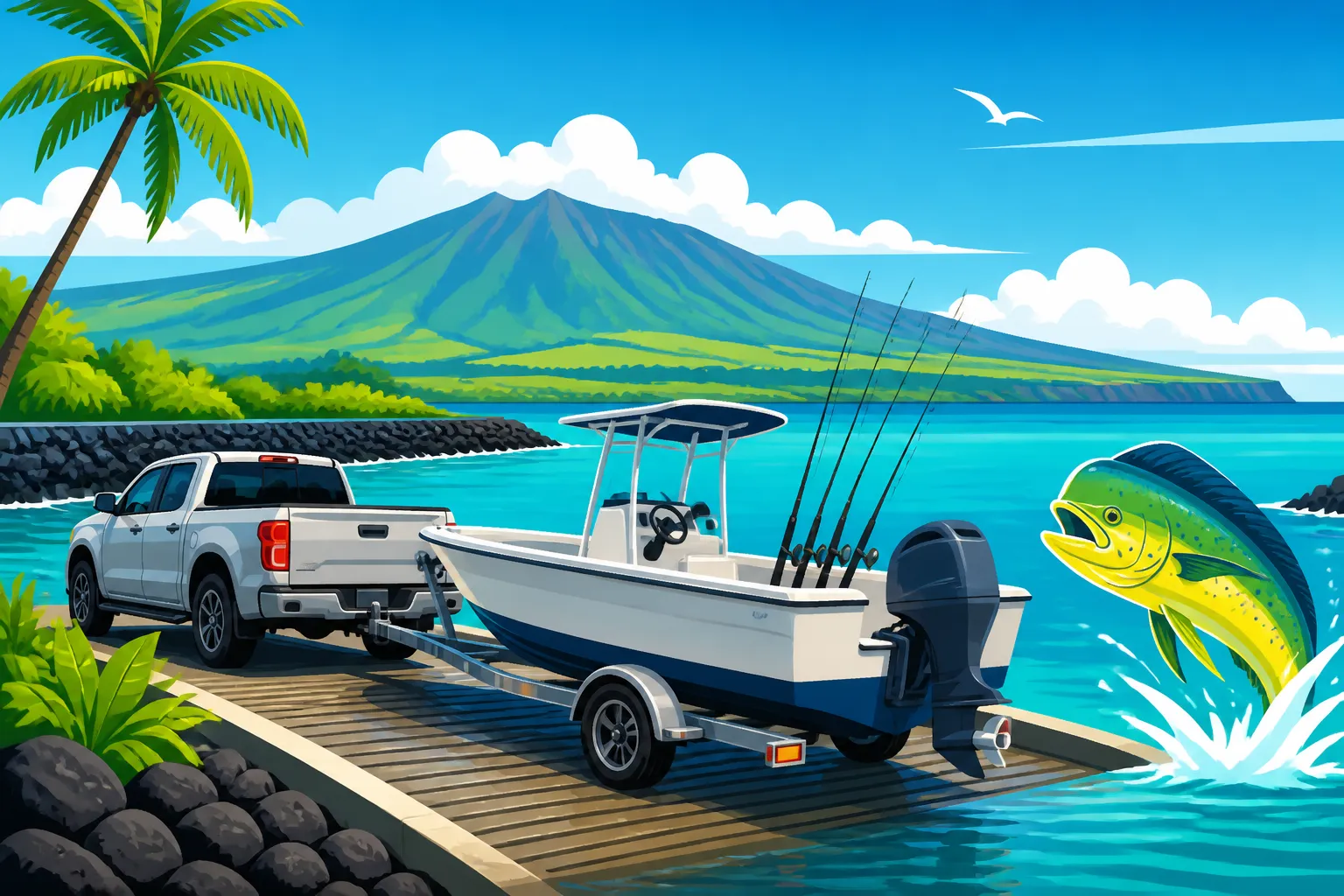
Best boat ramps on the Big Island
Trying to figure out the best place to launch your boat on the Big Island can feel like navigating a maze, especially if you’re new to the island or bringing your vessel over for the first time. The vast coastline, diverse ocean conditions, and specific harbor setups mean that just showing up with your trailer isn't always enough. This guide aims to clear up the confusion, providing you with a detailed overview of the Big Island's top public boat ramps, their unique features, and critical considerations to ensure a smooth and safe launch for your next Hawaii fishing adventure.
Understanding Big Island Boat Launch Challenges
Launching a boat anywhere in Hawaii comes with its own set of quirks and challenges, and the Big Island is no exception. Unlike many mainland locations where ramps are plentiful and conditions predictable, Hawaii's volcanic coastline and dynamic ocean environment demand a bit more foresight and preparation. It's not just about getting your tires wet; it's about understanding the specific conditions of each site and ensuring you're legally compliant.
Navigating Local Regulations and Conditions
One of the first hurdles you'll encounter on the Big Island is the sheer variety of marine environments, each with its own nuances. On the Kona (west) side, you often find deep, calm waters close to shore, thanks to the shelter provided by Mauna Loa and Mauna Kea. However, currents can still be swift, especially around points and channels. On the Hilo (east) side, the ocean is generally more exposed to trade winds and larger swells, making launches trickier on certain days. You might also contend with heavy rain runoff from the mountains, which can carry debris into the harbors and affect water clarity.
Beyond the natural conditions, understanding local regulations is paramount. The Department of Land and Natural Resources (DLNR) Division of Boating and Ocean Recreation (DOBOR) oversees all public ramps and harbor facilities. This means there might be specific rules regarding launching fees, parking duration, and even what types of activities are permitted from certain docks. For instance, some harbors might have designated areas for commercial operations versus recreational use. It's crucial to be aware of the general Hawaii Boating Laws for Anglers and confirm any specific rules posted at each ramp. Ignoring these can not only lead to fines but also put you and others at risk.
Choosing the Right Ramp for Your Vessel
Not all boat ramps are created equal, and what works perfectly for a small skiff might be completely unsuitable for a larger trailer boat or even a modest center console. When selecting a ramp on the Big Island, you need to think about your specific vessel's needs.
Consider the ramp angle: some ramps are very steep, which can be challenging for two-wheel-drive vehicles or older trailers. Others might be shallow, requiring you to back your trailer further into the water, which can be problematic at low tide, especially for boats with deeper drafts. For example, if you're trying to launch a 25-foot walk-around with a significant draft at a small, shallow ramp during a minus tide, you could find yourself stuck or even damaging your propeller or hull.
Parking availability is another huge factor. Larger trailer boats require more space, both for maneuvering and for parking the truck and trailer combination once the boat is launched. Some of the more popular ramps can fill up quickly, particularly on weekends or during peak fishing seasons. Imagine driving an hour to a ramp with your boat only to find all the trailer parking spots taken – it's a frustrating situation that can be avoided with a little prior research. Always check the facility's specific amenities like restrooms, wash-down stations, and fuel docks, as these can greatly impact your overall boating experience.
Top Public Boat Ramps on the Kona Coast
The Kona Coast, stretching along the western side of the Big Island, is renowned for its calm waters and world-class fishing, especially for big game species like marlin and tuna. It’s no surprise that this area hosts some of the island's busiest and most well-equipped boat launching facilities, serving both recreational anglers and a thriving charter fleet.
Honokohau Harbor: The Gateway to West Hawaii Fishing
When most people think about launching a boat on the Big Island, Honokohau Harbor immediately comes to mind. Located just north of Kailua-Kona, this is truly the heart of West Hawaii's boating and fishing scene. It's a bustling hub, and for good reason – it offers unparalleled access to some of the richest fishing grounds in the Pacific.
Honokohau boasts multiple wide, concrete boat ramps that can easily accommodate a range of vessels, from small recreational boats to larger sportfishing yachts. The ramps are generally well-maintained and offer good depth, making them usable even during lower tides. However, because of its popularity, you can expect significant traffic, especially during early morning hours as charter boats and private vessels head out. There are ample parking spaces for trucks and trailers, though these can still fill up quickly on busy days. Arriving before dawn is often the best strategy to secure a prime spot and avoid the rush.
Beyond the ramps, Honokohau Harbor is a full-service facility. You’ll find multiple docks for temporary mooring, a fuel station, ice machines (which are absolutely essential for keeping your catch fresh in Hawaii’s heat!), restrooms, and even a fish cleaning station. Many of the Big Island's top fishing charters operate out of Honokohau, and if you're looking to book a trip, platforms like FishingBooker can help you find an experienced captain departing from this very harbor. Its strategic location means you're just a short run from the deep waters where you can target magnificent Best marlin fishing spots off the Kona Coast, ahi, and other pelagic species.
Other West Side Options and Considerations
While Honokohau is the main event, the Kona Coast does offer a few other, albeit smaller, options that might suit specific needs or preferences, particularly if you're looking to avoid the crowds or launch a smaller craft.
Keauhou Bay, located south of Kailua-Kona, features a smaller, less-trafficked boat ramp. It’s generally suitable for smaller to medium-sized boats and personal watercraft. Parking is more limited here compared to Honokohau, and the ramp itself might be a bit steeper. What it lacks in extensive facilities, it makes up for in convenience if you're staying in the Keauhou area and prefer a quick, less crowded launch. However, it’s not typically recommended for large trailer boats due to the tighter maneuvering space.
Further north, Kawaihae Harbor offers a larger, more industrial-scale facility, primarily used for commercial shipping. While there are some launch opportunities, it’s not as recreational-friendly as Honokohau. The ramps are generally robust, but the overall atmosphere and facilities are geared towards commercial operations. Anglers using Kawaihae might find it less convenient for recreational use, and it's a longer drive from many popular lodging areas. Always check with local authorities or harbor staff before planning a recreational launch here, as rules and access can be stricter. For those bringing smaller, inflatable boats or kayaks, many beach parks and protected coves along the Kona Coast offer informal launch points, but these are typically for hand-launched craft and don't involve traditional ramps or trailer parking.
Public Boat Ramps on the Hilo and East Side
Shifting to the eastern side of the Big Island, the landscape and ocean conditions present a different set of challenges and opportunities for boaters. The Hilo and Puna coasts are more exposed to the prevailing trade winds and Pacific swells, meaning conditions can be rougher, and safe launching windows might be more limited than on the calmer Kona side.
Hilo Bay Boat Ramp: East Side Access
The primary and most robust boat launching facility on the eastern side of the Big Island is located in Hilo Bay. This ramp serves as the main gateway for anglers and boaters looking to explore the fishing grounds off the Hamakua Coast, Hilo Bay itself, and the more exposed Puna coastline.
The Hilo Bay boat ramp typically features multiple lanes, offering good capacity for various boat sizes. The concrete ramps are generally well-maintained, and the protected waters of Hilo Bay often provide a relatively calm launch environment, even when the open ocean is a bit rougher. Parking for trucks and trailers is available, though similar to Honokohau, it can get crowded during prime fishing days or local events. Unlike Kona, the fishing here can be quite different, with good opportunities for inshore species within the bay and nearshore reefs, as well as pelagics further out. For a deeper dive into the fishing prospects here, check out our Hilo Bay Fishing Guide.
While Hilo Bay offers essential facilities like restrooms and adequate lighting for early morning launches, it generally has fewer amenities than Honokohau Harbor. You might need to secure your ice or bait from local stores before arriving, as dedicated marine service shops within the immediate ramp area are less common. Always be mindful of the weather when launching from Hilo, as strong easterly swells can sometimes make exiting the bay a bumpy ride.
Exploring Puna and Hamakua Coast Launches
Beyond Hilo Bay, options for formal boat ramps become scarcer and often present unique challenges due to the Big Island's volcanic geology and coastal exposure.
The Puna Coast, famous for its dramatic lava flows, once had a notable boat ramp at Pohoiki Bay. This ramp was largely impacted by the Kīlauea eruption in 2018, which reshaped the coastline and filled the bay with new lava. While the bay has since undergone natural changes and the ramp area has seen some efforts toward restoration and reopening in 2021, its functionality and accessibility are still limited compared to pre-eruption days. It now offers a single, shallower ramp primarily suited for smaller boats, kayaks, and personal watercraft, with very limited parking. Access can be tricky, and it's essential to get current local information before planning a launch there. The dynamic nature of the Puna coastline means conditions and accessibility can change, so always exercise extreme caution.
Further north along the Hamakua Coast, you'll find Laupāhoehoe Point. This picturesque area features a small boat ramp within a naturally protected cove. It's a much more rustic and less developed facility than Hilo or Honokohau. The ramp is suitable for smaller boats, skiffs, and kayaks, and parking is very limited. This spot is often favored by local fishermen targeting nearshore species. The drive to Laupāhoehoe Point itself is stunning but can be winding, adding to the travel time. It's not the place for large trailer boats, but for a smaller, agile vessel, it offers a charming and less crowded alternative with access to beautiful, rugged coastline fishing. Always scout this location in advance if you're unfamiliar with it.
Key Considerations for Trailer Boaters and Launching
Launching a boat from a trailer on the Big Island is often an exercise in patience and preparation. It's not just about backing down the ramp; it's about the entire process, from getting to the harbor to securing your vehicle and trailer once your boat is in the water.
Trailer Parking and Security
One of the biggest headaches for trailer boaters on the Big Island is securing adequate and safe parking. Popular ramps like Honokohau Harbor have designated trailer parking areas, but these can fill up incredibly fast, especially on weekend mornings or during fishing tournaments. Imagine rolling up with your 24-foot center console and finding every spot taken – it's a quick way to derail your day. To mitigate this, consider arriving well before sunrise. Not only does it give you the best chance at a parking spot, but it also means less ramp congestion.
In less developed areas like Laupāhoehoe Point or the more rustic access points, dedicated trailer parking might be minimal or non-existent, forcing you to find alternative, sometimes less secure, spots along the road. This raises concerns about the safety of your vehicle and trailer. While Hawaii is generally safe, leaving a valuable trailer unattended for hours always carries a slight risk. Always ensure your trailer is securely locked to your vehicle, and consider additional deterrents like wheel locks. If you’re visiting, ask locals or harbor masters for advice on the safest places to park.
Essential Gear and Safety Checks
Before you even leave your driveway, a thorough check of your boat and trailer is crucial. The Big Island's roads can be bumpy, and ocean conditions can be unpredictable. Here's a quick checklist:
- Trailer Maintenance: Are your trailer lights working? Are your tires properly inflated? Is your hitch secure? Bearing buddies filled? It sounds basic, but a blown tire or a faulty light can ruin your trip before it even starts.
- Tie-Downs: Ensure your boat is securely fastened to the trailer. Both transom straps and a bow safety chain/strap are critical. You don't want your boat shifting during transit or, worse, sliding off the trailer during an emergency stop.
- Boat Safety Equipment: Double-check that all required safety gear is on board and easily accessible. This includes life jackets for everyone on board (especially important for children – know the Life Jacket Requirements for Hawaii Boaters), a working marine radio (VHF is standard), flares, a first-aid kit, and a whistle or horn. A properly functioning bilge pump is also non-negotiable.
- Engine Check: Give your engine a quick once-over. Check oil levels, fuel lines, and propeller condition. A little preventative maintenance goes a long way in avoiding breakdowns far offshore.
- Weather and Ocean Conditions: Always check the latest marine forecast before heading out. Websites like NOAA's National Weather Service provide detailed forecasts for Hawaii's coastal waters. Pay attention to swell height, wind speed and direction, and any small craft advisories. A sunny sky on land doesn't always translate to calm seas.
By meticulously checking these points, you not only ensure your safety but also avoid unnecessary stress and potential hazards on the water.
Maximizing Your Big Island Boating Experience
Having a boat on the Big Island opens up a world of incredible fishing and exploration, from chasing marlin offshore to diving in secluded coves. But to truly make the most of it, a combination of smart planning and embracing local insights is key.
Planning Ahead: Permits and Local Knowledge
While recreational boaters typically don't need a specific permit just to use a public boat ramp in Hawaii, it's absolutely vital to ensure your vessel itself is properly registered and that you have all the necessary fishing licenses. For Hawaii residents, the rules for ocean fishing licenses are different than for freshwater. Generally, residents do not need a license for marine fishing unless they are selling their catch, but non-residents almost always do. Freshwater fishing, like for trout at Kokee or bass at Wahiawa, always requires a license regardless of residency. It's best to consult the Hawaii Fishing License Guide for 2026 or Hawaii Fishing Regulations Explained well in advance. Make sure your Hawaii Boat Registration Requirements are up to date with the DLNR Division of Boating and Ocean Recreation (DOBOR).
Beyond official paperwork, tapping into local knowledge is invaluable. Talk to the harbor masters, visit local bait and tackle shops, or join online forums dedicated to Hawaii fishing. These resources can provide real-time updates on fishing conditions, recent catches, and any temporary access restrictions or hazards at specific ramps. For example, a local might know that a certain ramp gets extremely shallow at a particular tide, or that a submerged debris field has recently appeared after a heavy rain. This kind of nuanced information often isn't found in official guides and can save you a lot of trouble.
Chartering a Boat if You're Visiting
For visitors who dream of experiencing Hawaii's incredible offshore fishing but don't want the hassle of trailering a boat, dealing with unfamiliar ramps, or navigating local regulations, booking a fishing charter is an excellent alternative. It allows you to tap into the expertise of seasoned local captains who know the waters like the back of their hand, have all the necessary permits, and supply top-of-the-line gear.
When you book a charter, everything from the boat itself to the bait, tackle, and often even your fishing license (depending on the charter) is taken care of. You simply show up, ready to fish. This can be a far more relaxed and productive way to target specific species like blue marlin, ahi, or mahimahi, especially if you're not familiar with offshore trolling techniques or deep-drop bottom fishing. Reputable platforms like FishingBooker list a wide array of charters departing from key harbors like Honokohau, allowing you to compare options based on boat type, target species, and price.
Choosing a charter also gives you the flexibility to explore different types of fishing, whether it's an exhilarating deep-sea trip for trophy fish or a more relaxed inshore outing. Many charters are family-friendly, making them perfect for creating lasting memories. If you're weighing your options, consider reading our guide on How to Choose a Hawaii Fishing Charter to find the perfect fit for your dream fishing adventure.
Here's a quick comparison of the Big Island's main public boat ramps:
| Ramp Name | Location | Primary Access | Facilities | Suitability (Boat Size) | Key Considerations |
|---|---|---|---|---|---|
| Honokohau Harbor | North Kailua-Kona | West Hawaii Offshore | Multiple ramps, docks, fuel, ice, restrooms, fish cleaning, ample trailer parking | Small to Large | Very busy, early arrival recommended, central hub for Kona fishing. |
| Keauhou Bay | South Kailua-Kona | West Hawaii Nearshore | Single ramp, limited parking, restrooms | Small to Medium | Less crowded, convenient for South Kona lodging, tight maneuvering. |
| Hilo Bay | Hilo | East Hawaii Near/Offshore | Multiple ramps, docks, restrooms, adequate trailer parking | Small to Large | Exposed to trade winds, can be rough at times, main East side hub. |
| Pohoiki Bay | Puna Coast | Southeast Hawaii Nearshore | Single shallow ramp, very limited parking, restrooms (rustic) | Small (kayaks, SUPs, small skiffs) | Challenging access, affected by lava flows, dynamic conditions, check local status. |
| Laupāhoehoe Point | Hamakua Coast | Northeast Hawaii Nearshore | Single small ramp, very limited parking, restrooms (rustic) | Small (skiffs, kayaks) | Remote, picturesque, winding access road, local favorite for small craft. |
| Kawaihae Harbor | Kawaihae (North Kona) | West Hawaii Commercial/Offshore | Commercial docks, some ramp access, limited recreational amenities | Medium to Large | Primarily commercial, less recreational-friendly, check access rules. |
Disclaimer
The information provided in this guide is for general informational purposes only and is subject to change. Ocean conditions, regulations, and facility status can vary. Always consult official Hawaii Department of Land and Natural Resources (DLNR) and local harbor authorities for the most current and accurate information before planning any boating or fishing activities. Safety on the water is your responsibility.