Reef Fish Species Identification Guide for Hawaii
You've probably found yourself snorkeling over a vibrant reef or peering into a tide pool after a day of fishing, wondering "What is that fish?" Hawaii's waters are teeming with an incredible diversity of marine life, but telling one colorful fish from another can be a real head-scratcher, especially when some look incredibly similar or change appearance as they grow. This guide is here to help you unravel the mysteries of Hawaii's reef fish, offering clear identification tips that will enhance your understanding and appreciation of our beautiful underwater world, whether you're an avid angler, a curious snorkeler, or just a lover of the ocean.
Why Identifying Reef Fish Matters to Anglers and Ocean Lovers
For those of us who spend time by or in Hawaii's waters, being able to identify reef fish isn't just a fun parlor trick; it's a fundamental skill that connects us more deeply to the ocean. It allows us to participate responsibly, understand the ecosystem, and ultimately have more fulfilling experiences, whether we're casting a line or simply observing the coral gardens.
Understanding Regulations and Protecting Vulnerable Species
One of the most crucial reasons to learn your reef fish is tied directly to conservation and local regulations. Hawaii has very specific rules about what fish you can catch, how many, and how big they need to be, all designed to protect our precious marine resources. Imagine the frustration of catching a beautiful fish, only to realize later you couldn't keep it, or worse, that it was a protected species. Certain fish, like some species of uhu (parrotfish) or moi (Pacific threadfin), have specific size limits, seasonal closures, or even gear restrictions. Without proper identification, you might inadvertently violate these rules, leading to fines or, more importantly, contributing to the decline of a vulnerable population.
Knowing what you're looking at prevents honest mistakes. For example, distinguishing between a juvenile ulua (giant trevally), often called papio, and another similar-looking but smaller trevally species is key to adhering to bag and size limits. If you're unsure, it's always best to err on the side of caution. Checking out resources like the Hawaii Fishing Regulations Explained or Hawaii Bag and Size Limits by Species can save you a lot of headache and help you become a more responsible ocean user. The Department of Land and Natural Resources (DLNR) Division of Aquatic Resources (DAR) publishes detailed regulations, and understanding the target species for specific rules, such as those for Hawaii Uhu (Parrotfish) Size and Bag Limits or Hawaii Papio and Ulua Size Rules, is paramount.
Enhancing Your Fishing Success and Experience
Beyond regulations, identification is a powerful tool for anglers. Knowing the specific species you're targeting allows you to research their behavior, preferred habitats, and even their diet. Are they bottom-feeders? Do they prefer sandy flats or rocky ledges? What time of day are they most active? All these insights directly inform your choice of bait, lure, and fishing technique. For instance, if you're trying to catch kumu (goatfish), knowing they forage with barbels on the sandy bottom tells you to use baits that appeal to their sense of smell and to fish near sandy patches adjacent to reefs.
Imagine you're casting around a particular reef formation. If you can identify the types of fish you're seeing – a school of manini (convict tang) grazing, a territorial triggerfish patrolling its patch, or a papio darting after baitfish – you gain a better understanding of the ecosystem's health and what larger predators might be lurking. This knowledge allows you to adapt your strategy, increasing your chances of a successful and enjoyable outing. It's like having an underwater map in your head, guiding your next cast or dive.
Appreciating Hawaii's Unique Marine Ecosystem
Finally, and perhaps most importantly for many of us, identification deepens our appreciation for Hawaii's truly unique marine environment. Our reefs are biodiverse hotspots, home to many endemic species found nowhere else on Earth. By learning the names and characteristics of these fish, we move beyond seeing just "a fish" to recognizing a humuhumunukunukuapua'a (reef triggerfish) with its distinctive markings, or a vibrant lau wilwili (yellow tang) effortlessly navigating the coral.
This deeper connection fosters a sense of stewardship. When you know a fish by name, you’re more likely to care about its well-being, its role in the reef, and the health of its habitat. It transforms a simple snorkeling trip into an educational adventure, and a fishing trip into a lesson in natural history. Understanding the specific adaptations of each species – why an uhu has a beak-like mouth for scraping algae, or why a kumu has barbels for searching the sand – reveals the incredible complexity and beauty of evolution in action right beneath the surface. It’s an invitation to become a true observer and protector of Hawaii's living reefs.
Common Reef Fish Species You'll Encounter
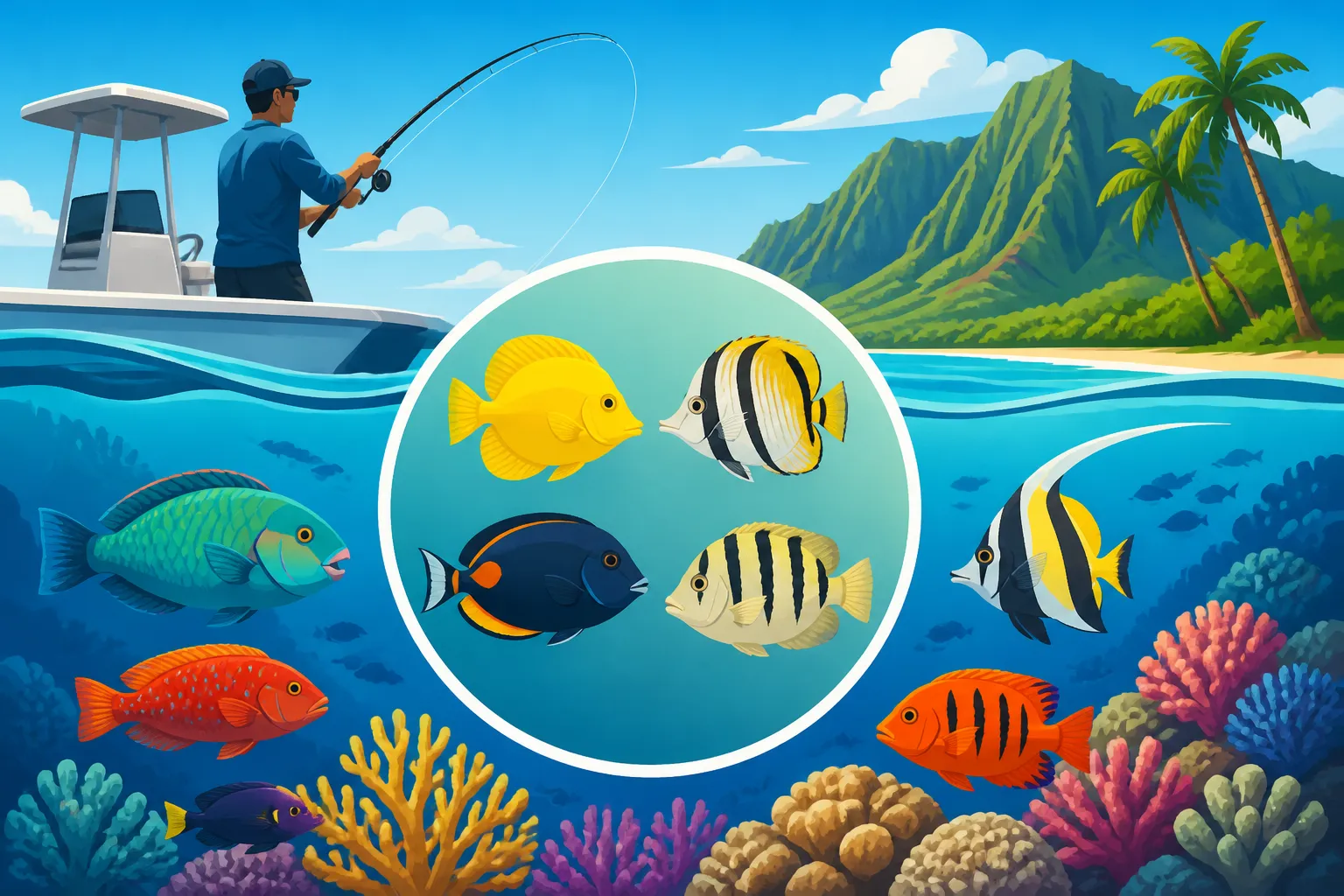
Hawaii's reefs are like bustling underwater cities, each inhabitant playing a vital role. From the colorful grazers to the stealthy predators, recognizing these common species will enrich your experience and understanding of the local marine environment. Here's a closer look at some of the characters you're most likely to meet.
Parrotfish (Uhu): The Reef's Gardeners
Uhu, or parrotfish, are truly iconic members of Hawaii's reef community, instantly recognizable by their vibrant colors and distinctive, beak-like mouths. These "beaks" are actually fused teeth, perfectly adapted for scraping algae off rocks and coral. They're like the reef's diligent gardeners, keeping the coral clean and healthy. You'll often see them in small groups, sometimes even larger schools, methodically grazing across the reef. Their grazing habits are incredibly important; they prevent algae from overgrowing and suffocating corals, and their digestion process also produces a significant amount of the fine white sand you love on Hawaii's beaches!
There are several species of uhu in Hawaii, and their colors can vary widely, even within the same species depending on age, sex, and mood. Juveniles often look very different from adults, a phenomenon known as sexual dimorphism and color phase changes. Some common species include the bullethead parrotfish (Uhu palukaluka), often a drab olive or brown, and the spectacular spectacled parrotfish (Uhu uliuli), which can display brilliant blues, greens, and pinks. To identify them, look for that characteristic parrot-like beak, their often robust, torpedo-shaped bodies, and their deliberate grazing motion. Anglers should be aware that certain larger uhu are highly prized but also subject to specific regulations. For detailed information, check out Uhu (Parrotfish) in Hawaii.
Goatfish (Kumu and Weke): Bottom Dwellers with Barbels
Goatfish, known locally as kumu and weke, are another fascinating group of reef fish, easily identified by the pair of distinctive "barbels" or whiskers protruding from their chins. These barbels are highly sensitive chemosensory organs, acting like tiny, mobile fingers that they use to probe the sandy bottom and crevices for small invertebrates, worms, and crustaceans. Watching a goatfish actively "feel" its way across the seabed is quite a sight!
Kumu (many-barrbed goatfish) are often reddish-pink to orange, sometimes with darker blotches, and are highly regarded table fare. They tend to be found near rocky reefs and sandy patches. Weke (yellowstripe goatfish) are typically smaller and have a prominent yellow stripe running along their silvery bodies. They are commonly found in shallower, sandy areas and grass beds. Both species tend to school or forage in small groups. When trying to identify them, always look for those tell-tale barbels. Their overall body shape is elongated and somewhat compressed. Anglers targeting these species often use small baits presented near the bottom, mimicking the prey they seek. You can learn more about these fascinating fish in resources like Kumu (Goatfish) in Hawaii and Weke (Goatfish) in Hawaii.
Snappers (Opakapaka and Onaga): Deepwater Delicacies and Shallow Reef Residents
When we talk about snappers in Hawaii, we often think of the prized deep-water varieties like opakapaka (pink snapper) and onaga (ruby snapper), which are staple catches for commercial fishermen and deep-sea charters. These fish are typically caught in much deeper waters, often beyond the typical reef edge, in hundreds of feet of water, making them less common for the casual snorkeler or shallow-water shore angler to spot. Opakapaka are known for their beautiful pinkish-red hue, while onaga are a brilliant ruby red, with elongated bodies and distinctive large eyes adapted for low-light conditions.
However, there are also some snapper-like species that inhabit shallower reef environments, though they may not be true snappers in the same family as opakapaka or onaga. The "taape" (bluestripe snapper), for example, is an introduced, highly prolific species often found in shallower reef areas, easily recognized by its yellow body and blue horizontal stripes. Identifying these can sometimes be tricky due to variations in size and color, but looking for their relatively pointed snouts, prominent eyes, and the presence or absence of specific color patterns can help. Remember, while opakapaka and onaga are deepwater species, understanding the full range of fish in Hawaii, including those in deeper waters, broadens your knowledge of the marine ecosystem. More details can be found in a Bottomfish Species of Hawaii guide.
Trevallies (Papio and Ulua): Powerful Predators of the Reef Edge
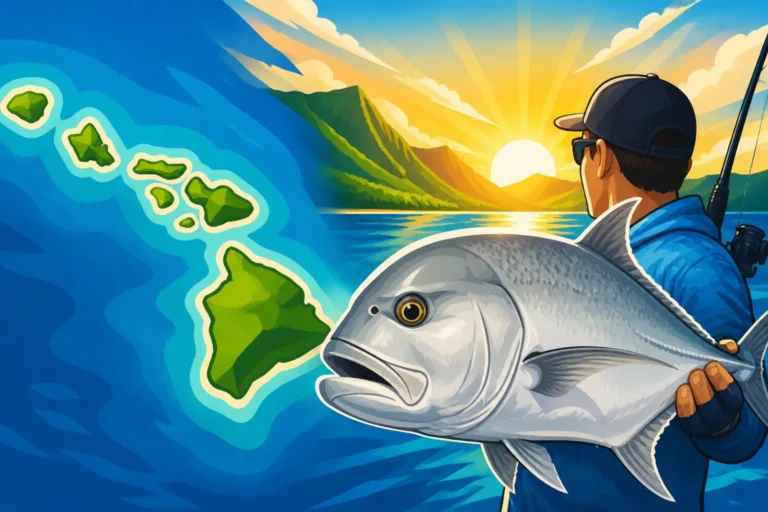
The trevally family in Hawaii includes some of the most exciting and powerful sportfish: papio and ulua. Papio is the general term for juvenile trevally, while ulua refers to the larger, adult specimens, particularly the giant trevally (Caranx ignobilis). These are formidable predators, known for their incredible strength and explosive runs, making them a favorite target for many local anglers. Ulua can grow to impressive sizes, with some individuals weighing well over a hundred pounds.
Visually, trevallies have a distinct, compressed, somewhat diamond-shaped body with large, powerful tails. Their coloration can range from silvery-grey to dark, almost black, especially in larger ulua. Papio are often more silvery, sometimes with faint vertical bars or spots. Key identification features include their strong, broad tail (caudal fin), a steep forehead profile in larger fish, and their general torpedo-like shape. They are often found patrolling reef edges, channels, and drop-offs, ambushing baitfish. Telling the difference between a smaller ulua (papio) and other similar-sized trevally species requires a keen eye for subtle differences in body shape, fin size, and coloration patterns. It's a skill that comes with practice! For those keen on targeting these powerhouses, Ulua (Giant Trevally) Fishing in Hawaii offers excellent insights.
Tangs and Surgeonfish (Manini, Palani): Colorful Grazers
Tangs and surgeonfish are a ubiquitous sight on Hawaiian reefs, instantly recognizable by their often vibrant colors and the presence of a sharp, scalpel-like spine (or "scalpel") on each side of their caudal peduncle (the narrow part of the body before the tail). This spine is used for defense and can deliver a nasty cut, so exercise caution if handling these fish. These fish are primarily herbivores, grazing on algae, and are essential for maintaining reef health.
The manini (convict tang) is perhaps one of the most common and easily identified, with its distinctive black and white vertical stripes. They often form large schools that sweep across the reef, efficiently clearing algae. The palani (surgeonfish) is another common species, typically brownish-grey with a white band at the base of its tail and often a yellow dorsal fin. Then there are the brilliant yellow tangs (lau wilwili), which are a favorite among aquarium enthusiasts and a stunning sight on the reef. These fish generally have small mouths adapted for nibbling algae. When identifying tangs and surgeonfish, look for their flattened, oval-shaped bodies, small mouths, and remember to check for those defensive caudal spines. Their schooling behavior and constant grazing are also key indicators.
Triggerfish (Humuhumunukunukuapua'a and Relatives): Distinctive and Often Territorial
Triggerfish are truly unique and charismatic inhabitants of Hawaii's reefs. Their most defining feature is their "trigger" mechanism – a dorsal spine that can be locked into an upright position by a second, smaller spine, making it difficult for predators to dislodge them from rocky crevices. When relaxed, both spines can be folded back. They have tough, leathery skin, small mouths with strong teeth, and independently moving eyes that give them an almost inquisitive look. Many species are quite territorial and can be feisty, especially during spawning season.
The most famous Hawaiian triggerfish is, of course, the humuhumunukunukuapua'a (reef triggerfish or rectangular triggerfish), Hawaii's state fish. Its complex pattern of black, white, yellow, and blue is unmistakable. Other common triggerfish include the black triggerfish (humuhumu ele'ele), which is a deep purplish-black, and the lei triggerfish (humuhumu lei), which has a distinctive yellowish body with a network of blue lines. When identifying triggerfish, pay attention to their overall body shape (often compressed and oval), their unique mouth and teeth, and their characteristic way of swimming using their dorsal and anal fins in a sculling motion, rather than just their tail. Their vibrant patterns and sometimes aggressive posture towards other fish also offer clues.
Practical Tips for Reef Fish Identification
Identifying reef fish in Hawaii can feel a bit like learning a new language, but with a few practical tips and a bit of patience, you'll be distinguishing between an uhu and a kumu in no time. It's all about keen observation and having the right tools.
Observing Key Physical Characteristics
When you're trying to identify a fish, the first thing you want to do is become a detective of its physical traits. Think of it like putting together a puzzle. Start with the most obvious features and work your way down to the subtle details.
- Body Shape: Is it long and slender like an eel? Flat and disc-like like some surgeonfish? Round and bulbous like a pufferfish? Or perhaps torpedo-shaped like a trevally? The overall silhouette is a huge clue.
- Mouth and Jaw Structure: Does it have a beak like a parrotfish? A small, upturned mouth for surface feeding? Barbels like a goatfish? Large, prominent teeth for crushing coral or smaller fish? The mouth tells you a lot about its diet and how it feeds.
- Fin Placement and Shape: Pay attention to the dorsal (top), anal (bottom), pectoral (side), and caudal (tail) fins. Are they long and flowing, or short and spiky? Are there unique spines, like the "trigger" on a triggerfish, or the "scalpel" on a surgeonfish? The shape and position of fins are often consistent across species.
- Coloration and Patterns: This is often the most striking feature, but also one that can be tricky due to variations. Look for distinct stripes (horizontal or vertical), spots, blotches, or solid colors. Remember that juvenile fish often have very different patterns than adults, and colors can change depending on light, depth, or even the fish's mood. Try to note patterns rather than just general color.
- Eye Size and Position: Are the eyes large, indicating a nocturnal or deep-water species? Are they independently moving, like those of a triggerfish? This can give clues about their vision and predatory habits.
Take your time. If you're snorkeling, try to get a stable view. If you're fishing, observe the fish before you release it (if it's not a keeper). Every detail matters!
Noticing Behavior and Habitat
Beyond what a fish looks like, how it acts and where you find it are equally important for identification. These behavioral and habitat clues offer a deeper understanding of the species.
- Social Behavior: Does the fish swim alone, in small groups, or in massive schools? Fish like manini are almost always found in schools, while large ulua might be solitary hunters. Certain triggerfish are known for their territorial behavior.
- Swimming Style: Does it glide gracefully, dart quickly, or hover in place? Parrotfish use their pectoral fins for propulsion, giving them a deliberate, "rowing" motion, whereas trevallies use powerful tail strokes for bursts of speed.
- Feeding Habits: Is it pecking at coral? Sifting through sand? Chasing baitfish near the surface? Watching a kumu use its barbels to search for food is a dead giveaway for a goatfish.
- Preferred Habitat: This is huge! Some fish, like many parrotfish and tangs, prefer shallow, sunlit coral reefs. Others, like certain snappers, are found only in deeper, rocky areas. Some fish are specific to sandy flats, while others hug rocky shorelines or hang out near sea caves. If you see a fish exclusively in a particular type of environment, that's a strong clue. For example, if you're exploring Hawaii Marine Life Conservation Districts, Explained, you'll notice a higher density and variety of species, and their behavior might be more relaxed due to protection. Understanding where to look for specific fish can significantly narrow down your identification efforts.
Combining physical characteristics with behavioral and habitat observations creates a much more complete picture, making identification both easier and more reliable.
Using Field Guides and Digital Tools
Even with a keen eye, sometimes you need a little help. That's where good field guides and modern digital tools come in handy. There are fantastic resources out there, both in print and on your phone, that can put an entire library of fish identification at your fingertips.
- Waterproof Field Guides: These are fantastic for snorkelers and divers. Many compact, laminated guides are available that you can take directly into the water with you. They often feature clear illustrations or photos of common species, sometimes even showing juvenile and adult forms. You can find a good selection of these kinds of guides on platforms like Amazon, making it easy to purchase one before your next Hawaii adventure. Just search for "Hawaii fish identification card" or "Hawaii reef fish guide."
- Traditional Books: For a deeper dive, comprehensive fish identification books for Hawaii are invaluable. These often contain more detailed descriptions, behavioral notes, and a wider array of species. While not waterproof, they are perfect for post-trip review or planning. Again, a quick search for "Hawaii marine life guide book" on Amazon will yield many options, from scientific texts to more accessible guides for the general public.
- Mobile Apps: Many excellent marine life identification apps exist, some specifically for Hawaii or the wider Indo-Pacific region. These apps often allow you to browse by image, search by common or scientific name, and read detailed profiles. Some even offer community features where you can upload photos for help with identification. Just be sure to download content for offline use, as cell service isn't always reliable on the water or at remote beaches.
- Online Databases: Websites from conservation organizations, universities, or local fisheries departments often have extensive databases of local fish species, complete with photos and descriptions. These can be great for cross-referencing or learning about lesser-known species.
Remember, no single tool is perfect, but using a combination of methods—observing in the field, then consulting guides—will rapidly improve your identification skills. Don't be afraid to take photos (even if they're blurry!) to review later with your chosen resources.
Protecting Hawaii's Reef Fish: Ethical Angling and Viewing
Our enjoyment of Hawaii's stunning reef fish comes with a responsibility to protect them. Every time we interact with the ocean, whether by fishing, snorkeling, or simply walking the shoreline, we have an impact. Practicing ethical angling and viewing habits ensures these vibrant ecosystems remain healthy for generations to come.
Following Size and Bag Limits Strictly
This cannot be stressed enough: know and follow the regulations. Hawaii's Division of Aquatic Resources (DAR) establishes specific size and bag limits for various fish species, and even closed seasons for others, all designed to ensure sustainable populations. Forgetting these rules or choosing to ignore them can have serious consequences, both legally and ecologically. Imagine a scenario where a popular food fish, like moi (Pacific threadfin), is overfished because anglers don't respect the Hawaii Moi Closed Season, Explained or its minimum size limits.
Before you even head out, take the time to review the current Hawaii Fishing License Guide for 2026 and the detailed regulations for your specific target species and location. This includes understanding the difference between commercial and recreational rules, as well as special regulations for certain areas. If you're unsure about the size of a fish, measure it carefully. If it's undersized, oversized, or a protected species, release it gently and quickly. It's not just about avoiding a penalty for Fishing Without a Required License in Hawaii: Penalties; it's about being a kuleana (responsible) member of the fishing community and doing your part to keep our reefs thriving.
Minimizing Impact While Shore Fishing and Snorkeling
Our actions, even seemingly small ones, can add up to a significant impact on fragile reef environments. Whether you're casting a line from the shore or exploring underwater with a mask and snorkel, being mindful of your presence is vital.
For shore anglers, this means using appropriate tackle that minimizes bycatch or allows for easy, safe release of non-target species. Avoid leaving fishing line, hooks, or other gear behind, as these can become "ghost fishing" hazards that continue to entangle marine life. Choose biodegradable baits where possible. Be conscious of where you're casting; avoid areas with heavy coral growth where your line might get snagged and damage the reef. If you're using a net, understand Hawaii Net Fishing Restricted Areas.
For snorkelers and divers, the primary rule is look, but don't touch. Touching coral can damage the delicate polyps, and picking up shells or rocks can disrupt the micro-habitats of countless small creatures. Avoid stirring up sand or sediment, as it can smother corals and reduce visibility for other marine life. Maintain a respectful distance from all fish and marine animals; chasing or harassing them causes stress and can alter their natural behavior. Always be aware of your fin kicks, especially in shallow areas, to prevent accidental contact with the reef. Consider wearing reef-safe sunscreen to protect the marine environment from harmful chemicals. By being present and observing without interfering, we allow these ecosystems to flourish undisturbed.
Reporting Violations and Supporting Conservation Efforts
Being an ethical ocean user also means being an advocate for the health of our marine environment. If you witness someone violating fishing regulations, polluting the ocean, or harming marine life, it's important to report it to the proper authorities, such as the Hawaii DLNR Division of Conservation and Resources Enforcement (DOCARE). It might feel uncomfortable, but your report can help prevent further damage and protect our precious resources.
Beyond reporting, actively support local conservation efforts. Many organizations in Hawaii are dedicated to reef restoration, marine protected area management, and public education. This could involve volunteering for beach cleanups, donating to a reputable marine conservation group, or simply educating your friends and family about responsible ocean practices. Understanding designations like Hawaii Marine Life Conservation Districts, Explained and supporting their protection is a key part of this. By taking an active role, we contribute to a collective effort to safeguard the incredible diversity of Hawaii's reef fish and the habitats they call home. Our reefs are not just beautiful backdrops; they are living, breathing communities that need our care and respect.
Quick Reef Fish Identification Chart
Here's a handy overview of some common reef fish in Hawaii, summarizing key identification features and typical habitats to help you quickly distinguish between species.
| Common Name (Local Name) | Key Identification Features | Typical Habitat | Angler Relevance |
|---|---|---|---|
| Parrotfish (Uhu) | Beak-like mouth (fused teeth), vibrant colors (blues, greens, pinks), robust body | Shallow to mid-depth coral reefs, rocky areas, often in groups | Prized food fish; specific size/bag limits apply. |
| Goatfish (Kumu, Weke) | Two prominent barbels (whiskers) under chin, elongated body, various colors | Sandy bottoms near reefs, grass beds, foraging in schools | Popular food fish; good for bait fishing on bottom. |
| Trevally (Papio, Ulua) | Compressed, diamond-shaped body, powerful tail, silvery to dark grey, large eyes | Reef edges, channels, drop-offs, open water near structure | Highly sought-after sportfish, strong fighters. |
| Tang/Surgeonfish (Manini, Palani) | Small mouth, flattened oval body, sharp "scalpel" near tail, often schooling | Shallow to mid-depth coral reefs, rocky areas, grazers | Less common angling target; important reef grazers. |
| Triggerfish (Humuhumunukuapua'a) | Distinct "trigger" dorsal spine, tough skin, independently moving eyes, patterns | Coral reefs, rocky crevices, often territorial | Not typically targeted for food; iconic reef resident. |
Disclaimer
This article is for general informational purposes only and does not constitute professional advice. Laws, prices and regulations vary by location and change over time. Consult a qualified professional for guidance on your specific situation.