Pelagic Species Identification Guide for Hawaii
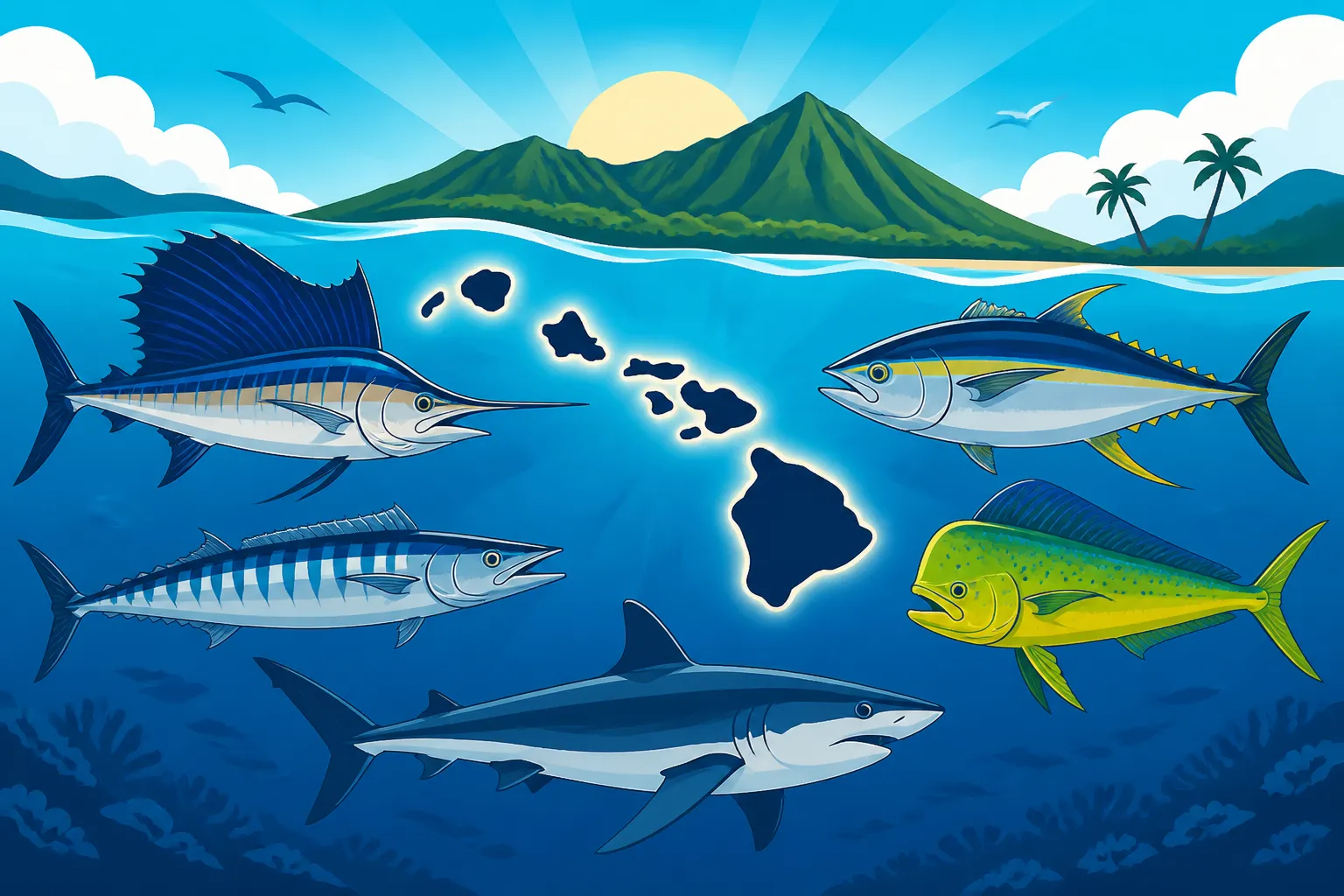
Heading out onto Hawaii's boundless blue waters is an experience unlike any other, but for newcomers, or even seasoned anglers visiting for the first time, identifying the pelagic species you encounter can feel like a daunting task. These open-ocean dwellers move fast and often look different out of the water than they do in a picture, leaving many confused. This guide will walk you through the distinct characteristics of Hawaii's most sought-after pelagic fish, helping you confidently identify your next big catch.
The Majestic Billfish of Hawaii's Open Ocean
When you think of big game fishing in Hawaii, billfish are usually the first thing that comes to mind. These powerful, iconic predators roam the deep waters, offering some of the most thrilling battles an angler can imagine. Knowing the difference between them isn't just about bragging rights; it's essential for understanding their behavior and even adhering to specific regulations.
Blue Marlin: The King of Kona
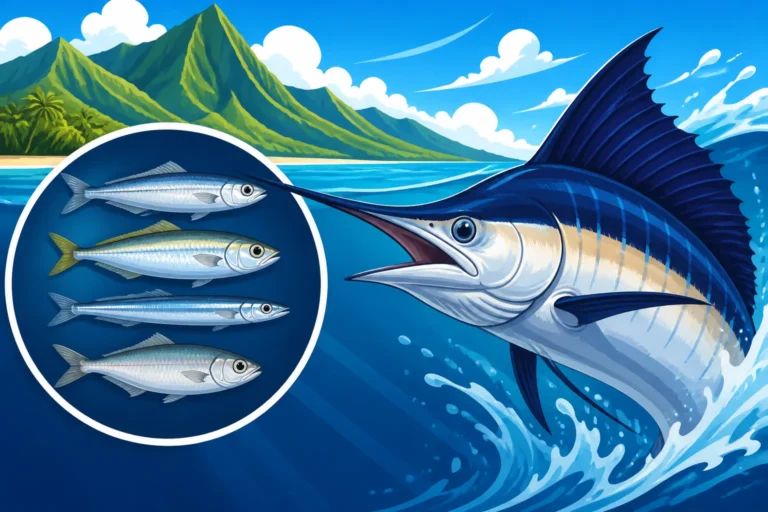
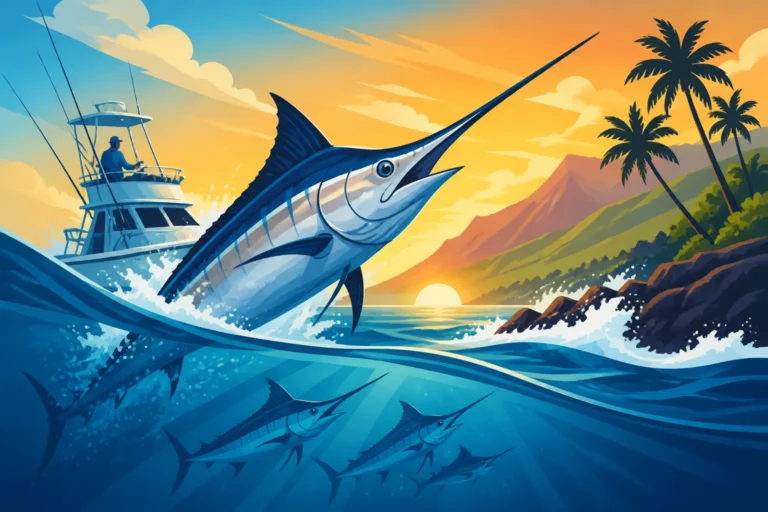
The Pacific Blue Marlin is truly the undisputed monarch of Hawaii's offshore waters, especially around the famed Kona Coast. These magnificent fish are built for power and speed, capable of reaching truly massive sizes. Identifying a blue marlin starts with its sheer presence. They have a stout, robust body that tapers significantly towards a large, crescent-shaped caudal (tail) fin. Their dorsal fin is relatively low and rounded, not particularly tall like some other billfish, and it won't fold completely into a groove on its back. The pectoral fins are also rigid and cannot be folded flat against their sides, which is a key identifying feature.
Coloration is another giveaway. While in the water, a blue marlin typically exhibits a dark, iridescent blue back fading into a silvery-white belly, often with vertical bars that might appear and disappear with their excitement or stress. However, once brought aboard, these bars often fade quickly. Their bill is thick and round in cross-section, reflecting their powerful hunting style. If you're planning a trip to target these giants, our guide on Marlin Fishing off the Kona Coast has everything you need to know about the best techniques and seasons.
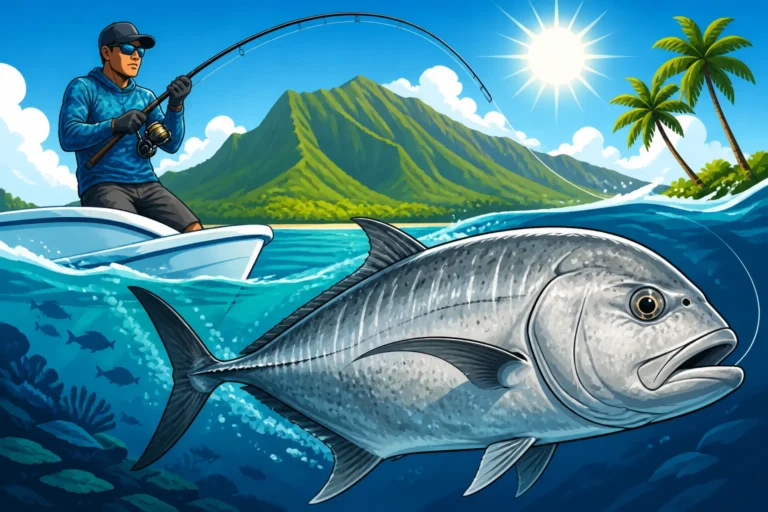
When a massive blue marlin hits your line, the fight is legendary. They make incredible runs, sometimes leaping high into the air, putting every ounce of your tackle and skill to the test. Many anglers consider catching a "grander" (a marlin weighing over 1,000 pounds) the pinnacle of big game fishing, and Hawaii's waters, particularly off the Big Island, are among the few places in the world where this dream can become a reality. Always ensure you have appropriate gear; heavy-duty rods and reels are a must, and you can find excellent marine-grade tackle bags to keep your essentials organized on Amazon.
Striped Marlin: The Athletic Acrobats
While perhaps not reaching the colossal sizes of their blue cousins, the Striped Marlin is an incredibly beautiful and acrobatic billfish that offers a fantastic fight on lighter tackle. These fish are generally smaller and much more slender than blue marlin, often weighing between 50 and 200 pounds, though larger specimens are certainly caught. The most striking identifying characteristic of a striped marlin is its vibrant, iridescent blue or lavender vertical stripes that run down its sides. These stripes are particularly prominent and vivid when the fish is excited or stressed, shimmering with incredible beauty as it fights.
Beyond the stripes, pay close attention to the dorsal fin. A striped marlin has a much taller, more pointed dorsal fin compared to a blue marlin, and critically, it is flexible and can be folded back into a groove along its back. Its pectoral fins are also rounded at the tips and can be folded flat against the body, unlike the stiff pectorals of a blue marlin. The bill is notably thinner and more compressed than that of a blue marlin. If you're ever in doubt, comparing the dorsal and pectoral fin flexibility is a reliable way to differentiate them. For a deeper dive into distinguishing these two, check out our article on Blue Marlin vs Striped Marlin Identification.
Striped marlin are known for their spectacular aerial displays, often leaping repeatedly out of the water when hooked, making for an unforgettable visual spectacle. They are a popular target for sport fishermen, providing a fast and furious fight. They tend to be found in slightly cooler waters than blue marlin and can be targeted year-round, though their seasonality can vary.
Shortbill Spearfish: The Smaller, Faster Cousin
The Shortbill Spearfish is often overlooked but is a true gem of Hawaii's pelagic waters. These are the smallest of the billfish found here, typically weighing between 20 and 50 pounds, although some can exceed that. Their body is remarkably slender and compressed, almost like a giant mackerel with a bill. The most distinct feature is, as their name suggests, their bill, which is notably shorter and more slender than that of marlins, resembling a sharp spear rather than a sword.
Their dorsal fin is exceptionally tall and pointed, even more so than a striped marlin, and like the striped marlin, it can be folded back into a groove on its back. The shortbill spearfish has a dark blue back and silvery belly, usually without the prominent vertical stripes of a striped marlin. Another key identifier is their anal fin, which is deeply notched, giving it a distinctive two-lobed appearance. They are incredibly fast swimmers, known for their powerful runs once hooked.
Shortbill spearfish are a favorite among light tackle enthusiasts due to their spirited fight and delicious table fare. They are generally found further offshore in deeper waters than some other pelagic species. While often caught incidentally while trolling for larger marlin or tuna, dedicated anglers can target them by focusing on specific depths and bait presentations. They are truly a unique and rewarding catch, proving that big thrills don't always require the biggest fish.
Tuna Species: Hawaii's Fast-Swimming Powerhouses
Tuna are the workhorses of the pelagic world, built for relentless speed and long migrations. Hawaii's waters are home to several species, each offering a distinct challenge and culinary reward. Recognizing the different types of tuna is key, as their behaviors and preferred habitats can vary significantly.
Ahi (Yellowfin Tuna): The Prized Catch
Ahi, known elsewhere as Yellowfin Tuna, is arguably the most prized pelagic fish in Hawaii, cherished for its culinary versatility and powerful fight. These magnificent fish are easily identified by their torpedo-shaped bodies, metallic dark blue or black backs, and silvery-white bellies. The most distinguishing features, especially in larger adults, are their incredibly long, sickle-shaped anal and second dorsal fins, which are a vibrant yellow. You'll also notice bright yellow finlets running along their back and belly towards the tail.
Smaller ahi, often referred to as "shibi," might not display the exaggerated fin length of their adult counterparts, but they still have the characteristic yellow finlets. They are strong, fast swimmers, often found schooling around submerged structure, current lines, or oceanic buoys (FADs). Ahi (Yellowfin Tuna) Fishing in Hawaii is a fantastic read if you're keen on learning the best methods to target these powerful fish.
Ahi are formidable opponents, known for their deep, sustained runs that test the angler's endurance and tackle. They can range in size from schoolie-sized "football" tuna weighing 20-40 pounds up to giant "cows" exceeding 200 pounds. When you hook into a large ahi, be prepared for a long and grueling battle. They are also incredibly important to Hawaii's commercial and recreational fisheries, making identification crucial for adhering to Hawaii Pelagic Species Bag Limits.
Aku (Skipjack Tuna): The Abundant Fighter
Aku, or Skipjack Tuna, are a mainstay of Hawaii's pelagic fishery and an essential part of the marine food web. While they don't reach the massive sizes of ahi, they are incredibly abundant, offering fast-paced action and serving as crucial baitfish for larger predators. Aku are easily identifiable by their stocky, rounded, torpedo-shaped bodies, dark blue or purple-blue backs, and silvery bellies. The definitive characteristic is the presence of four to six prominent, dark, longitudinal stripes running along their belly or lower sides.
Aku typically range from 5 to 20 pounds, making them a fantastic target for light tackle. They are highly migratory and often travel in massive, fast-moving schools, frequently associating with porpoises or birds diving into the water, indicating a feeding frenzy. When you encounter a school of aku, the action can be non-stop, with multiple hookups possible at once. For those interested in their behavior, our article on Aku (Skipjack Tuna) in Hawaii dives deeper into what makes them such prolific predators.
These tuna are incredibly powerful for their size, capable of blistering runs and a tenacious fight. They are excellent for fresh consumption, particularly in poke, and are also highly valued as fresh bait for larger gamefish like marlin and ahi. Many local fishermen rely on finding schools of aku to catch bait before heading offshore for bigger quarry. A good pair of binoculars, easily available on Amazon, can be invaluable for spotting bird activity that often indicates aku schools.
Other Tunas and Tuna-Like Species
While Ahi and Aku are the most commonly targeted tuna species in Hawaii, you might encounter other members of the Scombridae family.
Kawakawa (Bonito): Often mistaken for small aku, kawakawa are smaller tuna-like fish with a similar dark back and silvery belly. The key difference lies in their markings: kawakawa typically have a distinct pattern of dark, wavy, oblique stripes or spots on their upper back and sides, often extending onto their belly, unlike the straight longitudinal stripes of the aku. They also have a series of dark spots below the pectoral fin. They are fierce fighters for their size, usually ranging from 5 to 15 pounds, and are commonly found closer to shore than larger tunas. They are excellent light tackle gamefish and make good bait.
Dogtooth Tuna: Though not as common as Ahi or Aku in the general pelagic fishing scene, these powerful, toothy tuna are occasionally caught in deeper waters around submerged seamounts and reef structures. They are distinguished by their longer, more cylindrical body, large conical teeth, and lack of distinct stripes or spots on their sides. Their coloration is usually a steely blue-grey back fading to a silver belly. Dogtooth tuna are extremely strong and offer a brutal fight, often retreating to structure when hooked, making them a serious challenge for anglers.
Identifying these various tuna species correctly not only aids in compliance with regulations but also helps you refine your fishing strategies. Each species has preferred habitats and feeding patterns, and knowing who you're dealing with can make all the difference in your success on the water.
Ono and Mahimahi: The Ocean's Colorful Sprinters
These two species are celebrated for their speed, beauty, and incredible table fare. They are frequently encountered while trolling offshore and provide an exhilarating experience for anglers.
Ono (Wahoo): The Toothy Torpedo
Ono, known universally as Wahoo, is a true speed demon of the ocean, revered for its incredibly fast runs and delicious white flesh. The name "Ono" actually means "delicious" in Hawaiian, a testament to its culinary appeal. Identifying an ono is relatively straightforward: they possess an incredibly elongated, cigar-shaped body, a long, pointed snout, and a mouth full of razor-sharp, triangular teeth. Their back is a brilliant iridescent blue-green, fading to a silvery belly, and they are typically adorned with striking, irregular dark blue or silvery-blue vertical bands or stripes along their sides. These stripes are particularly vivid when the fish is fresh out of the water.
Ono range from 20 to 80 pounds on average, though much larger specimens are caught. They are solitary hunters or found in small groups, preferring to patrol current lines, weed lines, and the edges of deep drop-offs. Their incredible speed allows them to ambush prey with lightning-fast strikes. When targeting them, heavy leaders are a must due to their formidable teeth. Our detailed guide on Ono (Wahoo) Fishing in Hawaii can provide you with effective strategies to hook into these fast-moving predators.
Catching an ono is an exciting affair; they often make an initial blistering run that strips line off the reel at an astonishing rate. Their firm, flaky, and mild-flavored meat makes them a highly sought-after food fish, whether grilled, pan-seared, or prepared as sashimi. Always handle them with extreme caution due to their teeth; a good pair of long-nosed pliers or a fish gripper (available on Amazon) is essential for safe unhooking.
Mahimahi (Dolphin Fish): The Iridescent Leapers
Mahimahi, also known as Dolphin Fish or Dorado, are one of the most visually stunning and exciting pelagic species to encounter in Hawaiian waters. Their vibrant, iridescent colors and acrobatic leaps make them a favorite among anglers. Identifying a mahimahi is almost unmistakable due to their unique appearance and dazzling coloration. They have a distinctively compressed, deep body, especially males (bulls) which develop a prominent, blunt, nearly vertical forehead. Females (cows) have a more rounded head.
Their coloration is truly spectacular, featuring brilliant gold, green, and blue hues, often flecked with iridescent spots, which can change rapidly when the fish is excited, fighting, or removed from the water. Their dorsal fin is long, running almost the entire length of their back, and is usually a brilliant blue or green. Their tail fin is deeply forked. Mahimahi typically range from 10 to 40 pounds, but can occasionally exceed 60 pounds, offering a substantial fight on light to medium tackle. Dive deeper into their habits with Mahimahi Fishing in Hawaii for the best techniques.
Mahimahi are highly associated with floating debris, such as logs, weed lines, or FADs, where they gather to feed on baitfish that seek shelter. When you find a school of mahimahi, it's not uncommon to experience multiple hookups. They are renowned for their spectacular aerial acrobatics, often leaping and tail-walking across the water's surface in an attempt to shake the hook. Their firm, flavorful white meat is excellent for eating, making them a prime target for those looking to fill the cooler.
Smaller Pelagic Gamefish and Baitfish: Fueling the Food Chain
While the larger billfish and tuna often steal the spotlight, many smaller pelagic species play crucial roles in Hawaii's marine ecosystem, both as gamefish themselves and as vital forage for the bigger predators. Understanding these species is part of appreciating the intricate balance of the open ocean.
Opelu (Mackerel Scad): Essential Live Bait
Opelu, known scientifically as Mackerel Scad, are small, schooling fish that are absolutely vital to the Hawaiian fishery. They are one of the primary baitfish species for larger gamefish like ahi, marlin, and even ulua when they venture offshore. Identifying opelu is relatively easy: they have a slender, elongated, somewhat rounded body with a distinct line of scutes (hard, bony scales) running along their lateral line from the pectoral fin to the tail. Their coloration is typically a metallic blue or green back fading to a silvery belly, often with a subtle golden or yellowish stripe along their sides.
Opelu are generally small, usually ranging from 6 to 12 inches, making them the perfect bite-sized meal for bigger predators. They form vast schools, often found near the surface over deeper water, particularly around buoys, current lines, or known feeding grounds. Hawaiian fishermen have perfected techniques for catching opelu, often using specialized sabiki rigs or small net methods. Their abundance is critical, and their movements dictate where many larger pelagic species will be found. If you're interested in learning more about these important baitfish, our article Opelu (Mackerel Scad) in Hawaii provides further insight.
The presence of opelu often signals a healthy ecosystem and the potential for larger gamefish. Anglers will often spend time catching a livewell full of opelu before heading to the prime offshore fishing grounds. Using them as live bait is a highly effective method for enticing wary marlin and tuna, as their natural swimming action is irresistible to predators.
Akule (Bigeye Scad): The Schooling Staple
Akule, or Bigeye Scad, are another incredibly important schooling baitfish in Hawaiian waters, holding significant cultural and commercial value. They are easily identifiable by their large eyes, which are characteristic of many nocturnal or deep-water dwelling species, even though akule are often found near the surface. They have a sleek, somewhat compressed body, silvery sides, and a bluish-green back. Like opelu, they also possess a row of scutes along their lateral line, though they tend to be a bit deeper-bodied than opelu.
Akule typically range from 8 to 14 inches, and like opelu, they form immense, dense schools that can attract a wide array of predators. These schools are often found closer to shore than opelu, especially around harbors, bays, and protected reefs, particularly at night when they are drawn to lights. Learning about Akule (Bigeye Scad) Schooling Behavior can dramatically improve your chances of locating these vital baitfish.
Fishermen often use throw nets or specialized light tackle to catch akule, sometimes even using lights at night to draw them in. They are not only excellent live bait for ulua and other inshore predators but are also highly valued as fresh table fare, often prepared fried, grilled, or dried. The sight of a massive school of akule boiling on the surface, often being harassed by diving birds and larger fish, is a spectacular and exciting event for any angler in Hawaii.
Kawakawa (Bonito): A True Pelagic Fighter
While touched on briefly in the tuna section, it's worth dedicating a moment to Kawakawa, also known as Bonito. These aren't just "other tuna" – they are prolific, aggressive, and offer a fantastic fight on light tackle. They typically run in schools, often found chasing baitfish near shorelines, reefs, and around FADs. Their identification is distinct from Aku: instead of parallel stripes on the belly, Kawakawa display dark, wavy, oblique lines or spots on their upper back and sides, which can vary in intensity. They also often have a few dark spots under their pectoral fin.
Kawakawa are incredibly strong and fast for their size, generally ranging from 5 to 15 pounds. When a school is feeding, the action can be furious, making them a great target for beginners and experienced anglers alike looking for consistent bites. They respond well to fast-trolled lures, spoons, and live bait. While some consider them less desirable for eating than Ahi or Ono, they are excellent when prepared fresh, often used in fish stews, curries, or even smoked. They also make exceptional cut bait for larger bottom fish or shark fishing. Learning their feeding patterns can lead to some truly exciting days on the water.
Identifying Key Features and Behavioral Clues
Beyond just looking at a fish, understanding how to recognize certain features and behaviors can give you a massive advantage in identifying pelagic species, both in the water and when they're on your boat. It’s all about building a comprehensive mental database.
Fin Shapes, Body Markings, and Coloration
When trying to identify a pelagic fish, your first glance should always be at a few key areas:
- Body Shape: Is it torpedo-shaped like a tuna, elongated like an ono, or deep-bodied like a mahimahi? Marlin are robust and powerful, while spearfish are much more slender. The overall silhouette tells you a lot about its lifestyle and speed.
- Fin Characteristics: Pay close attention to the dorsal, anal, and pectoral fins. Can the dorsal fin fold back into a groove (striped marlin, spearfish) or is it rigid (blue marlin)? Are the anal and second dorsal fins long and sickle-shaped (adult ahi) or short and triangular (aku)? Are the pectoral fins rounded or pointed? These details are critical for distinguishing between similar species. You can find excellent laminated identification charts on Amazon that illustrate these differences clearly.
- Coloration and Markings: While colors can change, certain patterns are consistent. The stripes on a striped marlin or ono, the yellow finlets of an ahi, or the belly stripes of an aku are definitive. Mahimahi's vibrant greens, blues, and golds are unmistakable. Note that colors tend to be most vivid when the fish is first caught and often fade quickly.
- Bill Shape (for Billfish): Is the bill thick and round (blue marlin), thin and compressed (striped marlin), or short and spear-like (shortbill spearfish)? This is a primary differentiator among billfish.
Here’s a quick reference table to help visualize some of these key identification features:
| Species | Body Shape | Key Markings/Color | Fin Characteristics | Average Size (Weight) |
|---|---|---|---|---|
| Blue Marlin | Robust, powerful | Dark blue back, silvery belly, faint bars (fade) | Dorsal low, rigid; Pectoral rigid | 200-600 lbs+ |
| Striped Marlin | More slender, compressed | Vivid purple vertical stripes | Dorsal tall, flexible; Pectoral rounded, flexible | 50-200 lbs |
| Shortbill Spearfish | Very slender, compressed | Blue-purple back, no distinct stripes | Dorsal very tall, flexible; Anal fin deeply notched | 20-50 lbs |
| Ahi (Yellowfin) | Torpedo-shaped | Metallic dark blue, yellow finlets | Long, sickle-shaped dorsal/anal fins (adults) | 40-200 lbs+ |
| Aku (Skipjack) | Stocky, rounded | 4-6 dark longitudinal belly stripes | Short, triangular dorsal/anal fins | 5-20 lbs |
| Ono (Wahoo) | Elongated, cigar-shaped | Irregular dark blue vertical bands | Tall, pointed dorsal; sharp teeth | 20-80 lbs |
| Mahimahi | Compressed, deep-bodied | Iridescent gold/green/blue spots | Long dorsal fin runs almost entire back; blunt forehead (males) | 10-40 lbs |
| Opelu (Mackerel Scad) | Slender, rounded | Metallic blue/green back, silvery belly | Small, distinct fins; scutes along lateral line | <1 lb |
| Akule (Bigeye Scad) | Deep-bodied, compressed | Silvery, bluish-green back, large eyes | Small, distinct fins; scutes along lateral line | <1 lb |
| Kawakawa (Bonito) | Torpedo-shaped | Wavy dark lines on upper back, spots below pectoral | Similar to Aku but no belly stripes | 5-15 lbs |
Behavior and Habitat: Where to Find Them
Observing behavior and understanding preferred habitats can often help you identify species even before you get a clear look.
- Location: Are you fishing far offshore in deep blue water? You're likely dealing with marlin, ahi, or ono. Closer to shore, especially around structure or harbors, you might find aku or akule. Mahimahi love floating debris and weed lines. Understanding Best Deep Sea Fishing Spots in Hawaii can help you narrow down what species you might encounter.
- Feeding Habits: Are they busting bait on the surface (aku, kawakawa, smaller ahi)? Are they making long, powerful runs (marlin, larger tuna)? Are they leaping out of the water repeatedly (mahiahi, striped marlin)? These actions are species-specific.
- Schooling vs. Solitary: Aku, akule, and kawakawa often travel in large, visible schools. Ahi can school, especially younger fish, but grander marlin and large ono tend to be more solitary.
- Association with Other Animals: Birds diving are often a dead giveaway for schooling baitfish or tuna pushing bait to the surface. Porpoises can also be indicators of tuna schools below. A good fish finder, coupled with knowing what to look for, is a game-changer when trying to spot these pelagic species.
Remember, fish can sometimes stray from typical behavior, but these general patterns are usually a good starting point for identification.
Size and Weight Expectations
While size isn't always a definitive identifier, it can certainly help narrow down possibilities. Hawaii's pelagic species cover a vast range of sizes:
- Giants: Blue marlin are in a class of their own, routinely reaching hundreds of pounds and sometimes over a thousand. Large ahi can also exceed 200 pounds.
- Medium to Large Gamefish: Striped marlin, ono, and mahimahi generally fall into the 10-200 pound range, depending on the species and individual fish.
- Smaller Gamefish/Baitfish: Shortbill spearfish, aku, kawakawa, opelu, and akule are typically under 50 pounds, often much smaller.
Knowing what sizes to expect for a given species can prevent misidentification, especially when dealing with juvenile fish. For instance, a small ahi might be mistaken for a kawakawa if you're not paying close attention to its finlets and overall body shape. Always consult official regulations for Hawaii Bag and Size Limits by Species to ensure you're compliant with local laws once you've made your identification. The more time you spend on the water, the better your eye will become for these subtle yet important details.
Disclaimer
This article is for general informational purposes only and does not constitute professional advice. Laws, prices and regulations vary by location and change over time. Consult a qualified professional for guidance on your specific situation.