Hawaii state record ahi weight
The thrill of chasing a giant ahi, or yellowfin tuna, in Hawaii is a dream for countless anglers. There's something truly awe-inspiring about these powerful, sleek fish, and the ultimate bragging right for many is to land one worthy of the record books. It's a challenging, often humbling pursuit, filled with long hours and plenty of false alarms, but the thought of that one monumental bite keeps us coming back. This guide delves into the esteemed Hawaii state record for ahi, what it takes to achieve such a feat, and how aspiring anglers can aim for their own trophy yellowfin.
The Esteemed Hawaii State Record Ahi (Yellowfin Tuna) Weight
For many who dream of fishing the legendary waters of Hawaii, the ultimate prize is often a grand "grander" marlin, but for a certain dedicated set of anglers, the yellowfin tuna, or ahi as we call them here, holds an equally revered status. When we talk about a Hawaii state record ahi, we're discussing a truly exceptional fish, a creature of immense power and size that has defied the odds to grow to proportions that most anglers only see in their wildest dreams or in weathered photos at local tackle shops.
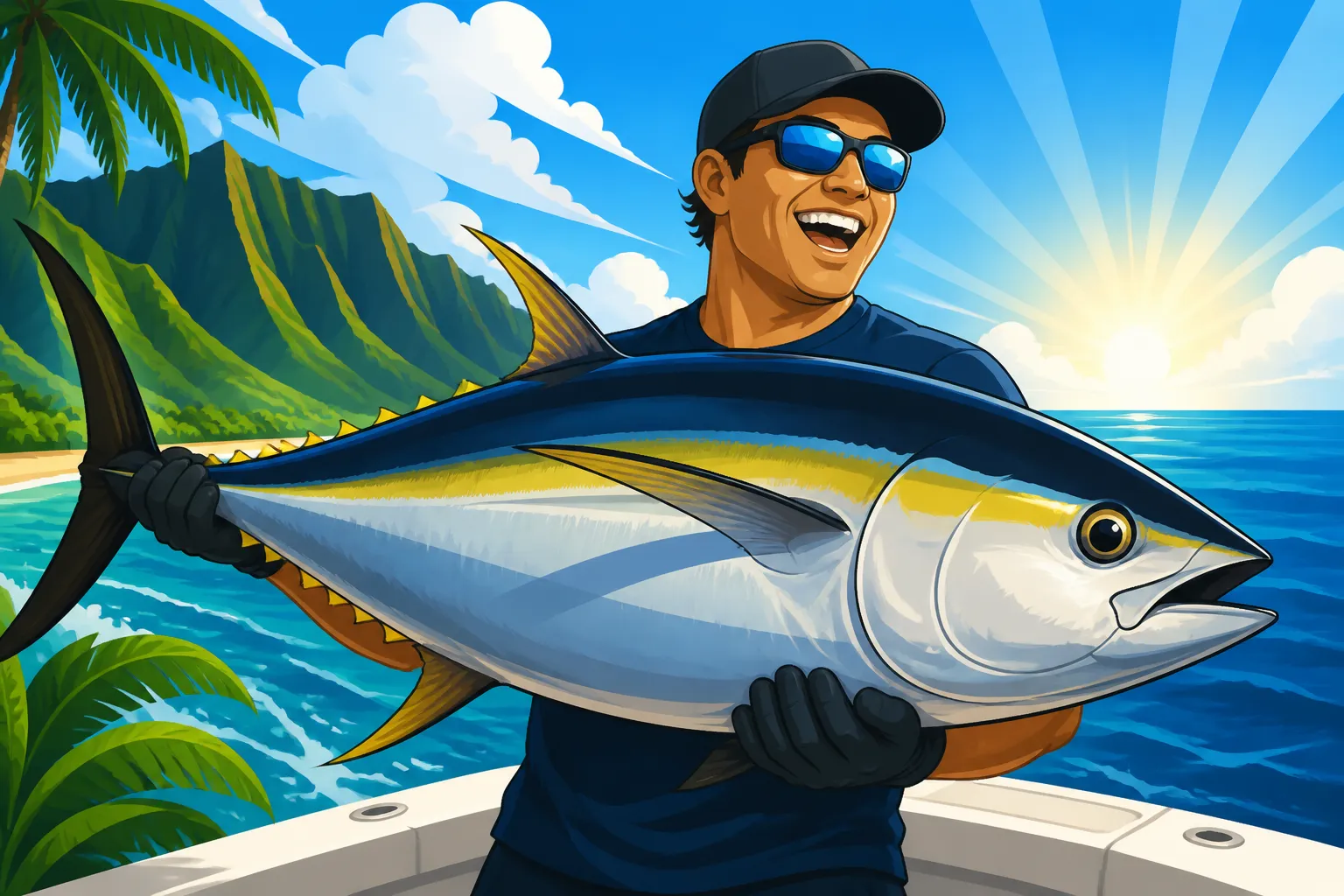
The existing Hawaii state record for yellowfin tuna is an astonishing 347 pounds. Imagine a fish that weighs more than two full-grown adults! This incredible specimen was caught right off the Kona Coast of the Big Island, a place famous worldwide for its deep-sea fishing opportunities. Landing a fish of this magnitude isn't just about strength; it's about skill, persistence, the right gear, and a healthy dose of luck. The angler who achieved this record is forever etched into Hawaii's fishing history, their name synonymous with one of the ocean's most formidable predators. It's a benchmark that pushes others to spend countless hours on the water, meticulously preparing, and tirelessly casting, all in the hope of someday matching or even exceeding that monumental catch.
Such a catch sends ripples through the local fishing community. When news of a record-breaking fish spreads, it ignites conversations in harbors, at boat ramps, and over coffee at dawn. It sets a new standard and inspires others, from seasoned charter captains to weekend warriors, to dream bigger. It validates the potential of our unique Hawaiian waters and reminds everyone why these islands are a world-class destination for big game fishing. The story of that 347-pound ahi is more than just a number; it's a tale of dedication, an epic battle between man and beast, and a testament to the rich bounty of our Pacific ocean.
Understanding What Makes a State Record Ahi
Catching a fish as magnificent as the Hawaii state record ahi is far more involved than simply weighing it on a scale. There's a whole process and a set of rules that ensure fair play and proper recognition for these incredible feats. It’s not just about the weight; it's about adhering to the standards set by governing bodies like the International Game Fish Association (IGFA), which are often mirrored in state-level record keeping. These rules ensure that all record submissions are legitimate, caught ethically, and measured accurately. Without this structure, the integrity of these records would be lost, diminishing the prestige of such an achievement.
Beyond the regulatory side, what truly makes an ahi grow to such immense, record-breaking dimensions? It's a combination of factors, often spanning many years of the fish's life. Ahi are pelagic wanderers, constantly on the move, and their growth is heavily dependent on a consistent, rich food source. They need abundant schools of baitfish, squid, and other smaller prey to fuel their rapid growth. The deep, nutrient-rich waters surrounding the Hawaiian Islands provide an ideal environment for this. Our deep-sea trenches and offshore seamounts create upwellings that bring vital nutrients to the surface, attracting bait and, subsequently, the giant ahi that feed on them. Factors like ocean currents, water temperature, and the absence of significant predation also play roles in allowing an individual ahi to reach such a mature and massive size.
Targeting an ahi of this caliber presents specific, often overwhelming, challenges. These aren't your average 50-pound schooling fish. Record-class ahi are typically older, wiser, and incredibly powerful. They’ve survived countless encounters with predators and anglers alike, making them wary and tough fighters. You're not just fishing for any ahi; you're looking for the anomaly, the one in a million. This requires specialized gear, heavy tackle designed to withstand immense pressure, and a deep understanding of their behavior. You might spend days, weeks, or even years specifically targeting these behemoths, often coming up empty-handed. It’s a testament to patience and perseverance, knowing that each trip, each lure presentation, brings you one step closer to that once-in-a-lifetime strike.
| Ahi Size Category | Typical Weight Range (lbs) | Common Gear | Fishing Strategy | Rarity |
|---|---|---|---|---|
| Schoolie Ahi | 20-60 | Medium Heavy | Trolling, Jigging | Common |
| Gaffer Ahi | 60-150 | Heavy | Trolling, Chunking | Moderate |
| Trophy Ahi | 150-250 | Heavy / Stand-up | Live Bait, Chunking | Less Common |
| Record Class Ahi | 250+ | Very Heavy | Live Bait, Slow Troll | Extremely Rare |
Strategies and Techniques for Chasing a Trophy Ahi in Hawaii
If you're dreaming of a record-class ahi, you need to understand where these giants hide and how to entice them. While ahi can be found throughout Hawaii, the Kona Coast of the Big Island is undeniably legendary for its calm waters and quick access to deep offshore grounds. Here, the ocean floor drops off dramatically just miles from shore, creating perfect conditions for pelagic species like ahi. Anglers often focus their efforts around Fish Aggregating Devices (FADs), which are buoys deployed offshore that attract baitfish, and in turn, larger predators. Submerged seamounts and deep-water ledges are also prime hunting grounds, as these structures create upwellings and eddies that concentrate food. Successful trips often involve heading far offshore, sometimes 20 to 50 miles or more, into the vast blue water where these behemoths roam. You'll want to review Best Deep Sea Fishing Spots in Hawaii for more detailed location insights.
When it comes to techniques, a multi-faceted approach often yields the best results for trophy ahi. Trolling large, vibrant lures, often set at varying depths and distances from the boat, is a classic method. Captains meticulously select their lure spreads, considering color, size, and action, hoping to mimic fleeing baitfish. Another highly effective strategy, especially for bigger ahi, is chunking. This involves drifting with the current and regularly tossing out small pieces of bait (chum) to create a scent trail, drawing ahi closer to the boat where a baited hook awaits. Live baiting with large opelu or mackerel scad is also incredibly productive; nothing beats a struggling live bait to trigger a predatory strike from a massive ahi. For those interested in optimizing their technique, checking out How to Catch Ahi in Hawaii can provide valuable insights.
Equipping yourself for a battle with a record-class ahi is non-negotiable. This isn't the time for lightweight gear. You'll need heavy-duty conventional reels, spooled with strong braided line and topped with a substantial monofilament leader. Rods should be stout, designed for stand-up fighting or capable of being put in a chair, offering the backbone to turn a powerful fish. Choosing the right hooks, swivels, and terminal tackle is crucial, as any weak link will be exploited by a fish of this size. Many anglers find great deals and a wide selection of heavy-duty fishing lines, leaders, and hooks on Amazon, ensuring they have the strongest components for the fight. Don't skimp on quality; a record ahi will test every single piece of your equipment. Learning about Best Bait for Ahi Fishing will also help you select appropriate offerings for your powerful gear.
The Journey Beyond the Catch: Documentation and Respect
Let's imagine, for a moment, that you've just landed an ahi that looks like it could contend for the state record. The adrenaline is pumping, but this is where critical thinking and adherence to rules become paramount. Proper handling for a record submission begins the moment the fish is secured. The utmost care must be taken to preserve its condition. This means avoiding unnecessary damage, keeping it as cool as possible to prevent weight loss from dehydration, and preparing for precise measurements. You'll need an official, certified scale for weighing, and the fish must be measured according to specific guidelines for length and girth. Clear, well-lit photographs from multiple angles, showing the fish in its entirety and with the measuring device, are also essential documentation. Without this meticulous attention to detail, even a record-worthy fish might not qualify.
Beyond the pursuit of a record, there's a deeper responsibility that comes with fishing in Hawaii: ethical consideration and conservation. Our ocean resources are precious, and anglers play a vital role in their sustainability. This means being aware of Hawaii Pelagic Species Bag Limits and adhering to them strictly. For many species, especially those not being submitted for a record, catch and release practices are encouraged, ensuring future generations can experience the same thrills. If you do harvest a fish, ensure it's done responsibly and that no part of the fish is wasted. Respect for the ocean, the fish, and the fishing community is a cornerstone of Hawaiian fishing culture. The goal is to celebrate the catch, not to exploit the resource.
Finally, the journey of chasing and potentially breaking a record extends into the community and earns recognition that lasts a lifetime. Successfully submitting a state record fish, or even a personal best that falls just short, makes you part of a unique fraternity of anglers. Your story becomes part of local lore, shared among friends and fellow fishermen. It’s an opportunity to educate others, inspire new anglers, and contribute to the ongoing legacy of Hawaii's rich fishing heritage. Whether your ultimate goal is a record, or simply to enjoy the incredible experience of Ahi (Yellowfin Tuna) Fishing in Hawaii, the pursuit connects you to the ocean in profound ways, fostering a deep appreciation for these majestic creatures and the vibrant ecosystem they call home. And when you're stocking up for your next adventure, remember that reputable brands like those found on Amazon can help you secure the gear you need to chase those dreams.
Disclaimer
This article is for general informational purposes only and does not constitute professional advice. Laws, prices and regulations vary by location and change over time. Consult a qualified professional for guidance on your specific situation.