Best Charters for Catching Mahimahi
One of the most thrilling experiences in Hawaii fishing is hooking into a mahimahi, also affectionately known as dorado or dolphin fish. These vibrant, acrobatic pelagic fighters are a bucket-list catch for many anglers, but knowing which charter will truly put you on them can feel like searching for a needle in a vast, blue haystack. This guide is here to cut through the confusion and help you navigate the world of Hawaiian fishing charters to find the perfect vessel and crew to make your mahimahi dreams a reality.
Understanding Mahimahi in Hawaiian Waters
Before you even step foot on a boat, having a good grasp of the mahimahi itself can dramatically improve your understanding of why certain charters and techniques are so effective. These aren't your typical reef fish; they're ocean roamers with distinct habits.
Mahimahi Behavior and Habitat
Mahimahi are truly creatures of the open ocean, characterized by their brilliant iridescent colors—electric blues, greens, and yellows—that fade quickly after they're caught. They are incredibly fast-growing and aggressive predators, often found near floating objects or temperature breaks in the open ocean. They love to hang around anything that offers shade or structure in the vast expanse of blue water, which is why FADs (Fish Aggregating Devices), buoys, weed lines, and even random debris like pallets or logs are prime real estate for them. These floating structures attract smaller baitfish, creating a miniature ecosystem that mahimahi readily exploit.
Their schooling behavior is fascinating. While larger, older mahimahi might be solitary or found in pairs, the younger, smaller "schoolie" mahimahi often travel in large packs. When you find one, there's a good chance more are lurking nearby, making for exciting multiple hook-ups. They are visual predators, with excellent eyesight, and their diet consists mainly of smaller fish, squid, and crustaceans. Understanding this preference for open-water structure and their opportunistic feeding habits is key to appreciating the strategies charter captains employ.
Prime Seasons for Mahimahi in Hawaii
Hawaii boasts a remarkably long mahimahi season, but like any fishery, there are peak times when your chances of encountering these beautiful fish are significantly higher. Generally, the best time of year to fish in Hawaii for mahimahi runs from spring through fall, roughly from March to October. During these warmer months, the ocean currents bring in more baitfish, and the water temperatures are ideal for their migratory patterns.
However, it's important to remember that Hawaii's fisheries are dynamic, and mahimahi can be caught year-round. Even in the "off-season" of late fall and winter, a skilled captain who knows the local waters and understands current conditions can still find them. The peak often starts with a surge in spring, continues strong through the summer, and can have another smaller peak in early fall. Different islands might experience slightly varied peak windows due to local current patterns and offshore geography, but the general warm-water rule applies across the board. Charters that consistently target mahimahi know these patterns like the back of their hand.
Key Considerations When Choosing a Mahimahi Charter
With a better understanding of mahimahi, let's dive into what truly makes a great mahimahi charter. This isn't just about finding any boat; it's about finding the right boat and right crew for this specific pursuit.
Boat Type and Size
When you're chasing mahimahi, the type and size of the boat can significantly influence your experience and success. Most reputable mahimahi charters in Hawaii operate either purpose-built sportfishing yachts or sturdy center console boats. Sportfishing yachts, often ranging from 30 to over 50 feet, offer more comfort and amenities, like air-conditioned cabins, enclosed heads (restrooms), and ample seating. They are generally larger, heavier, and handle offshore swells with greater ease, providing a smoother ride on longer runs out to the FADs or weed lines. Their larger cockpits also provide plenty of room for multiple anglers to fight fish simultaneously, which is common when a school of mahimahi is encountered.
Center console boats, typically in the 25-40 foot range, offer a more open-air, agile fishing platform. They can be quicker to maneuver and are often favored for their ability to get anglers closer to the action. While they might not have the luxurious cabins of a sportfisher, many are well-equipped with T-tops for shade, comfortable seating, and modern electronics. For mahimahi, which can pop up anywhere from just offshore to miles out, both types of boats are capable. The choice often comes down to your group size, budget, and preference for comfort versus a more "raw" fishing experience. Always inquire about the boat's amenities, especially if you have specific needs like shade or restroom access.
Captain's Experience and Reputation
This is arguably the single most critical factor in a successful mahimahi charter. A boat is just a vessel; it's the captain and crew who possess the knowledge and intuition to find fish. For mahimahi, this means an intimate understanding of ocean currents, seasonal bait migrations, and the location of various FADs and floating debris. A seasoned captain will know which FADs have been holding fish, how recent weather patterns might have shifted weed lines, and even how to read subtle signs like bird activity that can indicate feeding mahimahi below.
Look for charters with a long-standing presence in the local fishing community. Check their online reviews—platforms like FishingBooker are excellent resources for genuine feedback from past clients. Pay attention to comments specifically mentioning mahimahi success, the crew's professionalism, their ability to teach and assist anglers of all skill levels, and their general demeanor. A great captain doesn't just drive the boat; they actively scout, interpret conditions, and adapt their strategy throughout the day. They'll know the difference between a productive kelp paddy and one that's barren, and how to approach a feeding frenzy without spooking the school. Don't be shy about asking a potential charter about their specific experience targeting mahimahi.
Charter Trip Duration and Type
When booking a mahimahi charter, you'll typically encounter options for half-day, three-quarter day, and full-day trips, along with choices between private charters and shared (or "split") charters. The duration of your trip significantly impacts your chances of finding mahimahi. While half-day trips (typically 4 hours) can certainly yield fish, mahimahi are often found further offshore, requiring more run time to reach prime fishing grounds like FADs or productive current lines. A full-day trip (8 hours or more) provides the most fishing time, allowing the captain to explore a wider area, follow moving schools, and dedicate more effort to finding those elusive weed lines or floating debris that mahimahi call home. Best Half-Day Charters in Hawaii might be great for some species, but for mahimahi, more time usually means more success.
As for charter type, a private charter offers exclusivity and flexibility. You and your group have the entire boat, allowing you to dictate the pace, focus solely on mahimahi, and even try different techniques. This is often the best choice for dedicated anglers or groups seeking a tailored experience. Shared charters, where you book a single spot on a boat with other individuals, are a more budget-friendly option. While you'll share the lines and the catch, it's a great way to experience offshore fishing without the full cost of a private boat. However, the target species and techniques might be decided by the captain or majority vote, so clarify if mahimahi will be a primary target when booking a shared trip.
Top Hawaiian Islands for Mahimahi Charters
Each Hawaiian island offers fantastic mahimahi fishing, but they each have their own unique characteristics and advantages. Knowing these differences can help you choose the best departure point for your fishing adventure.
Mahimahi Charters off the Big Island Kona Coast
The Kona Coast of the Big Island is world-renowned for its deep-sea fishing, and mahimahi are a significant part of that reputation. What makes Kona so special for pelagic species like mahimahi is its unique geological formation: the island drops off very steeply into incredibly deep water very close to shore. This means less run time to reach prime offshore fishing grounds where mahimahi thrive. The waters off Kona are consistently calm on the leeward side, offering comfortable trolling conditions for most of the year. The currents here are also highly productive, frequently bringing in baitfish and creating those nutrient-rich upwellings that mahimahi love.
Kona also has a well-established network of FADs (Fish Aggregating Devices) maintained by the state, which are magnets for mahimahi. Experienced Kona captains know these FADs intimately, as well as the seasonal movements of baitfish like skipjack tuna and mackerel scad that mahimahi prey upon. Many of the charters operating out of Honokohau Harbor are highly specialized in targeting a range of pelagics, including mahimahi, and have decades of experience reading the local ocean conditions. Whether you're trolling lures or running and gunning for birds working over a school, Kona provides some of the most consistent mahimahi action in the islands. You'll find many Best Marlin Charters off the Kona Coast also excel at mahimahi, as both species often inhabit similar offshore zones.
Mahimahi Charters off Maui
Maui's fishing scene, particularly out of harbors like Maalaea and Lahaina, also offers excellent opportunities for mahimahi. The waters between Maui, Lanai, and Molokai, known as the 'Maui Channel,' can be incredibly productive. While perhaps not as immediately "deep" as Kona, Maui's offshore areas feature strong currents, a good number of FADs, and often produce significant weed lines, especially after periods of calmer weather. These conditions are perfect for attracting and holding mahimahi. The advantage of fishing off Maui is often a slightly shorter run to productive grounds compared to some other islands, as well as picturesque views of the surrounding islands while you fish.
Captains departing from Lahaina Harbor or Maalaea Harbor are generally adept at trolling for mahimahi and other pelagic species. They'll also keep a keen eye out for any signs of bird activity or floating debris that could indicate a mahimahi school. While Maui is also famous for its bottomfishing, many charters split their time between trolling offshore for mahimahi, ono, and ahi, and hitting the reefs for snapper and trevally. When booking, make sure to specify your interest in mahimahi, and a good charter will tailor the trip to maximize your chances. Maalaea Harbor Fishing Access and Lahaina Harbor Fishing Access are great departure points.
Mahimahi Charters off Oahu and Kauai
Oahu and Kauai also boast thriving mahimahi fisheries, with charters operating from Honolulu and Nawiliwili, respectively. Off Oahu, charters departing from Kewalo Basin or other Honolulu-area harbors frequently target mahimahi. The waters just offshore of Oahu, particularly on the leeward (south and west) sides, can hold abundant schools, especially when currents push baitfish and weed lines into favorable positions. While the fishing grounds might require a slightly longer run compared to Kona's immediate deep drop-off, skilled Oahu captains know the productive areas and FADs very well.
Kauai offers a more rugged and wild fishing experience, with charters typically leaving from Nawiliwili Harbor. The currents around Kauai can be strong, bringing in a wealth of nutrients and baitfish that attract mahimahi. The offshore landscape here is vibrant, and captains often combine trolling for mahimahi with targeting other pelagics like ahi and ono. Both Oahu and Kauai charters are well-equipped and experienced in locating and catching mahimahi, leveraging local knowledge of seasonal patterns and offshore structure. Regardless of the island, the key is always a captain who knows how to read the ocean and put you in the right spot.
Mahimahi Fishing Techniques Employed by Charters
Catching mahimahi involves a mix of tried-and-true trolling methods, opportunistic sight fishing, and sometimes a bit of finessing. A good charter captain will employ a variety of these techniques to maximize your chances.
Trolling for Mahimahi
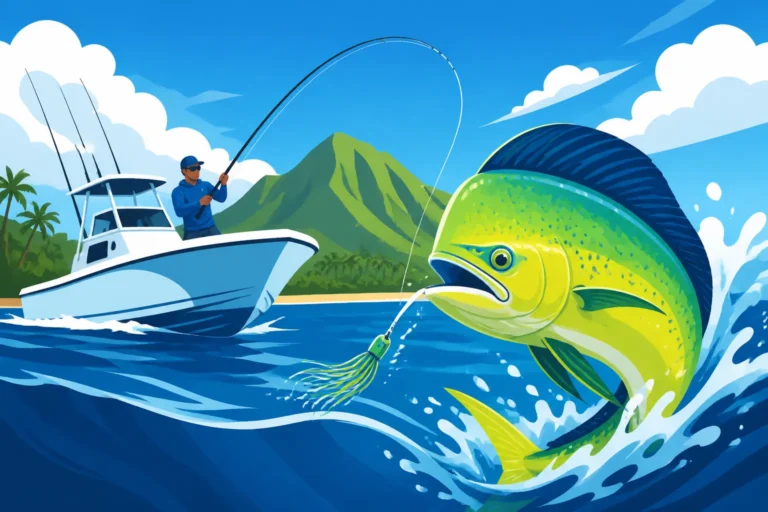
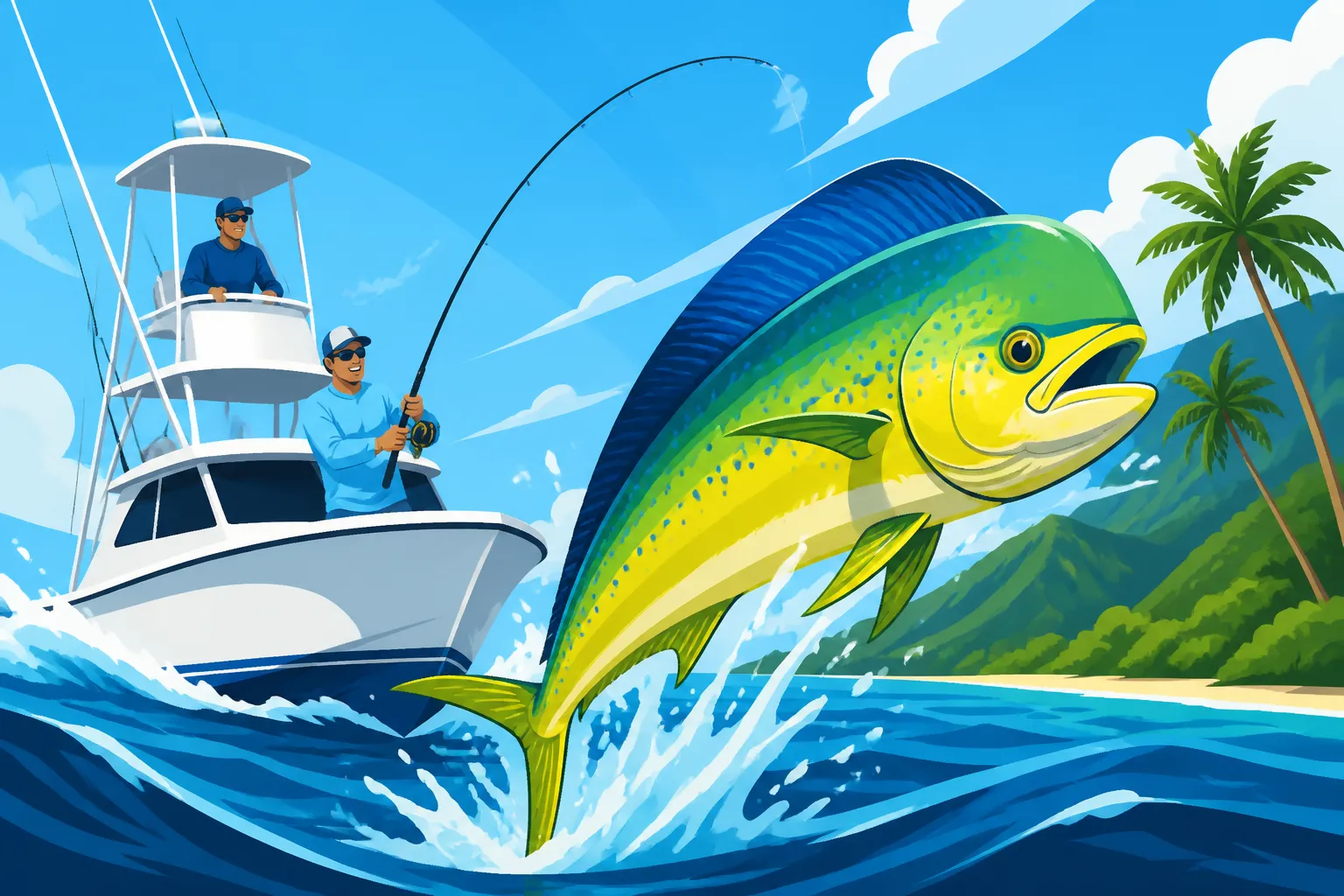
Trolling is by far the most common and effective technique for covering vast expanses of open ocean and locating mahimahi. Charters will typically deploy a spread of lures and baits from outriggers and flat lines behind the boat, covering a wide swath of water. The lures used are often brightly colored—pinks, greens, blues, and yellows—mimicking small baitfish or squid, designed to catch the eye of a cruising mahimahi. Sometimes, natural baits like ballyhoo or strip baits are incorporated into the spread, often rigged to swim erratically.
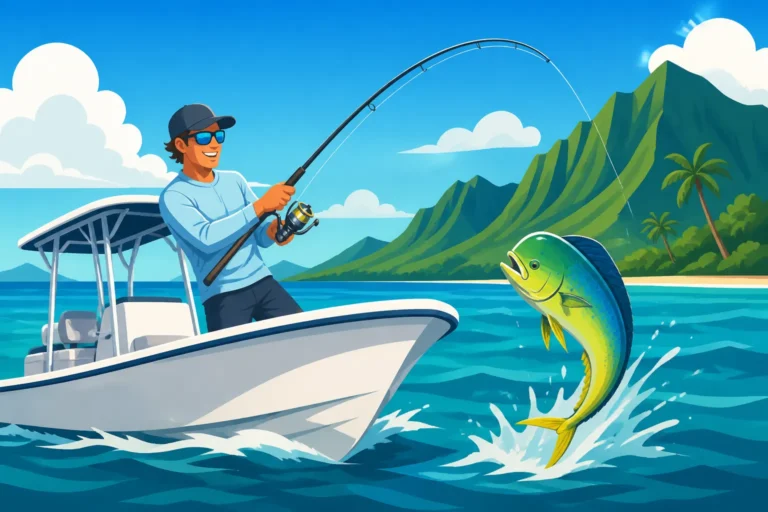
The captain will carefully control the boat's speed, typically between 6 to 9 knots, and adjust the depth of the lures to present them effectively. They'll continuously scan the water for any signs of activity—diving birds, changes in water color, or floating debris—that could indicate a mahimahi hotspot. When a mahimahi strikes, it's usually aggressive and unmistakable, often resulting in spectacular aerial acrobatics. The crew will work quickly to clear other lines and guide the angler through the fight, sometimes even keeping one fish in the water to entice the rest of the school to stay nearby for more hook-ups. Trolling Techniques for Hawaii Pelagics applies directly here.
Live Baiting and Sight Fishing
While trolling is excellent for finding mahimahi, once a school is located, live baiting and sight fishing become incredibly effective. If a charter boat comes across a FAD, a large weed line, or a floating object that is holding mahimahi, they will often switch tactics. Instead of continuously trolling, they might slow down or even drift, deploying live bait such as opelu (mackerel scad), akule (bigeye scad), or small skipjack tuna. Mahimahi are voracious predators, and a struggling live bait is often irresistible to them. This can lead to a "fire drill" of multiple hook-ups as the entire school competes for the easy meal.
Sight fishing for mahimahi is another thrilling technique. This often happens when the captain spots a school of mahimahi free-swimming under a flock of working birds, or cruising around a distinct weed line. The boat will then strategically approach, and anglers will cast live baits or artificial lures directly into the school. The visual aspect of seeing the mahimahi chase and strike your bait is incredibly exciting. Sometimes, they'll even bring a gaffed mahimahi onto the deck and keep it in a fish box with an open lid, which often keeps other mahimahi in the school circling the boat, making them easier targets for live baits or cast lures.
Jigging and Chunking for Mahimahi
Although less common than trolling or live baiting, jigging and chunking can be productive methods when mahimahi are deeper or a bit finicky. If a charter has located mahimahi on sonar, perhaps holding deeper around a FAD or a thermocline, vertical jigging can be very effective. Anglers drop heavy, flashy jigs down to the depth where the fish are holding and work them with a variety of retrieves, mimicking a wounded baitfish. The erratic action of a jig can trigger a predatory response from mahimahi that might be ignoring trolled lures.
Chunking, or "cubing," involves cutting up baitfish (like skipjack tuna or mackerel) into small pieces and tossing them into the water to create a scent trail and chum line. This technique aims to draw mahimahi closer to the boat and into a feeding frenzy. As the fish get excited by the free offerings, anglers can then present a hooked chunk of bait or a live bait that looks just like the chum. This method can be particularly effective when mahimahi are scattered or when you're trying to keep a school's attention once they've been found. While typically more associated with tuna, adaptable captains will use chunking if conditions dictate it might be the best way to get a bite from mahimahi.
What to Expect and Prepare for Your Mahimahi Charter
Preparing for your mahimahi charter is essential for ensuring a comfortable and successful day on the water. Knowing what the charter provides and what you should bring will help you focus on the fishing.
Gear and Equipment Provided
Reputable Hawaii fishing charters targeting mahimahi will provide all the necessary fishing gear and equipment. This typically includes high-quality rods and reels, often 30 to 50-pound class outfits, spooled with strong monofilament or braided line, capable of handling powerful mahimahi runs. The crew will also supply a variety of lures, natural baits, leaders, hooks, and all the terminal tackle needed for the day's fishing. They'll have gaffs for landing fish and large coolers or insulated fish boxes for storing your catch.
Beyond the fishing equipment, most charters will have essential safety gear onboard, including life jackets for all passengers, first-aid kits, communication devices, and emergency positioning beacons. Many boats also offer a shaded area, a head (restroom), and fresh water for rinsing. Some even provide light refreshments or snacks, but it's always a good idea to confirm this beforehand. Don't worry about bringing your own heavy tackle unless you have a specific, high-end setup you prefer and have cleared it with the captain. The charter's gear is usually well-maintained and perfectly suited for the local conditions and target species. What Gear a Hawaii Charter Provides can give you even more detail.
What Anglers Should Bring
Even though charters provide the essentials, there are several items you should definitely bring to enhance your comfort and enjoyment. Hawaii's sun is incredibly strong, so high-SPF sunscreen, a wide-brimmed hat, and polarized sunglasses are non-negotiable. Light, breathable clothing, preferably long-sleeved shirts and pants, will offer additional sun protection. Non-marking shoes with good grip are crucial for safety on a wet, rocking boat deck.
Seasickness can strike even experienced anglers, so if you're prone to it, consider taking preventative medication like Dramamine or Bonine the night before and again in the morning of your trip. Don't wait until you're feeling queasy. A small bag with personal snacks, drinks (non-alcoholic, unless cleared with the captain), and any personal medications is also a good idea. A camera is a must-have to capture those vibrant mahimahi colors and thrilling fight moments. Lastly, remember to bring cash for tips for the hard-working deckhand and captain – it's customary and always appreciated for good service.
Catch Handling and Regulations
Understanding how your catch will be handled and the local regulations is important. Mahimahi are prized for their delicious, flaky white meat, and most charters will clean and bag your catch for you at the end of the trip. Some captains operate on a "boat keeps all" or "boat keeps big fish" policy, especially for large marlin or ahi, but generally, for mahimahi, you'll be able to take home a good portion of what you catch. Always clarify the boat's catch policy before booking, so there are no surprises.
Hawaii has specific fishing regulations, including bag limits and sometimes size limits, for various species. For mahimahi, there isn't a minimum size limit, but there is a daily bag limit per person. Charter captains are well-versed in these rules and will ensure that all catches comply with the Hawaii Department of Land and Natural Resources (DLNR) regulations. Responsible angling also means respecting the resource. Many anglers choose to release smaller mahimahi or those they don't plan to eat, contributing to sustainable fishing practices. Your captain will guide you on the best practices for handling fish for release or retention. Hawaii Bag and Size Limits by Species is a good resource to review.
Booking Your Dream Mahimahi Charter
The final step is turning your research into a booking! Finding and securing the right charter can be a straightforward process with the right approach.
Researching and Booking Platforms
In today's digital age, finding and booking a fishing charter has never been easier. Online booking platforms have revolutionized the industry, allowing you to browse numerous charters, compare prices, read reviews, and check availability all in one place. One of the most prominent platforms for this is FishingBooker, which features a vast selection of Hawaii fishing charters with detailed profiles, photos, and verified reviews from previous customers. This makes it incredibly simple to find charters that specifically mention mahimahi as a target species and to gauge their success rate based on other anglers' experiences.
When researching, don't just look at the overall star rating. Dive into the specific comments. Did people praise the captain's ability to find fish? Was the crew helpful and friendly? Did they consistently catch mahimahi? Pay attention to how long the charter has been in business and if they have a strong local reputation. Beyond online platforms, local tackle shops and harbormasters are also excellent resources for referrals, often having first-hand knowledge of which captains are hot. Once you've narrowed down your choices, direct contact with the charter can help you fine-tune details and ask any remaining questions.
Asking the Right Questions
Before you commit to a booking, it's always a good idea to have a list of questions ready for the charter captain or booking agent. This ensures clarity and helps manage expectations. Here are some key questions to ask, particularly for a mahimahi focused trip:
- "What are the chances of catching mahimahi during my trip dates?" (A good captain will be realistic about current conditions and historical success.)
- "Do you specifically target mahimahi, or is it part of a general pelagic hunt?" (Ensuring their focus aligns with yours.)
- "What is your boat's catch policy for mahimahi?" (Clarify if you keep the fish, how much, or if it's strictly catch and release.)
- "What's included in the price, and are there any hidden fees?" (Confirm bait, tackle, fuel, and any cleaning services are covered.)
- "What happens if the weather is bad on my scheduled day?" (Understand their cancellation and rescheduling policy.)
- "What should I bring, and what do you provide?" (Reconfirm the essentials list.)
- "How experienced is your deckhand (if applicable)?" (A good deckhand is invaluable for a smooth fishing experience.)
By asking these questions, you'll gain confidence in your choice and set yourself up for an unforgettable day chasing the vibrant mahimahi in the beautiful waters of Hawaii.
| Island / Region | Primary Departure Harbors | Mahimahi Season Peaks | Typical Techniques Used | Key Advantages |
|---|---|---|---|---|
| Big Island | Honokohau Harbor (Kona) | March – October (strong) | Trolling, Live Baiting, Sight Fishing | Immediate deep water access, consistent calm leeward side, numerous FADs |
| Maui | Maalaea Harbor, Lahaina Harbor | March – September (strong) | Trolling, Live Baiting (around channels/FADs) | Proximity to productive channels, scenic views, good mix of fishing options |
| Oahu | Kewalo Basin (Honolulu), Waianae | April – November (good) | Trolling, Live Baiting (around FADs and current lines) | Most charter options, diverse fishing grounds, convenient for Honolulu visitors |
| Kauai | Nawiliwili Harbor | April – October (good) | Trolling, Live Baiting | Wild, rugged beauty, strong currents for pelagics, less crowded waters |
Disclaimer
This article is for general informational purposes only and does not constitute professional advice. Laws, prices and regulations vary by location and change over time. Consult a qualified professional for guidance on your specific situation.