Hanalei Bay Fishing Access
You drive over the one-lane Hanalei Bridge, the taro fields open up, the mountains stack waterfalls behind the town, and then you hit the real question: where exactly can you legally park, walk in, and wet a line in Hanalei Bay without trespassing or getting pounded by surf? This guide walks you through every practical access point, the seasons, the species and the etiquette.
Understanding Hanalei Bay Before You Fish It
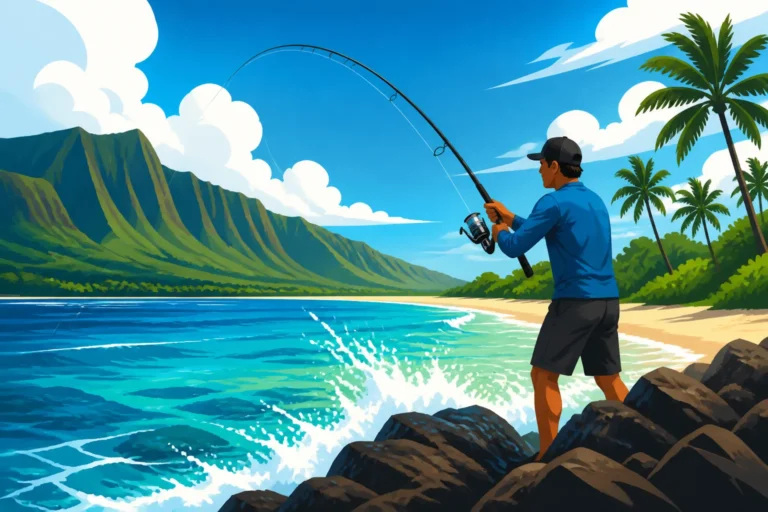
Hanalei Bay is the big crescent on Kauai’s north shore, roughly two miles from the rocky point below Princeville on the east to the reef at Waikoko on the west. It looks like one long beach from the lookout, but for an angler it is really several small fisheries sitting side by side: a river mouth, a historic pier, a sandy middle stretch, and reef edges on both ends. Each one fishes differently, and each one has its own access quirks.
If you have read our Kauai Fishing Guide, you already know the north shore behaves like a different island from the south shore in winter. Hanalei is the poster child for that split. In summer the bay is often glassy enough for paddleboards. In winter it can hold some of the largest surf on the island, and the outer reefs break hard enough that the shoreline becomes a place to watch rather than fish.
The Geography That Shapes the Fishing
The Hanalei River enters the bay at its eastern end, next to Black Pot Beach Park and the pier. That river is the engine of the whole bay. It pushes fresh, tannin-stained water into the ocean after rain, carries insects, shrimp and small fish out to the surf line, and creates a mixing zone where salinity, temperature and clarity change by the hour. Predators know it, and so do the locals who have fished it for generations.
West of the pier, the middle of the bay is mostly sand bottom with a shallow nearshore shelf that drops toward deeper water. Further west, the Waioli and Waipa stream mouths add their own smaller plumes, and the bay finally ends at Waikoko, where the reef pushes out and creates a calmer corner in moderate swells. On the far east side, below the Princeville bluffs, rocky ledges hold reef fish, but access there is steep and best left to people who know the trails.
A simple way to think about it: the east end is about river influence, the middle is about sand and surf, and the west end is about reef and shelter.
Who Uses the Bay and Why That Matters
Hanalei is not a lonely fishing outpost. It is a working community bay used by surfers, canoe paddlers, swimmers, families, boat tour operators, kayak rental companies and residents who have pole fished and net fished there their whole lives. On a summer weekend, the pier area can feel like a town square.
That shared use matters for an angler. Casting a weighted line across a swimming zone, leaving cut bait on the sand, or setting up a rod spike in the middle of a family’s beach space will get you noticed for the wrong reasons. Fishing access here is as much about reading people as it is about reading water. The best approach is to fish early, fish late, give swimmers and paddlers wide berth, and treat the river mouth and pier as shared spaces rather than personal spots.
Rules That Apply Before You Even Pick a Spot
Hanalei Bay is not a Marine Life Conservation District, so hook-and-line fishing is generally allowed from shore. But statewide rules still apply everywhere, including minimum sizes, bag limits and closed seasons on certain species. Before your trip, skim Hawaii Fishing Regulations Explained and check whether you personally need a license. Residents and visitors are treated differently in some categories, and the rules for visitors have been changing, so Do You Need a Fishing License in Hawaii is worth reading before you buy any gear.
Also keep in mind that Hawaiian monk seals and green sea turtles regularly rest on north shore beaches, Hanalei included. If one hauls out near your spot, you move, not the animal. Learn the recommended viewing distances and what to do if a turtle takes your bait before you go.
The Main Access Points Around Hanalei Bay
Here is the part most visitors are actually looking for. Hanalei has excellent public access compared with many Hawaii shorelines, but parking is limited and fills early. The following access points are listed from east to west.
| Access Point | Parking | Bottom Type | Best Conditions | Typical Targets |
|---|---|---|---|---|
| Black Pot Beach Park and river mouth | Public lot, fills fast | Sand with river channel | Calm to moderate surf, after light rain | Papio, oio, moi, halalu |
| Hanalei Pier | Shared with Black Pot | Sand and some rubble | Calm summer days, evenings | Papio, small reef fish, akule |
| Hanalei Pavilion Beach Park | Paved lot with restrooms | Sand | Small surf, dawn and dusk | Oio, moi, papio |
| Waioli Beach Park | Small lot under ironwoods | Sand, stream mouth | Light surf, incoming tide | Papio, oio |
| Waipa area | Very limited roadside | Sand to reef | Summer calm | Reef fish, papio |
| Waikoko | Roadside pullouts | Reef edge | Moderate swell shelter | Reef fish, papio, small ulua |
Black Pot Beach Park and the Hanalei River Mouth
Black Pot is the most popular fishing access in the bay and the easiest to find: follow Weke Road toward the pier and you will see the park and the river. The beach park has a parking area, restrooms and showers, and it is where many boats and kayak tours launch, so the lot can be busy from midmorning on.
The river mouth is the attraction. Papio patrol the edge where the brown river water meets clear ocean water, and oio (bonefish) cruise the sand flats along the eastern beach. On the right day, especially when a light rain upriver has pushed a little color into the bay, small lures and baits drifted along that seam can produce steady action. Whipping a small plug or spoon across the current line is a classic approach here; our guide to Best Techniques for Whipping for Papio covers the rhythm in detail.
The catch is that the river mouth also changes a lot. After heavy rain it can run hard and muddy, carrying debris and making both swimming and fishing unpleasant. Sandbars shift seasonally, so a channel that was deep last summer may be knee-deep now. Walk the edge, watch where the current bends, and fish the deeper side of whatever bar has formed.
Picture this: you arrive at first light on a July morning. The surf is flat, the river has a faint tea color from a night shower, and small baitfish are flicking along the seam. You cast a small silver spoon up-current and let it swing through the color change. Two casts later, a papio about the length of your forearm hits on the swing. That is the Black Pot experience at its best, and it is why people line up here.
Hanalei Pier
The Hanalei Pier is one of the most photographed structures on Kauai. It extends from the beach next to Black Pot, with its roofed end and historic look, and it has been a gathering place for generations. Locals jump off it, kids crab from it, and anglers drop lines from it on calm evenings.
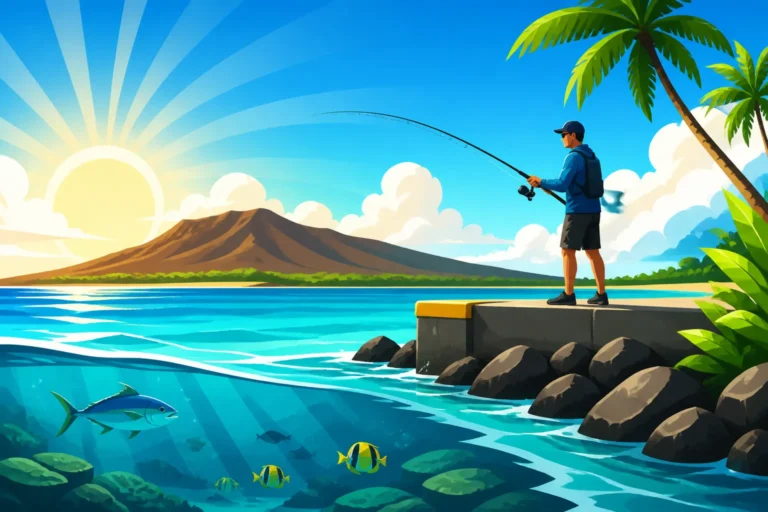
Fishing from the pier is a mixed bag. The water under it is relatively shallow and sandy, so it does not hold the kind of deep structure that you find at harbor piers on other islands. On the other hand, baitfish gather around the pilings and the shade, and on summer evenings that can draw papio and other predators in close. When akule or halalu (juvenile akule) move into the bay in late summer, the pier becomes a popular place to try for them with small hooks and light line.
The key rule at the pier is courtesy. It is a recreational structure for everyone. Do not cast in the direction of swimmers or jumpers, keep your gear compact, and never leave hooks, line or bait on the deck. If the pier is crowded, fish the beach on either side instead.
Hanalei Pavilion Beach Park
A short drive west along Weke Road, Hanalei Pavilion Beach Park sits near the middle of the bay. It has a paved lot, a pavilion, restrooms and lifeguard coverage, which makes it attractive for families who want one person fishing while others swim further down the beach.
For the angler, the middle bay is a sand game. Oio feed along the inside trough where waves have dug a little channel parallel to the beach, and moi move along the same troughs in the white water at dawn and dusk. Light tackle with small hooks and natural baits works well, and so do small jigs bounced along the bottom. Moi love this kind of churned, oxygen-rich water.
Fish this spot early or late. By midday, swimmers and boogie boarders are in the water and casting becomes a liability. In the soft light of evening, when the beach empties and the mountains turn gold, the trough fishing improves and you can spread out.
Waioli Beach Park and the Western Bay
Further west, Waioli Beach Park sits in a grove of ironwood trees with a small parking area and restrooms. The Waioli Stream enters nearby, adding another small freshwater plume. Because it is less obvious than Black Pot, Waioli is often quieter, especially on weekdays.
The bottom here is sand, but the influence of the stream and the slight curve of the beach create pockets where bait collects. Papio and oio both use these areas, and early morning on an incoming tide is a strong window. This is also a nice spot to slow down and simply watch the water for a few minutes before casting. Look for nervous water, birds working, or the flash of feeding fish just outside the shore break.
Beyond Waioli, toward Waipa and the Waikoko end, roadside parking along the Kuhio Highway becomes the main option. Pull fully off the road, never block driveways or gates, and respect the private land and agricultural areas behind the beach. If there is not a safe, legal spot to park, drive on. It is not worth a ticket or an angry neighbor.
Waikoko and the Reef Edge
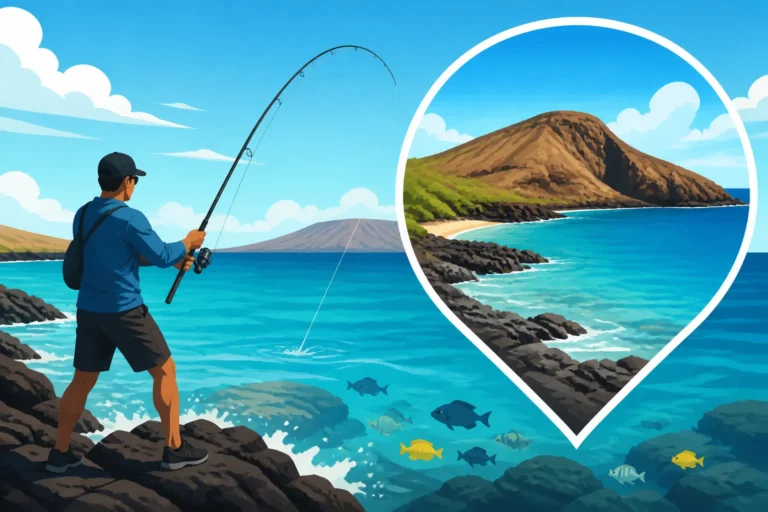
At the western end of the bay, the reef at Waikoko creates a more sheltered corner that can stay fishable when the middle of the bay is churning. The water here is clearer, with reef structure close to shore, so the fish mix changes: more reef species, papio hunting along the edge, and occasionally a small ulua pushing through.
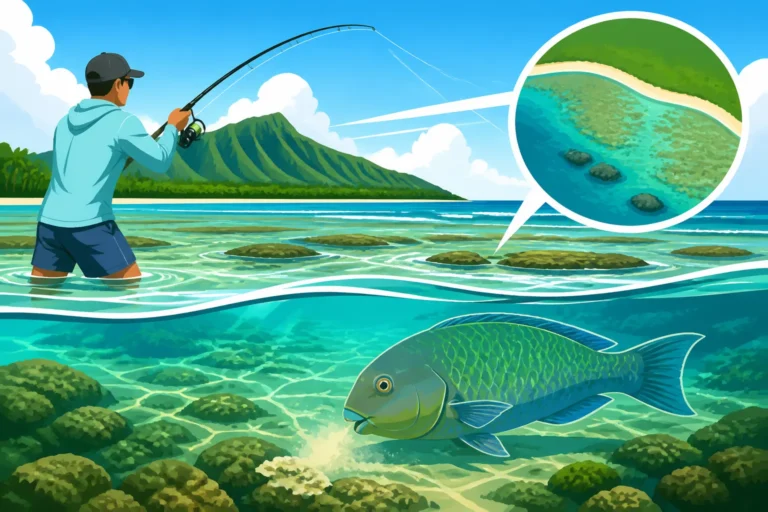
Fishing a reef edge is a different skill from fishing sand. You will lose more tackle, and you will need to manage your line around coral. Heavier leaders and lures that run above the reef rather than dragging across it help a lot. Wading here should be done carefully and only in calm conditions, because the reef is sharp, uneven and full of holes. Shuffle your feet, test each step, and turn back if the surge starts pushing you around.
Seasons, Surf and Timing at Hanalei
The single biggest factor in whether you can fish Hanalei is the north swell. Kauai’s north shore faces open ocean, and winter swells can wrap into the bay with real force. When that happens, the shoreline is dangerous and fishing becomes secondary to staying alive.
Summer Calm Versus Winter Surf
Roughly from late spring into early fall, Hanalei Bay is usually calm. This is the season when the bay is friendliest to shore anglers, kayakers and families. Papio, oio and reef fish are all accessible, and evenings can be magical.
From about October through April, the picture changes. North and northwest swells regularly hit the bay. Small and medium swells may still allow fishing at the river mouth or the sheltered western corner, but big swells can turn the entire bay into a wall of white water. Rip currents strengthen, the river mouth can pull hard, and the beach can lose a lot of sand.
| Season | Typical Surf | Shore Fishing Outlook | Best Spots | Main Risks |
|---|---|---|---|---|
| Summer | Small to flat | Excellent, especially dawn and dusk | River mouth, pier, middle bay | Crowds, boat traffic |
| Fall | Building swells | Good between swells | River mouth, Waikoko | Sudden swell arrivals |
| Winter | Large and frequent | Limited and swell dependent | Sheltered corners only | Big surf, rip currents, floods |
| Spring | Fading swells | Improving through the season | Middle bay troughs, river mouth | Runoff, lingering swell |
Check surf forecasts and buoy readings before every session in the cooler months, and look at the water yourself for at least ten minutes before getting close. Big sets often arrive after a lull, and people get caught because the first few minutes looked fine.
Rain, Floods and the River
Hanalei sits at the foot of some of the wettest mountains on Earth. Rain upriver can arrive at the bay hours after it stopped falling in town. Light rain often improves fishing by adding color and food to the river plume. Heavy rain is a different story: muddy water, logs and branches in the current, and potential bacteria in the water near the river mouth. Many local anglers simply skip a day or two after a big flood.
Also keep the road in mind. The Kuhio Highway on the north shore crosses several bridges, including the famous one-lane Hanalei Bridge, and flooding can close that road. If you are staying elsewhere on the island and planning a dawn session, check road status before you leave. After major floods in the past, access to areas beyond Hanalei was restricted for a long period, so do not assume the road west of town is always open to everyone.
Best Times of Day
At Hanalei, the dawn and dusk windows are not just good, they are practically mandatory. Early morning gives you empty beaches, cooler temperatures and active fish. Late evening brings the same benefits, plus a chance at bigger papio moving into the shallows as light fades.
Tide matters too. A rising tide pushes clean ocean water into the river mouth and over the shallow sand, and many anglers prefer the first couple hours of the incoming. The falling tide can also produce at the river mouth when baitfish get pulled out with the current. The best practice is to fish both and keep notes. After a few trips you will see your own pattern.
Species You Can Expect at Hanalei Bay
Hanalei is not a big-game shore spot in the way some rocky points on other islands are. It is a light tackle, mixed bag fishery, and that is part of its charm. Most people come away with a few papio, some reef fish or a hard-fighting oio, and a great morning.
Papio and Ulua
Papio, the juvenile form of the trevally that grow into ulua, are the most common gamefish anglers target in the bay. They hunt baitfish along the river mouth, the edges of sandbars and the reef margins. Small spoons, plugs, soft plastics and live or fresh bait all work when papio are feeding.
Larger ulua can show up, particularly near the reef at Waikoko or around the river mouth after dark, but they are not the main event here. If you are dreaming of a trophy, Hanalei is not the top spot; you will want rocky points with deep water access instead. Before keeping any, check Hawaii Papio and Ulua Size Rules so you know the minimum sizes.
Oio, Moi and Sand Species
Oio are a quiet favorite at Hanalei. They feed on crabs, shrimp and worms in the sand, and when hooked they run hard enough to surprise first-timers. Fish for them with small hooks, light leaders and natural baits on the bottom along the trough near shore. Patience matters; oio often mouth a bait gently before taking it.
Moi are also present in the white water along the beach. They are a prized eating fish and have a closed season during their summer spawning months, along with a minimum size. That means part of the summer, when Hanalei is most fishable, is also the time moi are off limits. Before targeting them, read Hawaii Moi Closed Season, Explained so you know the current dates and size.
Akule, Halalu and the Bay’s Net Fishing Tradition
Hanalei Bay has a long tradition of akule fishing. Historically, schools of akule would enter the bay, and spotters on land would signal fishermen who encircled them with nets from canoes and boats. That cultural practice is part of the identity of the place.
For the rod-and-reel angler, the more common encounter is with halalu, the young akule that appear in nearshore waters in late summer and fall. When they arrive, small hooks, light line and a little bait can produce a bucket of fish for the dinner table. Be respectful of anyone net fishing traditionally and give them space; this is their bay too.
Reef Fish and What to Leave Alone
Around the reef edges, you may encounter a variety of reef fish, including goatfish, wrasses, and others. Some are good eating, some are protected or regulated, and some are simply better released. If you are not sure what you caught, release it carefully. Our Reef Fish Species Identification Guide for Hawaii can help you learn the common ones before your trip.
Gear, Techniques and a Simple Game Plan
You do not need a heavy surf rod to fish Hanalei well. A versatile light to medium spinning setup covers most situations, and a few small lures and terminal tackle will get you through most days.
A Practical Tackle Setup
| Item | Recommended Choice | Why It Works at Hanalei |
|---|---|---|
| Rod | 7 to 9 foot medium spinning rod | Casts small lures and handles papio |
| Reel | Mid-size spinning reel | Easy to use, saltwater tolerant |
| Main line | Light to medium braid or mono | Good casting distance and feel |
| Leader | Medium fluorocarbon | Abrasion resistance near reef |
| Lures | Small spoons, plugs, soft plastics | Imitates baitfish in the river plume |
| Bait rigs | Small hooks with light sinkers | For oio, moi and halalu |
| Extras | Pliers, headlamp, reef shoes, towel | Safety and comfort |
If you are flying in and do not want to pack rods, local tackle shops on Kauai carry basic gear, and some kayak and tour outfitters in town rent equipment. Rinse everything with fresh water after each session; salt and humidity on the north shore are hard on reels.
Step-by-Step Plan for Your First Session
- Check the surf forecast and recent rainfall the night before, and decide whether the bay is fishable.
- Arrive at Black Pot or Hanalei Pavilion before sunrise to secure parking.
- Watch the water for ten minutes, noting current lines, bait activity and swimmers.
- Start at the river mouth with a small spoon or plug, casting across and letting it swing through the color change.
- If nothing happens after twenty minutes, move west along the beach and fish the inside trough with natural bait for oio or moi, respecting closed seasons.
- As swimmers arrive, pack up and move to a quieter stretch or call it a morning.
- Return in the evening for a second session, particularly on a rising tide.
- Rinse your gear and write down the conditions, tide and catch for next time.
That rhythm of short, focused sessions at dawn and dusk, plus constant movement, is how locals tend to approach the bay. It respects other users, keeps you safe in the heat of the day, and puts you on the fish when they are most active.
Kayak and Charter Options
Some anglers prefer to get off the beach. Kayaks launch from Black Pot into the river and the bay, and in calm summer conditions you can paddle along the edges of the reef or troll a small lure along the outer bay. Always check conditions, wear a life jacket, and stay clear of surf breaks.
If you want to target offshore species like mahimahi or ono, a charter is the realistic path. Most Kauai charters do not run from Hanalei itself; they generally depart from harbors on the south and east sides, such as Nawiliwili. Booking platforms like FishingBooker let you compare Kauai charter listings, read reviews and check departure points in one place. FishingBooker can be especially useful if you are on a tight vacation schedule and need to see what is available on short notice. As with any booking, check the listing and the operator’s own page for current prices, trip lengths and cancellation terms, since those vary by captain and season. For background on what a day offshore looks like, see What to Expect on a Hawaii Fishing Charter.
Etiquette, Culture and Conservation
Hanalei is a living Hawaiian community with deep roots. Fishing here is not just a recreational activity; it is tied to family history, food security and cultural practice. Visitors who understand that tend to have a better experience, and they are welcomed more warmly.
Respecting Local Fishers and Shared Space
The most important rule is simple: do not crowd anyone. If a local family has a line in at a particular spot, do not set up right next to them. If someone is throwing a net, give them space and do not cast into their area. If you are unsure, ask politely. Many people are happy to share a tip if you approach them with respect and genuine interest.
Keep your footprint light. Pack out every piece of line, bait packaging and trash. Fishing line left on the beach can entangle seabirds, turtles and monk seals. Bring a small bag and pick up any line you see, even if it is not yours. It is a small action that local fishers notice and appreciate.
Taking Only What You Need
Hanalei’s fishery depends on people taking only what they need. Even when a fish is legal to keep, consider whether you will actually eat it. Release undersized fish quickly and carefully, and avoid keeping more than you can use fresh. If you are not sure about a size or bag limit, release the fish. The Hawaii Bag and Size Limits by Species guide is a good quick reference to keep on your phone.
Remember too that some north shore waters have special rules, and stretches beyond Hanalei toward Haena are managed under a community-based subsistence fishing area with its own regulations. If you plan to fish further west, read up on those rules before you go.
Safety Is Part of Respect
Every year, visitors get into trouble in north shore waters. Rescues put lifeguards and volunteers at risk, and they often happen because someone underestimated the surf, the river current or the reef. Respecting the place means respecting its power.
Never turn your back on the ocean while fishing from the shoreline. Wear reef shoes when wading. Fish with a buddy when possible, especially at dawn or dusk. If lifeguards post warnings or close an area, follow their direction. Finally, keep a phone in a dry bag, tell someone your plans, and know where the nearest lifeguard tower is.
Frequently Asked Questions About Fishing Hanalei Bay
Do I need a license to fish Hanalei Bay from shore?
It depends on who you are and what you are doing. Hawaii’s marine licensing has traditionally been light for recreational shore anglers, but rules for visitors have been under review and change over time. Check the Division of Aquatic Resources before your trip.
Can I fish from the Hanalei Pier?
Yes, fishing is commonly done from the pier, but it is a shared recreational structure. Fish on calm days, avoid casting near swimmers and jumpers, and keep your gear tidy.
What is the best season to fish Hanalei Bay?
Summer is the most reliable season because the surf is usually small. Winter can still produce on calm days between swells, but conditions can change fast and become dangerous.
Is Hanalei Bay good for big ulua?
It can produce occasional larger fish, particularly near the reef or river mouth at night, but it is mainly a light tackle papio, oio and reef fish spot. If you want big ulua, look at rocky points with deep water access instead. The Best Shore Fishing Spots in Hawaii roundup can point you toward those.
Where should I park?
Black Pot Beach Park, Hanalei Pavilion Beach Park and Waioli Beach Park all have public parking. Lots fill early, especially in summer. Roadside parking further west is limited; pull fully off the road and never block driveways or gates.
Can I book a fishing charter from Hanalei?
Most Kauai fishing charters depart from other harbors on the island. Booking platforms like FishingBooker can show you what is available, but always confirm the departure point and details with the operator.
Hanalei Bay rewards anglers who show up early, read the water honestly and treat the place like someone else’s home, because it is. Do that, and even a slow morning there will be one of the best you spend on Kauai.
Disclaimer
This article is for general informational purposes only and does not constitute professional advice. Laws, prices and regulations vary by location and change over time. Consult a qualified professional for guidance on your specific situation.