Best free fishing access near Honolulu
It can feel incredibly daunting to arrive in a beautiful place like Honolulu, eager to cast a line, only to be hit with the overwhelming question: where can I actually fish for free without accidentally trespassing or breaking some obscure rule? The good news is, despite the bustling city and resort-lined shores, there are indeed fantastic, publicly accessible spots where you can enjoy Hawaii fishing without shelling out for a charter boat. This guide is all about helping you uncover those hidden gems and navigate the nuances of free fishing access right here on Oahu.
Navigating Public Access for Shoreline Fishing in Honolulu
One of the biggest hurdles for any angler, local or visitor, is figuring out where the "public" really means public and where you can actually put a line in the water without causing a fuss. Hawaii has a unique history with land and ocean access, and while the general rule is that shorelines below the high wash of the waves are public, getting to those shorelines can sometimes feel like a puzzle.
Identifying Truly Free and Accessible Spots
When we talk about "free fishing access," we're really focusing on spots that don't require any payment, permits beyond your standard fishing license (if needed, which for ocean fishing in Hawaii, residents are generally exempt, but non-residents need one for freshwater, and soon marine), or special permissions to enter. These are typically public parks, designated beach access points, or well-known stretches of coastline where locals have fished for generations. The key is to look for official beach access signs, public parking, and areas that aren't clearly marked as private property or restricted conservation zones. For example, popular beaches like Ala Moana Beach Park are clearly public and welcome anglers. However, walking through someone's private yard to get to the beach is a definite no-no, even if the shoreline itself is public. Always respect private property boundaries, no matter how tempting that stretch of reef looks.
Common Misconceptions About Public Land and Fishing
It's easy to get confused, especially with Hawaii's unique landscape. One common misconception is that if you can see the ocean, you can fish there. This isn't always true. For instance, while much of the shoreline is public, certain areas, like the highly protected Hanauma Bay, are designated as Marine Life Conservation Districts (MLCDs) where fishing is strictly prohibited. Understanding these nuances is crucial for a stress-free fishing experience. Many visitors also assume they need a license for ocean fishing, but for recreational marine fishing, Hawaii residents have historically been exempt. However, new regulations are always evolving, so it's wise to check the latest details on a Hawaii Fishing License Guide for 2026 or Do You Need a Fishing License in Hawaii to be absolutely sure. Always look for signage, and if in doubt, check the Hawaii Department of Land and Natural Resources (DLNR) Division of Aquatic Resources (DAR) website.
Popular Shoreline Fishing Locations Around Honolulu
Now for the good stuff! Honolulu and its surrounding areas boast some fantastic shoreline spots that are freely accessible and offer diverse fishing opportunities. From sandy beaches to rugged lava rock, there's a place for almost every type of shore angler.
Diamond Head to Kahala Stretch
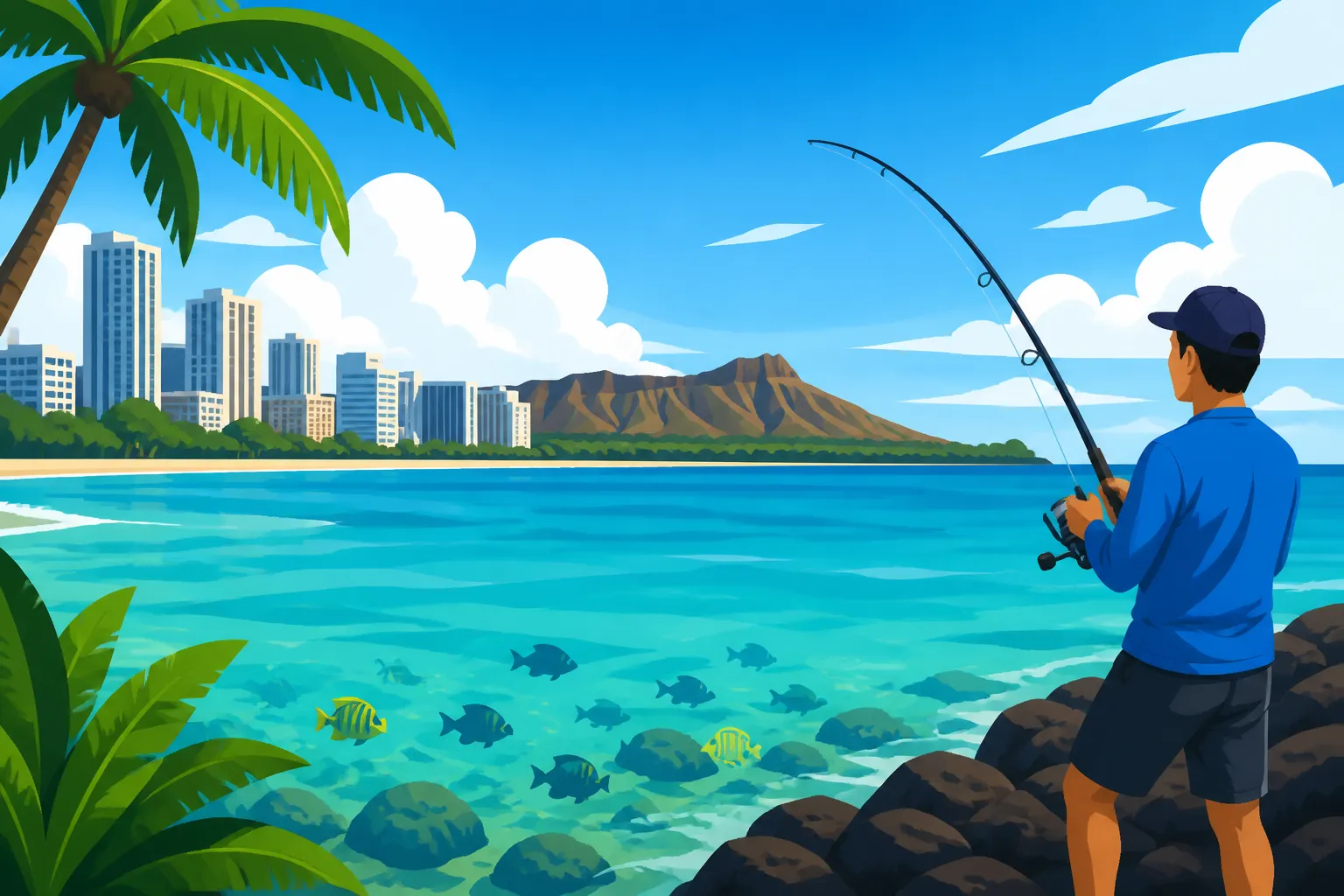
This stretch of coastline offers a mix of sandy beaches and rocky outcroppings, providing varied habitats for fish. Near Diamond Head, especially around Diamond Head Beach Park, you'll find rocky ledges and pockets that are perfect for whipping or slide baiting for species like papio (juvenile trevally) and ulua (giant trevally). Parking is often available in public lots or along the street in designated areas, but arrive early as these spots fill up quickly, especially on weekends. The rocky bottom here means you might lose a few rigs, so bring extra tackle! It's a fantastic place to practice Shore Fishing Techniques for Hawaii where you can cast into deeper channels or target fish hiding in the reef. Just remember to wear appropriate footwear for navigating the uneven terrain.
Further east towards Kahala, you'll find more protected, sandy beaches interspersed with coral rubble. These areas are excellent for lighter tackle, targeting smaller reef fish, or even trying your hand at throw netting for bait if regulations allow and you have the proper gear. The water here can be clearer and shallower, making it ideal for spotting cruising fish, but also requires a more stealthy approach. This area is less about big game and more about consistent action with smaller, yet still exciting, catches.
Ala Moana Beach Park and Kewalo Basin Area
If you're looking for incredibly easy access right in the heart of Honolulu, Ala Moana Beach Park is your go-to. This sprawling park features a long, calm sandy beach and the famous Magic Island peninsula. Magic Island, with its protective rock walls, offers both calm, shallow waters on one side and more exposed surf on the other. It's a fantastic spot for families and beginners. You can cast into the open ocean for papio, barracuda, or even small ulua, especially during dawn or dusk. The calmer side within the basin is great for catching baitfish or small reef dwellers. The park has ample, free parking, restrooms, and picnic areas, making it a comfortable place to spend the day.
Adjacent to Ala Moana is Kewalo Basin, which is primarily a commercial harbor for fishing charters, dive boats, and recreational vessels. However, certain sections, particularly along the rock walls and pier areas, are accessible for public shore fishing. While it might seem busy, many locals have their favorite spots here. You might find yourself casting alongside experienced anglers targeting a variety of species, from papio to goatfish and even small sharks. It's an excellent place to get into the action without venturing too far from the city. Just be mindful of boat traffic and respect any posted signs regarding restricted areas. For those interested in going beyond shore fishing, Kewalo Basin is also a major hub where you can find many reputable charters, which you can often browse and book conveniently through sites like FishingBooker if you ever decide to try offshore fishing.
Sandy Beach and Makapuʻu Point
Venturing to the eastern tip of Oahu, Sandy Beach and Makapuʻu Point offer a more rugged, exposed fishing experience. Sandy Beach, known for its powerful shore break, is a popular spot for experienced throw netters and surf casters. The strong currents and waves here often bring in larger predatory fish closer to shore. It's not uncommon to hear tales of ulua and even sizable papio being pulled from these waters. However, due to the dangerous shore break, extreme caution is advised, and it's best for those familiar with strong ocean conditions. It's definitely a spot where you need to be aware of the Hawaii Fishing Regulations Explained regarding safety and access.
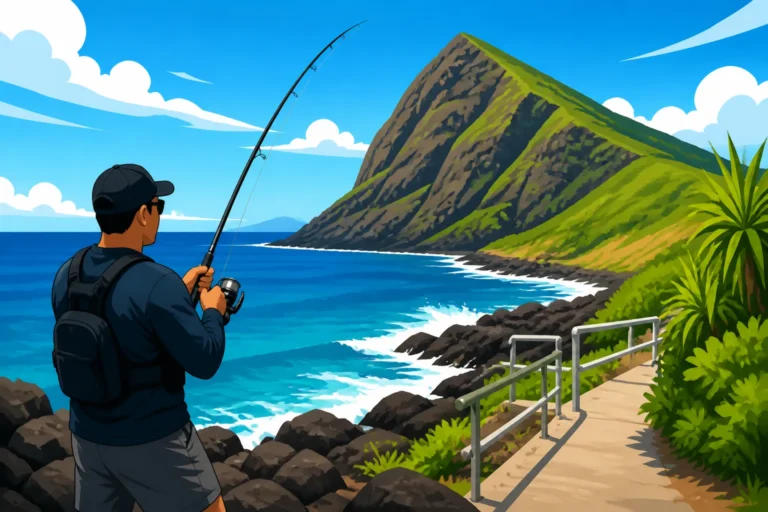
Just a bit further around the bend, Makapuʻu Point provides dramatic cliffside views and access to rocky coves below the lighthouse. This area is renowned for its deep water access close to shore, making it a prime location for casting heavy lures or bait for ulua and other pelagic species that occasionally venture close to the rocks. The hike down to some of the better spots can be challenging, so come prepared with sturdy shoes, plenty of water, and a backpack for your gear. The rewards, however, can be substantial for the adventurous angler.
Piers and Harbors: Urban Fishing Opportunities
Sometimes, the simplest access is the best. Piers and harbor walls offer convenient, often flat and stable, platforms for fishing, providing access to deeper water without the need for specialized shore-casting gear or navigating rough terrain.
Kewalo Basin: A Hub for Anglers
We touched on Kewalo Basin earlier, and it truly is a cornerstone of Honolulu's fishing scene, even for the shore-based angler. While many boats depart from here for deep sea adventures, the outer walls and designated public access areas within the basin are fantastic for land-based fishing. You'll see locals with their elaborate rod holders and buckets of bait, testament to the productivity of these spots. It’s a great place to catch papio, small jacks, barracuda, and even the occasional moi, especially during certain tides. The convenience of parking, restrooms nearby, and often a lively atmosphere makes it a great option. Remember, this is an active harbor, so always be aware of your surroundings and any moving vessels. If you're new to fishing in Hawaii, it's also a great spot to observe how local anglers set up their rigs and what baits they use. And for those times you want to try fishing from one of those big boats, looking up reputable charters on a platform like FishingBooker can set you up with an unforgettable offshore trip.
Ala Wai Harbor: Unexpected Access Points
The Ala Wai Small Boat Harbor, nestled right next to Waikiki, is primarily a mooring area for recreational boats and a gateway for some smaller fishing operations. While it might not immediately scream "free fishing spot," there are indeed areas along the harbor walls and designated public walkways where you can cast a line. The fishing here is typically for smaller, urban-dwelling species like various types of papio, goatfish, and sometimes even a predatory lizardfish or barracuda. It’s often a more relaxed atmosphere than the open ocean, making it suitable for beginners or those just looking to unwind with a rod in hand. Parking can be a bit trickier here, often requiring paid meters, but the trade-off is its proximity to Waikiki and ease of access to water. Always check for signs indicating public fishing areas, as some sections might be private or restricted for safety reasons due to boat maintenance or fueling. It might not be the place to catch a record Hawaii state record ulua weight, but it’s certainly a peaceful alternative.
Essential Rules and Respect for Public Access Fishing
Enjoying Hawaii's free fishing access comes with a responsibility to understand and respect the rules, both written and unwritten. This ensures these beautiful resources remain available and healthy for everyone.
Understanding DLNR Regulations for Shore Anglers
The Hawaii Division of Aquatic Resources (DAR), under the DLNR, sets the rules for fishing throughout the islands. Even when fishing from shore in publicly accessible areas, you are still subject to these regulations. This includes understanding Hawaii Bag and Size Limits by Species for what you catch, closed seasons for certain fish like moi, and restrictions on gear. For example, some areas might have limits on the number of hooks or the type of bait you can use. Before you head out, especially if you plan to keep your catch for dinner, it’s always a good idea to review the most current regulations. You can usually find a comprehensive PDF of the rules on the DLNR website. Ignorance of the law is no excuse, and penalties for fishing without a required license in Hawaii or violating bag limits can be quite steep.
It's particularly important to be aware of Hawaii Marine Life Conservation Districts, Explained. These protected areas prohibit or severely restrict fishing and other marine activities to preserve fragile ecosystems. While there aren't many directly within Honolulu's immediate free fishing zones, understanding their boundaries is crucial as you explore different areas. For instance, the waters around Waikiki are not an MLCD, but if you venture too far east, you could inadvertently enter one.
Practicing Aloha Aina: Respecting the Land and Ocean
"Aloha ʻĀina" means love of the land, and it's a principle deeply embedded in Hawaiian culture. When you're out fishing in public areas, practicing Aloha ʻĀina means leaving no trace, respecting the natural environment, and being mindful of other users. This includes properly disposing of all your trash, including fishing line, bait containers, and any other litter. Monofilament line, in particular, can be deadly to marine life if left behind.
It also means respecting local customs and traditions. If you see someone fishing in a particular way, or if an area seems to be a local favorite, be mindful and give space. Don't crowd other anglers. Always ask permission if you're unsure about an area, or if you're considering setting up near someone who was there first. The ocean is a shared resource, and courtesy goes a long way. For example, if you're fishing for something like Hawaii moi closed season dates, ensure you're aware of the specific regulations to avoid accidental violations. Sometimes, you'll find that talking to locals can give you insights into specific areas or techniques that no guide book can.
Top Free Fishing Access Spots Near Honolulu
To help you get started, here's a quick overview of some excellent free fishing spots and what you might find there:
| Fishing Spot | Access Type | Target Species (Common) | Key Considerations |
|---|---|---|---|
| Ala Moana Beach Park | Sandy beach, rock wall | Papio, Goatfish, Barracuda | Easy parking, family-friendly, restrooms |
| Magic Island | Rock wall, calm/surf | Papio, Ulua, small reef fish | Part of Ala Moana Park, popular, great views |
| Kewalo Basin (Public Areas) | Pier, harbor walls | Papio, Barracuda, Goatfish, Ulua | Active harbor, watch for boats, good for observation |
| Diamond Head Beach Park | Rocky shoreline | Ulua, Papio, Moana, Weke | Uneven terrain, bring sturdy shoes, can be windy |
| Sandy Beach | Open beach, heavy surf | Ulua, Papio, large Jacks | Dangerous shore break, for experienced anglers only |
| Makapuʻu Point | Rocky shoreline, cliffs | Ulua, Papio, offshore species | Challenging hike, deep water access, scenic |
| Ala Wai Harbor (Designated sections) | Harbor walls | Papio, Goatfish, small Barracuda | Paid parking likely, urban setting, quiet |
Remember, while these spots offer free access, the experience and potential catch can vary greatly depending on time of day, tide, weather conditions, and pure angler luck. Don't get discouraged if the fish aren't biting right away; that's just part of the adventure! Whether you're targeting How to Catch Ulua from Shore or just enjoying the calm of the ocean, Hawaii's shoreline offers a truly unique fishing experience.
Disclaimer
Please note: Fishing regulations, access points, and conditions in Hawaii can change. Always consult the official Hawaii Department of Land and Natural Resources (DLNR) Division of Aquatic Resources (DAR) website or local authorities for the most current information before heading out. This guide is for informational purposes only and does not constitute legal advice.