Best Techniques for Chumming for Ahi
There's nothing quite like the thrill of targeting Ahi, those magnificent yellowfin tuna, in the deep blue waters off Hawaii. But let's be honest, these powerful fish can be incredibly elusive. One day they're busting on the surface, the next they're nowhere to be found, leaving you scratching your head and wondering how to get their attention. This comprehensive guide is dedicated to one of the most effective, albeit often misunderstood, methods for drawing in these prized pelagics: chumming. We'll explore everything from choosing the right chum to understanding Ahi behavior and integrating your baits into a deadly slick, giving you the knowledge to significantly increase your chances of hooking up.
Understanding Ahi Behavior and Why Chumming Works
Before you even think about tossing chum over the side, it's crucial to understand the fish you're targeting. Ahi (Yellowfin Tuna) are powerful, fast-swimming predators, but they're also highly opportunistic feeders. Chumming taps directly into their instinctual drive for an easy meal, turning the vast ocean into a dinner bell just for them.
Ahi Foraging Habits and Preferred Prey
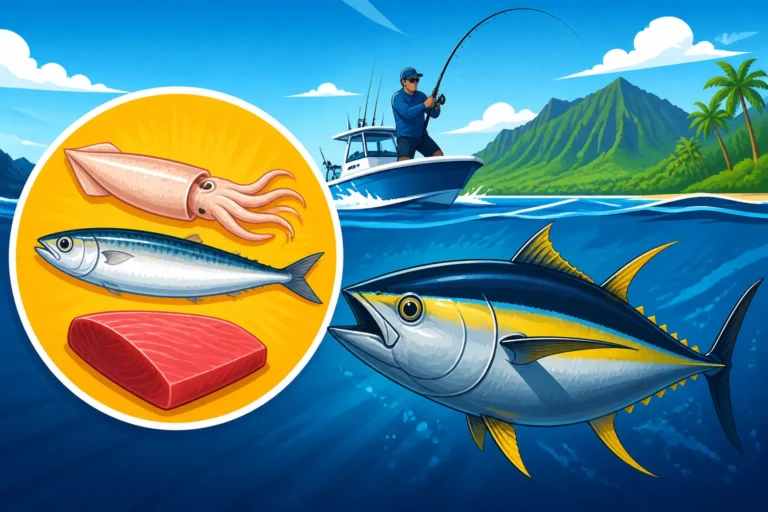
Ahi are true apex predators of the open ocean. They primarily feed on smaller schooling baitfish like mackerel, squid, and even smaller tuna species. Their diet can also include crustaceans and other invertebrates, depending on availability. They're constantly on the move, chasing bait schools across vast expanses. When they find a concentration of food, they feed aggressively, often in large schools themselves, creating those exciting surface boils that anglers dream of. However, these feeding frenzies are often short-lived and can move quickly.
What makes Ahi particularly susceptible to chumming is their keen sense of smell and their tendency to investigate any perceived food source. When a school of Ahi is in the vicinity, a properly deployed chum slick can act like a scent trail, leading them directly to your boat. They're not just looking for a single meal; they're looking for a sustained feeding opportunity, and a continuous chum line signals just that. Even if they're not actively busting on the surface, the scent of fresh bait in the water can pique their curiosity and draw them up from deeper columns, making them much more accessible to your lines.
How Chumming Mimics Natural Food Sources
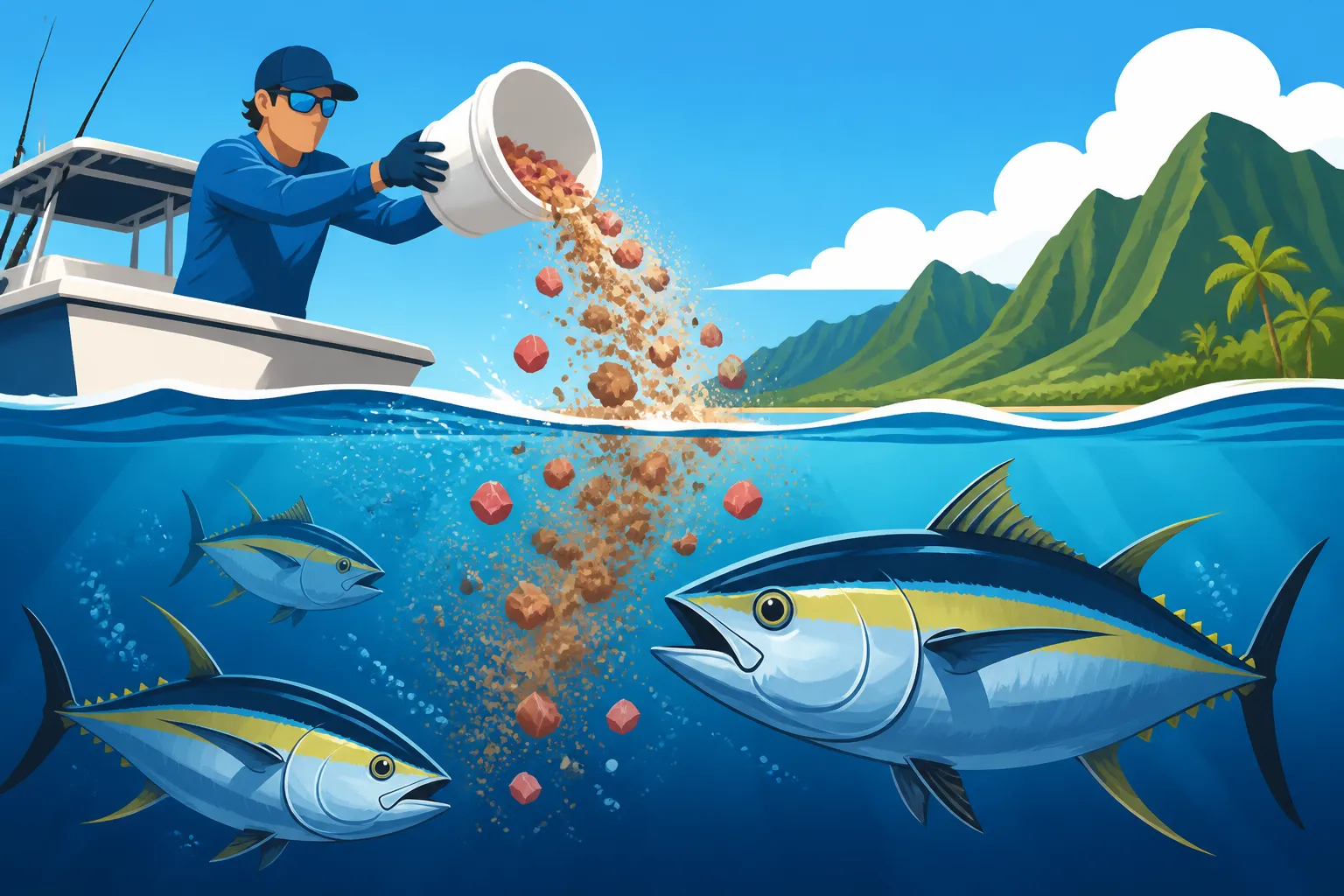
Chumming, at its core, is about creating an artificial feeding frenzy, mimicking what Ahi naturally encounter in the wild. Imagine a school of baitfish suddenly becoming disoriented or injured – their scent, scales, and small pieces of flesh disperse in the water, signaling an easy meal for predators. That's exactly what a good chum slick does.
By gradually dispersing small, palatable pieces of bait, often oily fish like mackerel, sardines, or opelu, you're sending out a powerful message. The scent trail travels with the current, drawing fish from downcurrent directly to your location. The visual component is also key; the flashing scales and fluttering bits of chum look like an injured bait school, triggering a predatory response. This sustained, low-effort food source can hold a school of Ahi around your boat, sometimes for hours, allowing you multiple opportunities to present your baited hooks. It's not about feeding them until they're full, but rather creating an irresistible "bread crumb trail" that leads them straight to your main course. When done right, chumming can turn a slow day into an epic battle with multiple Ahi. If you want to learn more about the species itself, check out our guide on Ahi Yellowfin Tuna Fishing in Hawaii.
Essential Gear and Supplies for Ahi Chumming
Effective chumming for Ahi isn't just about throwing fish over the side; it requires specific gear and a thoughtful approach to chum selection and deployment. Having the right tools for the job can make a world of difference in attracting and holding these pelagic powerhouses.
Chum Selection and Preparation
The success of your chumming operation starts with the chum itself. Quality and type matter immensely. Generally, oily fish work best because their scent disperses widely in the water, creating a strong trail. Mackerel, sardines, anchovies, opelu (mackerel scad), and aku (skipjack tuna) are all excellent choices for Ahi chum.
- Frozen Block Chum: This is the most common and convenient form. You can buy pre-made frozen blocks from tackle shops or often find whole frozen baitfish like mackerel or sardines at Asian markets or specialty seafood stores. If using whole fish, you'll want to chop them into smaller, manageable pieces before freezing them into blocks. The goal is to have varying sizes, from fine particles to small chunks, to create a diverse and enticing slick. Many anglers swear by a mixture of finely ground chum and larger chunks, ensuring both immediate scent dispersion and more substantial morsels for visual appeal. For the adventurous, making your own chum can be very rewarding. Just be sure to grind it well and consider adding a bit of fish oil or even some rock salt to enhance the scent and preservation. When stocking up, many anglers rely on bulk purchases available through retailers or even directly from fishing suppliers. You can often find a good selection of ready-made chum bags or the raw materials to make your own on platforms like Amazon.
- Live Bait Chum: While more labor-intensive, live bait chum is often the most effective. Small live opelu, akule, or sardines tossed overboard one or two at a time can drive Ahi into a frenzy. The erratic movements of live bait create an undeniable visual and vibrational signal that simply can't be replicated by dead chum. This method is particularly deadly when Ahi are finicky or require extra convincing. However, catching and keeping live bait requires its own set of skills and equipment, including a good livewell.
- Preparation: If using frozen blocks, store them in a dedicated cooler to keep them as frozen as possible until deployment. A partially thawed block will disintegrate too quickly. For chopped chum, consider mixing it with a bit of seawater to create a slurry that can be ladled out.
Specialized Chumming Equipment
To effectively deploy your chum and manage the slick, you'll need a few key pieces of equipment.
- Chum Bag/Dispenser: A sturdy mesh chum bag is indispensable for frozen block chum. It allows the chum to slowly dissolve and disperse, creating a consistent slick without dumping too much at once. These bags can be hung off the transom or from a designated pole. For a more controlled release, some anglers use specialized chum dispensers that can be submerged to specific depths. If you're using ground chum, a chum pot or a sturdy scoop is essential for broadcasting it.
- Chum Grinder: If you plan on making your own chum from whole fish, a heavy-duty chum grinder or meat grinder is a must-have. Look for one designed for saltwater use, as fish bones and tough scales can quickly damage standard kitchen grinders. A manual grinder can work for smaller batches, but an electric one will save you a lot of effort for consistent chumming.
- Chum Bat/Pole: For frozen blocks in a mesh bag, a "chum bat" – essentially a small club or heavy stick – is useful for breaking off pieces from the block and encouraging dispersion. For finely ground chum, a long-handled scoop or ladle allows you to distribute it evenly and maintain the slick.
- Buckets and Coolers: Have dedicated buckets for mixing and holding ground chum, and coolers for storing frozen chum and keeping live bait healthy. Organization is key on the boat, especially when things get hectic during a bite.
Appropriate Rods, Reels, and Terminal Tackle for Chumming
While chumming gets the Ahi to the boat, it's your fishing tackle that seals the deal. You need a setup that can handle powerful runs and still be subtle enough to present your bait naturally within the chum slick.
- Rods: Look for medium-heavy to heavy conventional rods, typically 6-7 feet in length. The rod should have enough backbone to put pressure on a large Ahi but also a sensitive tip to detect subtle bites. Fast-action rods are often preferred for quick hook sets. For a detailed look at all types of setups, you might want to review How to Catch Ahi in Hawaii.
- Reels: High-quality conventional reels with excellent drag systems are non-negotiable for Ahi. Lever drags are popular for their ease of adjustment during a fight. Reels should have a high line capacity, capable of holding at least 300-400 yards of 50-80 lb monofilament or braided line. Brands like Penn, Shimano, and Daiwa offer excellent options. A good quality reel is an investment, but it's one that will pay off when you're battling a stubborn Ahi.
- Line: Many anglers prefer braided line as their main line due to its strength-to-diameter ratio and lack of stretch, which enhances sensitivity. However, a fluorocarbon leader is crucial for its invisibility and abrasion resistance. A 60-100 lb fluorocarbon leader, typically 6-10 feet long, is a good starting point. The length of the leader can be adjusted based on water clarity and the shyness of the fish.
- Hooks: Circle hooks are highly recommended for chumming. They are designed to hook fish in the corner of the mouth, reducing gut-hooking and making for easier releases if you're not keeping the fish. Sizes can range from 7/0 to 12/0, depending on the size of your bait and the target Ahi. Ensure they are strong, sharp, and corrosion-resistant.
- Swivels and Weights: Use high-quality barrel or ball-bearing swivels to prevent line twist. Split shots or small egg sinkers might be needed to get your bait down into the chum slick, but the goal is to use as little weight as possible to achieve a natural drift. The more natural your bait looks and acts, the more likely an Ahi will strike.
Effective Chumming Strategies for Different Scenarios
Chumming isn't a one-size-fits-all technique. The way you deploy your chum needs to adapt to your fishing environment, the currents, and the behavior of the Ahi. Mastering these different strategies will make you a more versatile and successful angler.
Drifting and Slow Trolling Chum Lines
This is arguably the most common and effective method for chumming Ahi in open water. The idea is to create a long, continuous scent trail that leads Ahi directly to your boat as you slowly drift or troll.
- Understanding the Drift: Before you even start chumming, take some time to understand the current and wind direction. Your goal is to position your boat so that your chum slick flows away from you, creating a path for the Ahi to follow. If the wind is pushing your boat faster than the current, your chum line might curve or even come back towards you, which is counterproductive. Using a sea anchor or drift sock can help slow your drift and keep your boat oriented correctly, allowing your chum line to stretch out efficiently.
- Continuous Dispersion: The key to a successful drift-chumming operation is a continuous, steady flow of chum. Don't dump a large amount all at once, as this can satiate the fish or draw them too far from your boat. Instead, aim for a consistent dribble of scent and small particles. If using a frozen block in a mesh bag, hang it off the stern, just barely in the water, allowing the dissolving chum to create a milky trail. For ground chum, use a scoop or ladle to toss small amounts overboard every 30-60 seconds, creating a steady stream.
- Bait Presentation: As your chum slick develops, you'll want to deploy several lines with baited hooks, allowing them to drift naturally within the slick. Try different depths, with some baits just below the surface, others a bit deeper. The idea is for your baited hooks to look like just another piece of chum, drifting with the flow. Use minimal weight, or even no weight at all, to achieve this natural presentation. If the Ahi are finicky, light tackle and a very subtle presentation can be key. Many anglers consider this approach a form of Drift Fishing for Ahi in Hawaii.
- Boat Control: If you're slow trolling, use your engines sparingly to maintain a very slow forward motion (often less than 1 knot) that keeps the chum line extending behind the boat. This can be particularly effective when trying to cover more ground and find active schools. The sound of the engines, when consistent and low, can sometimes even attract curious Ahi.
Anchored Chumming for Stationary Schools
While Ahi are known for being nomadic, there are times when they might congregate in a more stationary manner, such as around FADs (Fish Aggregating Devices), submerged seamounts, or specific areas where baitfish are holding. In these situations, anchored chumming can be incredibly effective.
- Strategic Anchoring: The most critical step here is positioning your boat correctly. You need to anchor upcurrent from the desired fishing zone, allowing your chum slick to flow directly over the area where you expect Ahi to be holding. Consider the strength and direction of the current, as well as the depth. Dropping anchor near a known structure like a deep reef or a FAD can be highly productive. Take your time setting the anchor to ensure you're in the optimal position for your chum to work its magic.
- Concentrated Slick: Unlike drifting, where you're spreading the chum over a wide area, anchored chumming aims to create a more concentrated feeding zone around your boat. You'll still want a continuous stream, but you might increase the frequency of your chum tosses or use a larger chum bag to put more scent in the water. The goal is to hold the Ahi's attention and keep them within casting range.
- Varying Depths: When anchored, Ahi might come up to the surface, but they could also be holding deeper. Deploy lines at various depths, including some on the surface, some mid-water, and others closer to the bottom, especially if you're fishing over structure. Using light weights, or even a slow-sinking bait without weight, can allow your presentation to look natural as it descends through the chum column. This approach is excellent for targeting deeper-holding fish that might not respond to surface commotion.
- Patience and Persistence: Anchored chumming often requires a bit more patience. It can take time for the chum slick to establish itself and for the Ahi to find it. But once they do, the action can be phenomenal. Stay vigilant for any signs of fish, such as boils, nervous bait, or even birds working the area.
Deep-Water Chumming Techniques
Sometimes, Ahi are holding in deeper water, well below the surface slick. This often happens during the middle of the day or when water temperatures are warmer on the surface. To reach these deeper fish, you need specialized deep-water chumming techniques.
- Weighted Chum Dispensers: The most effective way to get chum down deep is by using a weighted chum dispenser. These are often cylindrical cages or tubes that can be filled with ground or chopped chum and then lowered to a desired depth using a separate line and heavy sinker. Once at depth, a release mechanism (sometimes a pull-cord) can open the dispenser, releasing a cloud of chum directly into the deep. This allows you to create a localized scent plume where the Ahi are holding.
- Chum Bombs: Another technique involves creating "chum bombs" – frozen blocks of chum with a heavy weight (like a rock or a concrete block) embedded in them. These are then dropped overboard and allowed to sink. As the chum block thaws, it releases a trail of scent and particles as it descends, attracting fish from the entire water column. Once it hits the bottom, it continues to disperse, creating a deep-water feeding zone.
- Bottomfishing Crossover: Deep-water chumming can sometimes overlap with Bottomfishing in Hawaii, as you might be targeting Ahi that are feeding on deeper bait concentrations. In these scenarios, having a mix of heavy bottom fishing gear and lighter Ahi tackle can be beneficial. You might even find yourself hooking other prized deepwater species like opakapaka or onaga while waiting for the Ahi.
- Sonar and Depth Finders: For deep-water chumming, a good quality sonar or fish finder is your best friend. Use it to locate bait schools, thermoclines, and any signs of Ahi holding at specific depths. This intelligence allows you to deploy your deep chum exactly where it will be most effective, increasing your chances of success significantly.
| Chum Type | Best Use Case | Pros | Cons |
|---|---|---|---|
| Frozen Block | General chumming, slow troll, drift | Convenient, consistent release, widely available | Can be expensive, requires cooling, slow dispersion sometimes |
| Ground Chum | Anchored chumming, quick scent dispersal | Fast scent release, can mix custom blends, versatile | Can be messy, requires frequent tossing, might satiate fish quickly |
| Live Bait | Finicky Ahi, strong visual appeal, high effectiveness | Most natural, triggers aggressive strikes, highly potent | Difficult to acquire/keep, more expensive, labor-intensive |
| Chum Bombs | Deep-water chumming, attracting fish from depth | Effective for deep-holding fish, covers water column | Requires preparation, can be cumbersome, not for surface fish |
Integrating Your Baits into the Chum Slick
Getting the Ahi to the boat is one thing; getting them to bite your hook is another. The art of integrating your baits into the chum slick is paramount. Your baited hook must appear as natural and irresistible as the free offerings, tricking the Ahi into taking your "meal."
Matching Bait Presentation to Chum
The golden rule for chumming is to make your baited hook look identical to the freebies you're tossing over the side. Ahi are smart, and they'll quickly learn to distinguish between the natural, freely drifting chum and a line with a hook if you're not careful.
- Size and Type: Use the same type and size of bait on your hook as you are using for chum. If you're chunking small pieces of mackerel, your hook bait should be a small, cleanly cut piece of mackerel. If you're using live opelu as chum, your hook bait should also be a lively opelu of similar size.
- Subtle Hook Concealment: Your hook needs to be as invisible as possible. Rig your bait to completely conceal the hook point and shank. For chunk baits, pass the hook through once or twice, ensuring it's buried. For live baits, bridle rigging or nose hooking can keep the hook out of sight while maintaining the bait's natural action. Using fluorocarbon leader is also critical here, as its low visibility in water makes it much harder for discerning Ahi to spot your line.
- Weightless Drift: This is probably the most crucial aspect. Your baited hook must drift at the exact same speed and depth as the free chum. This often means fishing with little to no weight, allowing your bait to free-spool naturally down the chum line. If your bait sinks too fast or too slow, or if it's being pulled unnaturally by a heavy leader, the Ahi will ignore it. Practice this technique by watching your bait as it drifts alongside the chum pieces; they should move in perfect harmony.
Live Baiting within the Chum Zone
Live bait, especially small, energetic baitfish like opelu (mackerel scad), akule (bigeye scad), or even small kawakawa (bonito), is incredibly effective when chumming for Ahi. The frantic movements and natural scent of live bait are often too much for a hungry Ahi to resist.
- Fresh and Lively: The success of live baiting hinges on the quality of your bait. Ensure your livewell is well-aerated and your baitfish are healthy and active. A sluggish live bait is far less enticing to an Ahi.
- Deployment: When you see Ahi appearing in your chum slick, or when you notice a surge of activity, gently deploy a live bait into the water. Let it swim freely, allowing it to become a natural part of the chum line. The natural struggles and vibrations of a live bait will often trigger an immediate predatory strike, even from Ahi that were previously wary of dead bait.
- Light Tackle for Natural Presentation: For live bait, lighter tackle can sometimes be more effective, provided it's still strong enough for Ahi. A lighter leader (e.g., 60-80 lb fluorocarbon) and a smaller, but strong, circle hook (e.g., 7/0-9/0) can allow the bait to swim more naturally and avoid spooking finicky fish. However, be prepared to put maximum pressure on the fish once hooked, as lighter tackle means longer fights.
- Free-Lining vs. Weighted: Most often, live bait is free-lined into the chum slick, allowing it to swim naturally. However, if Ahi are holding deeper and ignoring surface presentations, you might need to use a small split shot or a minimal lead weight to get your live bait down into the feeding zone. The key is to add just enough weight to get it down without hindering its natural swimming action.
Dead Bait and Artificial Lure Presentations
While live bait is often king, dead bait and even artificial lures can be highly effective within a chum slick, especially when Ahi are aggressive.
- Chunk Baits: Freshly cut chunks of oily fish like mackerel, opelu, or aku are fantastic dead baits. Again, ensure the size and appearance match your chum. Rig them on a circle hook, burying the hook point completely. Allow these chunks to drift naturally, just like the free chum. Sometimes, a subtle twitch of the rod tip can give the dead bait a bit of lifelike action, mimicking an injured fish.
- Whole Dead Baits: Smaller whole dead baitfish, like sardines or small mackerel, can also be deployed effectively. Rig them by passing the hook through the mouth and out the gill plate, then back into the body, ensuring the hook point is exposed. This helps create a natural swimming action as it drifts.
- Pitch Baits: Keep a rod ready with a rigged dead bait for "pitch baiting." If you see an Ahi surface or come into the slick, quickly cast your bait just beyond it and let it drift back into its strike zone. This quick, opportunistic cast can often entice an immediate bite.
- Artificial Lures: While less common for direct chumming, certain artificial lures can be integrated. Small, natural-colored jigs or soft plastics that mimic the size and color of your chum can be effective, especially if Ahi are aggressively feeding. You might jig them vertically in the chum zone or cast them out and retrieve them with a natural, wounded baitfish action. The key is subtlety; you want the lure to blend in, not stand out. Sometimes, during a full-blown feeding frenzy, Ahi will hit almost anything that moves. For more lure-specific tactics, you might want to look into Best Lures for Marlin Trolling off Kona as some of those can cross over for Ahi.
- Varying Your Presentation: Don't be afraid to experiment. If the Ahi are ignoring your surface baits, try letting a bait sink deeper. If they're shy, switch to an even lighter leader or smaller hook. The goal is to constantly adjust until you find what triggers their bite. Remember, the chum is drawing them in; your presentation is what convinces them to eat. Understanding Best Bait for Ahi Fishing can further refine your choices.
Reading the Ocean and Adjusting Your Chumming Tactics
Chumming for Ahi is a dynamic process, not a set-it-and-forget-it operation. The ocean is constantly changing, and Ahi behavior can be unpredictable. Being able to read the signs and adjust your tactics on the fly is what separates good chumming from great chumming.
Interpreting Ahi Behavior in the Slick
Once your chum slick is established, you need to be constantly observing and interpreting what the Ahi are telling you. Their behavior will dictate your next moves.
- Surface Boils and Crashes: This is the most obvious and exciting sign. If you see Ahi busting on the surface in your slick, it means they are actively feeding and aggressive. This is the time for quick pitch baits, live bait free-lined on the surface, or even topwater lures. The key is to get your presentation to them quickly while they're in a frenzy.
- Shadows and Swirls: Even if they aren't fully breaching, look for dark shadows moving through the water or subtle swirls just beneath the surface. These indicate Ahi investigating the chum. They might be a bit shy, or just not fully committed yet. In this scenario, a stealthy, weightless presentation with live or dead bait is crucial. Any splash or unnatural movement can spook them.
- Following the Chum Line: Observe where the Ahi are appearing in relation to your boat. Are they hitting the chum far down the line, or are they coming right up to the transom? If they're hitting far back, it might mean your boat is too noisy, or they're a bit wary. Try extending your lines further back or slowing your chum rate slightly to encourage them to come closer.
- Ignoring the Chum: If Ahi are present (confirmed by sonar or brief sightings) but not engaging with the chum, they might be satiated, uninterested in your specific chum, or simply holding deeper. This calls for a change in strategy: try a different type of bait, adjust your chum rate, or employ deep-water chumming techniques. Remember, just because they're there doesn't mean they're ready to eat your hook bait.
Environmental Factors Affecting Chumming Success
A multitude of environmental factors can influence how Ahi respond to your chum. Being aware of these can help you anticipate and react effectively.
- Current Strength and Direction: This is perhaps the most critical factor. The current dictates how your chum slick forms and disperses. A strong, consistent current is ideal, creating a long, straight scent trail. Weak or swirling currents can make it difficult to establish and maintain a cohesive slick. If the current is too strong, your chum might disperse too quickly. If it's too weak, the scent might not travel far enough. Always adjust your boat position and chum rate based on current conditions.
- Water Temperature: Ahi are temperature-sensitive. They prefer specific temperature ranges, often congregating around thermoclines where colder, nutrient-rich water meets warmer surface water. If the surface water is too hot, Ahi might hold deeper, requiring deep-water chumming. Monitoring sea surface temperature charts can give you a significant advantage in finding productive areas.
- Water Clarity: In clear Hawaiian waters, Ahi can be very line-shy. This means your fluorocarbon leader and hook concealment become even more critical. In murkier water (less common offshore), they might be less discerning, but the visual component of your chum might be reduced, placing more emphasis on scent.
- Moon Phase and Tides: While Ahi are pelagic and less directly influenced by tides than inshore species, some anglers believe certain moon phases can affect their feeding patterns. A full moon, for instance, might lead to more nocturnal feeding, making daytime chumming less effective. Paying attention to these subtle influences can help you refine your timing. For general patterns, our guide on Best Fishing Seasons by Month might offer some insights.
- Bird Activity: Working birds, especially terns and boobies, are excellent indicators of baitfish schools, which often attract Ahi. If you see birds actively diving, head that way, as it could be a sign of an Ahi feeding frenzy, making your chumming efforts even more potent.
Troubleshooting Common Chumming Challenges
Even with the best preparation, you'll encounter challenges. Knowing how to troubleshoot them can save your day.
- No Fish Showing Up:
- Check your location: Are you in a known Ahi area? Have you used your sonar to look for bait or fish? Try moving to a different spot or checking known FADs or seamounts which you can learn about in Best Deep Sea Fishing Spots in Hawaii.
- Check your chum: Is it dispersing properly? Is it fresh and oily? Are you deploying enough, but not too much?
- Check the current: Is your slick forming correctly? Is it getting blown back into your boat? Adjust your drift or boat position.
- Fish are in the Slick but Not Biting:
- Stealth: Re-evaluate your leader size, hook concealment, and presentation. Are you spooking them with too much movement or noise?
- Bait Match: Are your hook baits exactly matching the chum?
- Depth: Are the fish holding deeper? Try letting your baits sink further into the chum column, or deploy a deep chum dispenser.
- Aggression: They might be in a "look but don't touch" mood. Try twitching your bait, or switching to live bait if using dead.
- Chum Running Out Too Fast/Slow:
- Too Fast: If your block chum is dissolving too quickly, it might be partially thawed or the current is too strong. Use a thicker mesh bag, or try breaking off smaller pieces manually at intervals.
- Too Slow: If chum isn't dispersing enough, the block might be too frozen or the current too weak. Use a chum bat to break off pieces, or try a finer mesh bag. For ground chum, increase the frequency of your tosses.
By constantly observing, analyzing, and adapting, you'll become a true master of chumming for Ahi, turning those frustrating days into memorable fishing adventures.
Safety and Ethical Considerations for Chumming in Hawaii
While chumming is a highly effective fishing technique, it's crucial to practice it responsibly and ethically, especially in Hawaii's unique and fragile marine environment. Understanding local regulations and adopting best practices ensures the health of the fishery and a positive experience for all.
Understanding Local Regulations and Best Practices
Hawaii has specific regulations governing fishing activities, and while chumming for pelagic species like Ahi is generally permitted, there are nuances you need to be aware of.
- Permitted Species: Always ensure that the fish you are targeting and keeping are within legal Hawaii ahi bag limit rules and Hawaii Pelagic Species Bag Limits. Catch and release of undersized fish or those exceeding limits should be done carefully to maximize survival.
- Restricted Areas: Certain areas in Hawaii, such as Marine Life Conservation Districts (MLCDs) or near certain harbors and recreational areas, may have restrictions on fishing methods, including chumming or even fishing altogether. Always consult the Hawaii Department of Land and Natural Resources (DLNR) Division of Aquatic Resources (DAR) regulations before you head out. These regulations are designed to protect sensitive ecosystems and replenish fish stocks.
- Bait Restrictions: While generally not an issue for Ahi chumming, be aware that some areas or fisheries may have restrictions on the type of bait or chum used, especially regarding non-native species or those that could introduce disease. Stick to natural, locally sourced baitfish for chum.
- Boating Laws: Ensure your boat complies with all Hawaii boating laws, including safety equipment requirements, registration, and proper navigation lights. This isn't directly related to chumming but is crucial for overall safety while on the water. For more details on compliance, you can refer to the Hawaii Boating Laws for Anglers guide.
- Waste Disposal: Never dispose of non-biodegradable waste (plastics, old fishing line, etc.) overboard. All trash should be properly stored and disposed of back on shore. This is not only a legal requirement but an ethical responsibility to protect the marine environment.
Minimizing Environmental Impact
As anglers, we are stewards of the ocean. Practicing responsible chumming helps ensure healthy fisheries for future generations.
- Avoid Over-Chumming: The goal of chumming is to attract, not to feed. Excessive chumming can satiate fish, making them less likely to bite, and can also lead to an accumulation of decaying organic matter on the seafloor in certain areas, potentially impacting water quality or attracting unwanted species. A steady, consistent, but moderate flow is key.
- Biodegradable Chum: Stick to natural, biodegradable chum materials. Avoid any chum that contains artificial ingredients, preservatives, or non-food items. The best chum is simply fresh, oily fish.
- Respect Marine Wildlife: While chumming, you might attract other marine life, including sharks, seabirds, or even dolphins. Maintain a respectful distance from protected species like Hawaiian Monk Seals and sea turtles. If sharks become a nuisance or danger, consider moving to a different location or altering your chumming strategy. Never intentionally feed or harass marine animals.
- Responsible Catch and Release: If you're practicing catch and release, especially for Ahi that are not within legal limits or if you've already met your bag limit, ensure you do so with minimal harm to the fish. Use appropriate tackle (circle hooks are excellent for this), handle the fish gently, and release it quickly. Always have de-hooking tools ready.
- Cleanliness: Chumming can be messy. Keep your boat clean, hosing down any blood or fish scraps from the deck. This not only makes for a more pleasant trip but also prevents unwanted smells and attracts fewer insects.
By adhering to these safety guidelines and ethical practices, you can enjoy the incredible experience of chumming for Ahi in Hawaii while contributing to the preservation of its beautiful and abundant marine resources.
Disclaimer
The information provided in this guide is for informational purposes only and should not be considered legal advice. Fishing regulations in Hawaii are subject to change, and it is the angler's responsibility to stay informed of the most current rules and regulations set by the Hawaii Department of Land and Natural Resources (DLNR) Division of Aquatic Resources (DAR). Always consult the official DAR website or publications before engaging in any fishing activities. Adherence to all local, state, and federal laws is mandatory.