Best trophy ahi waters in Hawaii
Chasing trophy ahi in Hawaii is more than just a fishing trip; it's an exhilarating quest that many anglers dream of but few truly conquer. The frustration of spending hours on the water, only to come up empty or land smaller tuna, is a familiar ache for those seeking that truly monstrous yellowfin. This guide cuts through the noise, revealing the prime locations, the optimal conditions, and the time-tested strategies that give you the best shot at hooking into a world-class ahi in the incredible waters of Hawaii.
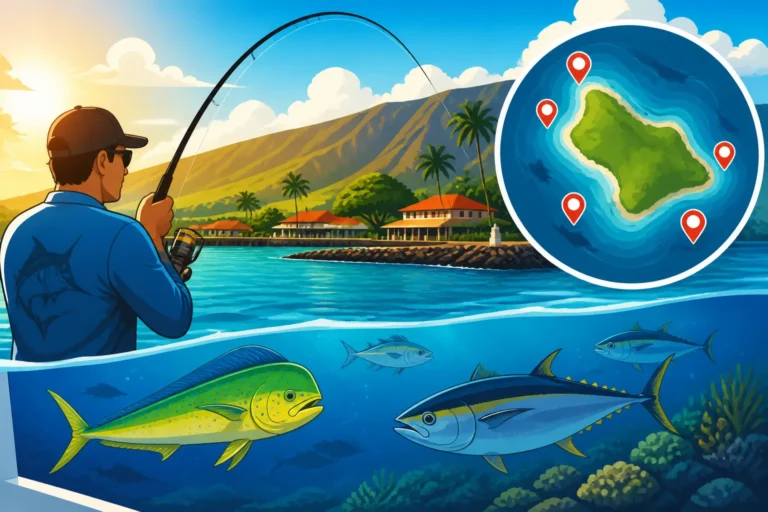
The Kona Coast: Hawaii's Premier Trophy Ahi Grounds
When you talk about trophy ahi in Hawaii, the conversation almost always begins and ends with the Kona Coast of the Big Island. This isn't by accident; it's a unique confluence of geography, oceanography, and abundant bait that creates a natural supermarket for colossal yellowfin tuna. The Big Island's leeward side offers remarkably calm seas for much of the year, thanks to the massive shield of Mauna Loa and Hualalai volcanoes blocking the prevailing trade winds. This means more comfortable fishing days and consistent access to offshore grounds.
Why Kona is Uniquely Suited for Giant Ahi
The magic of Kona lies in its incredibly steep drop-off, often referred to as the "Kona Coast Fishing Guide." Just a few miles offshore, the ocean floor plummets from shallow reefs to thousands of feet deep. This rapid change in depth creates massive upwellings and current lines, which in turn push nutrient-rich waters to the surface. These nutrients form the base of the food chain, attracting huge schools of baitfish like mackerel scad (opelu), akule (bigeye scad), and even smaller skipjack tuna (aku). Where the bait is, the predators will follow, and ahi are at the top of that predator list. These currents also act like highways for migrating pelagic species, channeling them right through Kona's prime fishing lanes.
Key Fishing Grounds for Trophy Yellowfin
Within the Kona Coast's vast expanse, there are several particularly renowned areas for trophy ahi. The "Grander Lane" is famous for its marlin, but it’s also a corridor for ahi feeding on the same bait. Another crucial feature is the 100-fathom curve and beyond. This is where the ocean floor truly drops off into the abyss, creating optimal conditions for deep-dwelling tuna. Anglers here often target specific pinnacles, seamounts, and underwater ridges that hold bait and, consequently, ahi.
Then there are the FADs, or Fish Aggregating Devices. These are buoys anchored offshore by the Division of Aquatic Resources (DAR), strategically placed to attract and hold pelagic fish. While not exclusively for ahi, these FADs are absolute magnets for schools of yellowfin, especially larger ones that patrol the deeper edges. Understanding how to approach and fish these FADs effectively can make all the difference, as detailed in our guide on the Best charters targeting ahi at the buoys. These spots are like gas stations in the open ocean, where ahi can consistently find food.
Other Productive Ahi Hotspots Across the Islands
While Kona often steals the spotlight, Hawaii boasts other fantastic locations where trophy ahi can be found. Each island offers its unique deep-sea topography and current patterns that can concentrate these powerful fish. Knowing where to look on each island can significantly increase your chances of success.
Maui's Productive Channels and Banks
Maui, with its dramatic underwater landscapes, offers several compelling areas for targeting trophy ahi. The most famous is undoubtedly the Penguin Bank, a vast, submerged plateau stretching between Maui and Molokai. This area is known for its incredible biodiversity and deep-water currents that sweep across the bank, bringing nutrients and bait. Anglers often find ahi here, especially around the edges of the bank where the depths plunge. The 'Au'au Channel, separating Maui and Lanai, also holds its share of ahi, particularly on its deeper, western side. The depths and strong currents here create ideal feeding grounds for migrating tuna. Charters departing from Ma'alaea Harbor often head to these prime offshore spots, searching for the tell-tale signs of feeding ahi.
Oahu's Offshore Banks and FADs
Oahu, being the most populous island, also offers excellent deep-sea fishing for ahi. Offshore of Ko Olina, particularly around the 1,000-fathom curve, you'll find productive waters. The Keku Point area, west of Kaena Point, is another known hotspot where current lines and bait converge. Similar to Kona, Oahu also has a network of FADs that draw in pelagic species, including impressive ahi. These FADs are often targeted by sportfishing boats departing from Kewalo Basin or Honolulu Harbor. The key on Oahu, like elsewhere, is to find the deep water where the baitfish are schooling. Our guide to Best Deep Sea Fishing Spots in Hawaii offers more details on these and other key areas.
Kauai's Deep Water Edge
Kauai, the Garden Isle, is not to be underestimated when it comes to trophy ahi. The deep waters off its Nā Pali Coast are particularly renowned. The dramatic cliffs continue underwater, creating incredibly steep drop-offs and complex current patterns. These deep waters are often frequented by large schools of baitfish, which in turn attract ahi. While less trafficked by big sportfishing fleets compared to Kona, serious anglers on Kauai know that the potential for a monster ahi here is very real, especially during peak seasons.
Understanding Trophy Ahi Behavior and Preferred Conditions
To consistently catch trophy ahi, you need to think like one. Understanding their seasonal patterns, preferred water conditions, and feeding habits is paramount. These fish are powerful, intelligent, and often migratory, moving across vast stretches of ocean in search of food and optimal temperatures.
Seasonal Patterns and Migration
Ahi, or yellowfin tuna, are present in Hawaiian waters year-round, but their abundance and size can vary seasonally. Generally, the warmer months from late spring through fall (roughly May to October) are considered prime time for larger ahi. This period often coincides with the peak of the Ahi Migration Patterns Around Hawaii, when huge schools move through the region. However, don't write off the winter months entirely; while numbers might be lower, some of the largest ahi can still be caught, often in deeper waters or during specific weather windows. Understanding the specific Best Time of Year to Fish in Hawaii for different species can give you a significant advantage.
Water Temperature, Currents, and Upwellings
Trophy ahi thrive in specific oceanographic conditions. They prefer warm, blue, clear ocean water, typically in the 75-82°F (24-28°C) range. However, it's not just about temperature; it's about the convergence of different water masses. Current lines, often visible as distinct color changes or ripple lines on the surface, are gold mines. These lines are where warmer water meets cooler, nutrient-rich upwellings, concentrating baitfish. Look for areas where different currents meet, creating swirls, eddies, or distinct temperature breaks. These are often the same areas where you'll find other pelagic species like marlin and mahi-mahi.
Baitfish Concentration: The Key to Success
Ahi are voracious predators, and their presence is inextricably linked to the availability of their prey. In Hawaii, the primary baitfish for ahi include opelu (mackerel scad), akule (bigeye scad), small skipjack tuna (aku), and various squid species. When you're out on the water, keep an eye out for signs of baitfish schools. This might be diving seabirds (especially frigatebirds and boobies), porpoising dolphins, or even visible schools of bait on your sonar. Ahi will often push these bait schools to the surface, resulting in explosive feeding frenzies that are unmistakable. Knowing the habits of these baitfish, such as when and where akule schools show up on Oahu, can lead you directly to the ahi.
Proven Strategies for Hooking a Monster Ahi
Once you've identified potential trophy ahi waters and understood the conditions, it's time to talk tactics. Catching these powerful fish requires specialized gear and techniques, whether you're trolling lures or deploying live bait.
Trolling for Giants
Trolling is perhaps the most common and effective method for covering ground and finding ahi, especially the larger ones. When offshore, boats typically run a spread of several lures at varying distances and depths. For trophy ahi, you'll want robust tackle – 80-pound or even 130-pound class outfits are not uncommon, especially if you're hoping for a true monster.
- Lure Selection: Large, dark-colored skirted lures (black and purple, blue and silver, green and yellow) are often highly effective. Kona-style lures, designed to mimic fleeing baitfish, are a local favorite. Sometimes, lighter lures that imitate smaller prey can also entice a bite, particularly on slower days. Our guide on How to Catch Ahi in Hawaii offers detailed advice on specific lure types and rigging.
- Trolling Speed: Generally, trolling at speeds between 7-10 knots is effective. However, experiment with speed. Sometimes a slight acceleration or deceleration can trigger a strike.
- Spread: A typical spread might include flat lines, short and long rigger lines, and a shotgun lure way back. The goal is to present a varied and enticing school of "bait" that mimics natural feeding activity.
Live Baiting and Chunking
While trolling covers ground, sometimes the most effective method for truly large, stubborn ahi is to "sit and soak" with live bait or a strategic chunking operation. This is often done when you find a concentrated school of bait, or around FADs.
- Live Bait: Live opelu or akule are irresistible to ahi. Rigged on a circle hook with a heavy fluorocarbon leader, they can be deployed at various depths. Some anglers use downriggers to get the bait deep, while others simply let it drift with the current. This method is incredibly effective, but it requires catching bait first, which can be a whole adventure in itself. Our article on Best Bait for Ahi Fishing goes into detail on how to prepare and present these.
- Chunking: This involves drifting chunks of cut bait (often oily fish like skipjack, mackerel, or even old ahi scraps) down current. The scent trail created by the chunks acts as a liquid chum line, drawing ahi up from the depths. As the fish get closer, you present a "free-lined" chunk with a hook hidden inside. This technique, explored further in Best Techniques for Chumming for Ahi, can be incredibly productive for enticing large, finicky ahi.
Drift Fishing
Drift fishing, where your boat moves with the current and wind while you present baits at specific depths, can be another highly effective method, especially when you've located ahi on sonar. Instead of actively trolling, you're letting your baits or lures move more naturally with the water column. This allows you to target precise depths where ahi are holding, often in a more stealthy manner than trolling. The article on Drift Fishing for Ahi in Hawaii provides in-depth instruction on this method.
Utilizing FADs and Buoys
As mentioned earlier, FADs are critical for ahi fishing. However, just showing up isn't enough. You need a strategy. Many anglers will troll around the FAD at various distances, sometimes making figure-eight patterns. Others will stop up-current from the FAD and drift live bait or chunks towards it. The ahi often hold just below or around the structure, using it as an ambush point for passing bait. Be mindful of other boats and common etiquette when fishing these shared resources. Also, always be aware of the Hawaii Pelagic Species Bag Limits for ahi and other tuna to ensure you're fishing legally.
Here's a quick overview of prime ahi fishing conditions and locations:
| Fishing Ground | Primary Peak Season | Key Features | Primary Technique | Bait/Lure Preference |
|---|---|---|---|---|
| Kona Coast | May – October | Steep drop-offs, FADs, current lines, deep water | Trolling, Live Baiting, Chunking | Large skirted lures, Opelu, Aku |
| Maui (Penguin Bank) | May – October | Submerged plateau, strong currents | Trolling, Deep Dropping | Skirted lures, Artificial jigs |
| Oahu (Offshore FADs) | May – November | FAD network, deep ocean banks | Trolling, Live Baiting | Skirted lures, Opelu, Aku |
| Kauai (Nā Pali Coast) | June – September | Steep underwater cliffs, deep currents | Trolling, Live Baiting | Skirted lures, Opelu |
When considering a trip, especially if you're targeting a trophy, don't hesitate to reach out to local experts. Reputable charter operators on all islands, many of whom you can find on platforms like FishingBooker, have intimate knowledge of current conditions and the most productive spots. Booking with a seasoned captain through FishingBooker can significantly enhance your chances of landing that dream ahi, as they provide all the necessary gear and expertise. They know when to adjust trolling speeds, when to switch to live bait, and how to read the subtle signs that indicate ahi presence. Many even specialize in specific techniques like chumming for ahi or targeting bigeye tuna at specific depths.
Disclaimer
Fishing regulations, seasons, and licensing requirements in Hawaii can change. While every effort has been made to provide accurate information, it is always your responsibility to consult the latest rules and regulations published by the Hawaii Division of Aquatic Resources (DAR) before heading out on the water. This guide is for informational purposes only and does not constitute legal advice.