Bottomfish Species of Hawaii
One of the biggest joys and, let's be honest, sometimes the biggest head-scratchers for anglers in Hawaii is figuring out exactly what kind of fish you've just hooked from the deep. It can be incredibly frustrating to land a beautiful specimen only to scratch your head, wondering if it's an onaga or an ehu, and whether it's legal to keep! This comprehensive guide is here to unravel the mysteries of Hawaii's incredible bottomfish species, helping you identify your catch, understand their habits, and appreciate the unique experience of deep-sea bottomfishing in these pristine waters.
The Allure of Hawaii's Deep-Sea Bottomfish
There's something uniquely captivating about bottomfishing in Hawaii. It's not the high-speed thrill of chasing marlin across the open ocean, nor the sight-fishing challenge of bonefish on the flats. This is a quieter, more patient pursuit, often demanding more specialized gear and a keen understanding of the underwater topography. It's a true angler's game, where the rewards are not just a fight on the line, but often some of the most sought-after and delicious fish in the Pacific.
Why Bottomfishing is a Unique Hawaiian Experience
Bottomfishing in Hawaii often feels like stepping back in time, connecting with a tradition that goes back generations. Locals have been targeting these deep-water species for centuries, relying on their knowledge of the currents, the moon phases, and the hidden structures below the surface. Unlike trolling for pelagics, where you're covering vast distances, bottomfishing is about precision – finding that specific rock pile, ledge, or trench where these fish congregate. You're dropping your line into depths that can range from a few hundred feet to well over a thousand, truly exploring an unseen world beneath the waves. The anticipation as your weight hits the bottom, the subtle taps on your line that signal a bite, and then the slow, powerful pull of a deep-dwelling fish — it's an experience that truly connects you to the ocean's depths. It's a test of patience, skill, and the right equipment.
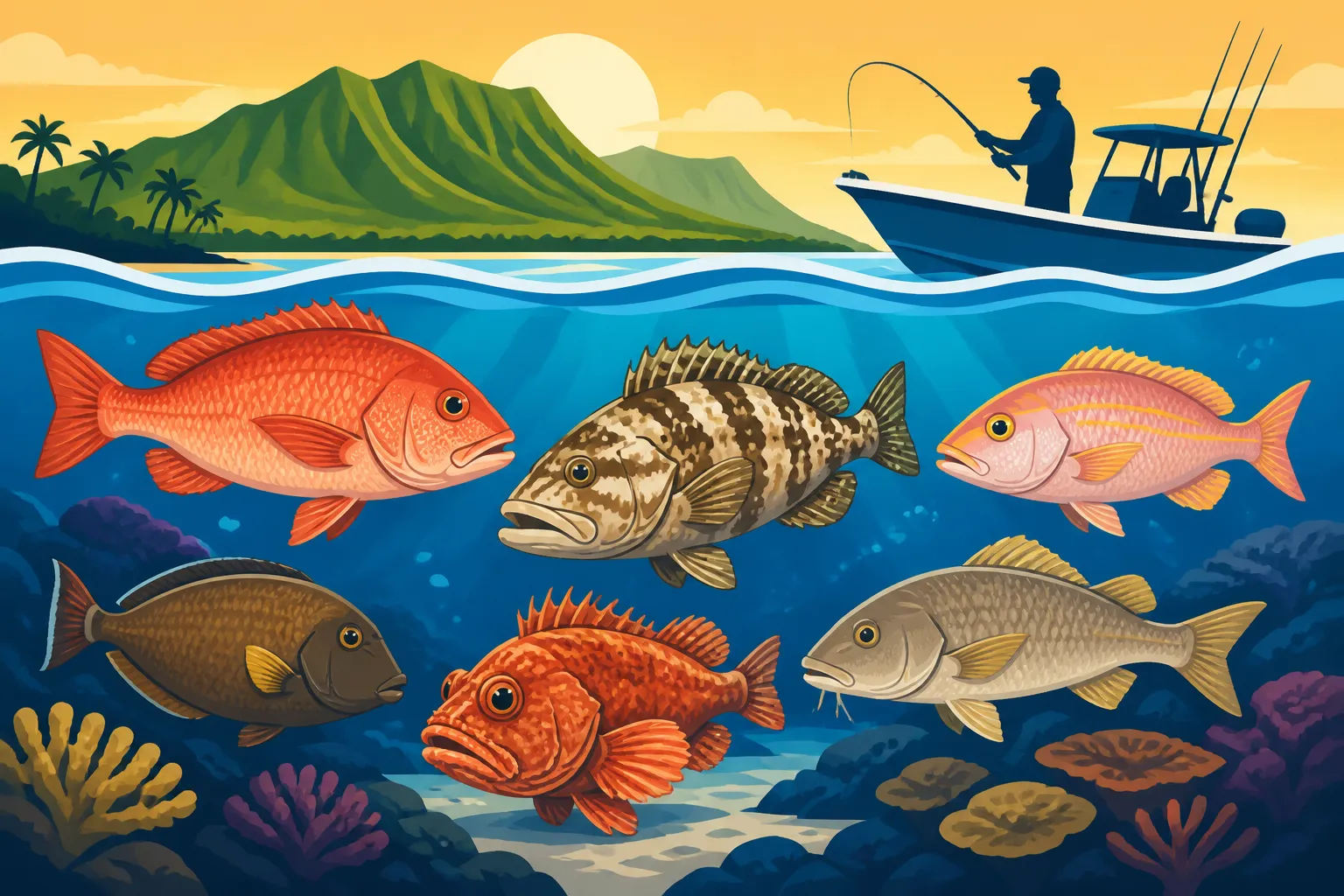
Furthermore, the variety of species you can encounter is astounding. While we often think of "bottomfish" as a single category, Hawaii's waters are home to a diverse array of snappers, groupers, and other intriguing creatures that inhabit the seafloor. Each species has its own characteristics, preferred depths, and fighting style, making every drop an adventure. Whether you're fishing near the Big Island's dramatic drop-offs or exploring the ledges off Maui, the bottomfishing experience here is unlike anywhere else, offering both a challenge and a deeply rewarding connection to Hawaii's rich marine life.
The Ecosystem of Hawaii's Bottomfish Grounds
The Hawaiian Islands are essentially the tips of massive volcanoes rising from the ocean floor, creating a diverse and complex underwater landscape. This topography is crucial for bottomfish, as it provides the perfect habitat for them to thrive. We're talking about incredibly steep ledges, deep canyons, seamounts, and vast reef systems that extend far beyond where sunlight can penetrate. These structures offer protection from predators, plentiful food sources in the form of smaller fish and invertebrates, and specific thermal layers that different species prefer.
The deep ocean around Hawaii is a nutrient-rich environment, with upwellings bringing cold, productive waters to shallower depths. This creates a food web that supports everything from tiny plankton to the impressive bottomfish we seek. Certain areas, like the famed Kona Coast, are renowned for their proximity to deep water close to shore, making these prime fishing grounds accessible to many. Understanding this ecosystem – the currents that bring the food, the structures that provide shelter, and the depths where different species reside – is key to successful bottomfishing. It’s a delicate balance, and responsible fishing practices are vital to ensure these deep-sea populations remain healthy for future generations. Knowing what lies beneath the surface helps us appreciate the fragility and richness of this unique marine environment.
Key Bottomfish Species: The Prized Catches
When you talk about bottomfish in Hawaii, a few names immediately come to mind for their fighting prowess, their beauty, and their exquisite taste on the dinner table. These are the "A-listers" of the deep, and successfully targeting them is a badge of honor for any serious angler.
Opakapaka (Pink Snapper)
The opakapaka is arguably one of Hawaii's most iconic and highly prized bottomfish. With its distinctive pinkish-red hue and large eyes, it's a beautiful fish that lives up to its reputation. These fish typically inhabit depths ranging from 180 to 600 feet, often found schooling over rocky bottoms, ledges, and seamounts. They're not solitary creatures, so if you find one, there's a good chance you'll find more. Anglers targeting opakapaka often employ techniques that involve drifting over structure with multiple hooks, hoping to land several fish in a single drop.
Opakapaka are known for their firm, white, flaky flesh, making them incredibly popular for a variety of culinary preparations, from sashimi to pan-seared fillets. Landing a good-sized opakapaka, which can range from 2 to 18 pounds (though larger specimens are caught), is a truly satisfying experience. They put up a respectable fight, often with strong headshakes and powerful runs, especially when brought up from considerable depths. Their habitat preferences mean you'll often be fishing with heavy gear and strong lines, which is a common theme for most deep-water bottomfish. Opakapaka (Pink Snapper) Habits are crucial to understand for a successful trip.
Onaga (Ruby Snapper)
If opakapaka is the queen of the deep, then the onaga is undoubtedly the king. Known for its brilliant ruby-red color and long, flowing caudal fin (tail), the onaga is perhaps the most visually stunning and most highly sought-after bottomfish in Hawaii. These magnificent fish inhabit even deeper waters than the opakapaka, typically found at depths of 600 to 1200 feet, sometimes even deeper. Their habitat is often characterized by steep drop-offs, deep pinnacles, and rough, rocky bottoms.
Onaga are known for their delicate, translucent white flesh, which is highly prized for sashimi and other fine dining preparations. Because of their deeper habitat and highly valued meat, they often command a premium. Landing an onaga is a serious endeavor, requiring specialized electric reels and robust tackle to handle the immense depths and the powerful fight these fish can deliver. They can range from 5 to 25 pounds, with larger ones being truly impressive specimens. The sheer effort involved in bringing an onaga to the surface from such extreme depths only adds to the reward. Onaga (Ruby Snapper) Habits are fascinating and understanding them will greatly improve your chances of catching one of these ruby jewels.
Ehu (Red Snapper)
The ehu, another member of the snapper family, is a gorgeous bright red fish, often confused with other red snappers by newcomers. It's a reliable and delicious bottomfish, though it doesn't quite reach the celebrity status of the opakapaka or onaga. Ehu typically occupy intermediate depths, often found between 200 and 600 feet, making them accessible to a wider range of bottomfishing setups. They tend to prefer rocky reefs and ledges, often schooling in smaller groups.
Ehu are excellent eating fish, offering firm, white meat that holds up well to grilling, baking, or frying. They average between 2 to 8 pounds, though larger ones are certainly caught. Their fight is solid and consistent, making them a fun catch on medium-heavy bottomfishing gear. You'll often find ehu in the same general areas as opakapaka, sometimes even sharing the same schools, which adds to the excitement of deep drops. Being able to correctly identify ehu is important, especially when navigating Hawaii Bag and Size Limits by Species.
Lesser-Known but Equally Delicious Bottomfish
While opakapaka, onaga, and ehu get most of the spotlight, Hawaii's deep waters are home to many other incredible bottomfish species that are well worth targeting. These fish might not always command the same price tag or fanfare, but they offer fantastic table fare and an exciting challenge for anglers.
Hapu'upu'u (Hawaiian Grouper)
The hapu'upu'u, or Hawaiian grouper, is a truly formidable bottomfish that can reach impressive sizes. These are big, powerful fish, characterized by their robust bodies and mottled brown and white coloration, allowing them to blend seamlessly with the rocky seafloor. Hapu'upu'u typically inhabit depths from 300 to over 1000 feet, often found lurking in caves, crevices, and under ledges on steep drop-offs. They are ambush predators, waiting for unsuspecting prey to swim by.
When you hook a hapu'upu'u, be prepared for a serious battle. Their initial run is incredibly strong, and they'll try to head straight back into the rocks to cut your line. Anglers need heavy-duty gear and quick reflexes to turn these fish away from structure. They can weigh anywhere from 10 to over 50 pounds, making them a true trophy catch. Their firm, white, mild-flavored meat is excellent, especially baked or steamed. Landing a hapu'upu'u is a testament to an angler's strength and gear, providing both a thrilling fight and a bountiful meal.
Kalekale (Silvermouth Snapper)
The kalekale, also known as the silvermouth snapper, is a beautiful, smaller bottomfish, often caught in similar depths as opakapaka and ehu, typically between 200 and 600 feet. It has a distinctive silvery sheen with hints of pink and red, and its mouth often appears slightly compressed. While not as large as its snapper cousins, the kalekale is still a highly regarded food fish.
Kalekale usually weigh between 1 to 5 pounds, making them a delightful catch on lighter bottomfishing tackle. They offer a good, spirited fight for their size and are frequently caught in schools. Their meat is white, tender, and has a delicate flavor, making them excellent for frying or steaming whole. When you're dropping multiple hooks for bottomfish, it's not uncommon to pull up several kalekale along with other species, making for a truly mixed bag and a great day's fishing.
Uku (Gray Snapper)
The uku, or gray snapper, is a sleek and powerful bottomfish that can be found in a variety of habitats, making it a bit more versatile than some of its deeper-dwelling relatives. While primarily a bottomfish, uku can sometimes be found suspended higher in the water column or even around shallower reefs, especially when hunting baitfish. They are typically found in depths ranging from 60 to 400 feet, often around rocky outcrops, ledges, and channels.
Uku are characterized by their greenish-gray coloration and prominent canine teeth. They are incredibly strong fighters, known for their powerful runs and dogged determination, especially when hooked near structure. A big uku, which can easily exceed 20 pounds, will test your tackle and your stamina. Their firm, white, and delicious meat is highly valued, making them a popular target for both recreational and commercial anglers. Jigging for Bottomfish in Hawaii can be a particularly effective technique for targeting uku, as they are often aggressive feeders. Many anglers also find great success targeting them with live baits fished near the bottom.
Identifying Your Catch: Beyond the Basics
Okay, so you've hauled up a beautiful fish from the deep. Now what? Knowing exactly what you've got is crucial, not just for bragging rights, but also to ensure you're complying with local regulations. Misidentification can lead to keeping an undersized fish or a protected species, which nobody wants.
Distinguishing Between Snapper Species
Hawaii is home to several species of snapper, and they can sometimes look quite similar, especially to the untrained eye. Getting it right can save you a headache later. Let's break down some of the key visual cues:
-
Opakapaka (Pink Snapper): Look for that characteristic rosy pink to reddish hue. Their body is usually deep-bodied and somewhat compressed, with relatively large eyes. The dorsal fin has spines in the front and soft rays in the back. A key identifier is often the presence of a small, barely noticeable spot above the pectoral fin, though this can fade. They tend to be a more uniform pink.
-
Onaga (Ruby Snapper): The onaga stands out with its incredibly vibrant ruby-red color. The most definitive feature is its long, flowing, deeply forked caudal (tail) fin, which often has streamers. Their body is more elongated and streamlined than the opakapaka. Their eyes are also quite large, reflecting their deep-water habitat. There’s almost an iridescent quality to their skin.
-
Ehu (Red Snapper): The ehu is also red, but generally a duller, more uniform red or reddish-orange compared to the onaga's brilliant ruby. Their body is more robust than an onaga's, and their tail fin is not as deeply forked or streamer-like. The eyes are large, but their overall body shape is squatter than an opakapaka. They can often have faint banding or mottling, which opakapaka usually lack.
-
Kalekale (Silvermouth Snapper): This snapper is generally more silvery than red, with a distinctive "silvermouth" appearance. It's smaller and more slender than the opakapaka or ehu. The body is sleek, and the tail is typically forked, but without the long streamers of the onaga.
-
Uku (Gray Snapper): The uku is distinctly gray to greenish-gray, sometimes with a bronze tint, making it quite different from the red snappers. It has a more elongated, torpedo-shaped body, and a strong, powerful tail. Look for those prominent canine teeth when you open its mouth; they're quite noticeable.
It's always a good idea to have a laminated fish identification card or a reliable app with you on the boat. Better yet, if you're on a charter, your captain or deckhand will be an expert at identifying your catch. When in doubt, take a picture and consult someone knowledgeable or release the fish if you're unsure about regulations.
Other Bottom Dwellers You Might Encounter
While snappers and groupers are the primary targets, Hawaii's bottomfishing grounds are teeming with other fascinating and sometimes delicious species. These can often be a welcome surprise in your catch!
-
Butaguchi (Amberjack): While technically a jack, the butaguchi (greater amberjack) is often found near the bottom around structure, especially large seamounts and wrecks. They are incredibly powerful fighters, with a stocky body and a distinctive amber stripe running along their flank. They can grow very large and offer a serious challenge on the line. Their meat is firm and tasty, though some anglers prefer it smoked or grilled rather than raw.
-
Deep-sea Trevally (White Ulua): While the more common ulua (Giant Trevally) patrols shallower reefs, there are deep-dwelling trevally species that you might encounter while bottomfishing. These are often lighter in color, more silvery-white, and just as powerful as their shallow-water cousins. Landing one from the depths is a serious feat of strength.
-
Hogo (Pomfret): These fish are deep-water dwellers, often caught accidentally while targeting snappers. They have a distinctive, compressed, oval body shape and are usually a silvery-gray color. While not a primary target, their white, flaky meat is quite good eating, often compared to cod.
-
Moray Eels: You might be surprised to hook a moray eel from the deep! While not typically sought after for food by most anglers, these creatures are powerful and can be quite a handful to get off the hook. Most are released due to their challenging nature and often slimy skin.
-
Deep-water Sharks: Occasionally, a deep-dwelling shark might take your bait. These are usually released safely back into the water, as they are not typically targeted by recreational bottomfishers. Always exercise extreme caution if you hook one, and know how to safely release it without harm to yourself or the shark.
Regulations and Sustainable Bottomfishing Practices
Fishing in Hawaii, especially for its prized bottomfish, comes with significant responsibilities. The deep-sea ecosystems are delicate, and it's up to us as anglers to ensure we're fishing responsibly and sustainably. Ignorance of the law is never an excuse, and violating regulations can lead to hefty fines and loss of fishing privileges. Hawaii Fishing Regulations Explained provides an excellent overview, but specific bottomfish rules are critical.
Understanding Bag and Size Limits
Each of the prized bottomfish species in Hawaii has specific regulations regarding bag limits (how many you can keep) and minimum/maximum size limits. These rules are put in place by the Hawaii Division of Aquatic Resources (DAR) to protect fish stocks from overfishing and ensure healthy populations for the future. For example, species like opakapaka, onaga, and uku all have minimum size requirements. Keeping an undersized fish, even accidentally, can result in significant penalties.
It's not enough to simply know the rules; you need to have the right tools on board to measure your fish accurately. A sturdy measuring tape or board is essential. Before your trip, always check the most current regulations, as they can change. If you're fishing on a charter, the crew will handle this for you, but if you're on your own boat, this responsibility falls squarely on your shoulders. Being well-prepared means you can confidently keep your legal catch and quickly release any fish that don't meet the requirements, minimizing stress on the fish. For a quick reference, check out Hawaii Bag and Size Limits by Species.
Protecting Hawaii's Bottomfish Resources
Sustainable fishing isn't just about following the rules; it's about adopting practices that contribute to the long-term health of the marine environment. Bottomfish are particularly vulnerable because they are often slow-growing and long-lived. When they are brought up from significant depths, they can suffer from barotrauma—a condition caused by the rapid change in pressure, which can inflate their swim bladder and push out their stomach or eyes.
To minimize impact, consider these practices:
- Use appropriate gear: Heavy enough tackle prevents prolonged fights, which can exhaust fish.
- Quick release: If a fish is undersized or you've met your bag limit, release it as quickly as possible.
- Fish handling: Handle fish gently, especially if you intend to release them. Avoid removing their protective slime layer.
- Ventilation: For fish suffering from barotrauma, learning how to properly "vent" a fish (releasing the air from the swim bladder with a specialized tool) can greatly increase their survival chances. However, this is a technique that requires proper instruction to avoid further injury to the fish.
- Targeting specific species: While a mixed bag is fun, sometimes focusing on more abundant species can reduce pressure on more vulnerable ones.
- Respect closed seasons: Some species or areas may have seasonal closures to protect spawning populations.
By being mindful of these practices, we can all do our part to ensure that Hawaii's incredible bottomfish resources remain abundant for generations to come. It’s about being a steward of the ocean, not just a harvester.
Essential Gear and Techniques for Bottomfishing
Bottomfishing for these deep-water species isn't like casting a lure from shore. It requires specialized gear that can withstand immense pressure and bring powerful fish up from hundreds of feet below. Having the right tools makes all the difference, transforming a frustrating ordeal into a rewarding experience.
Rods, Reels, and Line Setups
When it comes to bottomfishing in Hawaii, your gear needs to be robust and reliable. You're dealing with serious depths, often strong currents, and hard-fighting fish.
-
Rods: Look for heavy-duty, fast-action rods, typically 6 to 7.5 feet long. These rods need a strong backbone to handle heavy weights and pull powerful fish from the bottom, but enough tip sensitivity to detect those subtle bites. Many anglers prefer specialized bottomfishing rods designed for deep drops. A good quality fiberglass or composite rod can absorb the shock and provide the necessary lifting power.
-
Reels: This is where things get serious. For traditional bottomfishing, large conventional reels are essential. These need high line capacity and powerful drags. Brands like Penn, Shimano, and Daiwa offer excellent options. For the deepest drops (600+ feet for onaga, for instance), electric reels are commonly used. While some purists prefer manual cranking, electric reels significantly reduce the physical exertion of retrieving hundreds of feet of line and multiple fish, especially when using heavy lead weights (often 1 to 5 pounds). If you're looking to invest, check out options on platforms like Amazon, where you can compare different models and read reviews.
-
Line: Braided line (superline) is almost universally preferred for bottomfishing due to its incredible strength-to-diameter ratio and, critically, its lack of stretch. This non-stretch property allows you to feel the bites more distinctly, even in deep water, and provides direct power to pull fish up. You'll typically be using 60 to 100-pound test braided line, sometimes even heavier. A monofilament top shot or leader is then added to provide some shock absorption and abrasion resistance against rocks and the fish's mouth. The choice of leader material and strength will depend on the target species and the structure you're fishing. How thick a leader you need for ulua fishing might offer some relevant insights into heavy-duty leaders, though ulua fishing differs in depth.
Baits, Rigs, and Locating Structure
Beyond the core tackle, the right bait and rig, combined with knowledge of the ocean floor, are what truly put fish in the boat. Bottomfishing in Hawaii goes into detail on these aspects.
-
Baits: Fresh is always best! Popular bottomfish baits in Hawaii include:
- Squid: A universal favorite, cut into strips or left whole for larger baits.
- Cut fish: Pieces of mackerel, opelu (mackerel scad), or akule (bigeye scad) are excellent. Their oily nature disperses scent, attracting fish from afar.
- Live bait: Smaller live fish like opelu or akule, if available, can be incredibly effective for larger, more aggressive bottomfish like hapu'upu'u or uku.
- Eels: Smaller pieces of eel can also be very effective for certain species.
For specific guidance, check out Best Bait for Opakapaka Bottomfishing and Best Bait for Deep Drop Onaga Fishing.
-
Rigs: Most bottomfishing rigs are designed to present multiple baits at varying depths off the main line.
- Dropper Loop Rigs: These are common, featuring several "dropper" lines with hooks tied off the main line, with a heavy lead sinker at the very bottom. This allows you to fish multiple baits at different levels in the water column.
- Three-Way Swivel Rigs: Similar in concept, using swivels to create leaders for hooks and a separate leader for the sinker.
- Gang Rigs: For really deep water, pre-made gang rigs with several hooks are often used, sometimes with light-emitting diodes (LEDs) to attract fish in the dark depths.
The length of your leaders (the line between the main line and the hook) can vary, but generally, 12-24 inches is common. Hooks should be strong, sharp circle hooks, which promote lip-hooking and are generally better for catch and release survival.
-
Locating Structure: This is paramount. Bottomfish congregate around underwater features. Your boat's electronics are your best friend here.
- Sonar/Fishfinder: A good quality sonar unit is essential for mapping the bottom, identifying depth changes, rock piles, ledges, and even schools of fish. Learning how to interpret your sonar screen is a skill that comes with practice. How to locate bottomfish structure with sonar is a fantastic resource for this.
- GPS/Chartplotter: Once you find a productive spot, mark it on your GPS! This allows you to return to the exact location. Modern chartplotters often have detailed bathymetric maps that show underwater contours.
- Drifting vs. Anchoring: Most deep bottomfishing is done by drifting, allowing your baits to cover more ground along a productive ledge or over a seamount. Understanding the currents and how they affect your drift is key to presenting your baits effectively. Sometimes, if a small, isolated pinnacle is incredibly productive, anchoring directly over it might be worthwhile, but this can be challenging in deep water with strong currents.
The Best Times and Places for Bottomfishing
Timing and location are everything in fishing, and bottomfishing for Hawaii's deep-dwellers is no exception. While some species are available year-round, knowing when and where to drop your lines can significantly improve your chances of success.
Seasonal Considerations and Weather Impacts
Hawaii's climate is relatively consistent, but certain seasons can influence bottomfishing success, mainly due to ocean conditions and fish behavior.
- Year-Round Availability: Many bottomfish species, like opakapaka, onaga, and uku, are generally available throughout the year. Their deep-water habitats are less affected by surface temperature changes than shallower species.
- Winter Months: The cooler, choppier winter months can sometimes make it challenging to get out to the deeper grounds, but when the weather breaks, winter can be excellent for bottomfish. The slightly cooler water might concentrate certain species, and there's often less fishing pressure than during peak tourist seasons. Best technique for winter bottomfishing often involves paying close attention to weather windows.
- Summer Months: Summer often brings calmer seas, making it easier and more comfortable to reach distant fishing grounds. This can be a popular time for charters targeting bottomfish, especially for family trips. However, the increased boat traffic can sometimes scatter fish or increase competition.
- Moon Phases and Tides: Many experienced bottomfishers swear by certain moon phases for optimal fishing. Full and new moons often bring stronger currents, which can stir up bait and make fish more active, but also make it harder to hold bottom. Intermediate moon phases with moderate tides are often preferred. Always pay attention to the tidal charts and local wisdom.
- Weather and Swell: High winds and large swells make bottomfishing incredibly difficult and unsafe. Heavy lead weights are needed to hold bottom, and the constant pitching and rolling of the boat can be miserable. Always prioritize safety and check marine forecasts before heading out. Calm days with light to moderate currents are ideal. Bottomfish generally prefer stable water temperatures, so extreme weather events can sometimes push them around. What water temperature bottomfish prefer is a key indicator often monitored by experienced captains.
Popular Bottomfishing Grounds Across the Islands
Each of the main Hawaiian Islands offers fantastic opportunities for bottomfishing, with unique underwater topographies that attract these deep-dwelling species.
- Big Island (Kona Coast): The Kona Coast on the Big Island is world-renowned for its incredibly deep water close to shore. The steep drop-offs and numerous seamounts make it a prime location for all the major bottomfish species. Areas like the Pailolo Channel, the various FAD buoys (Fish Aggregating Devices), and the ledges off Keahole Point are legendary. Many top bottomfishing charters operate out of Honokohau Harbor, accessing these rich grounds. Best Bottomfishing Spots in Hawaii will undoubtedly highlight many of these Kona gems.
- Maui: Maui boasts excellent bottomfishing grounds, particularly off the west and south coasts. The deep channels between Maui, Molokai, and Lanai (e.g., Pailolo Channel, Au'au Channel, Alalakeiki Channel) are rich in bottom structure and hold good numbers of opakapaka, onaga, and ehu. Charters often depart from Ma'alaea Harbor or Lahaina Harbor to access these productive areas.
- Oahu: While famous for its pelagic fishing and inshore bonefishing, Oahu also offers solid bottomfishing opportunities, especially off the North Shore, Windward Coast, and the deep ledges south of Diamond Head. The underwater topography around Oahu has numerous pinnacles and drop-offs that hold bottomfish. Kewalo Basin in Honolulu is a popular departure point for many bottomfishing charters.
- Kauai: The Garden Isle has some fantastic, less-pressured bottomfishing spots, particularly along its south and west coasts. The waters off Port Allen and Nawiliwili Harbor lead to deep channels and seamounts that are home to a healthy population of snappers and groupers.
- Molokai and Lanai: These less developed islands offer more remote and often highly productive bottomfishing. The deep waters surrounding them, especially in the channels, are relatively pristine and can yield some truly exceptional catches. Due to fewer facilities, fishing here often involves charters from neighboring islands or well-equipped private boats.
Finding the truly secret "honey holes" often comes down to local knowledge, persistence, and a keen eye on your sonar. However, the well-known areas are productive for a reason, and a good charter captain will put you on fish. How deep bottomfish species live in these areas is crucial to selecting your target species and gear.
Preparing Your Catch: From Ocean to Plate
Successfully catching a Hawaiian bottomfish is only half the battle; the other half is ensuring it makes it to your plate in peak condition. These fish are renowned for their culinary quality, and a little care goes a long way in preserving their exquisite flavor and texture.
Handling and Care for Optimal Flavor
The moment your bottomfish hits the deck, the clock starts ticking to preserve its quality. Proper handling is critical for ensuring that delicate, flaky flesh retains its texture and flavor.
- Iki-Jime (Brain Spike): The absolute best way to dispatch your catch is through a technique called "iki-jime." This involves spiking the fish's brain to induce immediate death. This prevents the build-up of lactic acid in the muscles, which can degrade the meat's quality and flavor. It also prevents the fish from thrashing, which can bruise the flesh. If you're serious about eating your catch, invest in an iki-jime spike.
- Bleeding: Immediately after iki-jime, bleed the fish. A quick cut to the gills or throat allows the blood to pump out, resulting in cleaner, better-tasting meat. Blood left in the flesh can accelerate spoilage and give the meat a "fishy" flavor.
- Ice Slurry: Get your fish into an ice slurry (a mix of ice and saltwater) as quickly as possible. This rapid cooling halts bacterial growth and rigor mortis, preserving the texture and flavor. Don't just lay fish on top of ice; they need to be fully submerged or surrounded by it. A good quality cooler filled with a mix of ice and saltwater is essential for any bottomfishing trip. For longer trips, consider a cooler like those found on Amazon that are designed for extended ice retention.
- Protect from Sun: Never leave your fish exposed to direct sunlight. The sun's heat rapidly deteriorates meat quality. Always keep them in the cooler.
- Cleanliness: Maintain a clean deck and work area. Bacteria can easily transfer from surfaces to your fish. Wash down your boat and tools regularly.
By following these steps, you'll ensure that your beautiful opakapaka or onaga arrives home in pristine condition, ready to be transformed into a memorable meal.
Simple Recipes to Savor Your Hawaiian Bottomfish
The beauty of Hawaii's bottomfish is that their natural flavor is so exquisite, they don't need much fuss. Simple preparations often highlight their best qualities.
- Sashimi: For the freshest, highest-quality onaga or opakapaka, sashimi is often the preferred method. Slice the raw, chilled fillets thinly against the grain. Serve with a touch of soy sauce, wasabi, and pickled ginger. The translucent, delicate texture of fresh onaga sashimi is truly a culinary highlight.
- Pan-Seared Fillets: This is a classic for good reason. Season fillets of opakapaka, ehu, or uku with salt, pepper, and perhaps a touch of garlic powder. Heat a pan with a little olive oil or butter until shimmering. Sear the fish skin-side down first (if skin is on) until crispy, then flip and cook until just opaque. A squeeze of fresh lemon juice at the end is all you need.
- Steamed Whole Fish (especially for smaller Kalekale or Ehu): Steaming a smaller, whole fish is a fantastic way to enjoy its delicate flavor and beautiful presentation. Score the fish a few times on each side. Place it on a bed of ginger and green onions, drizzle with a little soy sauce and sesame oil. Steam until the flesh flakes easily. This method is particularly popular for species like kalekale.
- Grilled Fillets: For a taste of the outdoors, grilling bottomfish fillets is excellent. Marinate the fillets lightly in a mixture of olive oil, garlic, lemon juice, and Hawaiian sea salt for 15-30 minutes. Grill over medium-high heat until cooked through, being careful not to overcook. The firm flesh of uku or hapu'upu'u holds up beautifully on the grill.
- Fish Tacos: For a more casual meal, pan-fried or grilled bottomfish makes incredible fish tacos. Flake the cooked fish into warm tortillas and top with your favorite salsa, cabbage slaw, and a creamy sauce. This works well with ehu or uku.
No matter how you choose to prepare your catch, the fresh, clean taste of Hawaiian bottomfish is an experience to savor. Enjoy the fruits of your labor, knowing that you've participated in a truly unique Hawaiian fishing tradition.
Disclaimer
This article is for general informational purposes only and does not constitute professional advice. Laws, prices and regulations vary by location and change over time. Consult a qualified professional for guidance on your specific situation.