Papio Growth Stages Into Trophy Ulua
It’s a common scenario for anglers here in Hawaii: you've hooked into something strong from shore, reel screaming, and after a valiant fight, you pull in a beautiful, hard-fighting trevally. Is it a papio or an ulua? The distinction can often feel a little blurry, especially since they're essentially different stages of the same incredible fish. This guide will take you through the fascinating journey of Hawaii's trevally, exploring how these powerful fish grow from energetic papio into the legendary trophy ulua that haunt our dreams.
Understanding the 'Ulua' Family in Hawaii
When we talk about "ulua" and "papio" in Hawaii, we're generally referring to various species of trevally, members of the Carangidae family. It's not so much two completely different fish as it is a way of categorizing the same fish at different points in their life, primarily by size. But there's a lot more to it than just that, and understanding these nuances can truly elevate your fishing game and appreciation for these magnificent creatures.
Papio: The Energetic Juveniles
"Papio" is the local term we use for the younger, smaller trevally. These are the fish that most shore anglers encounter frequently, known for their aggressive strikes and spirited fights, even at a smaller size. They might not be the giants of the deep, but they pack a punch that belies their stature, often leaving anglers with sore arms and big smiles. You'll find a variety of species categorized under the "papio" umbrella, including the white trevally (lai), bluefin trevally (omilu), and even juvenile giant trevally (po'opaa or the smaller 'ulua keiki').
These smaller fish typically range from just a few ounces to around 10-15 pounds. They're often found in shallower waters, like reef flats, sandy beaches, harbor channels, and even brackish estuarine areas. Their diet is diverse, feasting on small baitfish, crabs, shrimp, and other invertebrates. Anglers love targeting papio because they are abundant, willing to strike a wide variety of lures and baits, and offer an accessible entry point to the thrilling world of trevally fishing. Catching a school of whipping papio can be some of the most exciting light tackle action you'll find anywhere in the islands, a true testament to the strength and fighting spirit embedded in their DNA from the moment they hatch.
Ulua: The Grand Sages of the Reef and Deep
Now, when we talk about "ulua," we're usually referring to the larger, more mature trevally, primarily the Giant Trevally (Caranx ignobilis), or GT as they are known globally. These are the apex predators of our inshore waters and outer reefs, revered for their immense power, cunning, and sheer size. An ulua is the embodiment of strength and tenacity, capable of snapping lines, bending hooks, and testing the mettle of even the most experienced angler. The pursuit of a trophy ulua is a passion for many local fishermen, a quest that demands patience, knowledge, and heavy-duty gear.
Ulua generally start at around 15-20 pounds and can grow to truly epic proportions, with some specimens exceeding 100 pounds, and even reaching over 150 pounds on rare occasions. The term "trophy ulua" usually refers to those in the 50+ pound range, often targeted by specific heavy-duty techniques like slide baiting or throwing massive poppers. Unlike their papio counterparts, these larger fish are more solitary or travel in smaller packs, patrolling deeper ledges, channels, and offshore pinnacles. Their diet consists of larger prey, including substantial reef fish, eels, octopus, and even smaller sharks. Landing one of these giants is not just a catch; it's an accomplishment, a story told for generations, and a truly unforgettable experience. To delve deeper into the pursuit of these giants, check out Ulua (Giant Trevally) Fishing in Hawaii.
The Connection: Papio Are Young Ulua (Mostly)
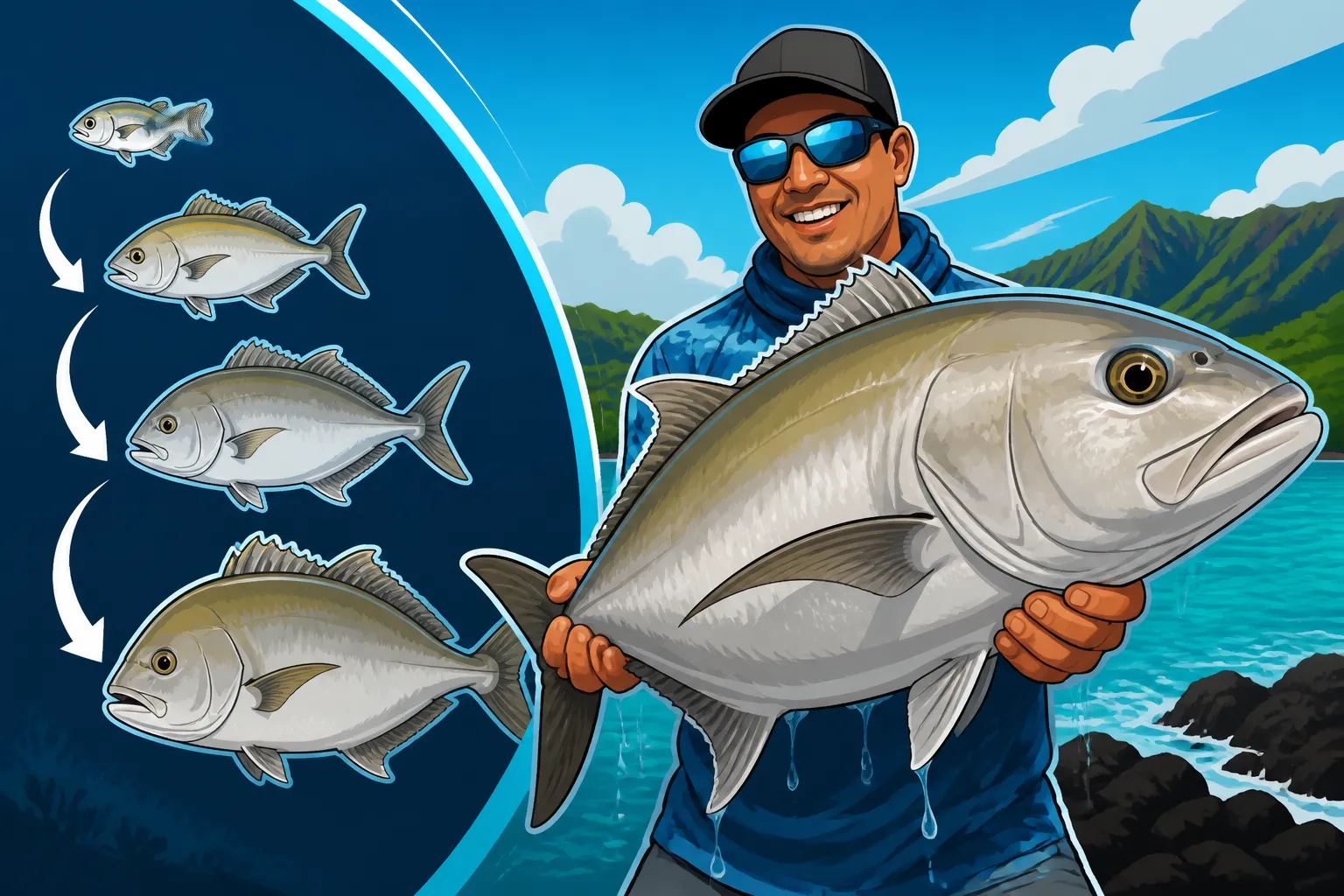
Here's where the local terminology clarifies things. While "papio" can encompass several species of juvenile trevally, the most sought-after "papio" that grow into "ulua" are the juvenile Giant Trevally. So, that feisty 5-pound fish you caught whipping on the reef might very well be the younger version of a 50-pound monster lurking in deeper water. It's a spectrum, not a sharp division. Think of it like a human child growing into an adult; they are the same organism, just at different life stages.
This understanding is crucial for anglers because it highlights the importance of conservation. Every papio released carefully has the potential to become a grand ulua someday. The journey from a finger-sized fry darting through the shallows to a massive, battle-scarred ulua patrolling the deep takes many years and involves navigating countless dangers. Recognizing this continuum allows us to appreciate the entire life cycle and practice sustainable fishing. The distinction also plays a role in Hawaii Papio and Ulua Size Rules, which aim to protect these fish as they mature. The general rule of thumb is that any trevally under a certain size limit is considered papio, while those over are ulua, though species-specific regulations might apply.
The Transformative Journey: From Papio to Trophy Ulua
The transformation from a small, agile papio to a formidable, trophy ulua is a remarkable journey of growth, adaptation, and survival in the challenging Hawaiian marine environment. This isn't just about getting bigger; it's about significant changes in behavior, diet, and habitat preference.
Growth Rates and Environmental Factors
The rate at which a papio grows into an ulua isn't uniform across all individuals or even all species of trevally. It's a complex process influenced by a multitude of environmental factors, with food availability being one of the most significant. In areas with abundant baitfish, crustaceans, and other prey, a young trevally will grow faster and reach maturity sooner. Conversely, in less productive areas, growth can be stunted. Water temperature also plays a role, with warmer, consistent tropical waters generally supporting faster metabolic rates and growth compared to cooler, more temperate zones, though Hawaii's waters are consistently warm.
Habitat health is another critical component. Healthy reef systems, vibrant estuaries, and thriving baitfish populations provide not only food but also protection from larger predators, allowing papio to survive their vulnerable early years. Areas like well-managed fish replenishment areas or marine protected areas, even if fishing is allowed, can serve as nurseries and feeding grounds, contributing to healthier and faster-growing fish stocks. For example, a papio growing up in a nutrient-rich harbor environment with plenty of food might grow faster than one in a sparse, overfished reef flat. The specific species of trevally also dictates potential maximum size and growth trajectory, as some trevally species naturally don't reach the same trophy sizes as the Giant Trevally.
Dietary Shifts and Hunting Behaviors
As a papio grows, its diet undergoes a significant evolution, moving from smaller, easily catchable prey to larger, more challenging targets. Juvenile papio, often found around the calmer, shallower parts of bays and reefs, will typically feed on small shrimp, crabs, juvenile reef fish, and small schooling baitfish like silversides. Their hunting technique is often characterized by fast, aggressive dashes and schooling behavior, using numbers to overwhelm prey.
However, as they transition into larger ulua, their diet becomes much more substantial. They begin to target larger reef fish like goatfish, parrotfish, and surgeonfish, as well as eels, octopus (or "tako" as we call them here), and even small sharks. Their hunting strategies also become more sophisticated. While still capable of explosive bursts of speed, larger ulua might employ ambush tactics, using reef structure to their advantage, or hunt in smaller, highly coordinated packs to corner and disorient larger prey. This shift in diet and hunting behavior is why different baits and lures are effective at different stages. For instance, tiny soft plastics or metal jigs might fool a papio, while a whole live mackerel or a massive topwater popper is needed to entice a true trophy ulua. If you’re looking to stock up on gear for both stages, checking out available fishing tackle on Amazon can give you a wide range of options for different prey sizes. To understand more about what these giants prefer, read What Ulua Eat Around Hawaii's Reefs.
Habitat Preferences Across Life Stages
The journey from papio to ulua also involves a significant migration through various marine habitats. Young papio thrive in environments that offer both food and protection. This typically includes shallow reef flats, tide pools, sandy shorelines with a good mix of structure, and even the calmer, nutrient-rich waters of harbors and estuaries. These areas provide plenty of small prey and places to hide from larger predators. You might see schools of papio darting around pier pilings or cruising the edges of sandy flats.
As they mature into ulua, their preferences shift towards deeper, more exposed, and often more turbulent waters. Large ulua are frequently found patrolling offshore structures, deep channels, the outer edges of barrier reefs, and underwater pinnacles. They gravitate towards areas with strong currents that bring in nutrient-rich waters and a constant supply of larger prey. Think about the dramatic drop-offs along the Kona Coast or the deep channels between our islands – prime ulua territory. These larger fish are powerful enough to contend with strong currents and are less vulnerable to predation, allowing them to occupy more exposed, productive hunting grounds. Understanding these habitat shifts is key to knowing where to cast your line, whether you're targeting a school of hungry papio or hoping for that once-in-a-lifetime encounter with a trophy ulua. Many anglers specifically seek out these varied locations for Best Deep Sea Fishing Spots in Hawaii or Best Shore Fishing Spots in Hawaii depending on their target.
Identifying Papio vs. Ulua: Beyond Just Size
While size is the most obvious differentiator between a papio and an ulua, there's more to it than just a measuring tape. Different species of trevally contribute to both categories, and even within the Giant Trevally, there are subtle clues that can tell you a lot about the fish you've caught.
Key Physical Characteristics (Species-Specific)
When you pull in a trevally, observe it closely. While both papio and ulua (especially the Giant Trevally) share a similar robust, compressed body shape, there are species-specific characteristics that can help. For instance, the Omilu (bluefin trevally) is usually smaller, even as an adult, and known for its distinctive iridescent blue fins. A small Omilu would be called papio, but a large adult Omilu would still be an Omilu, not typically an "ulua" in the sense of a giant trevally. The White Papio (lai or papio huli) typically has a more silver body and can grow quite large, also being identified as ulua when mature. The key is that "ulua" refers to the mature, large stage of certain trevally species, most notably the Giant Trevally, while "papio" refers to the juvenile stage of many trevally species, including the Giant Trevally.
For Giant Trevally specifically, regardless of size, look for their steep, blunt head profile, often described as having a "football" shape. As they grow from papio to ulua, their bodies become even deeper and more robust, with broad shoulders and powerful caudal (tail) fins. The lateral line, often a silvery stripe on smaller fish, can become more pronounced and sometimes even develop small scutes (bony plates) near the tail as the fish matures. Coloration can vary from silvery-bronze in sandy areas to darker, almost black hues in deeper, reefy environments. While a small GT papio might look proportionally similar to a larger ulua, the sheer mass and density of a trophy ulua's head and shoulders are unmistakable. If you're still not sure, this article helps differentiate: Ulua vs Papio: What's the Difference.
Behavioral Differences in the Water
Beyond physical traits, the way these fish behave in the water—from how they fight on the line to their natural schooling tendencies—can offer clues about their stage of life. Papio, being juveniles, often exhibit more schooling behavior. You might find them in large, active groups, especially when baitfish are abundant. Their fights are typically characterized by rapid, erratic bursts of speed, quick changes in direction, and often frantic headshakes near the surface. They’re fast and agile, making them incredibly fun on lighter tackle.
In contrast, a large ulua often presents a very different challenge. While they can still move with incredible speed, their fights are generally characterized by raw, unrelenting power. They tend to make long, powerful runs towards structure, trying to chafe the line, or simply bore down into the depths, making it feel like you've hooked a submarine. Their strikes can be explosive, often jarring the rod out of your hands, and they use their massive body weight to their advantage. Large ulua are also often more solitary or found in smaller, tighter groups, patrolling their territories with an imposing presence. The sheer power required to turn a large ulua away from a rocky ledge is an experience that leaves a lasting impression. Anglers often comment on the difference in the initial "thump" of a large ulua strike versus the quicker, lighter "tap" of a papio.
Targeting Each Stage: From Light Tackle to Heavy Gear
Successfully catching trevally in Hawaii means understanding that the gear and techniques need to evolve along with the fish's growth stages. What works for a feisty papio won't necessarily cut it for a monstrous ulua.
Techniques for Papio (Whipping, Light Spin)
Targeting papio is a fantastic entry point into trevally fishing. They are generally less wary than their larger counterparts and will strike a wider variety of offerings. One of the most popular techniques is "whipping," which involves casting and retrieving small, fast-moving lures. Think small metal jigs, soft plastics rigged on jig heads, or even small topwater poppers and stickbaits. The key is to mimic fleeing baitfish. Casting these lures into churning water, around bait schools, or along reef edges can produce explosive strikes. For those looking for local favorites, many anglers turn to specific types of fishing lures available through online retailers.
Light to medium spinning tackle is ideal for papio. A 7-9 foot rod with a fast action, paired with a 2500-4000 series spinning reel, spooled with 10-20 lb braided line and a 20-30 lb fluorocarbon leader, is a versatile setup. Bait fishing for papio is also highly effective. Small pieces of cut bait, squid, or live bait like opelu or akule fished with a float or on a light Carolina rig near structure can yield excellent results. Targeting papio often involves a lot of casting and covering ground, making it an active and engaging form of shore fishing. For more detailed tips on this, check out How to Catch Papio on Hawaii's Shoreline.
Strategies for Trophy Ulua (Sliding Bait, Live Bait, Heavy Poppers)
The game changes dramatically when you set your sights on a trophy ulua. This isn't for the faint of heart or light-tackle enthusiast. Ulua fishing requires heavy-duty gear, immense patience, and a deep understanding of their habits. One of the most iconic techniques for shore-based ulua fishing is "sliding bait," where a live or dead bait is sent out on a separate line or drone and then connected to your main line, allowing the bait to fish far offshore. This method often targets specific deep channels, drop-offs, or rocky points where ulua patrol. For more information on this specialized technique, see Sliding Bait Techniques for Ulua.
Another highly effective method involves live baiting from a boat or kayak, drifting large live fish like mackerel, opelu, or even small kahala over known ulua grounds. For the active angler, throwing heavy topwater poppers and stickbaits from shore or boat can be exhilarating. These lures often weigh several ounces and require stout rods to cast and work effectively. The strike of a large ulua on a topwater lure is one of the most violent and unforgettable experiences in fishing. Successful ulua anglers often spend hours, sometimes days, waiting for a single bite, but the reward is undoubtedly worth the effort.
Recommended Gear & Tackle for Each Stage
The contrast in gear required for papio versus ulua highlights the immense difference in their fighting power. Equipping yourself properly is non-negotiable for success and to avoid losing valuable tackle or, worse, losing a fish due to inadequate gear. Here's a general comparison:
| Feature | Papio (Juvenile Trevally) | Ulua (Trophy Giant Trevally) |
|---|---|---|
| Rod | 7-9 ft medium-light to medium spinning/casting | 9-12 ft heavy-duty surf rod, specialized ulua rod, heavy boat rod |
| Reel | 2500-4000 series spinning or baitcasting | 8000-20000 series heavy-duty spinning or conventional |
| Line (Braid) | 10-20 lb | 60-100 lb (or more for sliding bait) |
| Leader | 20-30 lb fluorocarbon or monofilament | 80-200 lb fluorocarbon or heavy mono |
| Lures/Baits | Small metal jigs, soft plastics, small poppers, cut bait | Large poppers, stickbaits, whole live/dead bait (mackerel, eels) |
| Hooks | Smaller J-hooks or treble hooks (size #4 to 1/0) | Heavy-duty circle hooks (size 10/0 to 20/0) |
| Terminal | Light swivels, small split rings, standard weights | Heavy-duty swivels, stout split rings, heavy lead weights |
When preparing for an ulua expedition, don't skimp on quality. Investing in robust rods and reels that can handle massive torque is crucial. Similarly, high-strength braided line and abrasion-resistant fluorocarbon leader are essential to withstand their powerful runs and sharp fins. For instance, finding a high-quality, heavy-duty conventional reel from Amazon that can handle 80lb braid and has a strong drag system is a common approach for anglers preparing for a battle with a trophy ulua. Remember, a chain is only as strong as its weakest link, and an ulua will exploit any vulnerability in your setup.
Conservation and Respect for Hawaii's Trevally
Fishing in Hawaii is not just about the catch; it's about respecting the ocean, its resources, and ensuring that future generations can experience the same thrill we do. When it comes to trevally, this means understanding and adhering to regulations and practicing responsible fishing techniques.
Regulations and Bag Limits (General)
Hawaii has a robust set of fishing regulations designed to protect our marine life, and this includes trevally species. These regulations are subject to change and can vary by location, so it's always critical to consult the latest information from the Hawaii Department of Land and Natural Resources (DLNR) Division of Aquatic Resources (DAR). Generally, there are minimum size limits for various trevally species, which often dictate whether a fish is considered a papio or an ulua. For example, specific length requirements might apply before you can retain a Giant Trevally. There might also be bag limits, restricting the number of fish you can keep per day.
Ignoring these rules isn't just illegal; it undermines the health of our fisheries. The goal of such regulations is to allow enough fish to mature and reproduce, ensuring a healthy population for years to come. Always measure your catch accurately and, if unsure, it's best to release the fish. Being informed about Hawaii Bag and Size Limits by Species and Hawaii DLNR Fishing Regulations Explained is a fundamental responsibility of every angler. Remember that special rules might apply in certain areas like Marine Life Conservation Districts (MLCDs), where fishing can be heavily restricted or entirely prohibited.
Practicing Responsible Catch and Release
Given the long journey from papio to trophy ulua, responsible catch and release practices are paramount, especially for the larger fish. A successful release means the fish swims away healthy, with a high chance of survival, to continue its growth and contribute to future spawning cycles. This is particularly important for ulua, which are often targeted for their trophy status rather than solely for consumption.
Here are some best practices for catch and release:
- Minimize Fight Time: Use appropriate gear to land the fish as quickly as possible without over-stressing it.
- Handle with Care: Avoid touching the fish's gills or eyes. If possible, keep the fish in the water while unhooking. If you must remove it, support its full body weight horizontally to avoid damaging internal organs. Avoid dragging it on rough surfaces.
- Use Barbless Hooks: Barbless hooks, or hooks with crushed barbs, are easier to remove and cause less damage to the fish.
- Quick Release: Have your pliers or de-hooking tool ready. Unhook the fish efficiently and release it gently headfirst into the water, facing any current to help push water through its gills.
- Revive if Necessary: If the fish appears sluggish, gently hold it upright in the water, moving it back and forth to force water over its gills until it regains strength and swims away on its own.
Every papio and ulua we encounter is a vital part of Hawaii's marine ecosystem. By understanding their life cycle, respecting regulations, and practicing ethical fishing, we can ensure that the thrill of catching these magnificent fish endures for generations of anglers to come.
Disclaimer
This article is for general informational purposes only and does not constitute professional advice. Laws, prices and regulations vary by location and change over time. Consult a qualified professional for guidance on your specific situation.