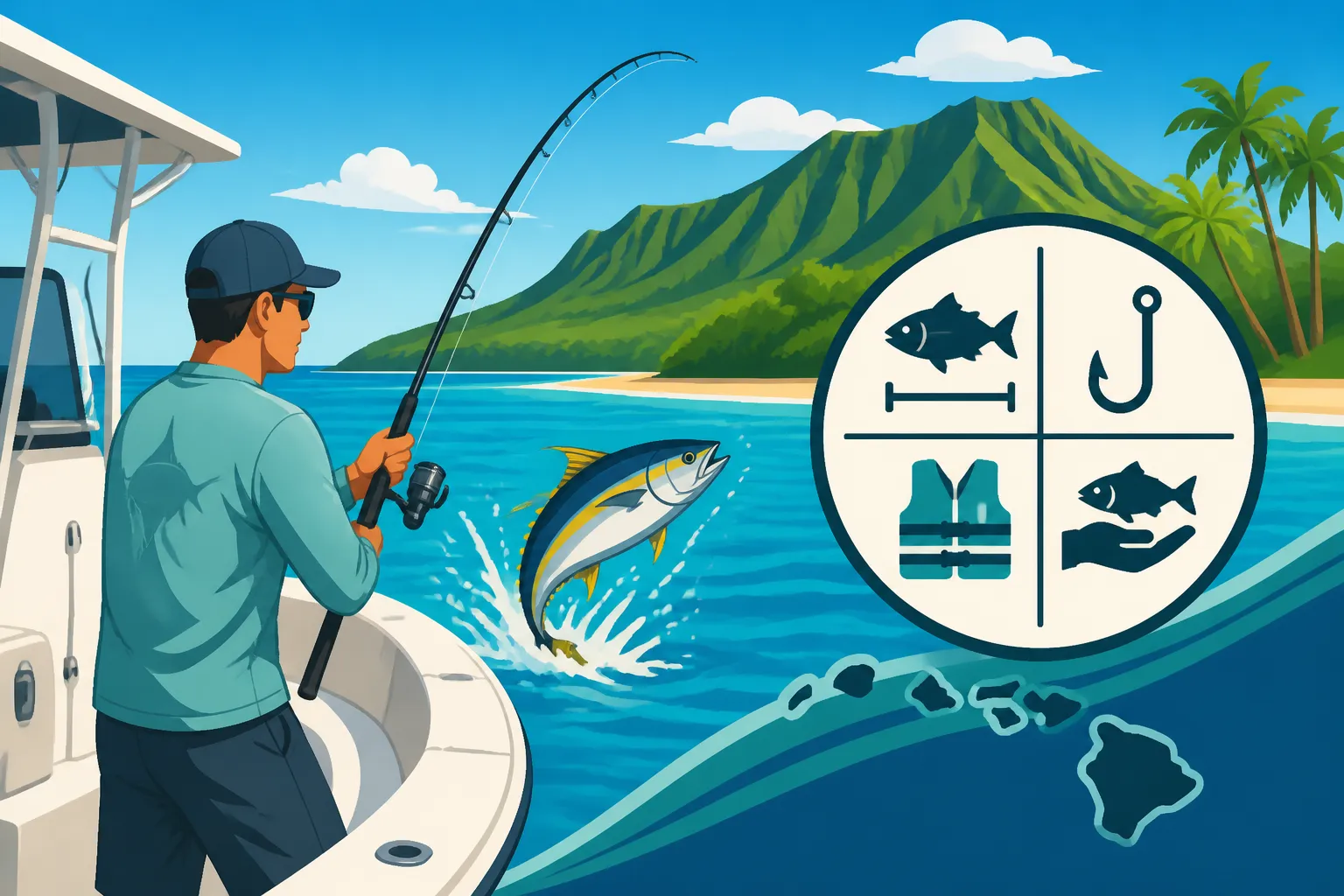
Hawaii Boating Laws for Anglers
Navigating the waterways of Hawaii can feel like stepping into a beautiful, yet sometimes perplexing, legal maze. For us anglers, the last thing we want is to accidentally break a rule while out chasing that dream catch. It's frustrating to just want to enjoy the ocean or a quiet reservoir, only to be constantly worried about unseen regulations. This comprehensive guide is here to untangle Hawaii's boating laws specifically for anglers, ensuring you can hit the water with confidence, knowing you're fully compliant and ready for a hassle-free day of fishing.
Understanding Hawaii's Boating Landscape for Anglers
Picture this: you've got your fishing gear ready, the sun is just rising over the Pacific, and the water looks absolutely perfect. You launch your boat, eager for that first cast, but in the back of your mind, there's a nagging question about whether you've got all your ducks in a row with the local regulations. It's a common feeling, and frankly, a valid one. Hawaii's waters are stunning, but they're also carefully managed to protect both the environment and everyone who uses them.
Why Boating Regulations Matter in the Islands
It's easy to look out at the vast ocean and think of it as a place without rules, a wild frontier. But here in Hawaii, where our natural resources are so precious and our boating community is vibrant, regulations are absolutely essential. They're not just there to make your life difficult; they're designed to keep you, your passengers, and even the marine life safe. Think about it: without clear rules on navigation, speed, and equipment, the channels could become chaotic, accidents would skyrocket, and our beautiful reefs could be damaged by careless operation or improper anchoring. These laws also play a crucial role in preventing pollution, ensuring that our pristine waters remain healthy for generations of anglers to come.
Moreover, these regulations help maintain order and respect among different types of water users. Whether you're sharing the channel with commercial fishing vessels, recreational kayakers, surfers, or even divers, understanding and adhering to boating laws fosters a harmonious environment. It ensures everyone knows what to expect and how to behave, minimizing conflicts and maximizing enjoyment for all. It's about collective responsibility to preserve the unique beauty and bounty of Hawaii's aquatic realm.
Who Oversees Boating in Hawaii
When it comes to boating laws in Hawaii, the primary authority you'll be dealing with is the Department of Land and Natural Resources (DLNR), specifically its Division of Boating and Ocean Recreation (DOBOR). These are the folks who register your boat, manage public boating facilities, and enforce the vast majority of state boating laws. They're the ones you'll go to for your vessel registration, for information on safe boating courses, and unfortunately, they're also the ones who might pull you over if something isn't quite right.
However, it's not just DOBOR. Other agencies also have a hand in keeping our waters safe. The U.S. Coast Guard, for example, enforces federal boating laws, especially on larger vessels or in situations involving serious safety violations. You might also encounter county lifeguards or even local law enforcement in certain harbors or near popular beaches, particularly when it comes to speed limits or restricted zones close to shore. So, while DOBOR is your main point of contact, always be aware that other authorities might also be present, each with their own specific jurisdiction and enforcement powers. Staying informed about the various agencies involved helps you understand who to approach for specific questions and what to expect when you're out on the water.
Vessel Registration and Titling Requirements
One of the first hurdles many anglers face when getting their boat ready for Hawaiian waters is understanding the often-confusing world of registration and titling. It’s not just about slapping a sticker on your hull; it’s a legal acknowledgment of your vessel and your responsibility as its owner. Skipping this crucial step can lead to hefty fines and a lot of unnecessary stress, which is the last thing you need when you're trying to unwind on the water.
Which Boats Need to Be Registered
Generally speaking, if your boat has a motor, you’re almost certainly going to need to register it with the Hawaii Department of Land and Natural Resources (DLNR), through its Division of Boating and Ocean Recreation (DOBOR). This includes everything from a small aluminum skiff with an outboard motor, to a massive sportfisher, and even your personal watercraft (PWC). The motor is the key differentiator here. It doesn't matter if it's an electric trolling motor or a gas-guzzling inboard; if it propels your vessel, registration is usually required.
However, there are a few important exceptions. For instance, most non-motorized vessels like canoes, kayaks, stand-up paddleboards (SUPs), and surfboards are exempt from registration requirements. While it's great news if you're planning a paddle-powered fishing trip, it doesn't mean you're off the hook for all rules; safety equipment and operational guidelines still apply. Also, if your vessel is already documented by the U.S. Coast Guard, it does not need state registration. Understanding these nuances is crucial, as mistakenly assuming your boat is exempt can lead to an unwelcome surprise from enforcement. For more details, you can read our guide on whether "Are Kayaks Required to Be Registered in Hawaii?".
The Registration Process and Associated Fees
The process of registering your vessel in Hawaii typically involves a few steps and some paperwork. You'll need to submit an application, provide proof of ownership (like a bill of sale or manufacturer's statement of origin), and pay the applicable fees. The fees themselves depend on the length of your vessel and the type of registration (initial, renewal, transfer). For example, a new registration for a small recreational boat might be significantly less than a commercial vessel or a larger yacht. You’ll usually apply at a DOBOR district office or through approved agents. They'll issue you a Certificate of Number and validation decals, which must be prominently displayed on your boat.
It’s important to gather all necessary documents before you go. This might include your Hawaii driver's license or state ID, the vessel's hull identification number (HIN), and any previous registration documents if you're transferring ownership from out-of-state. Sometimes, an inspection of the vessel might be required, especially for older boats or those imported from other countries, to verify the HIN and ensure basic compliance. Don't forget, there are also specific rules for trailers. You can find detailed information on "Hawaii Boat Registration Requirements" on the DLNR website, which is invaluable for ensuring you don't miss any steps.
Hawaii Boat Registration Renewal Period
Just like your car's registration, your boat's registration in Hawaii isn't a one-and-done deal. It needs to be renewed periodically to remain valid. In Hawaii, vessel registrations are generally valid for two years, and you'll typically receive a renewal notice in the mail or via email as the expiration date approaches. Missing that renewal date is a common pitfall that many boaters, including seasoned anglers, can fall into, often leading to fines or complications if you're stopped by enforcement on the water.
It's your responsibility to ensure your registration is current, even if you don't receive a reminder. Keeping your contact information updated with DOBOR is crucial for receiving these notices. Renewals can often be completed online, by mail, or in person at a DOBOR office. There might be a grace period, but it's always best to renew well in advance to avoid any lapse in coverage. Imagine planning an epic fishing trip, only to realize your registration expired last week – it’s a scenario no one wants to face. So, mark your calendars or set digital reminders to keep your boat legal and your fishing plans uninterrupted.
Essential Safety Equipment for Every Angler's Boat
When you’re out on the open ocean, or even a calm reservoir, safety isn’t just a good idea – it’s a legal requirement and, more importantly, a lifeline. The last thing any angler wants is to be caught unprepared in an emergency, or worse, to receive a citation because vital safety gear was missing or expired. These aren't just arbitrary rules; they are put in place to protect lives, and understanding them fully is paramount.
Personal Flotation Devices PFDs and Their Specifics
One of the most critical pieces of safety equipment you'll need on your boat are U.S. Coast Guard-approved Personal Flotation Devices, or PFDs, commonly known as life jackets. The law is quite clear: you must have at least one wearable PFD for every person on board your vessel. This isn't just a suggestion; it's a non-negotiable rule. Beyond that, all children 12 years of age and under must wear a PFD while on board a vessel that is underway, unless they are inside an enclosed cabin. This specific age requirement is often overlooked, but vital for family fishing trips.
But it’s not just about having enough PFDs; they also need to be in serviceable condition, meaning no tears, broken buckles, or waterlogging. They must also be correctly sized for the intended wearer. A PFD designed for an adult won't adequately protect a child, and vice versa. It’s a good idea to periodically inspect your PFDs, especially before the start of fishing season, to ensure they meet all these requirements. You can find a wide range of Coast Guard-approved PFDs on platforms like Amazon, making it easy to ensure everyone on your boat is properly outfitted. This critical information is detailed further in our guide on "Life Jacket Requirements for Hawaii Boaters".
Fire Extinguishers, Visual Distress Signals, and Other Must-Haves
Beyond PFDs, there's a host of other safety equipment that Hawaiian boating laws mandate, depending on your vessel's size and type. For instance, most boats with an enclosed engine compartment, permanent fuel tanks, or other potential fire hazards are required to carry a readily accessible, U.S. Coast Guard-approved fire extinguisher. Just like PFDs, these need to be in good working order, regularly inspected, and not expired.
Visual distress signals (VDS) are another crucial item. If you’re operating on coastal waters, certain bays, or beyond the line of demarcation (where the ocean meets inland waters), you'll typically need to carry VDS appropriate for both day and night use. This could be a combination of flares, an orange distress flag, or an electric distress light. And don't forget a sound-producing device, like a horn or whistle, which is vital for communicating with other vessels in fog or low visibility. A first-aid kit, while not always legally mandated, is highly recommended. These small investments, often easily found on Amazon, can make a monumental difference in an emergency. You can review a comprehensive list in our article on the "Hawaii required boat safety equipment checklist".
Navigational Lights and Sound-Producing Devices
Operating your boat from sunset to sunrise, or during periods of restricted visibility like heavy fog or rain, brings additional legal obligations for safety equipment, specifically concerning navigational lights. Every vessel, regardless of size, must display appropriate navigation lights when underway during these hours. This usually means a red light on the port (left) side, a green light on the starboard (right) side, and a white all-around masthead light or stern light, depending on the vessel type and length. These lights are crucial for other boaters to determine your vessel's size, direction of travel, and whether it's underway or at anchor, preventing collisions in the dark.
Beyond lights, having a proper sound-producing device is also a mandatory safety item. Whether it’s a handheld air horn, a mounted electric horn, or even just a whistle on smaller vessels, you need to be able to signal your presence and intentions to other boats, especially in low visibility or when approaching blind turns in channels. These devices are essential for warning other mariners of your presence, signaling distress, or indicating maneuvers. Ensuring your navigational lights are functioning correctly before every night excursion and that your sound device is easily accessible should be part of your pre-trip routine, ensuring a safer experience for everyone on the water.
Rules of the Road: Safe Operation on Hawaiian Waters
Just like driving a car, operating a boat in Hawaii comes with a set of "rules of the road" designed to prevent collisions and ensure a smooth flow of traffic. It's not always intuitive, especially if you're used to open water where you feel like you have the sea to yourself. But in harbors, channels, and popular fishing spots, understanding these rules is crucial for safety and avoiding a run-in with another vessel, or worse, with law enforcement.
Understanding Right-of-Way and Navigation Rules
The concept of right-of-way on the water is one of the most fundamental aspects of safe boating. It dictates which vessel has the "stand-on" privilege (meaning they maintain course and speed) and which is the "give-way" vessel (meaning they must take early and substantial action to avoid a collision). These rules are based on the International Regulations for Preventing Collisions at Sea (COLREGS), which Hawaii largely adopts. For instance, a power-driven vessel typically gives way to sailing vessels, and all vessels generally give way to those that are restricted in their ability to maneuver, like large commercial fishing boats actively trawling or dredging.
When two power-driven vessels are approaching head-on, both must alter course to starboard (right) to pass port-to-port. If they are crossing, the vessel approaching from the starboard side has the right-of-way. It sounds a bit complicated at first, but these rules are designed to create predictable behavior and avoid ambiguity when vessels are on a collision course. As an angler, you'll often be focused on your lines, but you must remain vigilant, constantly scanning the horizon and your surroundings to anticipate potential conflicts and act accordingly. Remember, it's always better to take early, obvious action to avoid a collision, even if you technically have the right-of-way.
Speed Limits and Restricted Areas to Be Aware Of
While the open ocean might feel like a place where you can open up the throttle, Hawaii has very specific speed limits and restricted areas that boaters, particularly anglers trying to get to their favorite spots, need to respect. Near shorelines, in harbors, and around designated swimming or protected areas, "No Wake" or "Slow Speed" zones are common. These zones require you to operate your vessel at the slowest speed necessary to maintain steerage and avoid creating a wake that could disturb others, damage property, or harm marine life.
Beyond speed, there are numerous restricted areas, Marine Life Conservation Districts (MLCDs), and Fish Replenishment Areas (FRAs) that have varying rules regarding boating, anchoring, and even fishing itself. For example, some areas might prohibit anchoring on coral reefs, while others might restrict access entirely to protect sensitive habitats. Operating in a protected area without knowing the specific rules can lead to significant penalties, not to mention environmental damage. Always consult local charts and DOBOR advisories before heading out to an unfamiliar area to ensure you're not inadvertently trespassing or violating specific conservation measures. These are often clearly marked on navigational charts and sometimes with buoys, so keep an eye out.
Hawaii Boating Under the Influence Penalties
Just like driving a car under the influence, operating a boat while impaired by alcohol or drugs (BUI) is strictly prohibited and carries severe penalties in Hawaii. The legal blood alcohol content (BAC) limit for operating a vessel is the same as for driving a car: 0.08% for adults. For commercial vessel operators, or those under 21, the limit is even lower. It's a critical safety issue, as impaired judgment, slower reaction times, and reduced coordination drastically increase the risk of accidents on the water, endangering yourself, your passengers, and other mariners.
The consequences for a BUI conviction are no joke. They can include substantial fines, suspension or revocation of your boating privileges, mandatory boater education courses, and even jail time. If an accident occurs and injuries or fatalities result, the charges can become even more serious, leading to felony convictions. Law enforcement agencies, including DOBOR and the Coast Guard, actively patrol Hawaiian waters for BUI infractions, especially during holidays and peak boating seasons. The best advice is simple: if you plan to drink, designate a sober operator. There's no fish worth the risk of a BUI, as detailed in our guide on "Hawaii boating under the influence penalties".
Special Considerations for Anglers: Fishing-Specific Boating Laws
As anglers, our relationship with our boats is often intimately tied to the act of fishing itself. We deck them out with rod holders, fish finders, and bait tanks. But this also means there are specific boating laws that directly impact how we fish from our vessels in Hawaiian waters. It's not just about getting to the spot; it's about how you behave once you're there, especially when it comes to the impact on the environment and marine life.
Fishing Gear Placement and Storage on Board
It might seem like a minor detail, but how you store and secure your fishing gear on your boat is not only a matter of safety for you and your passengers but can also fall under boating regulations. Loose tackle boxes, unsecured rods, or flying lures can become dangerous projectiles in rough seas or during sudden maneuvers. Imagine a sudden swell knocking your heavy tackle box into someone's shin, or a stray hook snagging a passenger. Enforcement officers often look for general safety compliance, and a messy deck can be a red flag.
Therefore, it's highly recommended to keep your gear stowed properly. Rods should be in holders or secured racks. Tackle boxes should be latched and placed in compartments or strapped down. Knives should be sheathed. Not only does this prevent injuries, but it also minimizes the risk of gear going overboard, becoming marine debris, or interfering with navigation or emergency equipment. A tidy boat is a safe boat, and it reflects positively on you as a responsible angler.
Hawaii Boating Laws for Anchoring and Mooring in Fishing Spots
Anchoring is a fundamental part of many fishing strategies, allowing you to hold position over a productive reef or a deep-sea drop-off. However, Hawaii has strict rules about where and how you can drop anchor, primarily to protect its incredibly delicate coral reefs and sensitive marine habitats. Anchoring directly on coral is generally prohibited and can result in severe fines, even if it's unintentional. The damage caused by an anchor chain dragging across a reef can take decades to heal.
Many popular fishing spots, especially those within or near Marine Life Conservation Districts (MLCDs) or Fish Replenishment Areas (FRAs), will have specific anchoring restrictions or even mooring buoys available for use. Always look for sandy bottoms or use existing mooring buoys where provided. If you're unsure, it's often better to drift fish or use a GPS-enabled trolling motor with a "spot-lock" feature rather than risking damage to the reef. Being aware of and adhering to these rules is not just about avoiding penalties; it's about being a kuleana (responsible) steward of Hawaii’s irreplaceable ocean environment. These specific rules are often outlined in guides like "Hawaii Marine Life Conservation Districts, Explained" or "Hawaii Fish Replenishment Areas in West Hawaii."
Hawaii Turtle and Monk Seal Proximity Rules for Anglers
Hawaii is home to incredible marine wildlife, including protected species like green sea turtles (honu) and Hawaiian monk seals (ilio-holo-i-ka-uaua). Encountering these magnificent creatures while fishing is a truly special experience, but it also comes with a legal responsibility: maintaining a respectful and safe distance. Disturbing, harassing, or injuring these animals is strictly prohibited under both state and federal law, and the penalties are severe.
This means that if you're fishing and a turtle or monk seal approaches your boat, you must avoid any actions that could disturb it. Do not attempt to feed, touch, or swim with them. Maintain a distance of at least 10 feet from turtles and at least 50 feet from monk seals, though a greater distance is always safer and more respectful. If you accidentally hook a turtle or monk seal, it’s critical to know what to do: call the NOAA Marine Mammal Stranding Hotline immediately (1-888-256-9840) and follow their instructions. Do not try to remove the hook yourself unless specifically advised by experts. Awareness of these guidelines, detailed in our guide on "Hawaii turtle and monk seal proximity rules for anglers," is not just legal compliance; it’s an ethical imperative for all ocean users.
Paddlesports and Non-Motorized Vessels: What Anglers Need to Know
Not every angler in Hawaii needs a large motorboat to get out on the water. Kayaks, stand-up paddleboards (SUPs), and traditional canoes are incredibly popular ways to fish, offering quiet access to nearshore reefs and flats. While these vessels often have fewer registration requirements, they are by no means exempt from safety and operational rules. It's a common misconception that because they're human-powered, the rules don't apply, but that couldn't be further from the truth.
Kayak, SUP, and Canoe Registration and Safety
As we touched on earlier, one of the biggest benefits for anglers using kayaks, SUPs, or canoes is that, generally, these non-motorized vessels are exempt from the state's registration requirements. This means no annual fees or decals to worry about, which can be a relief for budget-conscious anglers. However, if you decide to attach any kind of motor – even a small electric trolling motor – to your kayak or canoe, it immediately becomes a "motorized vessel" and will then require registration with DOBOR. This is a crucial distinction that many paddlers overlook.
While registration might be waived, safety is not. Every person on a kayak, SUP, or canoe must still have a U.S. Coast Guard-approved PFD on board. For children 12 and under, that PFD must be worn at all times while underway. You also need a sound-producing device (like a whistle) and, if operating between sunset and sunrise, proper navigation lights. This often means a white all-around light that can be seen 360 degrees. These small vessels can be hard to spot, especially in choppy water or low light, so these safety measures are paramount. Our detailed article on "Hawaii Non-Motorized Boat Registration Exemption" provides more context.
Life Jacket Requirements for Hawaii Boaters on Small Vessels
Let's reiterate, because it's so important for those of us who love to fish from kayaks, SUPs, or canoes: The requirement for PFDs (life jackets) is absolute. Even if you consider yourself an expert swimmer, the unexpected can happen quickly on the water. A sudden rogue wave, a capsize, or an unforeseen medical emergency could leave you struggling in the water, and a PFD can be the difference between a close call and a tragedy. It’s not about if you can swim; it's about survivability in an emergency.
For adults on non-motorized vessels, the rule is to have a PFD "readily accessible." This means it needs to be immediately available for use, not buried under gear or stowed in a dry bag that takes time to open. Many kayak anglers choose to wear their PFDs at all times for convenience and maximum safety, which is always the best practice. For children aged 12 and under, the rule is even stricter: they must wear their PFD at all times while the vessel is underway. This applies equally to a large yacht and a small fishing kayak. Always choose a PFD that is comfortable, properly fitted, and Coast Guard-approved. You can usually find great options on Amazon that cater to paddlers, with features like extra pockets for tackle or hydration.
Safe Trailering and Launching Practices
Getting your kayak, canoe, or even a small motorboat to the water often involves trailering, and there are specific laws and best practices that ensure both your safety and that of others on the road and at the launch ramp. Your trailer must be properly registered and licensed, just like any other vehicle in Hawaii, and it needs functioning lights (brake lights, turn signals, running lights). Overloaded or improperly secured trailers are a major hazard, leading to accidents and potentially severe fines.
When launching your vessel, especially at public ramps, courtesy and efficiency are key. Prepare your boat before you get to the ramp – load your gear, attach tie-downs, and remove your transom straps and engine-travel supports. This minimizes the time you block the ramp, showing respect for other waiting boaters. Be mindful of prop wash near the ramp, which can erode the bottom and create hazards. After launching, move your vehicle and trailer to a designated parking area promptly. Likewise, when retrieving your vessel, be efficient. Following these practices not only keeps you compliant but also contributes to a smoother, less stressful experience for everyone enjoying Hawaii's precious access points.
Operating Your Vessel: Age, Education, and Common Sense
Just like driving a car, operating a boat safely and legally in Hawaii requires a certain level of knowledge, skill, and maturity. It’s not just about steering the boat; it’s about understanding marine environments, reacting to changing conditions, and making responsible decisions. Hawaii has put some clear guidelines in place to ensure that those at the helm are prepared.
Hawaii Boater Education Certificate Rules
While Hawaii does not currently have a universal mandatory boater education requirement for all operators, there are specific circumstances where it becomes necessary. For instance, if you are convicted of a boating infraction, especially a serious one like reckless operation or a BUI, you will likely be mandated to complete an approved boater safety course as part of your penalty. Additionally, if you're operating a Personal Watercraft (PWC), sometimes called a jet ski, there are age-related requirements that might necessitate formal education, which we’ll discuss next.
However, even without a universal mandate, completing a boater education course is highly recommended for all anglers. These courses cover everything from navigation rules, safety equipment requirements, emergency procedures, environmental awareness, and even basic knot-tying. It’s a fantastic way to boost your confidence and ensure you’re prepared for any situation on the water. Many courses are available online or in person through organizations like the U.S. Coast Guard Auxiliary or Power Squadrons. Investing in a boater education certificate is an investment in your safety and the safety of those around you. You can find more information about these requirements in the "Hawaii required boater education certificate rules".
Hawaii PWC Operator Minimum Age
Personal watercraft (PWCs) like Jet Skis, WaveRunners, and Sea-Doos are incredibly popular for recreation and can even be used for fishing in certain areas. However, because of their speed and maneuverability, Hawaii has specific regulations regarding who can operate them. Generally, you must be at least 15 years old to operate a PWC in Hawaii. If you are between 15 and 17 years old, you are also required to complete a boater education course approved by DOBOR or the U.S. Coast Guard.
This age and education requirement is in place to ensure that young operators have a foundational understanding of safe boating practices, navigation rules, and environmental responsibilities before taking control of a powerful PWC. These vessels can be incredibly fun, but they also demand respect and responsible operation to prevent accidents. Always confirm the latest age restrictions and educational requirements before allowing a minor to operate a PWC. This is crucial for their safety and to avoid legal trouble, as detailed in our guide on the "Hawaii PWC operator minimum age".
Safe Trailering and Launching Practices
Beyond the actual operation of your boat on the water, getting it there and back safely is also covered by a set of practices, some of which are legally mandated and all of which are common sense. Proper trailering involves ensuring your boat is securely fastened to the trailer, with appropriate tie-downs at the bow and stern. The trailer itself needs to be in good repair, with working lights, good tires, and properly maintained bearings. Overloaded trailers or those with faulty components are traffic hazards, and law enforcement can issue citations for these issues even before you hit the water.
At the launch ramp, efficiency and courtesy are paramount. Prepare your boat for launch before you back down the ramp – remove covers, load gear, insert the drain plug (a surprisingly common mistake!), and remove transom straps. This minimizes the time you occupy the ramp. Back down slowly and carefully, being mindful of others. Once your boat is in the water, move it away from the ramp quickly so others can use it, and then park your tow vehicle and trailer in a designated area. The same applies in reverse when retrieving your boat. These practices ensure smooth operations at busy ramps and prevent frustrations among fellow anglers and boaters.
Enforcement and Penalties for Violations
It’s one thing to know the rules, but it’s another to understand what happens if you inadvertently, or intentionally, break them. Nobody wants a surprise fine or a confrontation with law enforcement while trying to enjoy a peaceful day of fishing. Understanding the potential consequences can serve as a powerful motivator to always stay compliant.
Common Infractions and Their Consequences
Hawaii's boating laws are enforced by various agencies, including the Department of Land and Natural Resources (DLNR) Division of Boating and Ocean Recreation (DOBOR) enforcement officers, the U.S. Coast Guard, and even local police departments. Common infractions range from minor administrative violations to serious offenses. Missing or expired registration, for example, might result in a warning for a first offense, but more often leads to a citation and a fine that can easily be a few hundred dollars. Failing to have enough PFDs, or having unserviceable ones, is another frequent violation that carries similar penalties, as it directly impacts safety.
More serious infractions, like operating in a restricted zone, anchoring on coral, or reckless operation, can lead to much higher fines, potentially thousands of dollars, and could even result in your vessel being impounded. These violations often carry a greater environmental or public safety risk, so the penalties reflect that severity. And, of course, the most severe penalties are reserved for operating under the influence (BUI), which can include felony charges, significant jail time, and permanent loss of boating privileges, depending on the specifics of the case and whether injuries or fatalities occurred.
What to Do if You're Stopped by Enforcement
If an enforcement officer from DOBOR, the Coast Guard, or any other agency signals for you to stop, it’s crucial to remain calm and comply immediately. Reduce your speed, put your engine in neutral, and stop your vessel. Turn off any loud music and keep your hands visible. Have your documentation ready: your vessel's registration, any required boating education certificates, and a valid photo ID. Be polite and respectful; arguing or resisting will only escalate the situation and could lead to additional charges.
The officer will typically explain why they stopped you and ask for your documents. They may also conduct a safety inspection, checking for required safety equipment like PFDs, fire extinguishers, and sound-producing devices. If you are found to be in violation, they will issue a citation. While you can explain your situation, it's generally best to keep it brief and cooperative. Any arguments should be reserved for court if you choose to contest the citation. Remember, your goal is to resolve the stop as smoothly and quickly as possible and avoid further complications.
Hawaii Fishing Without a License Penalty
While this guide focuses on boating laws, it's impossible to discuss legal fishing in Hawaii without touching upon fishing licenses, as the two often go hand-in-hand. In Hawaii, saltwater (ocean) fishing traditionally did not require a recreational license for residents or non-residents, which made it unique among most U.S. states. This has changed, however, with a new recreational marine fishing license system now in place for non-residents, and potentially for residents in the future for certain activities or areas. Freshwater fishing has always required a license.
If you are found fishing in an area or for a species that requires a license, and you don't possess one, you could face penalties. These generally include fines, which can vary depending on the severity and whether it's a first offense. Repeated violations or fishing in particularly sensitive areas might lead to higher fines or even confiscation of gear. It's a common mistake for visitors who assume no license is needed, or for locals who might not be up-to-date on new regulations. Always double-check the latest requirements with the Hawaii Division of Aquatic Resources (DAR) before casting a line, whether from shore or from your boat. You can learn more about this in our guide on "Hawaii Fishing Without a License Penalty" or "Do You Need a Fishing License in Hawaii".
| Safety Item | Requirement for Motorized Vessels | Requirement for Non-Motorized Vessels (Kayak, SUP) | Notes | Where to Buy (e.g.) |
|---|---|---|---|---|
| Personal Flotation Devices (PFDs) | 1 wearable Type I, II, III, or V per person onboard. Children 12 and under MUST WEAR while underway. | 1 wearable Type I, II, III, or V per person onboard. Children 12 and under MUST WEAR while underway. | Must be USCG-approved, in good condition, and appropriately sized for the user. | Amazon |
| Fire Extinguisher | Required if: enclosed engine, permanent fuel tank, enclosed cabin, or other fire hazards. (Specific type/size depends on vessel length) | Not typically required. | Must be USCG-approved, in good and serviceable condition, and readily accessible. Check expiration dates annually. | Amazon |
| Visual Distress Signals (VDS) | Required for coastal waters, certain bays, and beyond the line of demarcation. (Day & Night signals) | Required for coastal waters, certain bays, and beyond the line of demarcation. (Day & Night signals) | Examples: Pyrotechnic flares (must be unexpired), orange distress flag (day), electric distress light (night). | Marine Stores |
| Sound-Producing Device | Required (horn, whistle, or bell) | Required (whistle or horn) | Capable of producing an efficient sound signal audible for at least 1/2 mile. Useful for signaling intent, fog. | Amazon |
| Navigation Lights | Required for operation from sunset to sunrise and in restricted visibility. | Required for operation from sunset to sunrise and in restricted visibility (typically a 360-degree white light). | Specific configurations (red/green sidelights, white stern/masthead lights) depend on vessel length and type. | Marine Stores |
| Bailer/Bilge Pump | Required if boat has closed construction or is not self-bailing. | Not always strictly required by law for kayaks/SUPs, but highly recommended. | Essential for removing water from the hull. Hand bailer or electric pump. | Amazon |
| Anchor and Line | Recommended, especially for fishing. | Recommended. | While not always legally required, vital for safety and holding position. Choose appropriate size/weight for your vessel and conditions. | Marine Stores |
| Oars/Paddles | Recommended as a secondary means of propulsion if engine fails. | Required. | Essential for maneuvering non-motorized vessels. Even motorized boats benefit from backup paddles/oars. | Sports Stores |
Disclaimer
The information provided in this guide is for general informational purposes only and does not constitute legal advice. Boating laws and regulations in Hawaii can change, and interpretations may vary. It is always the responsibility of the individual boater to consult the most current regulations from the Hawaii Department of Land and Natural Resources (DLNR) Division of Boating and Ocean Recreation (DOBOR) and the U.S. Coast Guard, and to ensure full compliance before operating any vessel in Hawaiian waters.