Best waters for trophy ahi in Hawaii
Many anglers dream of battling a true trophy yellowfin tuna, known locally as ahi, but often struggle to pinpoint where in Hawaii these magnificent fish are most consistently found in their largest sizes. It can be disheartening to invest in a charter only to miss the prime grounds for the giants. This comprehensive guide will illuminate the specific Hawaiian waters renowned for producing trophy ahi, delve into the oceanographic conditions that attract them, and offer insights into how you can best position yourself for an unforgettable catch.
The Quest for Trophy Ahi: Why Hawaii Reigns Supreme
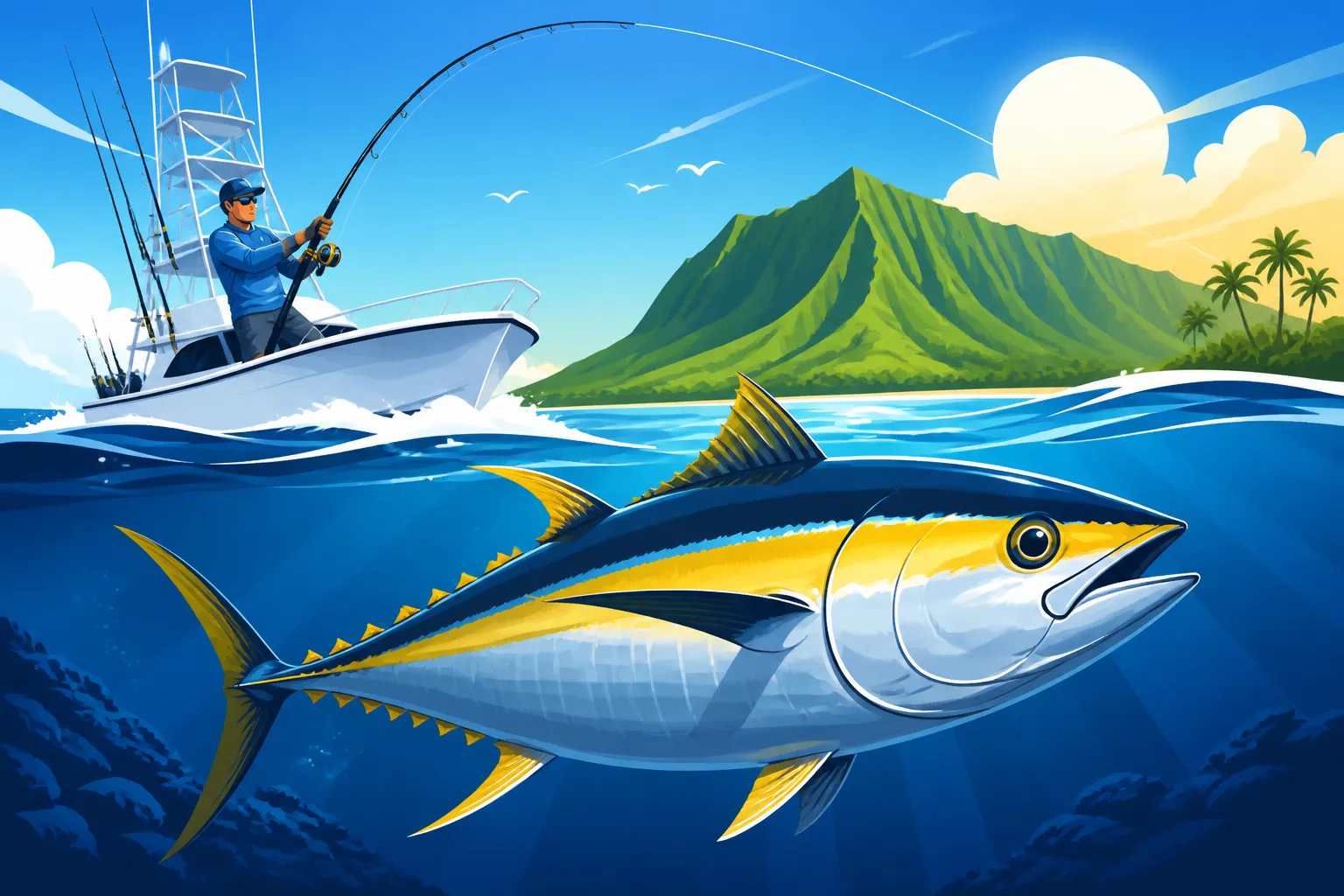
Hawaii holds a special, almost mythical, place in the hearts of big game anglers, particularly when it comes to ahi. These aren't just any yellowfin tuna; the deep, nutrient-rich waters surrounding our islands consistently produce some of the largest, most powerful ahi on the planet, often reaching weights that push the 100-pound mark and beyond – true trophy fish. The sheer power of an ahi, combined with its stunning iridescent colors fresh out of the water, makes it a prize unlike any other.
What makes Hawaii such a unique magnet for these pelagic giants? It boils down to a confluence of deep oceanic trenches, specific current patterns, and a thriving ecosystem of baitfish that form the perfect hunting grounds. Unlike many other fishing destinations, Hawaii's deep waters are often found remarkably close to shore, particularly on islands like the Big Island. This allows charters to access prime offshore hunting grounds quickly, maximizing fishing time. For an in-depth look at this species, check out Hawaii Ahi (Yellowfin Tuna) Fishing in Hawaii.
Pinpointing the Premier Waters for Giant Yellowfin Tuna
When it comes to consistently finding trophy-sized ahi in Hawaii, certain areas stand out above the rest. These are the locations where the ocean's intricate dance of currents, baitfish, and deep-water structure creates the ideal conditions for giant yellowfin to thrive.
The Legendary Kona Coast of the Big Island
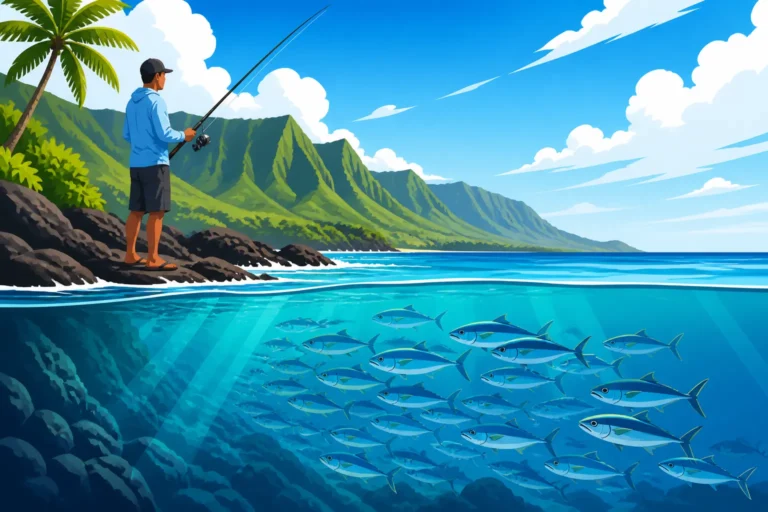
Without a doubt, the Kona Coast of the Big Island is internationally renowned as a prime destination for pelagic species, and trophy ahi are no exception. What makes Kona so special? It's a combination of factors. The deep blue water drops off dramatically just a short distance from shore, providing instant access to prime feeding grounds for tuna. The leeward side of the island typically offers calmer seas, which is a huge bonus for comfortable fishing, though the fish don't seem to mind a little chop.
Anglers targeting trophy ahi off Kona often focus on areas where current lines converge, near seamounts, or around the vast network of Fish Aggregating Devices (FADs) deployed by the state. These FADs act like beacons in the open ocean, drawing in smaller baitfish, which in turn attract the larger predators like ahi. The deep drop-offs and canyon systems provide ideal ambush points and foraging grounds. Many record-setting ahi have been pulled from these very waters, cementing Kona's reputation. If you're planning a trip, consider exploring a Kona Coast Fishing Guide for more localized insights.
Offshore Oahu: Beyond the Spotlight
While Kona often steals the spotlight, Oahu's offshore waters are absolutely capable of producing incredible trophy ahi, sometimes even larger than those caught off the Big Island. The key here is knowing where to look. Oahu's deep water banks and submerged structures, particularly on the windward (east) and leeward (west) sides, can hold massive schools of ahi.
Fishing off Oahu often involves running further offshore to reach the more consistent grounds, but the rewards can be phenomenal. Areas around specific buoy systems, deep ocean pinnacles, and even the extensive deep-water canyon systems that fall off Oahu's coast are prime targets. These spots act as natural gathering points for bait, drawing in hungry ahi from the vast Pacific. Don't underestimate Oahu's potential for a truly memorable ahi. You can find more details in our Oahu Fishing Guide.
Maui and Other Island Opportunities
Maui, particularly its offshore waters accessible from harbors like Ma'alaea or Lahaina, also offers excellent opportunities for trophy ahi. Similar to Oahu, anglers often head further offshore to seamounts and FADs. The waters between Maui, Lanai, and Molokai can be incredibly productive, especially during certain times of the year when ahi are migrating through.
Kauai, while perhaps less frequently associated with giant ahi than Kona, still provides fantastic fishing, particularly on its south and west sides where the shelf drops off into very deep water. The more remote nature of some of Kauai's fishing grounds can sometimes lead to less pressured fish. Essentially, wherever deep, blue water meets a rich food source and favorable currents around any of the main Hawaiian Islands, there's a chance for a trophy ahi. Always consult a Maui Fishing Guide or a Kauai Fishing Guide for island-specific advice.
| Island/Region | Primary Trophy Ahi Zones | Key Characteristics |
|---|---|---|
| Kona Coast (Big Island) | 100-fathom line, FADs, Seamounts, Deep Canyons | Calm leeward waters, quick access to deep water, consistent bait |
| Offshore Oahu | Specific Buoy systems, Offshore banks, Deep Canyons | Requires longer runs offshore, diverse deep-water structure, can produce giants |
| Offshore Maui | FADs, Banks between Maui/Lanai/Molokai | Strong currents, rich bait grounds, good seasonal opportunities |
| Offshore Kauai | South & West side drop-offs, FADs | More remote, less fishing pressure, excellent deep water |
Decoding the Ocean: Factors That Attract Trophy Ahi
Understanding why these specific waters are so productive for trophy ahi involves a deeper look into the ocean itself. Ahi are creatures of habit and opportunity, always seeking the most favorable conditions for feeding and survival.
Deep Water Structure and Nutrient Upwellings
Ahi are pelagic fish, meaning they live in the open ocean, but they are not aimless wanderers. They are drawn to areas where deep water structures interact with currents, creating nutrient-rich upwellings. These upwellings bring colder, nutrient-dense water from the deep to the surface, fueling the growth of phytoplankton and zooplankton, which are the base of the marine food chain. This attracts smaller baitfish, which in turn attract the ahi.
Underwater seamounts, ridges, and canyons, even though they might be hundreds or thousands of feet below the surface, create currents and eddies that concentrate food. The deep channels between the Hawaiian Islands also play a critical role, acting as highways and feeding lanes for these tuna. For example, the steep drop-offs from the shelves of the islands into the abyssal plains create thermal breaks and current shears that ahi find irresistible.
The Crucial Role of Baitfish Schools
It goes without saying that where there's food, there are predators. For trophy ahi, baitfish schools are their primary food source, and their presence dictates where the tuna will be found. In Hawaiian waters, ahi primarily prey on smaller pelagic fish like opelu (mackerel scad), akule (bigeye scad), small squid, and various types of flying fish. The larger the ahi, the larger the bait they can consume, which means they'll often be found near substantial schools. You can learn more about these crucial food sources in Opelu (Mackerel Scad) in Hawaii and Akule (Bigeye Scad) Schooling Behavior.
Anglers and captains constantly monitor for signs of bait. Diving birds, subtle color changes in the water, or even readings on sonar indicating large bait balls are all clues. Ahi often "ball up" baitfish against the surface before striking, creating a chaotic, exhilarating scene that's hard to miss if you're in the right place at the right time. The migration patterns of these baitfish often influence the movement of ahi throughout the year, as detailed in Ahi Migration Patterns Around Hawaii.
Fish Aggregating Devices (FADs) and Oceanic Buoys
Hawaii's FADs are strategically placed offshore to attract and hold pelagic fish. These man-made structures, typically anchored buoys or floats, become miniature ecosystems in the open ocean. Over time, algae and invertebrates grow on them, attracting small baitfish. These small baitfish then attract larger predators, and eventually, the apex predators like ahi.
FADs are incredibly effective at concentrating fish that would otherwise be dispersed across vast expanses of open ocean. Charters will often run a circuit, checking various FADs for signs of life. While any FAD can hold ahi, some are consistently more productive for trophy-sized fish due to their depth, location relative to currents, and surrounding oceanography. Fishing around these buoys is a time-honored tradition and a highly effective strategy for finding ahi. To see how these areas factor into charter options, look at Best charters targeting ahi at the buoys.
Equipping Yourself for a Trophy Ahi Encounter
Successfully landing a trophy ahi isn't just about finding the right water; it's about having the right strategy, gear, and crew. These fish are powerful, and they will test everything you've got.
The Power of a Knowledgeable Charter
For most visiting anglers, and even many local enthusiasts, the best way to target trophy ahi is by booking a reputable fishing charter with an experienced captain and crew. These professionals live and breathe these waters. They know the current conditions, recent bite reports, and where the bait has been moving. They have the boats, the gear, and most importantly, the hard-earned knowledge to put you on fish.
When selecting a charter, look for boats with a strong track record for ahi, specifically trophy-sized fish. Don't be shy about asking about their recent catches or their preferred methods for targeting large yellowfin. A good captain understands the nuances of the local currents, weather patterns, and the behavior of the fish. This insight is invaluable. For more on selecting a suitable vessel, read How to Choose a Hawaii Fishing Charter or explore general options in Best Fishing Charters in Hawaii.
Heavy-Duty Tackle and Rigging
Trophy ahi are not for light tackle. These fish can pull with incredible force, making screaming runs that can strip hundreds of yards of line from a reel in seconds. You'll need heavy-duty offshore gear capable of handling the fight. This typically means 50 to 80-pound class rods paired with large, powerful conventional reels spooled with at least 80-pound test monofilament or braid, often with a fluorocarbon leader of 100 pounds or more.
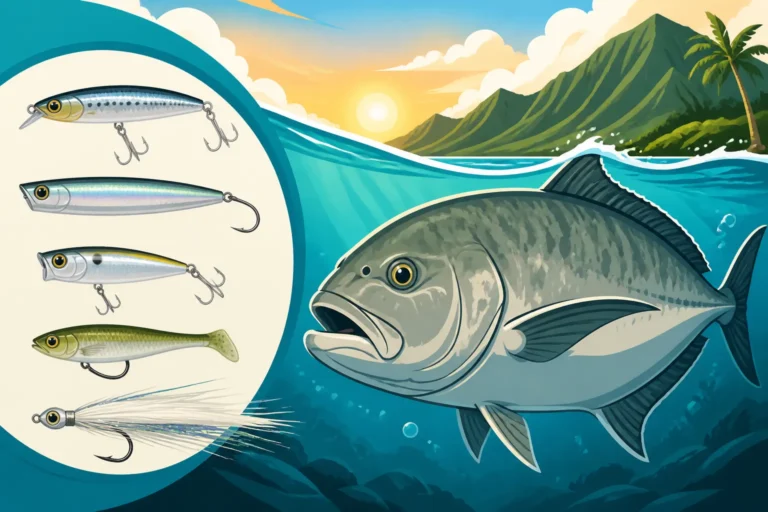
Bait and lure choice also matters. Live bait, such as mackerel scad or small tunas (aku), is often irresistible to large ahi. For lures, heavy-duty trolling lures designed for high-speed trolling are common, as are various jigs for vertical jigging. You can find robust leader material and other essential terminal tackle on platforms like Amazon, ensuring you have the strength to handle a powerful fish. Always check your knots and rigging thoroughly; a weak link will cost you the fish of a lifetime. Our article How to Catch Ahi in Hawaii provides more detailed rigging advice.
Proven Techniques for Ahi Success
There are several effective techniques for targeting trophy ahi in Hawaii:
- Trolling: This is a very common method, especially when covering large areas offshore or running between FADs. Spreads of artificial lures, often brightly colored, are trolled at speeds ranging from 7 to 10 knots. The idea is to mimic fleeing baitfish and trigger a strike from an opportunistic ahi. You'll often see charters running various lure sizes and colors to see what the fish are keying in on.
- Chunking/Chumming: Once a school of ahi is located, or if fishing a productive FAD, many captains will stop the boat and begin a chum line. Small pieces of bait (chunks) are tossed into the water to create a scent trail and draw the ahi closer to the boat. Whole dead bait or live bait is then presented naturally in the chum line. This can lead to exhilarating close-quarters battles. Learn more about this technique in Best Techniques for Chumming for Ahi.
- Live Baiting: When larger live baits like opelu or aku are available, they are often slow-trolled or drifted from the boat, particularly near FADs or known ahi grounds. A frisky live bait is often the most effective way to entice a reluctant trophy ahi.
- Jigging: Vertical jigging with heavy metal jigs can be incredibly effective when ahi are holding deeper, particularly around submerged structure or beneath bait schools. This is an active and physically demanding method but can produce fantastic results.
The best technique often depends on the current conditions, the behavior of the fish, and the captain's preferred strategy. Many charters will employ a combination of these methods throughout the day to maximize their chances. For more on how these approaches are used, you can also check out Drift Fishing for Ahi in Hawaii.
Beyond the Catch: Sustainable Ahi Fishing in Hawaii
While the pursuit of a trophy ahi is exhilarating, it's crucial to remember the importance of sustainable fishing practices. Ahi populations, like all marine resources, are susceptible to overfishing. In Hawaii, there are regulations in place to help manage these fisheries, though recreational anglers typically aren't subject to strict bag and size limits for pelagic species like ahi as commercial boats are. However, good stewardship is paramount.
Practice responsible angling: only take what you'll use, avoid unnecessary waste, and respect the ocean. Releasing smaller ahi or those you don't intend to consume helps ensure future generations of these magnificent fish. For general regulations that pertain to Hawaii's fisheries, you can reference Hawaii Fishing Regulations Explained or specifically for species, Hawaii Bag and Size Limits by Species. Supporting charters and guides who also prioritize conservation contributes to the long-term health of Hawaii's trophy ahi fishery.
Finding the best waters for trophy ahi in Hawaii isn't always easy, but by understanding the prime locations, the oceanographic factors at play, and equipping yourself with the right knowledge and resources, you significantly increase your chances of landing that fish of a lifetime.
Disclaimer
This article is for general informational purposes only and does not constitute professional advice. Laws, prices and regulations vary by location and change over time. Consult a qualified professional for guidance on your specific situation.