Hawaii Commercial vs Recreational Fishing License Rules
Navigating Hawaii's fishing regulations can feel like trying to untangle a particularly stubborn fishing knot, especially when you're trying to figure out if you're a "commercial" fisher or just enjoying a peaceful day "recreationally." Many folks get confused about who needs a license for what, and the thought of accidentally breaking a rule can really take the fun out of hitting the water. This guide is here to clear up that confusion, diving deep into the key differences between Hawaii's commercial and recreational fishing license rules so you can cast your line with confidence and stay on the right side of the law.
Understanding the Foundation of Hawaii's Fishing Regulations
Before we get into the nitty-gritty of licenses, it’s really helpful to understand who makes these rules and why. It’s not just about making things complicated; there’s a genuine purpose behind every regulation, and knowing that can make them a lot easier to grasp.
The Department of Land and Natural Resources DLNR
At the heart of all fishing regulations in Hawaii is the Department of Land and Natural Resources (DLNR), specifically its Division of Aquatic Resources (DAR). Think of them as the custodians of Hawaii's precious ocean and freshwater ecosystems. Their kuleana, or responsibility, is immense – they're tasked with managing, conserving, and protecting all of Hawaii's aquatic resources for both current and future generations. This isn't just about fish; it includes corals, marine mammals, and the habitats they call home.
The DAR scientists and enforcement officers work tirelessly to monitor fish populations, conduct research, and then use that data to propose and implement regulations. This might involve setting bag limits, creating closed seasons for spawning, or establishing protected areas. Their goal is always sustainability, ensuring that popular species aren't overfished and that the delicate balance of the ocean isn't disturbed. So, when you see a rule that seems overly specific, remember it's likely born from years of scientific study and a deep commitment to preserving Hawaii's unique aquatic heritage.
Why Different Rules Exist for Commercial vs Recreational Fishing
It might seem unfair at first glance that someone fishing for fun has different rules than someone fishing for a living, but when you think about the impact, it makes a lot of sense. The fundamental difference between commercial and recreational fishing boils down to intent and scale.
Commercial fishing, by its very nature, is an enterprise focused on profit. Commercial fishers often deploy more extensive gear, fish for longer periods, and typically aim to catch larger quantities of fish to sell to markets, restaurants, or distributors. Because their operations have a much greater potential impact on fish stocks and marine ecosystems, they are subject to a much stricter set of regulations. These rules are designed to prevent overfishing, ensure fair competition, and provide valuable data for resource management. Without these safeguards, it would be all too easy for a few large-scale operations to deplete vital fish populations.
Recreational fishing, on the other hand, is primarily for personal consumption, sport, or cultural practice. While recreational anglers also contribute to overall fishing pressure, their individual impact is generally smaller. The rules for recreational fishing tend to focus more on individual accountability – things like daily bag limits and minimum size requirements – to ensure everyone gets a fair shot at catching fish while still allowing populations to thrive. It's a delicate balance, aiming to allow people to enjoy the ocean while minimizing cumulative stress on the ecosystem.
Recreational Fishing in Hawaii: Rules and Licenses
One of the most common questions I hear from visitors and even new residents is, "Do I need a fishing license for the ocean in Hawaii?" It's a valid question, as most other states require one. Let's clear up that specific point right away.
Do You Need a Recreational Ocean Fishing License?
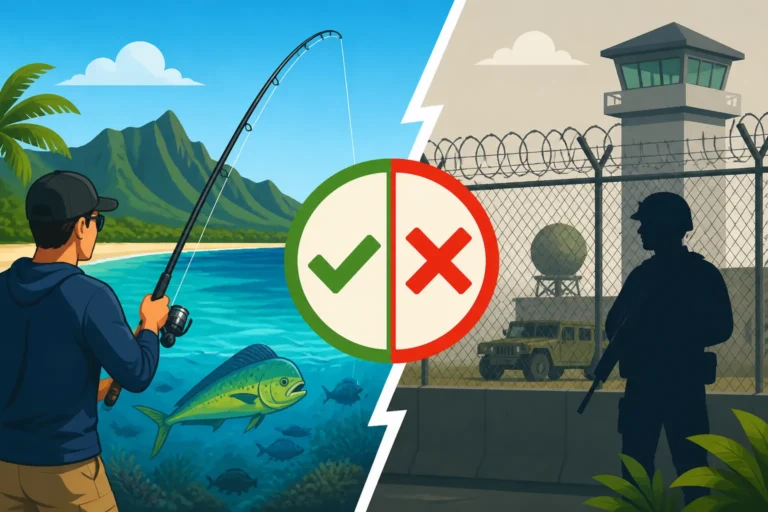
Here's the good news that often surprises people: For general recreational fishing in Hawaii's ocean waters, neither residents nor non-residents need a fishing license. That's right, you can cast your line from the shore, spearfish in permitted areas, or drop a handline from a boat in the open ocean for personal consumption without needing to purchase a specific marine fishing license. This policy is a huge departure from many other coastal states and often causes initial confusion.
This exemption applies as long as your intent is purely recreational. This means you're catching fish for your dinner, for fun, or to share with family and friends – you are absolutely not selling any part of your catch. The moment money changes hands for your fish, even a single one, your activity shifts from recreational to commercial, and that's a whole different ballgame license-wise. For many local families, this exemption makes fishing an accessible and important part of their lifestyle and cultural practice, allowing them to gather food without an extra financial burden. It's truly a unique aspect of fishing in the islands. If you're wondering about the specifics, our article on Do You Need a Fishing License in Hawaii goes into even more detail. You can also learn more about the specific Hawaii Resident Ocean Fishing License Exemption.
Freshwater Fishing License Requirements for Recreation
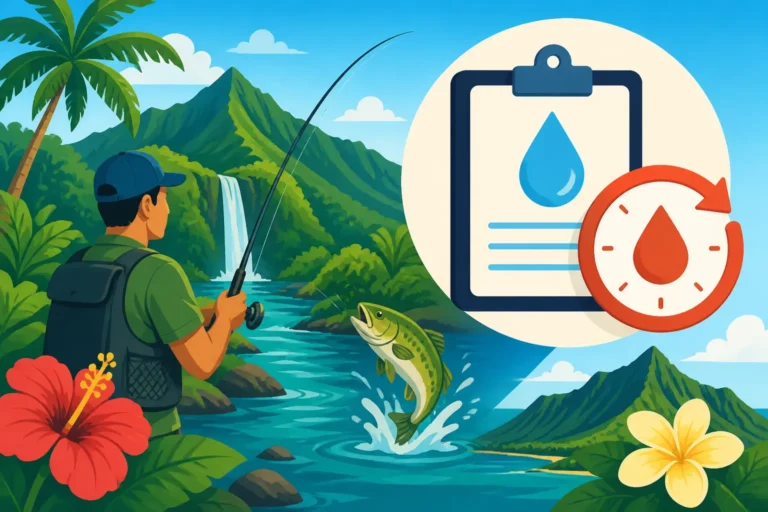
While the ocean might be license-free for recreational anglers, Hawaii's freshwater scene is a different story. If you're planning to target species like rainbow trout in the Kokee Public Fishing Area on Kauai, or peacock bass, largemouth bass, or tilapia in reservoirs like Wahiawa on Oahu, you absolutely do need a freshwater fishing license. This is a common point of confusion for those who assume all fishing in Hawaii is license-exempt.
The requirements for freshwater licenses vary slightly based on residency and age. Both residents and non-residents need a license for freshwater fishing. For residents, the cost is typically lower, reflecting their ongoing contribution to the state's economy and resources. Non-residents have options for annual licenses or shorter-term tourist licenses, usually valid for 7 or 30 days, which are perfect for visitors planning a limited freshwater angling trip. There are also specific age requirements, with younger anglers often exempt or requiring supervision. For instance, children under a certain age may not need a license. You can find detailed information on these requirements in our guide to Hawaii Freshwater Fishing License and Rules, including specifics on Hawaii Freshwater License Age Requirements, Hawaii freshwater license cost for residents, and Hawaii freshwater license cost for nonresidents. If you're visiting, checking out the Hawaii 7-day tourist freshwater license cost can help you plan your trip budget.
General Recreational Fishing Regulations to Know
Even without a general ocean fishing license, recreational anglers are far from being able to do whatever they please. Hawaii has a robust set of regulations designed to protect specific species and ensure sustainable fishing practices. These rules are crucial for maintaining healthy fish populations and preserving the marine environment that makes Hawaii so special for anglers.
One of the most important aspects to understand is bag and size limits. These dictate how many fish of a certain species you can keep per day and what their minimum (or sometimes maximum) length must be. For example, popular eating fish like Moi or Uhu have very specific rules that vary by species and sometimes by location. Catching a fish below the minimum size or exceeding the daily bag limit can result in fines and confiscation of your catch. Our article on Hawaii Bag and Size Limits by Species is an excellent resource to familiarize yourself with these critical numbers. You'll also want to be aware of closed seasons for certain species, like the Hawaii Moi Closed Season, Explained, or specific regulations regarding Hawaii Uhu (Parrotfish) Size and Bag Limits.
Beyond species-specific rules, there are also regulations concerning protected areas. Hawaii has Marine Life Conservation Districts (MLCDs) and Fish Replenishment Areas (FRAs) where fishing activity is either strictly limited or entirely prohibited. These areas serve as vital refuges for marine life, allowing populations to recover and spill over into surrounding waters. It's absolutely essential to know where these areas are, as fishing within them can lead to significant penalties. Our guide on Hawaii Marine Life Conservation Districts, Explained offers a comprehensive overview. Furthermore, certain gear types are regulated. While pole-and-line fishing is generally allowed, methods like certain types of Hawaii Spearfishing Regulations or Hawaii Net Fishing Restricted Areas have specific rules, restrictions, or even outright bans in various locations to prevent overharvesting or damage to sensitive habitats. Always consult the official Hawaii Fishing Regulations Explained from the DLNR to ensure you're compliant before heading out.
Commercial Fishing License and Permitting in Hawaii
If you're thinking about turning your passion for fishing into a business, even on a small scale, you'll step into a completely different regulatory landscape. The rules for commercial fishing are significantly more stringent, reflecting the greater impact commercial operations have on marine resources.
Who Needs a Commercial Marine License (CML)?
This is the big one, the line in the sand between recreational and commercial fishing: if you sell any aquatic life you catch in Hawaii, you need a Commercial Marine License (CML). It doesn't matter if it's one fish to a friend, a few lobsters to a local restaurant, or an entire boatload of tuna to a distributor at the harbor; the act of selling immediately categorizes your activity as commercial. This applies whether you're using a large fishing vessel, a kayak, or simply fishing from the shore. The intent to profit or gain financially from your catch is the defining factor.
Obtaining a CML involves a detailed application process through the DLNR Division of Aquatic Resources. You'll need to provide personal information, prove residency (for resident rates), and pay annual fees. This license is not just a formality; it's a legal requirement that allows the state to track commercial fishing activity, manage catch data, and ensure accountability. Without a valid CML, selling any aquatic resource you've harvested is illegal and can lead to severe penalties, including hefty fines and the confiscation of your catch and gear. This rigorous approach helps maintain the integrity of Hawaii's commercial fisheries and supports sustainable harvesting practices.
Vessel Registration and Commercial Permits
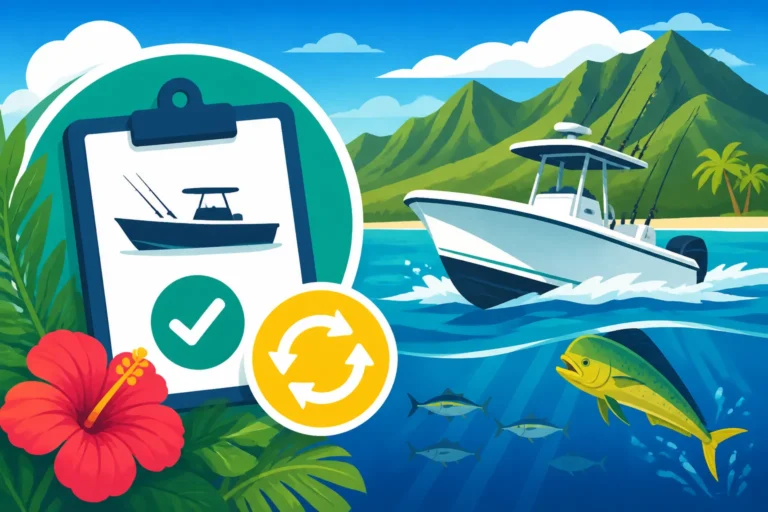
Beyond the individual angler needing a Commercial Marine License (CML), any vessel used for commercial fishing operations in Hawaii must also be appropriately registered as a commercial fishing vessel. This means going beyond basic recreational boat registration and complying with additional requirements set by both the state and, for larger vessels, potentially federal agencies. This distinction ensures that all commercial fishing activities, from the person handling the lines to the vessel transporting the catch, are properly documented and regulated.
Furthermore, many types of commercial fishing activities or specific gear require additional permits on top of the CML and commercial vessel registration. For instance, if you plan on using longlines, certain types of nets, or specific traps, you will likely need to apply for specialized permits that regulate their deployment, catch limits, and reporting requirements. These permits are designed to manage the impact of more intensive fishing methods and protect specific species or areas. Charter boat operators, who take paying customers out to fish, also face a unique set of licensing and permitting requirements. They must possess not only a CML for any fish they might keep and sell (or even for operating a commercial fishing enterprise) but also U.S. Coast Guard credentials for carrying passengers for hire, and potentially other business licenses. It's a complex web, and understanding all these layers is critical to avoid legal issues. Our guide on Hawaii Boating Laws for Anglers covers some general boat requirements, but commercial vessel registration is much more in-depth. You can also delve into the specifics for Hawaii charter boat operator license requirements to understand that particular niche. All these permits and licenses contribute to transparent and responsible commercial fishing within the islands, a topic explored further in Hawaii Commercial vs Recreational Fishing License Rules.
Reporting Requirements for Commercial Anglers
Perhaps one of the most significant differences between recreational and commercial fishing in Hawaii is the strict and ongoing reporting requirements for commercial anglers. Once you hold a Commercial Marine License, your responsibilities extend far beyond simply catching and selling fish. You become a crucial part of the state's resource management efforts, and accurate reporting is paramount.
Commercial fishers are mandated to submit detailed catch reports, often on a regular basis – sometimes daily, weekly, or monthly, depending on the fishery and species. These reports typically require information such as the species caught, the weight or number of fish, the area fished, the gear used, and the date of harvest. Beyond catch data, many commercial operations are also required to submit sales reports, detailing who they sold their fish to and for what price. This data provides the DLNR with invaluable insights into the health of fish stocks, fishing effort, and the economic value of Hawaii's fisheries. This information helps scientists and managers make informed decisions about quotas, seasons, and other regulations to ensure the long-term sustainability of the resource. Failure to comply with these reporting requirements is taken very seriously. Penalties can range from significant fines to the suspension or revocation of your CML, and potentially even legal action. It’s a commitment that commercial fishers willingly undertake as part of their contribution to responsible resource stewardship.
Key Differences in Regulations and Enforcement
The distinction between commercial and recreational fishing isn't just about whether you sell your catch; it permeates every aspect of the regulations, from how much you can take to the consequences if you don't follow the rules.
Bag Limits, Size Limits, and Gear
When it comes to bag and size limits, the philosophy often shifts between recreational and commercial fishing. For recreational anglers, limits are typically set as daily individual totals to prevent excessive take by any single person and to ensure a fair distribution of the resource. These limits are generally straightforward: a certain number of fish per person per day, or a specific length range within which fish can be kept. For example, a recreational angler might be allowed to keep two Moi, each over 11 inches.
Commercial limits, however, are often more complex. While they might also have daily or trip limits, these are frequently tied to specific quotas for the entire fishery or a particular gear type. For instance, the total annual catch for a certain deep-water snapper might be capped, and commercial fishers contribute to that overall quota. Their limits can also fluctuate more frequently based on scientific assessments of stock health. In some cases, commercial operations might not have "bag limits" in the recreational sense but are instead limited by vessel capacity or total annual allocation.
Gear restrictions also show a stark contrast. Recreational fishing generally allows for rod and reel, handline, and certain types of spearfishing (with restrictions). Commercial operations, however, can deploy a much wider array of gear, including longlines, various types of nets, and traps. Each of these commercial gear types is usually heavily regulated, requiring special permits, specific construction standards, and designated fishing areas to minimize bycatch and habitat damage. For example, a commercial fisherman might need a specific permit for using a large throw net, whereas a recreational angler might be able to use a small cast net for baitfish without additional permits beyond general regulations.
| Feature | Recreational Fishing | Commercial Fishing |
|---|---|---|
| Intent | Personal consumption, sport, cultural practice, sharing | Sale of catch, profit generation |
| General Ocean License | Not required for ocean waters | Commercial Marine License (CML) required |
| Freshwater License | Required for specific freshwater fisheries | CML likely required if selling freshwater catch |
| Vessel Registration | Recreational vessel registration (if applicable) | Commercial vessel registration required |
| Specific Permits | May need permits for certain gear (e.g., throw net), or access to restricted areas | Multiple specialized permits for gear, species, areas (e.g., longline, net, trap) |
| Bag Limits | Individual daily limits, often lower | Often higher or tied to vessel quotas/annual allocations, can be more complex |
| Size Limits | Minimum or maximum lengths per species | Similar, but often more strictly enforced and monitored |
| Reporting | Generally not required (except for tournaments/studies) | Mandatory detailed catch and sales reports (daily, weekly, monthly) |
| Enforcement | Fines, confiscation of catch/gear | Higher fines, CML/permit revocation, potential jail time, asset forfeiture |
Enforcement and Penalties
The enforcement of Hawaii's fishing regulations falls primarily to the DLNR's Division of Conservation and Resources Enforcement (DOCARE). These officers patrol the land and sea, ensuring compliance with all state laws pertaining to natural resources. They are the ones you might see checking licenses (for freshwater), inspecting catches for size and bag limits, and investigating reports of illegal activity.
For recreational anglers, violating regulations typically results in fines and the confiscation of illegally caught fish and gear. For example, if you're caught with an undersized Ulua, you might face a significant fine and lose your catch. Repeat offenses can lead to higher penalties. It's an inconvenience and a financial hit, but generally, the aim is to educate and deter future violations. Our article on Fishing Without a Required License in Hawaii: Penalties delves into the specifics of what happens if you're caught without the necessary permits in regulated waters.
However, for commercial operations, the stakes are considerably higher. Violations can lead to much more substantial fines, which can easily run into the thousands or even tens of thousands of dollars. More critically, commercial licenses and permits can be suspended or permanently revoked, effectively ending a person's ability to earn a living from fishing. In serious cases involving egregious violations, such as repeated disregard for quotas, illegal gear use, or fishing in protected areas, commercial fishers can face criminal charges, potential jail time, and the forfeiture of their vessel and equipment. This stark difference in penalties reflects the potential for commercial activities to cause widespread damage to fish stocks if left unchecked, making enforcement a critical component of resource protection.
The Importance of Knowing the Rules for Both Types of Angling
It sounds obvious, but you'd be surprised how many experienced anglers, both recreational and commercial, get caught out simply because they didn't fully understand the rules. Ignorance of the law is never an excuse, and in Hawaii, where the ocean is such a vital part of life and culture, compliance is taken very seriously. For recreational anglers, staying informed means being able to enjoy your time on the water without the anxiety of potential fines or the guilt of inadvertently harming the marine environment. It means knowing that the fish you're catching will be there for your keiki (children) and their keiki.
For those considering the leap into commercial fishing, or even those who occasionally sell a prized catch, understanding the distinctions is not just important – it's absolutely critical for your livelihood and reputation. The transition from recreational to commercial is a significant one, carrying with it a whole new set of responsibilities and legal obligations. Trying to operate commercially without the proper licenses and permits can quickly lead to the loss of your boat, gear, and fishing privileges, and can even result in legal action that affects your personal finances and freedom. Ultimately, both recreational and commercial anglers share a common interest in healthy oceans. By knowing and respecting the rules, everyone contributes to the longevity and abundance of Hawaii's incredible aquatic resources.
Practical Advice for Anglers
Even with all the regulations, fishing in Hawaii is an incredible experience. A little preparation and knowledge can go a long way in making sure your time on the water is enjoyable and hassle-free.
How to Confirm Your Fishing Activity Classification
One of the biggest hurdles for many people is simply figuring out if their fishing activity falls under "recreational" or "commercial" definitions, especially if they're new to the islands or considering dipping their toes into selling some catch. The simplest rule of thumb is this: if you receive any form of monetary compensation, goods, or services in exchange for your fish or aquatic resources, it's commercial. Period. It doesn't matter if it's cash, a trade for other goods, or payment for a service; the transaction makes it commercial.
For example, if you catch a few Mahi-mahi and give some to a neighbor for their dinner, that's recreational sharing. But if that neighbor offers you $20 for a fillet, and you accept, that's a commercial transaction. If you're a charter captain taking paying clients out, even if they catch the fish, your operation itself is commercial, and you'll have specific commercial requirements as mentioned earlier. If you are ever in doubt, your safest bet is always to contact the DLNR Division of Aquatic Resources (DAR) directly. Their staff are there to help clarify specific situations and ensure you understand the rules before you head out. It’s far better to ask a question beforehand than to face penalties later.
Where to Find Official Hawaii Fishing Regulations
The most reliable and up-to-date source for Hawaii's fishing regulations is always the official DLNR Division of Aquatic Resources (DAR) website. They publish all current rules, including bag and size limits, closed seasons, and area restrictions. It might not be the flashiest website, but it's the definitive authority. You can often download a comprehensive PDF document of the regulations, which is incredibly handy to have on your phone or printed out when you're on the go. Our guide on Reading the Hawaii DLNR Fishing Regulations offers tips on navigating these official documents, and you can often find the direct Hawaii DLNR fishing regulations PDF link there.
Beyond the website, many local tackle shops or community resource centers might have printed booklets summarizing the regulations. These can be great for a quick reference, but always double-check against the official online source, as regulations can change. It's also a good idea to invest in a good waterproof fishing logbook. Keeping track of your catches, locations, and the dates you fished can be helpful, especially if you ever need to reference your activity. You might even find useful fishing logbooks or specific gear for various techniques on Amazon that can help you keep track of your recreational catches and stay organized, though you'll always refer to the DLNR for the official rules. Staying informed is the best way to ensure your fishing adventures in Hawaii are always fun and legal.
Disclaimer
The information provided in this article is for general informational purposes only and does not constitute legal advice. Fishing regulations in Hawaii can be complex and are subject to change. Always consult the most current official regulations from the Hawaii Department of Land and Natural Resources (DLNR) Division of Aquatic Resources (DAR) or contact them directly before engaging in any fishing activity to ensure full compliance.