Hawaii fishing license refund policy
It’s a common scenario: you’ve got your fishing trip to Hawaii all planned out, you’ve bought your license, and then—bam!—life happens. Maybe your flight gets canceled, a family emergency pops up, or you accidentally bought the wrong type of license. Suddenly, you’re looking at a piece of paper (or a digital file) that cost you money and might not get used, and your first thought is, "Can I get a refund?" It’s a completely understandable question, and this guide is here to walk you through the realities of the Hawaii fishing license refund policy, what to expect, and how to navigate those tricky situations.
Understanding the General Rule for Hawaii Fishing Licenses
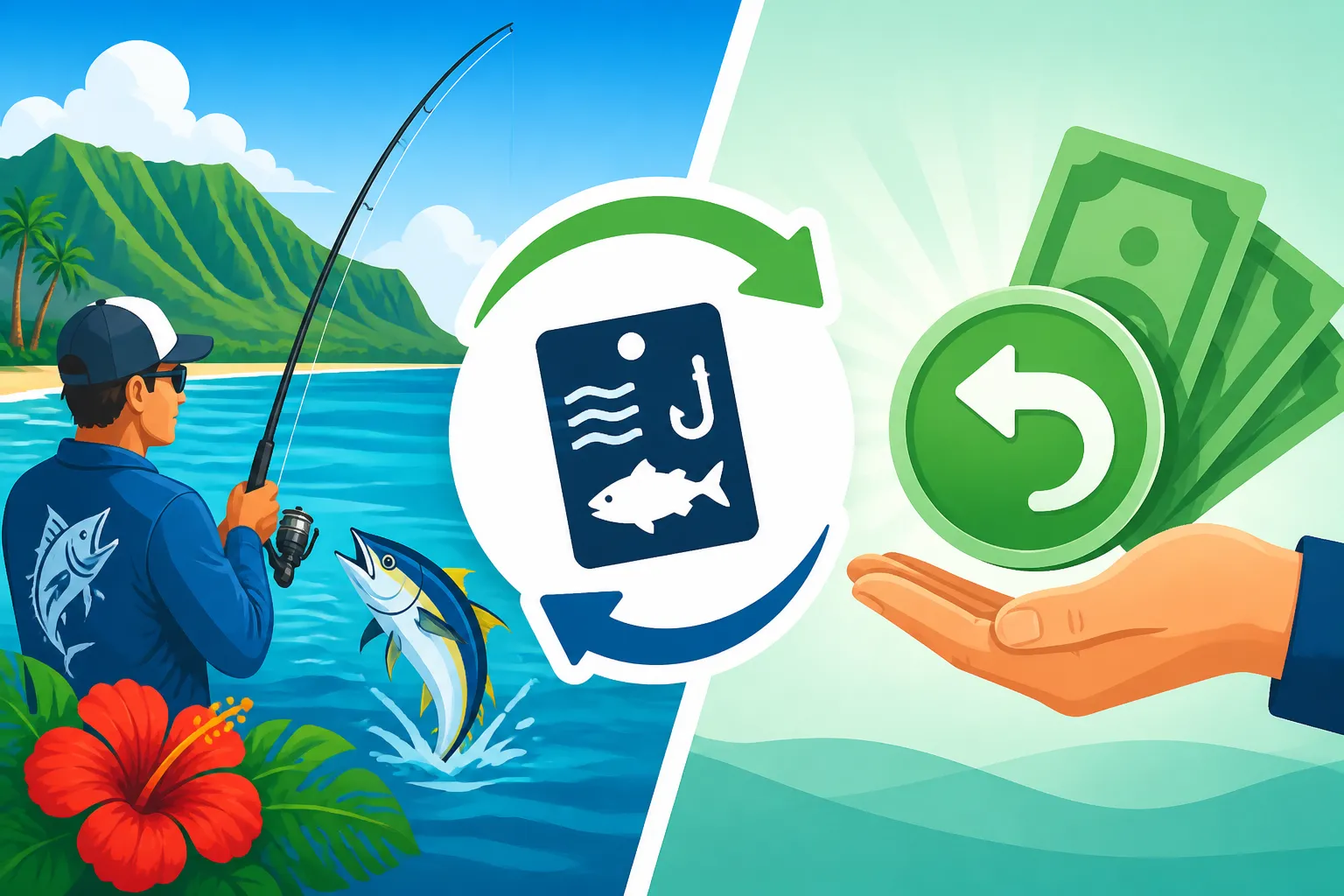
Let's get straight to it: for most government-issued permits, including fishing licenses in Hawaii, the general rule is that all sales are final. This can be a tough pill to swallow, especially when you’re dealing with unforeseen circumstances that are completely out of your control. Many anglers, both kama'aina (residents) and visitors, often assume there's a simple process for returns, just like buying something from an online retailer. However, fishing licenses operate under a different system, primarily because the funds generated often go directly into conservation efforts, aquatic resource management, and enforcement. Once that transaction is complete, those funds are typically allocated.
It’s not just Hawaii; this "all sales are final" policy is standard across many state wildlife and resource departments throughout the United States. They aren't selling a physical product that can be restocked on a shelf. Instead, they're granting a privilege for a specific period, and the administrative costs and resource allocations are immediate. So, while it's frustrating, it's a common practice. This reality means that before you even click "purchase" or hand over your cash, it's incredibly important to be sure of your dates, your residency status, and the type of fishing you plan to do. Taking the time to read through the Hawaii Fishing License Guide for 2026 can really help prevent these kinds of issues down the line.
Scenarios Where You Might Seek a Refund
Even with a "no refunds" policy generally in place, people still inquire about refunds for various reasons. Let's dive into some common scenarios and explore why they typically don't result in a refund, and what very limited exceptions might exist.
Trip Cancellations and Changes of Plans
This is perhaps the most frequent reason people look for a refund. You've booked your dream fishing charter off the Kona Coast, bought your Hawaii Nonresident Marine Fishing License, Explained well in advance, and then your entire trip falls apart due to travel restrictions, a sudden illness, or another unavoidable conflict. It's a horrible feeling to have to cancel your long-anticipated adventure, and seeing that unused license just adds insult to injury.
Unfortunately, even with legitimate, unavoidable trip cancellations, the Hawaii Department of Land and Natural Resources (DLNR) typically does not offer refunds. The state's position is that the license fee is for the privilege to fish for a specific period, not a guarantee that you will actually utilize that privilege. Think of it like a concert ticket; if you can't go, the venue usually doesn't refund you unless the concert itself is canceled. The DLNR doesn't differentiate between someone who chooses not to fish and someone who is unable to fish due to external circumstances. Your best bet in these situations is to accept the loss and perhaps consider it a small contribution to Hawaii's beautiful aquatic ecosystems.
Accidental Purchase or Incorrect License Type
Another common issue arises when anglers accidentally purchase the wrong type of license. This happens more often than you might think! Perhaps you thought you needed a freshwater license for the ocean, or you bought a nonresident license when you qualify as a resident, or vice-versa. Maybe you misread the Hawaii Fishing License Age Requirements and bought a license for someone who was exempt. Given that there are different licenses for marine and freshwater fishing, like the Hawaii Freshwater Fishing License and Rules, and distinct categories for residents and nonresidents, it's easy to make a mistake if you're not paying close attention.
While it's frustrating, even in cases of clear accidental purchase, a direct refund is unlikely. The system processes the sale, and the license is issued. What might be possible in very rare cases of immediate, verifiable administrative error (e.g., if the system somehow charged you twice for the same license, or issued a license for the wrong year entirely due to a technical glitch on their end) is to contact the DLNR Division of Aquatic Resources (DAR). You'd need to provide compelling proof and act quickly. However, if the error was on your part – simply selecting the wrong option – it's generally considered a final sale. Before purchasing, it's always wise to double-check everything, including your name, address, birthdate, and the specific license type and validity period. If you’re unsure, a quick call to the Hawaii Division of Aquatic Resources customer service phone number before buying can save you a lot of headache.
Fraudulent Purchases and System Errors
This is one area where a refund might be considered, though it’s less about a policy and more about rectifying an actual error or crime. If you discover that your credit card was used fraudulently to purchase a Hawaii fishing license, or if there was a verifiable system error where you were charged multiple times for a single license, then you would absolutely have recourse.
In such cases:
- For fraudulent charges: Contact your bank or credit card company immediately to report the fraud. They will usually investigate and reverse the charge. You should also inform the DLNR of the fraudulent activity, providing any details you have.
- For system errors: If you were double-charged or issued an incorrect license due to a confirmed technical issue on the DLNR's purchasing platform, gather all your transaction receipts and contact the Hawaii Division of Aquatic Resources customer service phone number without delay. They will have access to their transaction records and can investigate. These are rare occurrences, but they are generally the only times a refund is directly issued by the state.
What to Do If You Can't Use Your License
So, if a refund is highly unlikely, what are your options if you find yourself with an unused Hawaii fishing license? Unfortunately, the options are limited, but it's important to understand them.
The License is Non-Transferable
A Hawaii fishing license, whether it's for freshwater or marine species, is issued to a specific individual and is explicitly non-transferable. This means you cannot sell it, give it away, or transfer it to another person. The license is tied to your identity, and anyone else attempting to use it would be fishing without a valid license, which carries significant penalties. To understand these consequences, you might want to look into Fishing Without a Required License in Hawaii: Penalties.
No Rollover or Extension
An unused license generally cannot be rolled over to a future season or extended beyond its original validity period. For annual licenses, they expire on a specific date, regardless of when you purchased them within that year. For short-term licenses (e.g., 1-day, 7-day), their validity is fixed from the date of activation or purchase. This is another reason why it’s so important to be certain of your plans before buying, especially if you opt for a short-term nonresident license.
Consider it a Contribution
While it might not feel great to have an unused license, you can take some solace in knowing that the funds from your purchase directly support the management and conservation of Hawaii's unique aquatic resources. These funds help maintain healthy fish populations, fund research, support enforcement efforts to combat poaching, and improve public access to fishing spots. Your unused license, in a small way, still contributes to the health of the very fisheries you hoped to enjoy.
Distinguishing Refunds from Replacements
It's crucial to understand that a "refund" is very different from a "replacement." While refunds are rare to non-existent, obtaining a replacement for a lost or damaged license is usually a straightforward process.
If you lose your physical paper license or accidentally damage it, the DLNR typically has a process to issue you a duplicate. This usually involves a small administrative fee, but it's not a new purchase; it's simply re-issuing proof of an existing, valid license. This is especially helpful if you prefer a physical copy over a digital one, or if your printer decided to eat your original. For detailed steps on this, you can check out Replacing a lost Hawaii fishing license. Remember, even if you lose your paper copy, if you have a digital version saved on your phone, you might still be covered as long as you can present it to enforcement officers.
Preventing the Need for a Refund in the First Place
The best defense against needing a refund is to avoid the situation entirely. Here are some actionable steps to ensure you purchase the correct license and minimize the chances of needing a refund:
- Verify Your Needs: Before you even think about buying, confirm whether you actually need a license. For ocean fishing, residents often don't need a general marine recreational license, though certain activities or commercial endeavors do. Nonresidents almost always need one for marine fishing. Everyone needs a license for freshwater game fishing, whether resident or nonresident. Reading articles like Do You Need a Fishing License in Hawaii is a great starting point.
- Understand License Types: Familiarize yourself with the different types of licenses:
- Freshwater vs. Marine: Know which body of water you'll be fishing in.
- Resident vs. Nonresident: Your residency status significantly impacts the cost and type of license. Understand Hawaii's specific residency requirements.
- Term Lengths: Decide if you need an annual, 1-day, or 7-day license based on your trip duration.
- Special Permits: Certain activities might require additional permits beyond a general fishing license.
- Double-Check Information During Purchase: This is perhaps the most critical step. When you’re filling out the online form or speaking with a vendor, carefully review all the information before finalizing the purchase. Check:
- Your full name and address.
- Your date of birth.
- The chosen license type (freshwater/marine, resident/nonresident).
- The validity dates of the license.
- The total cost.
- Buy at the Right Time: Purchase your license close to your fishing dates, especially for short-term nonresident licenses. This reduces the window for unexpected changes to your travel plans. While you don't want to wait until the last minute, buying weeks or months in advance for a short trip can be risky.
- Utilize Official Resources: Always purchase your license from official DLNR channels, whether online through their website or from an authorized vendor. This ensures you're getting a legitimate license and that the funds are properly directed. You can find information on official vendors at Where and How to Buy a Hawaii Fishing License. Also, cross-reference information with the official Hawaii DLNR Fishing Regulations PDF if you have any doubts.
- Keep Records: Save your confirmation emails and receipts. If you purchase online, take a screenshot of the final confirmation page. This documentation is invaluable if you ever need to query a charge or prove your purchase.
By being proactive and diligent, you can significantly reduce the likelihood of finding yourself in a situation where you're wishing for a refund.
Comparing Hawaii's Policy with Other States
It's natural to wonder if Hawaii's refund policy is stricter than elsewhere. While specific nuances vary, the general principle of "no refunds" for fishing and hunting licenses is remarkably consistent across most U.S. states. This isn't a uniquely Hawaiian stance, but rather a standard operating procedure for state wildlife agencies.
For example, states like Florida, California, and Texas also have very limited or no refund policies for their recreational fishing licenses once purchased. The rationale is similar: the funds are immediately channeled into conservation and administrative costs, and the issuance of the license grants a privilege that cannot easily be "returned" like a physical product.
There might be very specific exceptions in some states, often related to unique circumstances like:
- Death of the license holder: Some states may offer a prorated refund to the estate, but this is rare.
- Active Military Deployment: In some states, if a license holder is unexpectedly deployed overseas, they might have a special provision for a partial refund, but this is not universal.
- Government-Declared Emergencies: During major, widespread emergencies (like a pandemic that restricts all travel), some states might implement temporary refund policies, but these are typically ad-hoc and not part of the standing policy.
However, these are almost always exceptions to the rule and not something you can generally rely on. Hawaii's policy aligns with the vast majority of other states in prioritizing the stability of funding for conservation over individual refund requests.
Key Takeaways
So, what’s the ultimate takeaway regarding the Hawaii fishing license refund policy?
| Scenario | Likelihood of Refund | Action to Take |
|---|---|---|
| Trip Cancellation | Very Low | Accept as a contribution; plan future trips carefully. |
| Incorrect License Type | Very Low | Double-check purchase details; contact DLNR immediately if a clear system error. |
| Accidental Purchase | Very Low | Double-check purchase details; usually considered final if user error. |
| Fraudulent Charge | High | Contact your bank/credit card immediately; inform DLNR. |
| System Double-Charge | High | Gather proof; contact Hawaii DLNR customer service. |
| Lost/Damaged License | N/A (Replacement) | Request a replacement from DLNR (small fee); carry digital proof. |
Ultimately, the best approach for anyone planning to fish in Hawaii is to exercise extreme care and diligence when purchasing your license. Understand the Hawaii Fishing Regulations Explained thoroughly, choose your license type wisely, and confirm all your details before completing the transaction. This way, you can fully enjoy your fishing adventure without the added stress of an unused or incorrect license.
Disclaimer
Please remember that this guide provides general information and recommendations. Fishing regulations, license requirements, and refund policies are subject to change by the Hawaii Department of Land and Natural Resources (DLNR). It is always your responsibility to consult the most current official regulations and guidelines published by the DLNR Division of Aquatic Resources (DAR) before engaging in any fishing activities. We recommend contacting the DLNR directly for specific questions or to confirm any information.