Replacing a lost Hawaii fishing license
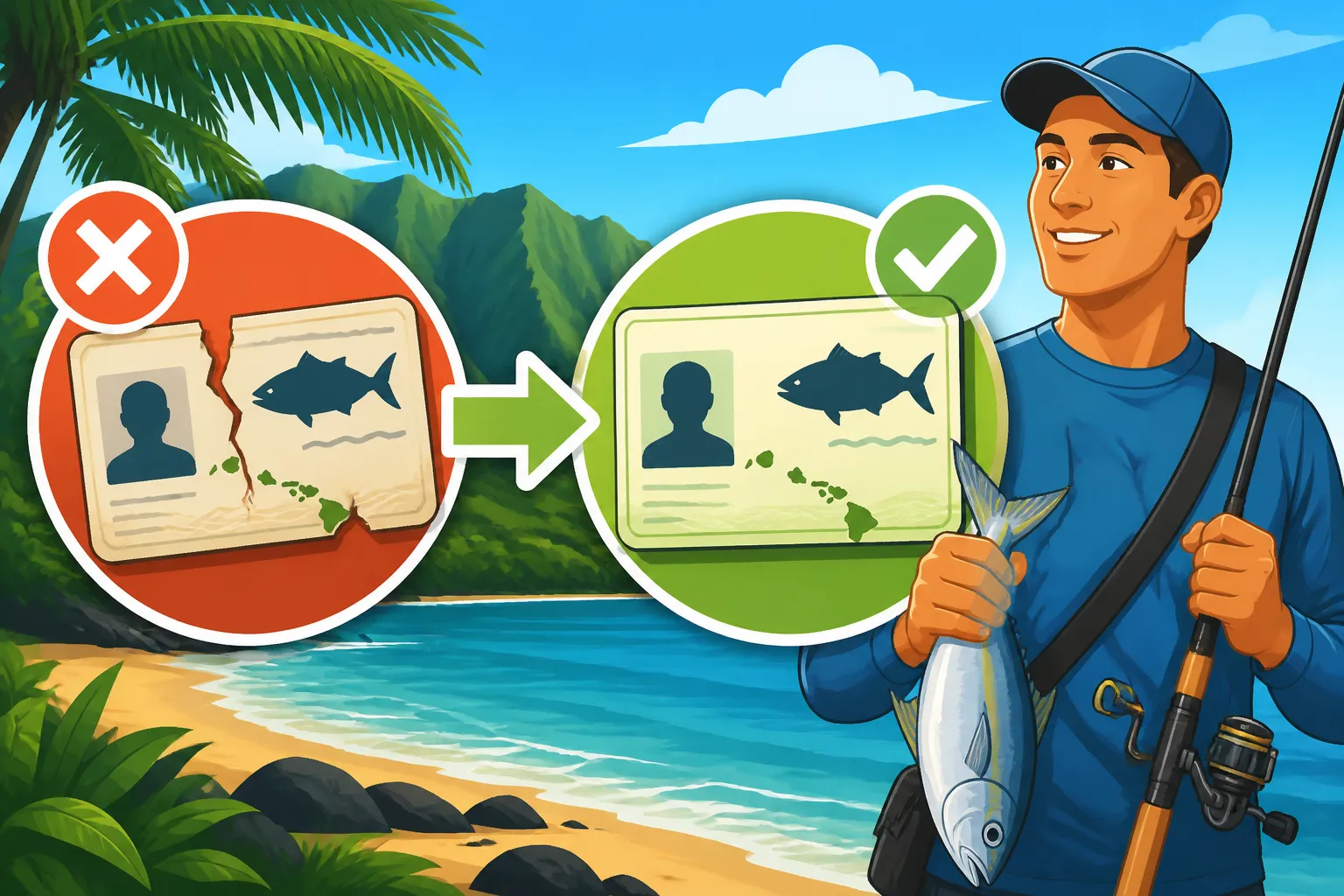
There's nothing quite like the sinking feeling you get when you reach for your fishing license, ready to hit your favorite Hawaiian fishing spot, only to find it's gone. Whether it slipped out of your pocket, blew away, or simply vanished, a lost license can throw a huge wrench into your plans and even land you in hot water. This guide is here to walk you through exactly what to do when your Hawaii fishing license goes missing, how to replace it, and crucial steps to avoid this headache in the future.
The Frustration and Consequences of a Missing License
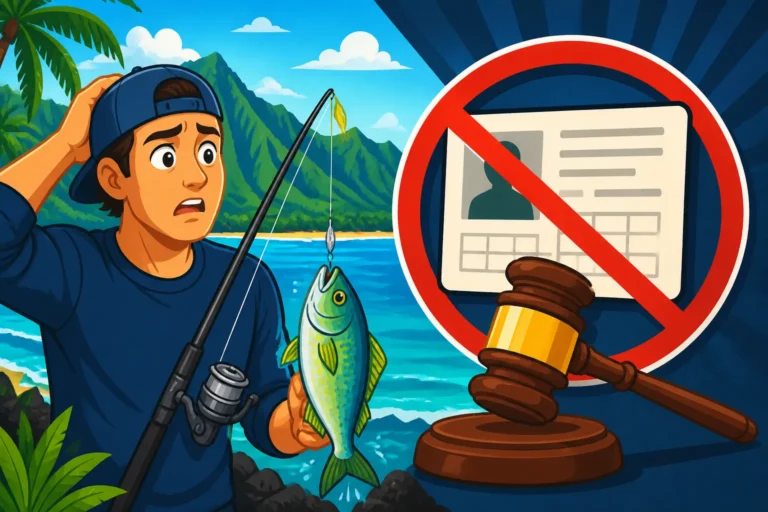
It’s more than just an inconvenience; losing your Hawaii fishing license can be a real buzzkill and even lead to serious trouble. Imagine you’ve spent weeks planning your dream trip to the Kona Coast, meticulously gathered your gear, and arrived at the perfect spot as the sun rises. You cast your line, hook into something big, and suddenly, a Division of Aquatic Resources (DAR) enforcement officer is there asking for your license. Your heart drops – it’s not in your wallet, not in your tackle box, nowhere to be found. This isn't just a hypothetical scenario; it happens to anglers all the time, and the consequences can be much heavier than a simple sigh of exasperation.
Immediate Legal Ramifications You Might Face
Fishing without a valid license, even if you simply lost it and had one previously, is treated seriously by the Hawaii Department of Land and Natural Resources (DLNR). The enforcement officers aren't mind-readers; they need proof that you are legally authorized to fish. If you're caught without your license, even if you explain your situation, you could be issued a citation or a hefty fine. These penalties are designed to deter illegal fishing, but they apply even to honest mistakes. It's a tough pill to swallow when you know you did buy one, but the state's rules, as outlined in the Hawaii Fishing Regulations Explained, are clear: you must have it on your person while fishing. The financial hit can range from minor to significant, easily outweighing the initial cost of the license itself. You can learn more about specific penalties in our article on Hawaii fishing without a license penalty.
The Disruption to Your Planned Fishing Trip
Beyond the legal issues, losing your license can completely derail your day or even your entire trip. Let's say you're on vacation on Maui, and you’ve got a charter booked out of Ma'alaea Harbor the next morning. You realize your license is gone the night before. Now, instead of getting a good night's sleep and preparing for a great day on the water, you're scrambling, trying to figure out if you can replace it in time. This kind of stress ruins the relaxation that fishing is supposed to bring. For many, a fishing trip to Hawaii is a once-in-a-lifetime experience, and having it interrupted by a lost document is truly disheartening. It’s not just about the monetary loss of the license itself, but the lost time, lost enjoyment, and potential lost opportunity to catch that trophy fish you've been dreaming about.
Step-by-Step Guide to Replacing Your Lost Hawaii Fishing License
Okay, take a deep breath. It's frustrating, but it's not the end of the world. Replacing your lost Hawaii fishing license is a straightforward process, thanks to the systems put in place by the DLNR. The key is to act quickly and gather the necessary information. Whether you prefer the convenience of online services or need to handle things in person, there are clear paths to getting a new copy in your hands.
Utilizing Online Replacement Services
For many, the easiest and quickest way to replace a lost Hawaii fishing license is through the online system. This is typically accessible 24/7, meaning you don't have to wait for business hours.
- Access the DLNR Portal: Head to the official Hawaii Department of Land and Natural Resources (DLNR) Division of Aquatic Resources (DAR) licensing portal. This is the same place you likely purchased your original license, or where you would go to find out How to Buy a Hawaii Fishing License Online.
- Locate "Reprint" or "Replace License" Option: On the portal, look for a section specifically for managing existing licenses. It might be labeled "Reprint License," "Replace Lost License," or "Access My Account."
- Enter Your Information: You'll typically need to provide some identifying details to pull up your original license record. This usually includes:
- Your full name (as it appeared on the original license)
- Date of birth
- Your Hawaii Driver's License or State ID number (if a resident) or other government-issued ID number
- Possibly the last four digits of the credit card used for the original purchase, or your customer ID number.
- Confirm and Pay the Replacement Fee: There is usually a small administrative fee associated with replacing a lost license. This fee covers the cost of processing and issuing a new document. Once confirmed, you'll be prompted to pay this fee.
- Print Your New License: After successful payment, you should immediately be able to download and print a new copy of your license. Make sure your printer is ready and that you print a clear, legible copy. You can then fold it and protect it. This immediate access is incredibly helpful if you need to get back on the water quickly. Remember, as per rules regarding Printing or Carrying a Digital Fishing License in Hawaii, a physical printout is often preferred, but carrying a digital copy on your phone is also widely accepted now.
In-Person Replacement at a DLNR Office or Authorized Vendor
If you prefer a face-to-face interaction, don't have access to a printer, or are having trouble with the online system, you can visit a DLNR Division of Aquatic Resources office or an authorized license vendor.
- Find a Location: Check the official DLNR website for a list of their offices and authorized license vendors. These vendors are often bait and tackle shops or outdoor recreation stores. Our guide on the Hawaii DLNR license agent list can help you find one near you.
- Bring Required Identification: Just like online, you'll need to prove your identity. Bring a valid government-issued photo ID (e.g., Hawaii Driver's License, State ID, passport).
- Provide Purchase Information: Be prepared to provide the date of your original purchase, the type of license you had (e.g., Hawaii Freshwater Fishing License and Rules, or specific marine licenses like a Hawaii Nonresident Marine Fishing License, Explained), and any other details that can help the agent locate your record.
- Pay the Replacement Fee: You will pay the replacement fee directly to the agent or staff member. They will then print a new license for you on the spot. This can be a great option if you're in a pinch and need a physical copy immediately before heading out to a specific fishing ground, like those mentioned in our Best Fishing Spots in Hawaii guide.
Here's a quick comparison of the two replacement methods:
| Replacement Method | Requires Internet Access | Immediate Printout | Requires ID | Replacement Fee | Best For |
|---|---|---|---|---|---|
| Online Portal | Yes | Yes | Yes | Yes | Quickest; 24/7 access; tech-savvy users |
| In-Person | No | Yes | Yes | Yes | No printer access; personal assistance; immediate physical copy |
What to Do If You Discover a Lost License While Fishing
This is the scenario everyone dreads: you're already out there, lines in the water, and then it hits you – your license is gone. Panic can easily set in, but staying calm and knowing your options can save your day, or at least help you mitigate potential issues.
Checking for Digital Alternatives
First, if you've ever saved a digital copy or taken a picture of your license, now's the time to check your phone. Many states, including Hawaii, recognize digital representations of licenses, especially if they clearly show your name, license number, and expiration date. Before you even head out, it's a smart habit to snap a photo of your physical license and save it to your phone's photo gallery or a cloud service. This digital backup can be a lifesaver. Our article on Digital vs paper fishing license in Hawaii goes into more detail about accepted formats. If you have a clear, legible digital image, you might be able to present that to an enforcement officer if asked. However, be aware that while generally accepted, an officer always has the discretion to request a physical document.
Contacting the DLNR Division of Aquatic Resources
If you don't have a digital copy, your next best bet is to try and contact the DLNR Division of Aquatic Resources directly.
- Phone Call: If you have cell service, try calling their main office or the local district office. The Hawaii Division of Aquatic Resources customer service phone number can usually be found on the DLNR website. Explain your situation calmly. They might be able to look up your license details over the phone and confirm its validity, potentially even emailing you a temporary digital copy or confirming your status to an officer if they can be reached. This is a long shot, especially on weekends or holidays, but it's worth a try.
- Check Official DLNR Website: If you have a smartphone or other device with internet access, quickly navigate to the DLNR website. As mentioned, some online portals allow you to view or even reprint your license on the go. If you can access the portal and download a PDF, you might be able to show that to an officer. You can even find the Hawaii DLNR fishing regulations PDF online, which might offer guidance.
Deciding Whether to Continue Fishing
This is the tricky part, and it comes down to a judgment call with a strong recommendation for caution.
- The Safest Option: Stop Fishing. If you cannot produce a physical or clearly recognized digital copy of your license, the safest and most compliant action is to immediately stop fishing. It’s a bitter pill, especially if the fish are biting, but continuing to fish without proof of a license leaves you vulnerable to a citation. The risk simply isn't worth it. Pack up your gear and head back to address the license issue.
- Taking a Risk (Not Recommended): Some anglers might choose to continue fishing, hoping they won't be checked. This is a gamble, and if it doesn't pay off, you'll face the aforementioned penalties. It's truly not worth the stress or the potential legal trouble. Remember, enforcement officers are out there to protect Hawaii's precious aquatic resources, and they do regular patrols in popular areas. Ultimately, if you're asking, "Do You Need a Fishing License in Hawaii?", and the answer is yes for your specific situation, you better have it on you.
Tips to Prevent Future License Loss and Keep It Safe
After going through the hassle of replacing a lost license, you'll definitely want to prevent it from happening again. It's all about developing smart habits and utilizing practical tools to keep your essential fishing document secure. Prevention is always easier than the cure, especially when it comes to navigating Hawaii Fishing License Guide for 2026 requirements.
Using Protective Gear and Smart Storage
One of the simplest ways to protect your license is to invest in some basic protective gear. Think about where your license lives when you're out fishing. Is it loose in your wallet, exposed to sweat and water? Or tucked into a pocket that easily opens?
- Waterproof Lanyards and Holders: These are absolute game-changers. A waterproof lanyard with a clear plastic holder allows you to keep your license visible and secure around your neck or attached to your vest. Brands like Simms or Grundéns offer excellent, durable options, or you can find many practical and affordable ones on Amazon. This ensures it's always on you and protected from the elements.
- Wallet Inserts and Card Holders: If you prefer keeping it in your wallet, use a dedicated, secure slot or a small, waterproof card holder that fits snugly. This prevents it from accidentally slipping out when you pull out cash or other cards.
- Tackle Box Pockets: Some tackle boxes have small, waterproof compartments or zippered pockets. If you choose this route, make sure the box itself is always with you and that the compartment is truly watertight.
Leveraging Digital Copies and Redundancy
In this modern age, technology offers fantastic backup solutions that complement physical licenses. Don't rely solely on one method of proof.
- Digital Photo on Your Phone: As mentioned earlier, take a clear photo of your license (front and back) and save it to your phone. Consider saving it in a dedicated folder or even emailing it to yourself so you can access it from anywhere with internet.
- Cloud Storage: Upload a scan or photo of your license to a cloud service like Google Drive, Dropbox, or iCloud. This provides an off-device backup, so even if you lose your phone, you can still access your license details from another device.
- Email to Yourself: Send an email to your personal account with your license number and expiration date in the body, and attach a photo. This creates another accessible record.
- Home Office Copy: Keep a photocopy of your license in a safe place at home, perhaps with other important documents. This has all the necessary information, like your license number, which will be crucial if you ever need to process a replacement. For more on the convenience of having both physical and digital options, check out Digital vs paper fishing license in Hawaii.
Regular Checks and Best Practices
Finally, integrate a few quick checks into your routine to ensure your license is always where it should be.
- Pre-Trip Checklist: Make checking for your fishing license a mandatory part of your pre-fishing checklist, right alongside checking your fishing poles, bait, and tackle box.
- Post-Trip Check: Before you leave your fishing spot or get back in your car, do a quick pat-down. Is your license still in its holder, wallet, or designated spot? This simple habit can prevent a lot of grief.
- Renew on Time: While not directly related to losing a license, keeping track of your license's expiration date and renewing it promptly ensures you're never caught off guard with an expired, rather than lost, document. This helps you maintain an active license record which is easier to replace if needed. You can find details on the Hawaii Fishing License Refund and Replacement Policy for different situations.
By taking these proactive steps, you can minimize the chances of ever having that dreaded "where's my license?!" moment again and focus on what truly matters: enjoying the incredible fishing opportunities Hawaii has to offer.
Disclaimer
Please remember that fishing regulations, license requirements, and fees are subject to change. Always consult the official Hawaii Department of Land and Natural Resources (DLNR) Division of Aquatic Resources (DAR) website or contact them directly for the most current and accurate information before planning your fishing activities. This guide is for informational purposes only and should not be considered legal advice.