Diamond Head Shore Fishing
The call of the ocean around Diamond Head isn't just for surfers and sightseers; for many local anglers and adventurous visitors, it's a prime hunting ground for some truly exciting shore fishing. However, casting a line from this iconic coastline comes with its own set of challenges, from navigating tricky terrain and powerful currents to understanding local regulations and identifying the best spots. This comprehensive guide will walk you through everything you need to know to experience successful and responsible shore fishing around one of Oahu's most famous landmarks.
The Allure and Challenge of Diamond Head Shore Fishing
Diamond Head, or Leʻahi as it's known in Hawaiian, is more than just a picturesque backdrop for Waikiki; its rugged coastline, dramatic lava rock formations, and surrounding reef systems create a unique ecosystem that attracts a diverse range of marine life. This makes it an incredibly appealing location for shore anglers, offering both the thrill of the chase and unparalleled scenic beauty. Yet, this very uniqueness also presents significant challenges that anglers must be prepared for.
Iconic Views Meet Prime Fishing Grounds
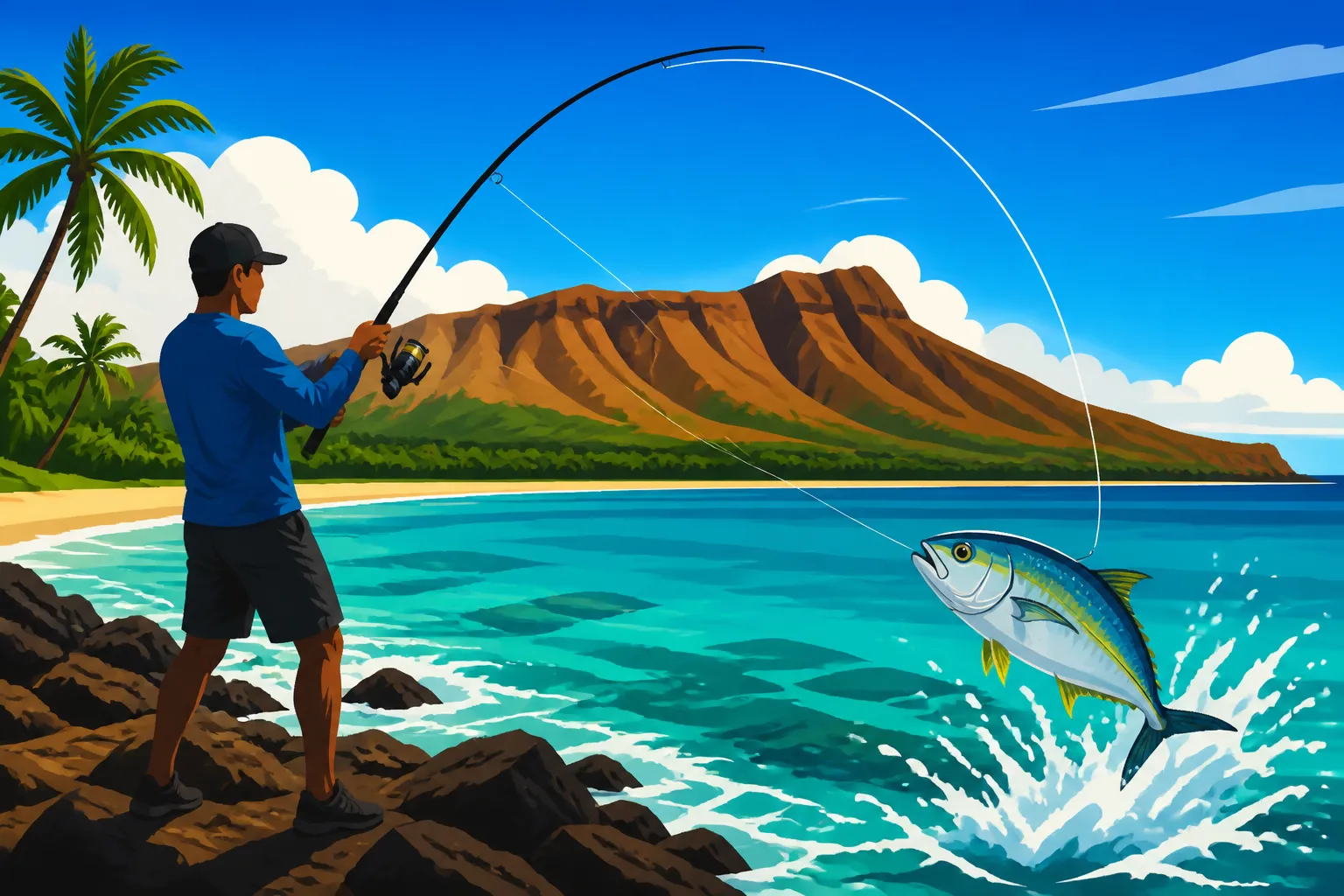
Imagine casting your line with the rising sun illuminating the ancient crater, the Pacific stretching endlessly before you, and the gentle Hawaiian breeze at your back. That's the typical morning scene for many dedicated shore anglers around Diamond Head. The underwater topography here is a mix of shallow reef flats, sandy pockets, and sudden drop-offs where the lava rock extends into deeper water. This varied environment provides ample habitat for everything from small, schooling baitfish to formidable game fish like ulua (giant trevally) and papio (jack crevalle). It's a place where you can feel profoundly connected to Hawaii's natural heritage, combining the pursuit of a prized catch with an unforgettable outdoor experience. However, don't let the beauty fool you; these waters can be tough, demanding skill, patience, and a healthy respect for the ocean's power.
Understanding the Unique Shoreline Dynamics
The shoreline around Diamond Head is largely composed of volcanic rock, with some small stretches of sandy beach. This rocky terrain creates complex currents, eddies, and surge zones that can be both advantageous and challenging for anglers. Powerful waves, especially during south swells, can make access difficult and dangerous, and can quickly pull an unwary angler or their gear into the sea. Moreover, the reef structure itself can be a snag magnet, leading to lost tackle if you're not careful. The water clarity can vary significantly, impacted by tides, recent rainfall, and wave action. Knowing how to read these conditions is paramount. For instance, strong outgoing tides can create current lines that funnel baitfish, attracting predators. Conversely, slack tide might be better for targeting more docile reef fish. Understanding these dynamics is crucial for success and safety, often more so than knowing the 'secret spot.' It's about being observant and adapting your approach to what the ocean is doing that day.
Navigating Diamond Head's Best Shore Fishing Access Points
While Diamond Head is a popular tourist destination, finding the best shore fishing spots requires a bit more local knowledge and a willingness to explore beyond the obvious. It’s not just about getting to the water's edge; it's about understanding the nuances of each access point and what they offer in terms of fishing opportunities and safety. Remember that parking can be limited and regulations are strictly enforced, so always plan ahead.
Public Access Near the Lighthouse and Crater Base
The area directly below the Diamond Head Lighthouse offers some popular, albeit challenging, shore fishing. This stretch is characterized by exposed lava rock shelves that drop into deeper water, providing excellent opportunities for targeting larger pelagic species that cruise closer to shore. Access usually involves a hike along rocky paths, and wearing sturdy, reef-safe footwear is non-negotiable. Anglers often brave these spots for the chance at ulua, papio, or even the occasional ono (wahoo) or mahimahi when conditions are right and they can cast far.
Further along the base, towards the eastern side of the crater, there are various points where locals will scramble down to the water. These spots are often characterized by deeper water access right off the rocks, making them prime locations for slide baiting or heavy whipping for larger game. However, these areas are often exposed to significant surge and waves, making them extremely hazardous, especially during high surf. Always prioritize safety, observe the water for at least 15-20 minutes before approaching the edge, and never turn your back on the ocean. Knowing the local weather and swell forecasts is essential.
Exploring Kapiolani Park and Leahi Beach Park Options
Moving westward from the crater base, towards Waikiki, you'll find the areas around Kapiolani Park and Leahi Beach Park. These spots offer a different kind of shore fishing experience, often more accessible and less exposed than the direct crater base. Here, you'll find a mix of sandy stretches interspersed with rocky outcroppings and shallow reef flats.
- Kapiolani Park: The shoreline fronting Kapiolani Park offers easier access, with grassy areas leading to sandy beaches and scattered reef formations. This is a popular spot for families and beginners, often yielding papio, goatfish (kumu, weke), and various reef fish. Light tackle whipping with small lures or bait is effective here. The water is generally calmer, making it safer for less experienced anglers, though caution is always advised regarding submerged rocks and occasional strong currents around reef channels.
- Leahi Beach Park: Adjacent to Kapiolani Park, Leahi Beach Park offers similar conditions but with perhaps a few more rocky patches providing structure for fish. It’s a great place to walk the shoreline, casting into pockets of water or along reef edges. These park areas can be very productive during twilight hours when fish come into shallower water to feed. You'll often see locals here casting into the incoming tide, hoping to intercept smaller schooling fish. For those interested in deeper insights into Hawaii's diverse fishing locales, you can always research more extensively, and sites like FishingBooker sometimes feature local guides who share specific insights on these types of accessible spots, even if you’re just looking for tips for your own shore adventure.
Safety and Respect for Private Property
It cannot be stressed enough: safety must always be your number one priority when shore fishing anywhere in Hawaii, especially around Diamond Head. The ocean here is powerful and unpredictable. Rogue waves are a real threat, and sharp lava rocks can cause serious injury. Always fish with a buddy if possible, wear appropriate footwear (closed-toe, reef-safe shoes with good grip), and never take unnecessary risks for a fish.
Beyond personal safety, respecting private property and local customs (kapu) is crucial. While Hawaii's shoreline is generally public up to the high-water mark, access points often traverse private or restricted lands. Always look for "No Trespassing" signs and abide by them. Leave no trace of your presence – pack out everything you pack in, including discarded fishing line and bait containers. Understanding local regulations, like those detailed in the Hawaii Boating Laws for Anglers, is also key to being a responsible visitor.
Target Species and Their Haunts Around Diamond Head
The waters around Diamond Head are teeming with life, offering a diverse array of fish species that appeal to anglers of all skill levels. From fast-fighting jacks to colorful reef fish, there's always something to keep things interesting. Knowing what you're likely to encounter and where they prefer to hang out can significantly increase your chances of success.
The Thrill of Papio and Ulua
For many shore anglers in Hawaii, the ultimate prize is an ulua (giant trevally) or its smaller, younger counterpart, the papio. These powerful jacks are renowned for their aggressive strikes and drag-screaming runs, providing an exhilarating fight that tests both angler and tackle. Around Diamond Head, papio are quite common, especially in the shallower reef areas and along sandy stretches near rocky points. They often feed on smaller baitfish, crustaceans, and even octopus. You can target them with light to medium tackle, using small poppers, stick baits, or fresh bait like cut squid or opelu. If you're specifically hoping to hook one of these hard-fighters, our guide on How to Catch Papio on Hawaii's Shoreline offers even more detailed strategies.
Ulua, the mature giant trevally, are a different beast entirely. While less common from shore than papio, the deep water access points around the lighthouse and the crater's east side offer the best chances. Targeting ulua usually involves heavy tackle, substantial live or dead bait (like whole mackerel scad or octopus), and specialized techniques such as slide baiting or heavy casting with large plugs. Ulua often patrol the edges of drop-offs and channels, especially under the cover of darkness or during strong tidal movements. Landing a large ulua from shore is a monumental achievement, a true test of strength and endurance against one of the ocean's most formidable predators. For a deeper dive into these impressive fish, you might find our article on Hawaii Papio and Ulua Size Rules to be particularly helpful.
Reef Dwellers: Uhu, Kumu, Weke, and More
Beyond the jacks, the diverse reef system around Diamond Head supports a vibrant community of reef fish, many of which are excellent table fare and provide consistent action for shore anglers.
- Uhu (Parrotfish): These colorful grazers are abundant on the coral and rock formations. While primarily herbivorous, they can be caught with small pieces of limu (seaweed) or bread, or sometimes by small jigs tipped with bait. They're not known for their fighting prowess but are highly valued for their unique flavor and texture. Be sure to check Hawaii Uhu (Parrotfish) Size and Bag Limits as they have specific regulations.
- Kumu and Weke (Goatfish): These distinctive fish with their prominent barbels ("whiskers") use them to root around in the sand and rubble for invertebrates. They are a common catch on bait, especially small pieces of shrimp, squid, or clam presented on a small hook near sandy pockets adjacent to reef. They offer a respectable fight on light tackle and are highly regarded as food fish.
- Chiselmouth (Nenue), Surgeonfish (Manini), and Trumpetfish (Nunu): These are just a few of the other species you might encounter. While some are less desirable for eating, they all contribute to the rich biodiversity and can provide plenty of action, especially for younger anglers or those simply enjoying the variety of Hawaiian marine life.
Occasional Surprises and Bycatch
Fishing around Diamond Head can also bring unexpected delights. Depending on the season and conditions, you might hook into transient pelagic species like small mahimahi (dolphin fish) or even an opportunistic ono (wahoo) cruising closer to shore, though these are more commonly caught offshore. Bonefish (oio) can occasionally be found in the shallower sandy flats, though they are notoriously shy and require specialized techniques. Always be prepared for anything, as the ocean often has surprises in store.
It's also important to be mindful of potential bycatch, including protected species like Hawaiian monk seals or green sea turtles. If you accidentally hook a protected animal, do not try to bring it in or cut the line close to its body. Instead, carefully try to remove the hook if safe to do so, or immediately contact the Department of Land and Natural Resources (DLNR) for assistance. Awareness and quick action are key to protecting Hawaii's precious marine inhabitants.
Mastering Techniques and Essential Gear for Diamond Head
Shore fishing at Diamond Head demands a tailored approach when it comes to both your gear and your techniques. The unique blend of deep rocky ledges, shallow reef flats, and powerful surf means that a one-size-fits-all strategy simply won't cut it. Being well-prepared and adaptable is key to success and, more importantly, to staying safe.
Rod, Reel, and Line for Varying Conditions
Your choice of rod and reel is paramount for tackling the conditions and target species around Diamond Head.
- Light to Medium Tackle (for Papio and Reef Fish): For targeting papio, goatfish, and other reef dwellers in the shallower, calmer areas like Kapiolani Park, a medium-action spinning rod (7-9 feet) paired with a 3000-5000 size spinning reel is ideal. Spool it with 15-20 lb braided line, which offers sensitivity and casting distance, and use a 20-30 lb fluorocarbon leader for abrasion resistance against the reef. This setup provides a good balance of power and finesse for these fast, yet not overly large, fighters.
- Heavy Tackle (for Ulua and Exposed Spots): If you're heading to the more exposed, deeper rocky points in pursuit of ulua, you'll need to step up your game. A heavy-action surf rod (10-14 feet) capable of casting heavy weights, paired with a large, robust spinning reel (8000-14000 size) or a conventional reel, is essential. Your main line should be 50-80 lb braided line, followed by a heavy shock leader (80-150 lb monofilament) to absorb the impact of casting heavy rigs and provide extra protection against abrasive rocks. A strong leader is absolutely critical when fighting a powerful ulua near sharp lava. Our guide on Shore Fishing Techniques for Hawaii delves into these specifics further.
| Gear Component | Light to Medium Tackle (Papio, Reef Fish) | Heavy Tackle (Ulua) |
|---|---|---|
| Rod | 7-9 ft Medium Action Spinning | 10-14 ft Heavy Action Surf |
| Reel | 3000-5000 Spinning | 8000-14000 Spinning or Conventional |
| Main Line | 15-20 lb Braided | 50-80 lb Braided |
| Leader Material | 20-30 lb Fluorocarbon | 80-150 lb Monofilament (Shock Leader) |
| Hooks | #4 to 2/0 J-hooks or Circle Hooks | 7/0 to 12/0 Circle Hooks |
| Weights | 1/2 oz to 2 oz pyramid/egg sinkers | 4 oz to 8 oz pyramid/sputnik sinkers |
| Primary Technique | Whipping, Bottom Fishing | Slide Baiting, Heavy Whipping, Live Baiting |
Bait, Lures, and Rigs That Get Bites
The right presentation is just as important as the right gear.
- Natural Baits: Fresh dead or live bait is often king, especially for larger predatory fish. Cut squid, whole or cut opelu (mackerel scad), akule (bigeye scad), or halalu (juvenile scad) are excellent choices for papio and ulua. For reef fish like goatfish, small pieces of shrimp, limu (seaweed), or even bread can be effective. Make sure your bait is fresh and presented naturally.
- Artificial Lures: Lures can be incredibly effective for actively feeding papio and other predatory species. Small to medium-sized metal jigs (½ oz to 2 oz) are great for whipping. Soft plastic grubs or swimbaits rigged on jig heads can also entice strikes. Topwater poppers and stick baits can provide explosive action, especially during dawn or dusk. Matching the hatch – using lures that mimic the local baitfish – is always a good strategy.
- Rigs:
- Bottom Fishing Rig: A simple paternoster or "dropper loop" rig with a weight at the bottom and one or two baited hooks above is effective for targeting reef fish and papio with bait.
- Whipping Rig: For lures, a simple swivel, a short fluorocarbon leader, and your chosen lure are all you need.
- Slide Bait Rig: For ulua, this involves casting a heavy sinker out, letting it settle, and then "sliding" a large live or dead bait down the main line via a specialized clip or ring system. This allows you to present large baits in areas you couldn't otherwise cast them. Check out Sliding Bait Techniques for Ulua for more information on this method.
Effective Shore Casting and Retrieval Methods
Mastering your casting technique is crucial for reaching productive water and presenting your bait or lure effectively.
- Overhead Cast: The most common and powerful cast, used to launch lures or baits a good distance. Proper timing and technique are essential to avoid injury, especially with heavy tackle.
- Sidearm Cast: Useful in windy conditions or when casting under obstacles, though it sacrifices some distance.
- Whipping: This active style involves repeatedly casting and retrieving lures, often with a fast retrieve, to cover ground and trigger reaction strikes from papio and other active predators. Varying your retrieve speed and adding pauses can often be key.
- Live Baiting/Soaking Bait: Once you've cast your bait, whether it's on the bottom or free-lined, the key is patience. Let the natural currents work your bait, and be vigilant for any subtle tugs or sudden runs. When fishing live bait, try to keep the bait lively and positioned in current seams where fish are likely to ambush prey.
Remember, the rocky, uneven terrain of Diamond Head means you often don't have a perfectly clear casting area. Always look behind you before casting to ensure no one is in your path and no obstacles will snag your line. When in doubt, a short, controlled cast is always better than a long, dangerous one. For some of the more advanced techniques, like those used for bonefishing, many anglers consult local experts or even look for guided trips on platforms like FishingBooker to learn firsthand from experienced captains and guides.
Regulations, Safety, and Ethical Angling at Diamond Head
Fishing in Hawaii, especially around iconic landmarks like Diamond Head, isn't just about catching fish; it's about respecting the aina (land) and kai (ocean), understanding local regulations, and prioritizing safety. These waters are precious, and our collective responsibility as anglers is to preserve them for future generations.
Understanding Marine Protected Areas and Licenses
Hawaii has specific regulations to protect its unique marine environment. Around Diamond Head, some areas may fall within or be adjacent to Marine Life Conservation Districts (MLCDs) or other protected zones where fishing is restricted or prohibited. For example, Waikiki-Diamond Head Shoreline Fisheries Management Area (SFMA) has specific rules regarding net fishing, spearfishing and certain species limits. It's crucial to know these boundaries and rules before you cast a line. You can find detailed maps and regulations on the Hawaii Division of Aquatic Resources (DAR) website, or by checking out our guide on Hawaii Marine Life Conservation Districts, Explained. Fishing in a restricted zone, even accidentally, can lead to hefty fines and confiscation of gear.
Furthermore, while residents generally don't need a license for ocean recreational fishing, non-residents do. If you're visiting from out of state, ensure you have the appropriate Hawaii Fishing License Guide for 2026 before your trip. Getting caught without one is a surefire way to ruin your day and lighten your wallet, with penalties potentially outlined in Fishing Without a Required License in Hawaii: Penalties. It's a small step that makes a big difference in ensuring you're fishing legally and supporting Hawaii's conservation efforts.
Essential Safety Practices for Rocky Shores and Surf
The beauty of Diamond Head's coastline belies its inherent dangers. The jagged lava rocks are sharp and slippery, and the powerful Pacific surf can be unforgiving.
- Footwear is Non-Negotiable: Wear sturdy, closed-toe shoes with excellent grip. Aqua socks or sandals are not enough. Reef boots or old athletic shoes are best to protect your feet from sharp rocks, barnacles, and sea urchins.
- Watch the Waves: Always spend at least 15-20 minutes observing the wave sets before approaching the water's edge. Look for "rogue waves" – larger, unexpected waves that can sweep you off the rocks. Never turn your back on the ocean.
- Fish with a Buddy: Whenever possible, fish with at least one other person. If something goes wrong, they can get help.
- Know Your Limits: Don't venture out onto wet, slippery rocks or into precarious positions if you're not confident in your footing. A fish is never worth risking your life.
- Carry a Cell Phone (in a waterproof bag): For emergencies.
- Bring Water and Sun Protection: The Hawaiian sun is intense. Stay hydrated and protect yourself from sunburn.
- Wear a PFD (Personal Flotation Device) if Wading: If you plan on wading out onto reef flats or around rocky points, a lightweight PFD can be a lifesaver, especially if you get knocked off your feet by a wave. Our guide to Wading Techniques for Hawaii Shore Fishing offers additional safety tips.
Practicing 'Malama Aina' – Caring for the Land and Ocean
"Malama 'aina" means to care for the land, and this extends to the ocean as well. Responsible angling practices are paramount in Hawaii:
- Take Only What You Need: Adhere to bag and size limits for all species, as outlined in guides like Hawaii Bag and Size Limits by Species. Don't keep fish you won't eat. Practice catch and release for fish you don't intend to keep, doing so quickly and carefully to minimize stress on the fish.
- Leave No Trace: Pack out all your trash, including fishing line, bait containers, and any food wrappers. Discarded fishing line is a major hazard for marine life.
- Protect the Reef: Avoid walking directly on live coral, as it is a fragile, living organism that takes decades to grow. Try to keep your movements on rock or sandy bottom.
- Respect Wildlife: Maintain a respectful distance from Hawaiian monk seals, sea turtles, and other protected marine life. Disturbing them is illegal and harmful.
- Be Mindful of Others: Diamond Head is a popular spot for many activities – swimming, surfing, diving, and sightseeing. Be courteous and share the shoreline. Avoid casting near swimmers or surfers.
By adhering to these principles, you not only ensure your own safety and a more enjoyable fishing experience but also contribute to the long-term health and sustainability of Hawaii's precious marine resources.
Tips for a Successful Shore Fishing Trip at Diamond Head
Shore fishing at Diamond Head can be incredibly rewarding, but it often requires a blend of skill, patience, and local knowledge. Maximizing your chances means paying attention to details, from reading the water to preparing properly for your outing.
Reading the Water and Structure
The ocean is constantly changing, and understanding its subtle cues is a skill that separates successful anglers from those who just get lucky. Around Diamond Head, this means carefully observing the water and the surrounding structure.
- Currents and Eddies: Look for areas where currents converge or create eddies behind prominent rocks or points. These are natural ambush points for predatory fish like papio and ulua, as baitfish often get disoriented or concentrated in these zones. A strong outgoing tide can create nutrient-rich current lines that fish will patrol.
- Reef Edges and Drop-offs: Fish love structure. Pay close attention to where the shallow reef transitions to deeper water. These edges are prime feeding grounds. From the elevated positions around Diamond Head, you can sometimes spot darker patches of reef indicating deeper pockets or channels.
- Whitewater and Foam: Areas of whitewater, where waves break over shallow reefs or against rocks, can be excellent spots. The turbulence dislodges food, and the aerated water provides cover for predators. Casting into the calmer water just outside the whitewater can often be productive.
- Baitfish Activity: Keep an eye out for schools of baitfish, whether they're jumping, dimpling the surface, or being harassed by larger predators. Where there's bait, there are usually bigger fish. Seabirds diving into the water can also be a clear indicator of bait schools.
By patiently observing these signs, you can often predict where fish are likely to be holding and feeding, drastically improving your chances. This kind of 'reading the water' is an art, not a science, and it develops with experience.
Preparing for Your Trip
A successful trip starts long before you even cast your first line. Proper preparation is essential, especially when venturing to potentially rugged areas like Diamond Head.
- Check Forecasts: Always check the weather, wind, and swell forecasts before you go. Strong winds can make casting difficult and uncomfortable, while large swells can make fishing from the rocks extremely dangerous. If the surf is too big, consider a calmer, more protected spot.
- Pack Smart: Beyond your fishing gear, bring plenty of water, snacks, sunscreen, a hat, sunglasses, and a small first-aid kit. A durable backpack is useful for carrying everything, leaving your hands free for navigating tricky terrain.
- Footwear, Again: We can't say it enough – good reef shoes or sturdy, closed-toe water shoes are crucial.
- Tackle Management: Bring more hooks, weights, and leader material than you think you'll need. Snags are inevitable when fishing rocky, reefy bottom, and being able to re-tie quickly can keep you in the action.
- License Check: If you're a non-resident, double-check that your Hawaii fishing license is valid and easily accessible.
- Local Knowledge: Before heading out, consider stopping by a local tackle shop. They can provide invaluable, up-to-the-minute information on what's biting, what baits are working, and any current regulations or dangerous conditions. Alternatively, if you're looking for an expert opinion or considering an offshore trip, exploring guides on platforms like FishingBooker can sometimes yield useful general information about what fish are active in Hawaiian waters.
Maximizing Your Catch and Experience
Beyond the technical aspects, there are a few overarching principles that can enhance your Diamond Head shore fishing adventure.
- Go Early or Late: Dawn and dusk are often the most productive times for shore fishing. Many predatory fish move into shallower water to feed during these low-light periods. Plus, you'll avoid the hottest part of the day and often encounter fewer people.
- Be Patient and Persistent: Fishing isn't always about instant gratification. There will be slow periods. Stay patient, keep trying different retrieves or baits, and trust your instincts. Sometimes the bite turns on suddenly.
- Learn from Others: Observe local anglers. They often have decades of experience and subtle techniques that can be incredibly effective. Don't be afraid to politely ask for tips, but always respect their space and fishing spots.
- Enjoy the Journey: Even if the fish aren't biting, take a moment to appreciate the stunning natural beauty of Diamond Head. The sunrises, the powerful ocean, and the unique Hawaiian landscape are a reward in themselves. Fishing is as much about the experience as it is about the catch.
- Share Your Knowledge: Once you've had some success, consider sharing your knowledge with others (within reason, of course!). This builds community and helps perpetuate responsible fishing practices.
By combining thorough preparation, an understanding of the environment, adherence to regulations, and a respectful attitude, your shore fishing experience around Diamond Head can be truly unforgettable.
Disclaimer
The information provided in this guide is for general informational purposes only. Fishing regulations, conditions, and access points can change frequently. Always consult the official Hawaii Department of Land and Natural Resources (DLNR) Division of Aquatic Resources (DAR) website for the most current regulations, warnings, and advisories before planning your fishing trip. Safety is paramount; always prioritize personal safety over catching fish. The author and publisher are not responsible for any accidents, injuries, or legal issues that may arise from using this information.