Best pond fishing near Kaneohe Oahu
It's easy to get caught up in the allure of Hawaii's deep blue ocean, thinking that's where all the fishing action is. But for those of us living near Kaneohe, or even just visiting, sometimes you crave something a little different, a little more serene – a quiet pond where the struggle isn't against massive pelagics, but rather a feisty bass or a colorful tilapia. If you've been searching for accessible freshwater fishing spots away from the salty spray, especially close to the windward side of Oahu, you're not alone. This guide will walk you through the best pond fishing options available near Kaneohe, helping you discover the tranquility and excitement of Hawaii's freshwater scene.
The Unique Appeal of Freshwater Fishing on Oahu
When most people picture fishing in Hawaii, their minds immediately drift to grander marlin, leaping mahimahi, or the thrill of deep-sea charters off the Kona Coast. And while that's an incredible experience, it often overshadows the surprisingly vibrant and accessible freshwater fishing opportunities available, especially on Oahu. For families with kids, those looking for a more relaxed outing, or even seasoned anglers seeking a different challenge, pond fishing offers a fantastic alternative.
A Break from the Ocean's Demands
Let's be honest, ocean fishing can be a whole ordeal. There's the motion sickness, the sometimes-unpredictable swell, the need for specialized boats and gear, and the sheer vastness of the Pacific. Pond fishing, on the other hand, provides a calmer, more contained environment. You can often fish from the shore, bring a picnic, and enjoy a peaceful afternoon without the constant rock and roll of the waves. It's perfect for teaching youngsters how to cast or just enjoying the simple pleasure of a bobbing cork. The feeling of the warm sun on your face, the sound of birds, and the anticipation of a tug on your line in a tranquil setting is truly unmatched.
Accessibility and Family Fun Near Kaneohe
For residents of Kaneohe or visitors staying on the windward side, accessing prime ocean fishing spots can sometimes mean a significant drive across the island. Freshwater ponds, while not directly in Kaneohe, offer relatively straightforward access compared to venturing far offshore. These spots are often well-maintained, with amenities that cater to families, making them ideal for a multi-generational outing. Imagine setting up chairs by the water, casting a line, and enjoying the lush, green backdrop of Oahu's interior – it's a memory in the making, and it's much closer than you might think. Plus, the species you'll encounter in these ponds are often abundant and eager to bite, ensuring that even novice anglers have a good chance of success. When planning any fishing adventure, even for freshwater, resources like FishingBooker can sometimes offer insights into local guides or unique experiences if you want to explore beyond DIY.
Oahu's Premier Freshwater Fishing Destinations Near Kaneohe
While direct "ponds" within Kaneohe might be scarce, Oahu hosts significant freshwater reservoirs that serve as excellent fishing grounds. These spots are within a reasonable driving distance from Kaneohe, making them the go-to locations for island residents seeking freshwater action. The most prominent among these is the Wahiawa Public Fishing Area, offering diverse species and a unique fishing experience. The Nuuanu Reservoir complex is also an option, though with more specific access considerations.
Wahiawa Public Fishing Area
Located roughly in the center of Oahu, the Wahiawa Public Fishing Area (PFA) is by far the most popular and productive freshwater fishing spot on the island, and it's a relatively easy drive from Kaneohe – usually under an hour, depending on traffic. This expansive reservoir, nestled amidst pineapple fields, is a haven for various introduced freshwater species and provides ample space for shore anglers, float tubers, and small boats. It's genuinely a gem that often surprises first-time visitors with its beauty and the quality of its fishing.
Target Species and What Makes Them Bite
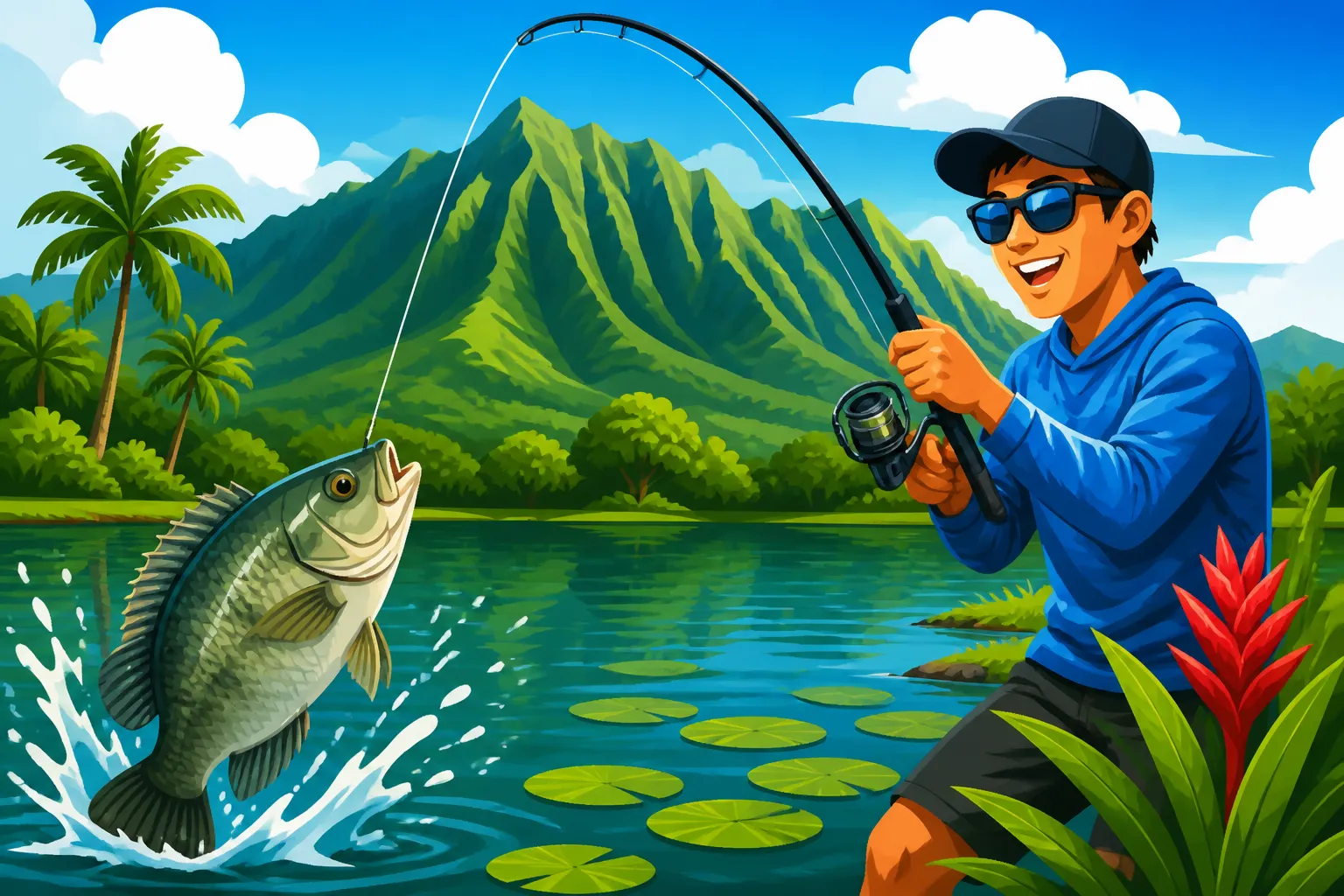
Wahiawa Reservoir is renowned for its vibrant population of largemouth bass. These feisty fighters are a thrill to catch, often striking aggressively at topwater lures or soft plastics. Beyond bass, you'll find healthy numbers of peacock bass, known for their stunning colors and powerful runs. These South American imports are a favorite among many local anglers, prized for their game qualities. You might also encounter tilapia, channel catfish, and various panfish, offering a diverse angling experience. Each species has its preferred diet and habitat, so understanding what they like can significantly boost your success. For example, the Best Techniques for Largemouth Bass in Hawaii Reservoirs often involve a mix of plastic worms and crankbaits, while best techniques for peacock bass in Wahiawa Reservoir might lean more towards aggressive topwater presentations.
Access, Rules, and Getting Your Permit
Fishing at Wahiawa Reservoir isn't just a matter of showing up with a pole. You absolutely need a valid Hawaii freshwater fishing license. Beyond that, the Division of Aquatic Resources (DAR) requires a free Wahiawa Public Fishing Area Permit, which you can obtain online or at their Honolulu office. This permit helps the state manage access and monitor fishing effort. Remember to check the Hawaii Wahiawa Reservoir Fishing Rules before you go, as there are specific regulations regarding bag limits, size restrictions, and approved fishing methods. For instance, only single, barbless hooks are permitted. Access points are generally well-marked, and there are areas suitable for launching kayaks, canoes, or small boats (electric motors only). There are also plenty of shoreline spots that are easily accessible for bank fishing, offering a good mix for different preferences.
Nuuanu Reservoir Complex (Limited Access)
The Nuuanu Reservoir complex, closer to Honolulu and therefore also accessible from Kaneohe, consists of several reservoirs (Nuuanu #1, #2, #3, and #4). Historically, these have offered freshwater fishing, but access has become much more restricted over the years due to water quality concerns and watershed protection. While it's listed as a potential freshwater spot on Oahu, it's crucial to understand that consistent public fishing access is not a given for all reservoirs within the complex.
Understanding Nuuanu's Unique Status
Unlike Wahiawa, where public access is generally consistent (with the required permit), Nuuanu's status can change. Currently, Nuuanu Reservoir #4 is often the most accessible for fishing, but even then, it's under stricter controls. The primary species you might find here include tilapia, largemouth bass, and occasionally grass carp. Due to the intermittent nature of access, it's always best to consult the Hawaii Division of Aquatic Resources (DAR) website or call their office directly for the most up-to-date information on public fishing opportunities and any specific permits or rules. Relying on outdated information could lead to disappointment. You'll want to review the Hawaii Nuuanu Reservoir fishing rules carefully before planning any trip.
Why Wahiawa is Generally Preferred
Given the more consistent access, diverse species, and robust management for public fishing, Wahiawa Reservoir remains the overwhelming favorite for freshwater anglers near Kaneohe and across Oahu. While Nuuanu offers a closer option for some, the reliability and variety at Wahiawa make it the top recommendation. However, if you're keen on exploring all available options, keeping an eye on DAR announcements regarding Nuuanu is wise.
Here's a quick comparison of the two main freshwater fishing areas on Oahu:
| Feature | Wahiawa Public Fishing Area (PFA) | Nuuanu Reservoir Complex (e.g., Nuuanu #4) |
|---|---|---|
| Location | Central Oahu, about 45-60 min drive from Kaneohe | Near Honolulu, closer to Kaneohe (30-45 min) but access varies |
| Primary Species | Largemouth Bass, Peacock Bass, Tilapia, Channel Catfish, Panfish | Tilapia, Largemouth Bass, Grass Carp |
| Access | Generally good, requires DAR permit + fishing license | Often restricted/limited, requires checking with DAR |
| Best For | Consistent fishing, diverse species, family outings, shore & boat | Quieter, more secluded experience when open, specific species |
| Boat Rules | Electric motors only | Often restricted to kayaks/canoes, check current rules |
| Permits | Hawaii Freshwater Fishing License + Free Wahiawa PFA Permit | Hawaii Freshwater Fishing License (and possibly specific Nuuanu permit if required) |
Essential Gear and Techniques for Pond Fishing Success
Getting set up for pond fishing near Kaneohe doesn't require breaking the bank or hauling specialized deep-sea equipment. In fact, one of the beauties of freshwater angling is its simplicity. However, having the right gear and a few tried-and-true techniques in your arsenal will significantly increase your chances of a successful and enjoyable day.
Rods, Reels, and Line Choices
For most pond fishing scenarios on Oahu, a medium-light to medium action spinning rod, about 6 to 7 feet long, will serve you well. This setup is versatile enough to cast lighter lures for bass and handle the occasional hard fight from a bigger fish. Pair it with a 2500 or 3000 size spinning reel. This combination offers a good balance of casting distance, power, and sensitivity.
When it comes to line, 8-12 lb monofilament or fluorocarbon is a solid choice. Monofilament is forgiving, stretches a bit, and is generally affordable. Fluorocarbon is less visible underwater and has better abrasion resistance, which can be a plus around submerged structures. Some anglers prefer braided line (15-20 lb) for its strength and sensitivity, especially when fishing for bass in thicker cover, often paired with a fluorocarbon leader for stealth.
Baits and Lures That Get Bites
The variety of species in Oahu's ponds means you have options when it comes to what you present to the fish.
- For Largemouth and Peacock Bass: These predators love action!
- Soft Plastics: Worms, creature baits, and swimbaits rigged Texas-style or on a jig head are incredibly effective. Natural colors like green pumpkin, junebug, or black and blue often produce.
- Topwater Lures: Poppers, walk-the-dog lures, and frog imitations can create explosive strikes, especially during dawn and dusk.
- Crankbaits and Spinnerbaits: These are excellent for covering water and enticing aggressive fish.
- Knowing the difference in how they strike can be key; for example, Largemouth Bass in Hawaii's Reservoirs are often caught on plastics, while Peacock Bass in Wahiawa Reservoir are famous for their topwater aggression.
- For Tilapia, Catfish, and Panfish: These species are often more opportunistic feeders.
- Natural Baits: Live worms, corn, bread balls, or even small pieces of shrimp work wonders.
- Small Jigs: Tiny jigs tipped with a piece of worm or artificial bait can be effective for panfish and smaller tilapia.
- Chicken Liver: A classic for channel catfish, offering a strong scent trail.
- Many anglers targeting tilapia will use simpler float rigs with small hooks and natural bait.
Basic Techniques for Freshwater success
- Casting and Retrieving: This is fundamental for lure fishing. Learn to cast accurately to cover, structure, and open water. Vary your retrieve speed and add pauses to mimic injured baitfish.
- Still Fishing: Especially effective for tilapia, catfish, and panfish. Cast out your bait, let it settle, and wait patiently. Using a bobber can help detect subtle bites.
- Whipping/Light Tackle: For the smaller, faster-biting fish, a light rod and reel with small lures or bait is called "whipping" in Hawaii. It's a fun, active way to catch a lot of fish.
- Targeting Structure: Freshwater fish, especially bass, love structure – submerged trees, rocky areas, weed lines, and drop-offs. Pay attention to where the water changes depth or cover is present, as these are prime ambush points.
Navigating Regulations and Responsible Angling
Fishing in Hawaii, whether in the ocean or a freshwater pond, comes with responsibilities. Understanding and adhering to local regulations is not just about avoiding penalties; it's about ensuring the health of the fishery for future generations. For anyone casting a line near Kaneohe, even in freshwater, there are a few critical things to keep in mind.
Understanding License Requirements
This is probably the most crucial piece of information for any freshwater angler on Oahu: you need a Hawaii freshwater fishing license. Many people are surprised by this, assuming that because ocean fishing traditionally hasn't required a license for residents (a topic covered extensively in articles like Do Hawaii Residents Need an Ocean Fishing License?), freshwater would be the same. Not so! If you're a resident, you'll need a Hawaii freshwater license cost for residents, and if you're a visitor, you'll need to look into options like the Hawaii 30-day tourist freshwater license cost or Hawaii 7-day tourist freshwater license cost.
Age Requirements and Exemptions
The state of Hawaii has specific age requirements for freshwater fishing licenses. Generally, anyone 18 years of age or older needs a license. However, there are typically exemptions for younger anglers, making it easier for families to introduce children to the sport without needing a license for every child. You can find detailed information on the Hawaii Freshwater License Age Requirements and a helpful Hawaii fishing license age exemptions summary. It's always best to confirm these details with the Division of Aquatic Resources (DAR) before your trip. For example, if you're bringing along an older relative, you might also want to check if Do Seniors Need a Freshwater Fishing License in Hawaii? applies to them, as there can be specific exemptions.
Bag and Size Limits, and Hook Regulations
Beyond the license, each public fishing area, and even specific species, might have bag limits (how many fish you can keep) and size limits (minimum or maximum length). At Wahiawa, for instance, there are limits on bass and peacock bass to help manage the population. You might also encounter rules about the type of hooks you can use – often single, barbless hooks are mandated in freshwater PFAs to minimize harm to fish that are released.
Why These Rules Matter
These regulations aren't arbitrary. They are put in place by the Hawaii Division of Aquatic Resources to ensure sustainable fishing practices. Overfishing a specific species, or taking too many juvenile fish, can severely impact the population for years to come. By following these rules, you're contributing to the long-term health and enjoyment of these unique freshwater fisheries. Always make it a point to consult the most current regulations available on the DAR website or through their official publications. When planning a trip, remember that helpful resources, like those sometimes listed on platforms such as FishingBooker, often point you towards these official regulations.
Practicing Catch and Release
While keeping a few fish for dinner is certainly part of the experience, practicing catch and release, especially for larger breeding fish, is highly encouraged. This helps maintain a healthy population of trophy-sized fish for everyone to enjoy. If you do plan to release fish, handle them gently, minimize their time out of the water, and use proper de-hooking tools. Even if you're targeting species like Tilapia in Hawaii's Freshwater Reservoirs which are often considered invasive and good to keep, being mindful of your impact on the ecosystem is always a good practice. Remember, the goal is to enjoy the resource responsibly so others can enjoy it too.
Disclaimer
Please note that fishing regulations and access policies in Hawaii can change. Always consult the official Hawaii Department of Land and Natural Resources (DLNR) Division of Aquatic Resources (DAR) website for the most current rules and regulations before planning any fishing trip. This guide is for informational purposes only and does not constitute legal advice.