How to Catch Ulua from Shore
The thrill of chasing ulua from the shore in Hawaii is something truly special, yet it can feel incredibly daunting for anyone who hasn't experienced it. The sheer power of these fish, combined with the challenging ocean conditions and the complex techniques involved, often leaves anglers feeling a mix of excitement and frustration. This comprehensive guide is here to demystify the art of ulua shore fishing, equipping you with the knowledge, gear, and strategies to successfully target these magnificent Hawaiian game fish.
Understanding the Elusive Ulua from Shore
Targeting ulua, also known as Giant Trevally (GT), from the Hawaiian shoreline is a legendary pursuit, steeped in local tradition and demanding immense skill and patience. These fish are not just big; they are incredibly powerful, cunning, and have an uncanny ability to exploit any weakness in your gear or technique. Before you even cast a line, understanding who you're fishing for is paramount.
What Makes Ulua Such a Prized Catch?
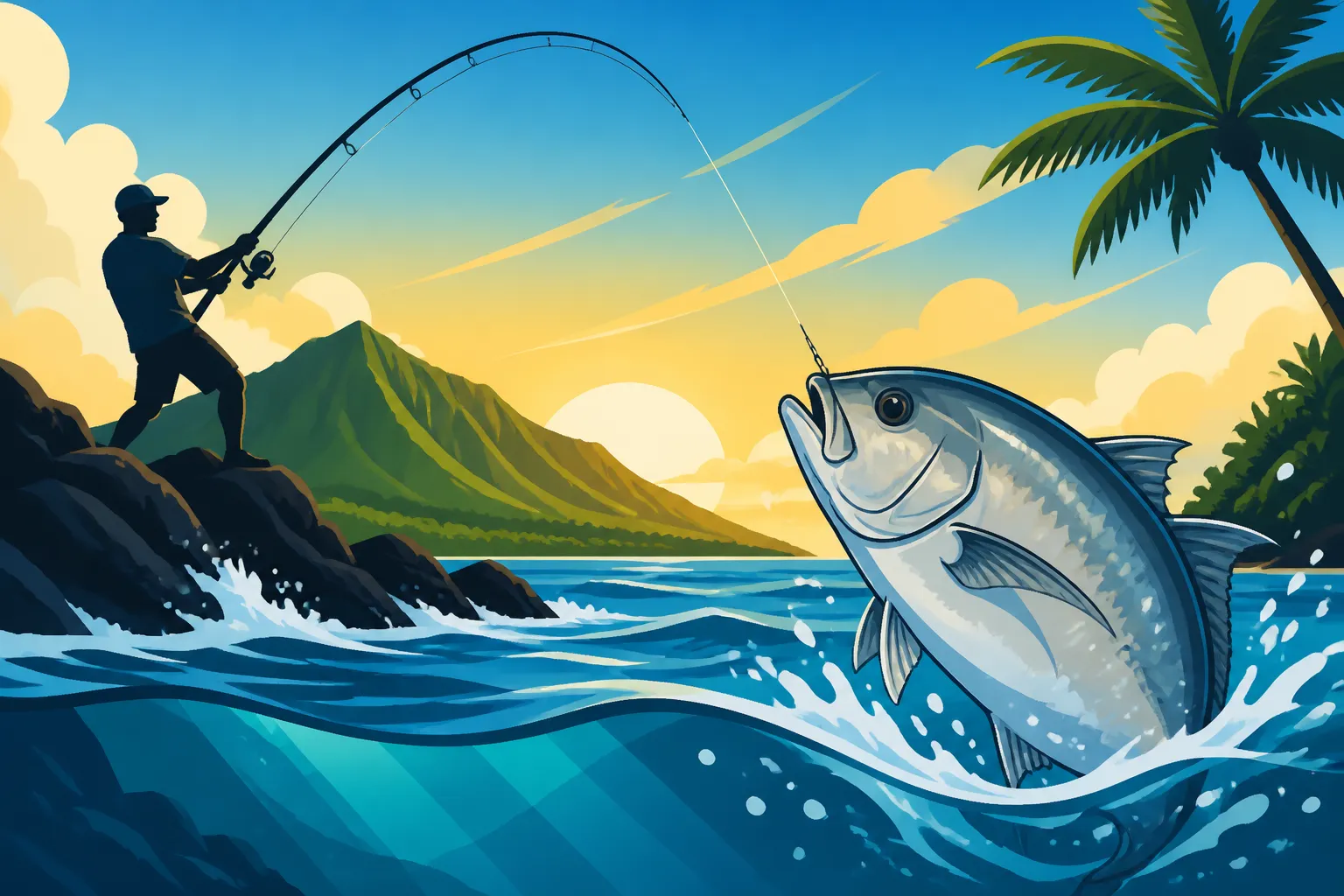
The ulua is arguably one of Hawaii's most iconic and revered game fish. What makes them so highly sought after isn't just their impressive size, which can easily reach over 100 pounds, but their legendary fighting prowess. When an ulua hits, it's not a gentle tug; it's an explosion of raw power that will test your tackle, your knots, and your physical endurance to their absolute limits. They make blistering runs, often trying to cut you off on jagged coral or lava rock, and they pull with a relentless, heavy force that can leave even seasoned anglers with aching muscles. The challenge of outsmarting and landing such a formidable opponent from the confines of the shore, without the mobility of a boat, elevates the ulua to a near-mythical status among local fishermen. Beyond the thrill of the fight, ulua hold significant cultural value in Hawaii, often representing strength and abundance.
Ulua Habits and Preferred Habitats
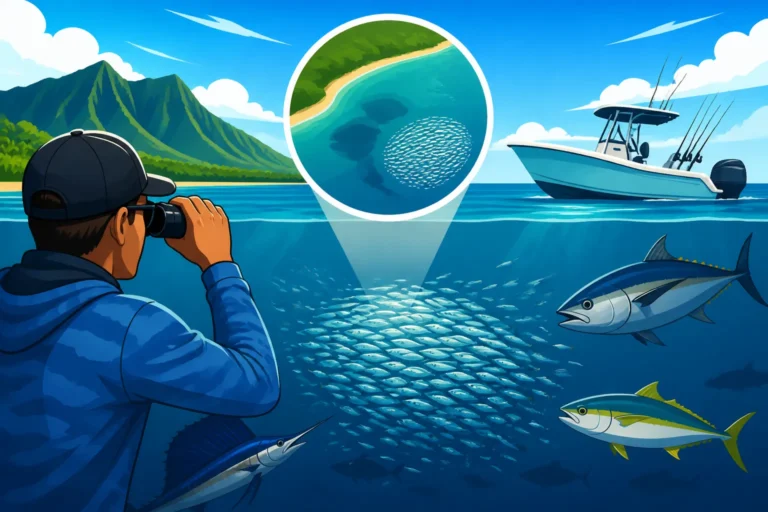
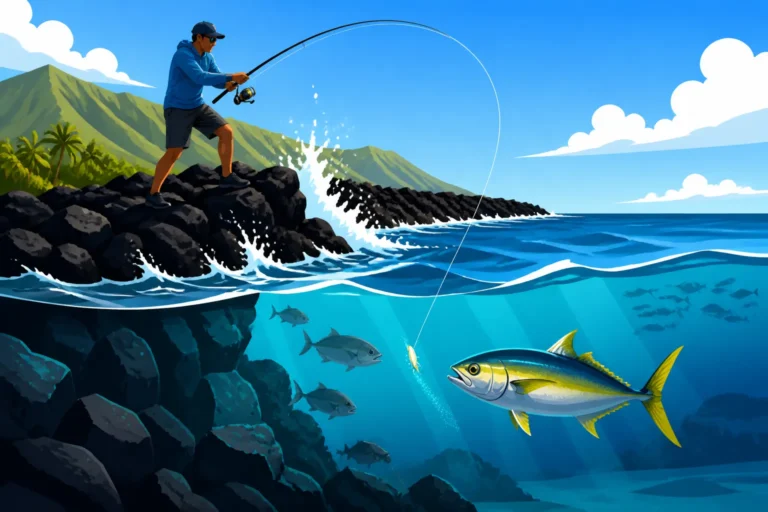
Ulua are opportunistic predators with a voracious appetite. They are typically found patrolling the turbulent waters around rocky points, deep channels, ledges, and areas where strong currents converge, bringing with them a buffet of baitfish and crustaceans. These powerful fish use the structure of the reef and the force of the current to ambush their prey. While they can be caught during the day, they are notoriously more active hunters at night, especially during incoming or outgoing tides when current flow is strongest. The reduced light gives them an advantage over their prey and allows them to move into shallower areas with less risk. They often lurk in the deeper pockets or along the edges of drop-offs during the day, moving onto the shallower feeding grounds as dusk settles. Understanding these patterns is key to positioning yourself for success; you need to be where the ulua are, and often, that means being there when they feel safest to feed aggressively.
Identifying Ulua vs. Papio
It's common for anglers, especially those new to Hawaiian waters, to confuse ulua with papio, and understandably so – papio are simply juvenile ulua. The distinction often comes down to size, but there are also subtle differences in their fighting style and behavior. Papio, generally under 10 pounds, offer a thrilling fight, making quick, erratic runs, often darting back and forth. They are aggressive feeders and can be caught on lighter tackle using various techniques. An ulua, on the other hand, is the full-grown version, typically anything over 10 pounds, and their fight is characterized by sheer, unyielding power and brute strength. They will often make long, powerful runs, trying to bury themselves in structure or simply swim away with an incredible amount of force. While both are members of the Caranx family, knowing the difference is important for understanding their behavior and, more critically, for adhering to regulations. Make sure you're familiar with the specific rules regarding size limits for both when reviewing the official guide on Hawaii Papio and Ulua Size Rules.
Essential Gear for Shorecasting Ulua
Shorecasting for ulua isn't your average fishing trip; it's an extreme sport that demands specialized, heavy-duty gear designed to withstand immense stress. You're not just casting a lure; you're often launching heavy baits hundreds of feet into turbulent waters, then battling a fish that can weigh more than you do, all while anchored to the unforgiving Hawaiian coastline. Skimping on tackle here is a recipe for heartbreak.
Rods and Reels Built for Battle
When it comes to ulua fishing from shore, "heavy-duty" is the absolute minimum standard. Your rod needs to be capable of handling heavy casting weights, often 8-16 ounces or more, and possess the backbone to turn a powerful fish away from jagged lava rock or coral. Look for rods typically ranging from 10 to 14 feet in length, made from strong graphite or composite materials. Popular choices often feature a fast action tip for casting distance and a heavy power rating. Brands like Daiwa, Shimano, and Penn offer excellent surf rods that fit the bill.
For reels, you need something with incredible drag pressure, high line capacity, and robust construction. Spinning reels in the 10000 to 20000 size range, or even larger conventional reels, are common. The drag system is paramount – it needs to be smooth and capable of applying upwards of 30-50 pounds of pressure without locking up or failing. You'll be relying on it to wear down a powerful ulua, so ensure it's well-maintained and tested. Look for reels with sealed drag systems to protect against saltwater intrusion. Many anglers find great deals on reliable, high-performance reels on online platforms like Amazon, but always ensure they meet the specific requirements for ulua fishing.
Line, Leaders, and Terminal Tackle
The line on your reel is your direct connection to the fish, and for ulua, it needs to be exceptionally strong. Braided line, with its thin diameter and incredible strength, is the preferred choice for the main line, typically in the 60-100 pound test range. This allows for more line capacity on your reel and better casting distance. However, braid has no stretch, which can be unforgiving during the violent strikes of an ulua and can easily get cut on sharp coral. This is where a robust monofilament shock leader comes into play.
A shock leader, usually 100-200 pound test monofilament, is tied to the end of your braid. Its length can vary, but typically it's at least twice the length of your rod, plus a few extra feet for the terminal rig. This heavy mono provides stretch to absorb the initial shock of a strike and, more importantly, offers superior abrasion resistance against the rough bottom and the fish's powerful jaws. Connecting the braid to the mono is usually done with a strong knot like an FG knot or an Albright knot, which needs to be tied perfectly.
Terminal tackle includes heavy-duty swivels, typically 300-500 lb test barrel or ball-bearing swivels, strong snaps, and, crucially, razor-sharp hooks. Circle hooks (16/0-20/0) are highly recommended for their ability to hook fish in the corner of the mouth, reducing gut-hooking and making for easier release if desired. J-hooks (12/0-16/0) are also used, but require more precise hook-setting timing. Your weights will vary based on conditions, but pyramid or Sputnik sinkers from 6 to 16 ounces are common to hold bottom in strong currents.
The Importance of a Quality Rod Holder
Imagine casting a heavy bait out, setting your rod in the sand, and then getting a strike from a 50-pound ulua. Without a proper rod holder, that rod is either going to be yanked into the ocean or snapped in two. A reliable, sturdy rod holder isn't just a convenience; it's a necessity and a critical safety component when targeting ulua from shore.
For sandy beaches, heavy-duty PVC pipe holders are popular, often several feet long with an angled cut at the bottom for easy penetration into the sand. You can find these at local hardware stores or even pre-made for fishing. For rocky shorelines, which are more common ulua haunts, heavy metal stakes or custom-fabricated metal holders are essential. These need to be robust enough to be hammered securely into crevices or withstand direct impacts from waves. Many anglers also build or buy portable rod stands that can hold multiple rods, often made from steel, providing a stable base even on uneven terrain. Ensuring your rod holder is firmly planted and capable of resisting the immense pull of a large ulua is paramount; a failed holder can lead to lost gear, lost fish, and potentially dangerous situations.
Mastering Bait Selection and Presentation
Ulua are intelligent and powerful predators, but they're still fish, and they respond to the right bait presented in the right way. Your bait choice and how you rig it can dramatically increase your chances of success. It's not just about throwing something out there; it's about offering an irresistible meal.
Live Bait: The Gold Standard
When it comes to enticing a trophy ulua, live bait is, without a doubt, the most effective option. Nothing beats the natural movement, scent, and vibrations of a struggling baitfish to trigger an ulua's predatory instincts. Popular choices for live bait in Hawaii include akule (Bigeye Scad), opelu (Mackerel Scad), moi (Pacific Threadfin), and even smaller papio. These baits mimic the natural food sources ulua commonly prey upon.
The challenge, of course, is acquiring and keeping live bait. Many dedicated ulua anglers will spend hours prior to their main fishing trip catching bait using sabiki rigs, throw nets, or cast nets in harbors or calmer bays. Once caught, keeping them alive and lively requires a good bait tank with aeration and circulation. A healthy, active baitfish hooked correctly will swim naturally and draw attention, making it far more appealing to an ulua than a sluggish, stressed one. Hooking live bait often involves careful placement to allow for maximum swimming action, typically through the nose or just behind the dorsal fin, avoiding vital organs.
Cut Bait and Artificial Alternatives
While live bait is king, cut bait can also be incredibly effective, especially when you can't source live offerings. The key with cut bait is freshness and scent. Popular choices include chunks of fresh octopus (tako), squid, or large pieces of oily fish like akule, opelu, or skipjack tuna (aku). When using cut bait, ensure it's fresh, as the strong scent trail it creates is what attracts the ulua. Rigging cut bait should ensure it stays on the hook through long casts and strong currents, often requiring bait elastic or multiple hooks.
For anglers who prefer a more active approach, or when ulua are aggressively feeding near the surface, artificial lures can be highly productive. Large poppers, especially those designed for GT fishing, can create a commotion on the surface that mimics a struggling baitfish, drawing explosive strikes. Heavy stickbaits and large swimbaits can also be effective when retrieved through productive areas. While not as common for stationary shorecasting, actively "whipping" or casting and retrieving these lures can be incredibly exciting. Many of these specialized lures can be found on online marketplaces like Amazon, offering a wide selection of colors and sizes to match local baitfish. For more on active techniques, you might want to read our guide on Whipping Techniques for Papio.
Effective Rigging Techniques
The way you rig your bait is crucial for both presentation and ensuring a solid hook-up. For ulua shore fishing, two primary rigs dominate: the sliding sinker rig and the float rig (or balloon rig).
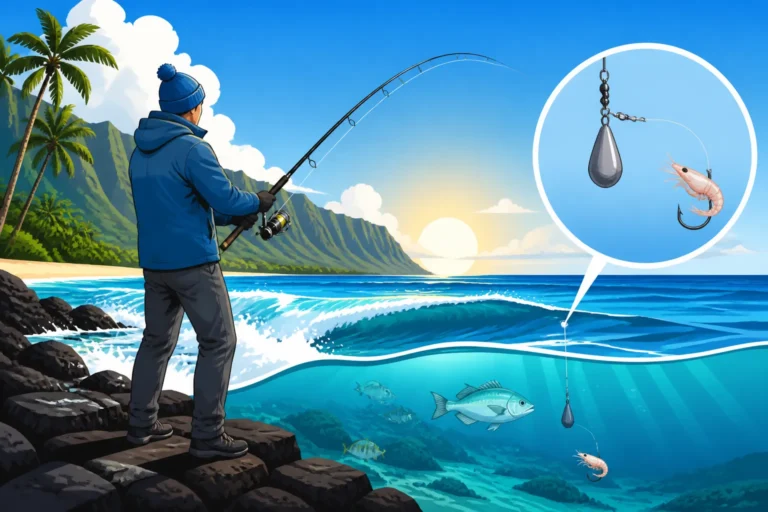
The sliding sinker rig is perhaps the most common. It allows your bait, often a live or cut bait, to swim or drift naturally near the bottom while your weight holds your line in place against the current. This rig typically consists of a heavy sliding sinker (like a pyramid or Sputnik sinker) on your main line, followed by a bead to protect your knot, then a heavy-duty swivel. To the other end of the swivel, a robust monofilament or fluorocarbon leader (200-300 lb test, often 2-5 feet long) is tied, terminating with your large circle or J-hook. This setup allows the ulua to pick up the bait and run without immediately feeling the resistance of the heavy sinker, giving you a better chance for a clean hook-set.
The float rig, often involving a large balloon or specialized float, is used when you want to suspend your live bait closer to the surface or allow it to drift with the current over a specific structure. This is particularly effective when targeting ulua that are feeding higher in the water column or when trying to cover a wider area without constantly recasting. The balloon is attached to your line, often above a swivel, with a leader and hook below it. The buoyancy of the balloon keeps your bait swimming naturally at a set depth. Both rigs require strong knots and meticulous attention to detail, as a single weak link can mean a lost fish.
Prime Shore Fishing Locations for Ulua in Hawaii
Finding ulua from shore isn't just about having the right gear; it's about knowing where to put your bait. Hawaii's coastline is incredibly diverse, offering both prime ambush points and barren stretches. Learning to "read the water" is an art form that comes with experience, but there are definite indicators that point to ulua territory.
Reading the Water: Identifying Ulua Structure
Ulua are structure-oriented predators. They use the natural contours of the ocean floor and coastline to their advantage, ambushing prey that passes by. When scanning a potential fishing spot, look for several key features:
- Rocky Points and Headlands: These areas jut out into the ocean, creating current breaks and eddies where baitfish gather. Ulua will often patrol the edges of these points, waiting for an easy meal.
- Deep Channels and Ledges: Areas where the depth rapidly changes, especially near shore, are prime ulua territory. These ledges and channels provide hiding spots and transit routes for larger fish. A sudden drop-off within casting distance is gold.
- Reef Drop-offs: Similar to ledges, the edges of shallow reefs that plunge into deeper water are major feeding grounds. Ulua will cruise these perimeters, picking off smaller reef fish.
- Current Lines and Turbidity: Look for areas where currents converge, create rips, or where murky water meets clear water. These current lines often concentrate baitfish and indicate active feeding zones. Choppy, turbulent water usually means good current, and good current often means ulua.
- Whitewater and Foam: The constant churn of waves crashing against rocks creates oxygenated, food-rich whitewater that attracts smaller prey. Ulua are not afraid to hunt in this turbulent environment.
Remember, ulua are strong enough to withstand heavy current and waves, so don't be afraid to target spots that look rough to the casual observer. For more general guidance on understanding the water, check out our guide on Hawaii Shoreline Fishing Rights and Public Access Rules.
Best Islands and Specific Areas
While ulua can be found around all the main Hawaiian Islands, certain coastlines are renowned for their consistent action and potential for trophy fish.
- Oahu: The North Shore of Oahu, famous for its big waves, also offers incredible ulua fishing, particularly around rocky points and beaches with deep drop-offs. The Windward side (East Coast) also has numerous promising spots, often characterized by strong currents and rocky outcrops. Areas like Kaena Point and Makapuu are popular, though access and conditions can be challenging.
- Big Island: The Kona Coast is legendary for its deep-sea fishing, but its rugged, volcanic coastline also offers prime ulua shore opportunities. The lava fields create countless ledges, channels, and turbulent areas perfect for ambush predators. Areas south of Kona, like South Point (Ka Lae), are known for their strong currents and deep waters close to shore.
- Maui: Maui's diverse coastline, from the rocky shores of La Perouse Bay to the more accessible areas around Ma'alaea, holds ulua. The wilder, less developed coastlines tend to offer the best opportunities away from heavy human activity.
- Kauai: The Garden Isle's rugged cliffs and river mouths, particularly along the Na Pali Coast and other less-trafficked areas, can yield impressive ulua. Remote access often means less pressure and bigger fish.
Always scout a location during daylight hours to understand the terrain, potential hazards, and safe access points before attempting to fish at night. Many of the best spots require a hike, so be prepared with proper footwear and plenty of water.
Night Fishing Hotspots for Ulua
As mentioned earlier, ulua are primarily nocturnal feeders, and some of the most productive shore fishing happens under the cloak of darkness. The reasons are simple: they feel safer in low light, their prey is often more active, and the human activity that might deter them during the day is minimal. Therefore, targeting ulua at night opens up many more possibilities, particularly in areas that might be too shallow or exposed during daylight hours.
When choosing a night fishing spot, safety is paramount. You need to be intimately familiar with the area from daylight reconnaissance. Look for spots with stable footing, clear escape routes from rogue waves, and without hidden hazards. Using a powerful headlamp is crucial, but remember to use red light filters when you don't need bright white light, as this preserves your night vision and is less likely to spook fish. Many anglers will set up their rod holders and prepare their bait during the last hour of daylight. Focus on areas with good deep water access close to shore, strong current, and nearby structure that would hold baitfish after dark. Often, the same rocky points and deep channels that look promising during the day become absolute magnets for ulua at night. For specific tactics, our guide on Night Fishing for Ulua in Hawaii offers even more in-depth advice.
Strategic Shorecasting Techniques for Ulua
Catching ulua from shore is not just about showing up with big gear; it's about employing strategic techniques that capitalize on the fish's habits and the environment. You need to get your bait to where the fish are, keep it there, and be ready to battle when the moment strikes.
The Art of Long-Distance Casting
One of the biggest hurdles in shorecasting for ulua is achieving the necessary casting distance. Ulua often patrol waters well beyond the typical casting range of conventional surf fishing setups, lurking in deeper channels or farther out on reef edges. To reach these zones, you need to master long-distance casting techniques. This often involves specific casting styles, like the "pendulum cast" or "off-the-ground cast," which utilize the entire length of the rod and the weight of the sinker to generate maximum momentum. These casts require practice and proper form to execute safely and effectively.
Beyond technique, selecting the right casting weight is crucial. It needs to be heavy enough to load the rod effectively and penetrate the wind, but not so heavy that it overstresses your tackle. Balancing your rod, reel, and line with the appropriate casting weight is an art. Additionally, line management is key: using thin-diameter braid for your main line, minimizing line coils, and ensuring your retrieve is smooth will aid in maximizing your distance. Always practice your casting in an open, safe area away from people and obstructions before heading to your chosen fishing spot. A poorly executed long-distance cast can be dangerous.
Sliding Bait Techniques for Ulua
The sliding bait technique is a favorite among seasoned ulua anglers, especially when using live or large cut baits. This method allows your bait to drift naturally in the current or swim freely, while your main line remains anchored by a heavy sinker on the bottom. The beauty of this rig is that it presents the bait in a very natural manner, enticing cautious ulua to strike without feeling the immediate resistance of a heavy weight.
Here's a breakdown of the typical setup, often referred to as a "slider" or "trolley" rig:
- Main Line: Your heavy braided main line is cast out with a heavy pyramid or Sputnik sinker attached, firmly anchoring it to the bottom.
- Slider Line: A separate, lighter line (often 80-100 lb mono or braid) is then clipped onto your main line using a specialized slider clip or a large snap swivel.
- Bait Connection: At the end of this slider line, you'll have your leader (150-300 lb test mono/fluoro) and your baited hook.
- Deployment: Once your main line and sinker are deployed and holding bottom, you simply send your baited slider rig down the main line. The current, or sometimes the swimming action of a live bait, will carry it out until it reaches the desired distance or depth. This technique is especially effective for presenting live baits at specific depths or across current lanes. For an in-depth tutorial on how to set this up, consult our guide on Sliding Bait Techniques for Ulua.
Active Fishing: Popping and Jigging for Ulua
While many ulua anglers employ the patient, stationary approach of sliding baits, there are times when an active fishing technique can be incredibly rewarding. Popping and jigging can trigger aggressive strikes from ulua that are actively hunting or reacting to a disturbance.
Popping for Ulua: This involves using large, heavy-duty topwater poppers (often 6-10 inches long) that create a significant commotion on the surface when retrieved with sharp jerks of the rod. The "plopping" sound and splashing action mimic a struggling baitfish, drawing the attention of predatory ulua. This technique is often best at dawn, dusk, or during periods of high activity, especially in areas with baitfish schools present. It's physically demanding, requiring continuous casting and retrieving, but the visual spectacle of an ulua exploding on a surface lure is unforgettable.
Jigging for Ulua: While more commonly associated with boat fishing, shore jigging can be effective in areas with deep water access close to shore, such as around harbor mouths, deep channels, or pier structures. Heavy metal jigs (2-6 oz or more) are cast out and retrieved with a series of lifts and drops, mimicking an injured or fleeing baitfish. The erratic action can provoke a reaction strike from ulua lurking in deeper water. Both popping and jigging require a different rod and reel setup than the heavy-duty conventional gear used for bait fishing; often a slightly lighter, faster action spinning rod with a powerful reel is preferred for optimal lure presentation and retrieve.
Tides, Weather, and Moon Phases: Timing Your Ulua Hunt
Fishing for ulua from shore is not a "whenever you feel like it" endeavor. These powerful fish are highly attuned to their environment, and understanding the subtleties of tides, weather, and even moon phases can dramatically influence your success rate. It's about being in the right place at the right time, armed with knowledge.
Optimal Tidal Movements and Current Flows
Tides are arguably the most crucial factor in successful ulua shore fishing. Ulua are master opportunists, and they use tidal currents to their advantage when feeding. The period around incoming and outgoing tides is often the most productive. As the tide moves, it creates currents that stir up the bottom, dislodge bait, and concentrate food sources into specific lanes. Ulua will position themselves strategically along these current seams, waiting to ambush anything that drifts by.
- Incoming Tide: As the water pushes in, it often brings cooler, cleaner offshore water and can push baitfish closer to shore and into shallower feeding grounds. This can be a prime time, especially as it approaches high tide.
- Outgoing Tide: As the water recedes, it can pull baitfish out of bays, estuaries, or off shallower flats, concentrating them in channels or around points where ulua lie in wait. The start of the outgoing tide can be particularly productive.
- Slack Tide: The brief period of little to no current around high and low tide often sees a lull in activity, as the bait is not moving as much. While not always barren, it's generally less productive than periods of strong tidal flow.
Paying attention to the local tide charts for your specific fishing spot is paramount. Look for strong tidal swings, as these usually equate to more robust currents and more active fish.
Weather Conditions: When Ulua Go on the Feed
Beyond tides, certain weather conditions can dramatically improve your chances of hooking an ulua from shore. These fish thrive in conditions that might deter less robust species or fair-weather anglers.
- Choppy Water and Swells: Ulua are not intimidated by rough seas. In fact, choppy water, moderate swells, and breaking waves often provide cover for them to hunt more aggressively. The turbulence breaks up their silhouette, disorients prey, and washes out strong scent trails, making it harder for prey to detect the predator. Fishing just before or after a large swell can be particularly productive, as the changing ocean dynamics stir up the food chain.
- Cloud Cover and Overcast Skies: While not as critical as rough water, overcast conditions can extend the active feeding periods into daylight hours, as the reduced light mimics dawn or dusk conditions.
- Pre-Storm or Post-Storm Conditions: Just before a storm front rolls in, a sudden drop in barometric pressure can trigger a feeding frenzy among many predatory fish, including ulua. Similarly, once a storm has passed and the ocean begins to settle, the agitated waters can bring new food sources to the area, resulting in another surge in activity. However, exercising extreme caution during actual storm conditions is essential due to dangerous surf and lightning.
Conversely, flat, calm, crystal-clear water during bright daylight hours is generally less productive for ulua shore fishing, as they become more wary and less likely to venture into exposed feeding areas.
The Influence of Moon Phases
Many traditional and anecdotal fishing calendars swear by the influence of moon phases on fishing success, and for ulua, there's certainly a strong local belief in its impact. While not scientifically proven across the board, the moon's gravitational pull directly affects tidal movements, so its influence is undeniable through that mechanism.
- New Moon: Often considered a prime time for ulua fishing. The absence of moonlight creates the darkest nights, allowing ulua to feel more secure in shallower waters and to hunt more effectively. The stronger tidal currents associated with new moons (spring tides) also contribute to increased feeding activity.
- Full Moon: This is a more debated moon phase. While the full moon also brings strong spring tides and thus good current, the bright moonlight can make ulua more wary, especially in very clear water. However, some anglers report excellent full moon fishing, particularly if the water is murky or the bait is extremely plentiful. The strong tidal currents are the key here.
- Quarter Moons: These phases bring weaker tidal currents (neap tides), which can often correspond with slower ulua activity, as the bait movement is less concentrated.
Ultimately, while moon phases can offer some guidance, paying close attention to the immediate tidal and weather conditions will likely yield more consistent results. There are fantastic opportunities to catch ulua during any moon phase, provided the currents are strong and the conditions are right. For general guidance on seasonal timing, check out Hawaii Fishing Season Dates and Closures.
| Factor | Optimal Condition | Reason | Impact on Ulua Activity |
|---|---|---|---|
| Tide | Incoming/Outgoing (strong current) | Concentrates bait, stirs up bottom | High: Triggers aggressive feeding |
| Weather | Choppy water, moderate swells, overcast | Provides cover, disorients prey, high oxygen | High: Bold hunting, less wary |
| Moon Phase | New Moon (darkest nights, strong tides) | Maximum stealth, stronger currents | High: Ventures into shallower water |
| Time of Day | Night (especially dusk/dawn transitions) | Reduced light, increased security for predator | High: Prime hunting hours |
| Current | Strong, ripping currents | Funnels bait, perfect ambush conditions | High: Positions for easy meals |
The Fight, Landing, and Responsible Angling
Hooking an ulua from shore is just the beginning of what will likely be one of the most memorable fishing battles of your life. These fish are notorious for their powerful runs and relentless fights. Knowing how to properly fight, land, and handle an ulua is crucial, not only for success but also for the health of the fish and the sustainability of the fishery.
Battling a Big Ulua from Shore
When an ulua hits your bait, it's often a violent, heart-stopping strike. The rod will buckle, and the reel will scream as the fish makes its initial, blistering run. This is where your heavy tackle and carefully tied knots prove their worth.
- Setting the Hook: If using a circle hook, resist the urge to violently yank the rod. Instead, simply reel down until your line is tight and lift the rod smoothly but firmly. The circle hook is designed to set itself in the corner of the fish's mouth as it swims away. For J-hooks, a swift, strong upward sweep of the rod is necessary.
- The First Run: Ulua will often make incredibly powerful, long runs immediately after being hooked. This is where a smooth, well-set drag is paramount. Allow the fish to take line, but maintain steady pressure. Do not try to stop the run prematurely, as this will either snap your line or pull the hook.
- Rod Pumping: Once the initial run subsides, it's time to gain line. Use a "pump and reel" technique: lift your rod tip high (using the rod's backbone), then drop it quickly while simultaneously reeling in the slack line gained. Repeat this motion. It's a grueling process, but it's how you wear down a large fish.
- Managing Structure: Ulua will almost always try to head for nearby rocks, coral, or ledges to cut your line. Your heavy shock leader is your best defense here, but you must actively try to steer the fish away from these hazards. Apply side pressure with the rod, pulling the fish's head in the opposite direction it wants to go. This often requires considerable strength and strategic footwork on the shore. Patience and persistence are key; a big ulua fight can last 20 minutes to an hour or more.
Safely Landing and Handling Your Catch
Bringing a large, powerful fish to shore requires careful planning and execution to avoid injury to yourself, damage to your gear, or harm to the fish.
- Gaffs or Large Nets: For fish you intend to keep, a sturdy gaff with a long handle is the most common tool. It allows you to quickly secure the fish and lift it out of the water. Aim for the lower jaw or just behind the head for a clean, humane shot. If you plan on catch and release, a very large, rubberized landing net can be used, but for truly big ulua, they often outgrow standard nets.
- Beach Landing: On a sandy beach, you can often "beach" a tired ulua by guiding it into a receding wave, letting the wave carry it onto the sand. Then, quickly grab the leader or tail and pull it further up the beach away from the wash.
- Rocky Shore Challenges: Landing an ulua on a lava rock shoreline is the most difficult. You often need to time your pulls with incoming waves, trying to slide the fish onto a flat, accessible rock shelf. This is where having a fishing partner to assist with a gaff or to grab the leader is invaluable. Never turn your back on the ocean, and always be aware of rogue waves.
- Unhooking and Measuring: Once landed, handle the fish carefully. Use pliers or a dehooker to remove the hook quickly. If keeping the fish, measure it against regulations (again, refer to Hawaii Papio and Ulua Size Rules). If releasing, minimize its time out of the water.
Catch and Release vs. Keeping Your Ulua
The decision to keep or release an ulua often depends on personal preference, local regulations, and the health of the fish.
- Catch and Release: Many anglers, particularly those targeting trophy-sized ulua, practice catch and release to conserve the species. To maximize survival, minimize the fight time, handle the fish as little as possible, avoid touching its gills, and keep it in the water as much as you can. If you need to take a photo, do it quickly with the fish supported horizontally, preferably just above the water. Revive the fish by holding it upright in the current, allowing water to flow over its gills, until it swims away under its own power.
- Keeping Your Catch: If you plan to keep an ulua for consumption, ensure it meets all size and bag limits set by the Hawaii Department of Land and Natural Resources (DLNR). Dispatch the fish quickly and humanely. Bleeding the fish immediately after landing improves the meat quality. Place it on ice or in a cooler as soon as possible to preserve freshness. Ulua meat is firm and delicious, suitable for a variety of preparations. Always be mindful of local advisories for fish consumption.
Regulations and Conservation for Ulua Fishing
Fishing in Hawaii, especially for prized species like ulua, comes with a responsibility to understand and adhere to local regulations. These rules are in place to ensure the health of the fish populations and the sustainability of Hawaii's unique marine ecosystem for future generations. Ignoring them can lead to significant penalties and harm the resource we all cherish.
Understanding Hawaii's Ulua Regulations
The Hawaii Division of Aquatic Resources (DAR), under the Department of Land and Natural Resources (DLNR), sets specific rules for fishing in state waters. For ulua, these regulations typically cover size limits, bag limits, and sometimes gear restrictions or seasonal closures in certain areas. It's not uncommon for these rules to change, so always check the most current regulations before heading out.
Currently, for Giant Trevally (ulua), there is typically a minimum size limit to allow fish to reach reproductive age. This might be a specific length, often measured from the tip of the snout to the fork of the tail. There might also be a bag limit, restricting the number of ulua an individual angler can keep per day. Some areas, such as certain Marine Life Conservation Districts (MLCDs) or Fish Replenishment Areas, might have even stricter rules, including "no take" zones or specific gear prohibitions. For detailed, up-to-date information, it's always best to consult the official Hawaii Fishing Regulations Explained or directly on the DLNR's DAR website. Remember, regulations exist for a reason – to protect these incredible fish so we can continue to enjoy fishing for them.
Practicing Sustainable Ulua Fishing
Beyond simply following the rules, truly responsible angling involves a commitment to sustainable practices that go above and beyond minimum requirements. The future of ulua fishing in Hawaii rests on the collective actions of its fishing community.
- Respecting Size and Bag Limits: Adhere strictly to these limits. Consider releasing larger, breeding-size ulua, especially the biggest females, as they are crucial for reproduction. While catching a giant is exhilarating, releasing it to spawn again contributes significantly more to the population than keeping it.
- Minimizing Harm to Released Fish: If you're practicing catch and release, use appropriate techniques to minimize stress and injury to the fish. This includes using circle hooks, which are less likely to gut-hook, and handling the fish gently, keeping it in the water as much as possible, and reviving it thoroughly before release.
- Proper Disposal of Waste: Never leave fishing line, hooks, or any trash on the shoreline. Monofilament and braid can be deadly to marine life. Pack out everything you pack in, and if possible, pick up any litter you find.
- Educating Others: Share your knowledge of responsible fishing practices with fellow anglers, especially newer ones. We all learn from each other, and fostering a community of conservation-minded fishermen benefits everyone.
- Reporting Violations: If you witness illegal fishing activity, report it to the DLNR. This helps enforce regulations and protects the resource from those who would exploit it.
- Awareness of Protected Species: Always be vigilant for protected species such as Hawaiian monk seals or sea turtles. If you accidentally hook one, know how to safely release it without causing further harm, and report the incident. Understanding and respecting the entire marine ecosystem is part of being a responsible angler in Hawaii.
Disclaimer
The information provided in this guide is for general informational purposes only and does not constitute legal advice regarding fishing regulations. Fishing rules and regulations in Hawaii are subject to change by the Department of Land and Natural Resources (DLNR) Division of Aquatic Resources (DAR). It is the responsibility of each individual angler to consult the most current official Hawaii fishing regulations and local ordinances before engaging in any fishing activity. Always prioritize safety, respect the environment, and adhere to all applicable laws.