Best Techniques for Opelu
Oh, the humble opelu! Many anglers overlook these fantastic little fish, but those in the know understand their immense value, both as a delicious meal and, perhaps more importantly, as the ultimate live bait for some of Hawaii's most prized pelagic species. It can be incredibly frustrating when you're out on the water, needing a live opelu for a marlin spread or a fresh snack for dinner, and they just seem to vanish. This guide is dedicated to helping you unlock the secrets of consistently catching opelu, sharing proven techniques and local insights to fill your baitwell or your cooler.
The Elusive Opelu: Understanding Your Target
Before we even cast a line, it's crucial to understand the opelu, or mackerel scad, a schooling fish that plays a vital role in Hawaii's marine ecosystem. They're often misunderstood, seen merely as baitfish, but their habits and habitats are fascinating, and knowing them is the first step to successful angling.
Opelu Behavior and Habitat Preferences
Opelu are highly migratory, pelagic schooling fish, meaning they live in the open ocean and move in large groups. They're not like reef fish that stay put; their world is one of constant movement, driven by currents, food sources, and predators. You'll typically find opelu schools around various structures, both natural and artificial. This includes offshore ledges, pinnacles, and most famously, the FADs (Fish Aggregating Devices) that Hawaii's Division of Aquatic Resources deploys and maintains. These FADs act like magnets in the vast ocean, providing a point of reference for schooling baitfish like opelu, and subsequently, for the larger predators that feed on them, like tuna and marlin.
They're particularly sensitive to changes in water temperature and currents. A strong current can push a school away from a familiar spot, or conversely, concentrate them in a feeding zone. While they can be found throughout the water column, they often prefer depths where they can easily feed on plankton and small invertebrates, often ranging from the surface down to several hundred feet, depending on conditions and the time of day. Observing surface activity, like diving birds, can be a huge clue. If you see a frenzy of terns or boobies aggressively diving, chances are there's a school of opelu (or opelu-sized baitfish) being pushed to the surface by predatory fish from below.
Seasonal Patterns and Prime Times
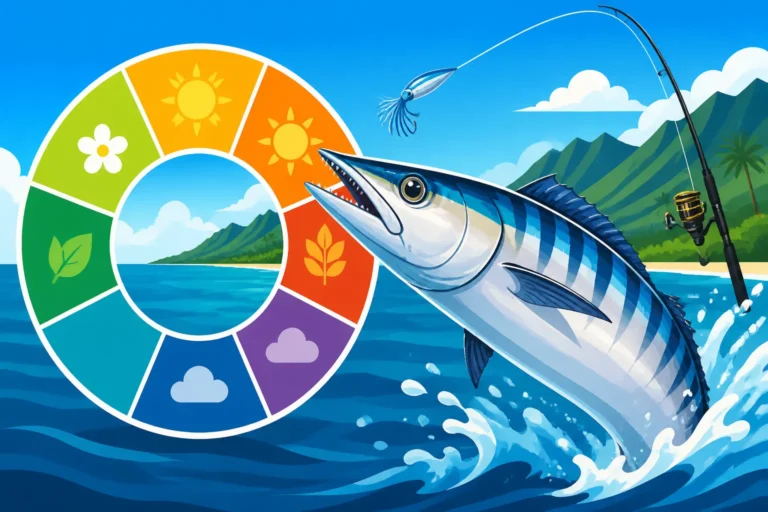
While opelu can be found year-round in Hawaiian waters, their abundance and accessibility tend to fluctuate with the seasons. Generally, the warmer months, roughly from late spring through fall, see larger and more consistent schools. This aligns with the peak seasons for many of the pelagic species that feed on opelu, like ahi (yellowfin tuna) and mahimahi. However, even in the "off-season," you can still find them, albeit often in smaller, more dispersed schools.
Timing of day also plays a significant role. Opelu are often most active during dawn and dusk, when light levels are changing, providing them both feeding opportunities and a degree of camouflage from larger predators. This is why many successful opelu anglers head out before sunrise or plan for a late afternoon session. You might notice that at mid-day, they tend to drop deeper, seeking cooler water or safety. Understanding these nuances, as discussed in our guide on Opelu (Mackerel Scad) in Hawaii, is crucial for targeting them effectively. Keep an eye on local fishing reports, too; charter captains and experienced local anglers are often the first to notice shifts in opelu patterns. They'll often share intel on where opelu schools gather, which can save you a lot of searching.
Essential Gear for Opelu Mastery
You don't need a massive sportfisher or an arsenal of heavy tackle to catch opelu. In fact, lighter, more sensitive gear often works best. The key is subtlety and efficiency. Let's break down what you'll want to have on hand.
Sabiki Rigs: The Opelu Magnet
When it comes to catching opelu, the sabiki rig is king. If you've never used one, it's basically a series of small, flashy flies or imitation baitfish tied onto dropper lines off a main leader, with a swivel at the top and a snap swivel at the bottom for a weight. These rigs are designed to mimic a school of small baitfish, triggering a feeding frenzy in schooling fish like opelu.
You'll find sabiki rigs in various sizes, indicated by hook size (e.g., #6, #8, #10). For opelu, smaller hooks are generally better, typically in the #8 to #12 range. The "flies" themselves come in different colors and materials – iridescent green, silver, pink, or white are common, sometimes with tiny bits of fish skin or Mylar for added flash. Having a variety on hand is smart, as opelu can sometimes be picky. You can find a wide selection of these rigs on Amazon, making it easy to stock up before your trip. The main line on the sabiki itself is usually light, so handle them gently to avoid tangles and breaks. The goal is to make the rig look as natural as possible, mimicking a small school moving together.
Light Tackle Setups and Ancillary Gear
While sabikis are the primary tool, the rod and reel you pair them with make a big difference. You'll want a light spinning rod, typically 6-7 feet in length, with a fast action tip for sensitivity. This allows you to feel the subtle bites of opelu and handle the light sabiki rig without overpowering it. A light spinning reel, sized 2500-3000, spooled with 10-20 lb braided line, is ideal. Braid offers excellent sensitivity and casting distance, which can be useful if the opelu are schooling a bit further from the boat. A short fluorocarbon leader (say, 4-6 feet of 15-20 lb test) tied to the main line will provide stealth and abrasion resistance, especially if you're fishing around structure.
Beyond the rod and reel, a few other items are indispensable. A good supply of lead weights (1-3 oz is usually sufficient) to get your sabiki rig down to the feeding zone. A bucket with an aerator or a livewell is crucial if you plan to keep opelu alive for bait. You'll also want a dehooker tool to quickly and safely remove opelu from the sabiki hooks, minimizing handling stress if you're using them for live bait. A small landing net can also be helpful, especially if you're bringing up a full string of opelu. Don't forget a pair of pliers for cutting line and crimping, and a good pair of polarized sunglasses to spot surface activity.
Primary Techniques for Catching Opelu
Now that you're geared up, let's dive into the actual methods. While opelu can be caught in several ways, two techniques stand out for their effectiveness.
Sabiki Jigging: The Go-To Method
Sabiki jigging is, hands down, the most popular and often the most productive way to catch opelu. The technique is simple but requires a bit of finesse.
- Locating the School: First, you need to find the opelu. This often involves motoring around FADs, offshore pinnacles, or areas where you've seen bird activity. Use your fish finder to mark schools of baitfish. Opelu schools will often show up as dense clouds on the screen, sometimes in mid-water, other times closer to the bottom.
- Deployment: Once you've located a school, gently drop your sabiki rig over the side, allowing the weight to pull it down. The key is to get the rig to the depth where the fish are holding. Pay attention to your fish finder or simply count off line as it descends.
- The Jigging Motion: Once your rig is at the desired depth, engage your reel and begin a subtle jigging motion. This isn't aggressive, heavy jigging. Think of it more as a gentle "lift and drop" or a slow, rhythmic "jiggle" of your rod tip. The goal is to make the sabiki flies "dance" enticingly, mimicking small baitfish swimming erratically. Opelu will often hit the rig on the drop or during a pause.
- The Bite: When opelu strike, you'll feel a series of rapid taps or a sudden weight. It's not uncommon to hook multiple fish at once, sometimes a full stringer! Resist the urge to yank hard. Instead, maintain steady pressure and reel them in smoothly. Too much aggressive pulling can tear the light hooks out.
One common mistake is jigging too aggressively or too quickly. Opelu are often curious, not frantic. A slower, more deliberate action often yields better results. And don't forget to check the regulations for Hawaii Pelagic Species Bag Limits and Hawaii Fishing Regulations Explained before you go!
Chumming for Opelu: Drawing Them In
Chumming is an incredibly effective tactic to concentrate opelu around your boat, especially if they're a bit scattered or holding deeper. It works by creating a scent trail and a visual attractant that draws the fish to you.
- Chum Selection: For opelu, finely ground fish scraps (like mashed up discarded baitfish, or even old sashimi scraps), stale bread, or commercially available chum blocks work wonders. The goal is small, digestible particles that create a cloud without filling the fish up. Some anglers even use finely chopped pieces of sashimi grade fish like ahi as chum, knowing it will attract quality opelu.
- Deployment: Place your chum in a mesh bag (often called a chum bag) and suspend it just below the surface, or on a rope that allows you to lower it to different depths. The current will do most of the work, dispersing the chum. If there's minimal current, you can periodically give the chum bag a squeeze or a gentle shake to release more particles.
- Combining with Sabiki: As the opelu are drawn in by the chum, they'll often rise higher in the water column and become more aggressive. This is the perfect time to drop your sabiki rig into the chum line. The visual chaos of the chum, combined with the enticing sabiki flies, can lead to incredible hookups. You'll often see them swirling just below the surface, making it easy to target them.
- Maintaining the Chum Line: Consistency is key. Don't dump a huge amount of chum all at once, as it can spook the fish or fill them up. Instead, release a steady, small stream of chum to keep them interested and active around your boat.
Remember that chumming can also attract larger predatory fish, which can be exciting but might also chase the opelu away temporarily. It’s all part of the game!
Advanced Strategies and Situational Tactics
Once you've mastered the basics, you can elevate your opelu game with some more nuanced approaches. These tips come from years of experience on the water and can make a big difference on those tougher days.
Reading the Water and Spotting Schools
True opelu success isn't just about the rig; it's about observation. Learn to "read" the ocean.
- Bird Activity: We touched on this, but it bears repeating. Pay close attention to seabirds, particularly boobies, shearwaters, and terns. When they are circling, diving, or crashing into the water, it's a huge indicator of baitfish below. Sometimes, the birds might just be sitting on the water, indicating that the bait has gone deep, but they're still in the area. Often, the bigger the bird activity, the bigger the school of bait.
- Surface Boils and Ripples: Keep an eye out for subtle disturbances on the water's surface. These could be small ripples, "nervous water," or even full-blown "boils" where a school of opelu is actively feeding on plankton or being chased by predators. These are visual cues that tell you exactly where to drop your sabiki.
- Current and Structure: Understand how currents interact with natural and artificial structures. Opelu will often stack up on the leeward (down-current) side of FADs or submerged pinnacles, finding a brief respite from the flow and waiting for food to drift by. Knowing the local current direction for the day can help you predict where they'll be holding. If you're near a prominent feature, like those mentioned in "Hawaii Fish Replenishment Areas in West Hawaii", consider the currents.
Night Fishing and Light Attraction
Opelu, like many baitfish, are attracted to light at night. This phenomenon can be incredibly effective for gathering a large quantity of bait.
- The Light Source: You'll need a good, submersible fishing light or a strong LED lantern suspended over the side of the boat. These lights attract plankton and other small organisms, which in turn draw in opelu and other baitfish. Many anglers use green or white lights specifically designed for this purpose. You can find some excellent submersible lights that run on boat batteries or even portable ones from brands available on Amazon.
- Anchoring and Waiting: Find a suitable spot, often over deeper water near a FAD or known opelu grounds, and anchor your boat. Deploy your light and be patient. It can take 30 minutes to an hour, sometimes longer, for the light to start drawing in bait.
- Sabiki Under Lights: Once the opelu begin to school under the light, drop your sabiki rig directly into the illuminated zone. The fish will be highly concentrated and often quite active, making for easy pickings. A gentle jigging motion is still effective, but sometimes simply holding the rig still will result in hookups as they swim by.
- Safety First: When night fishing, always prioritize safety. Ensure you have proper navigation lights, PFDs (personal flotation devices), and a reliable means of communication.
Night fishing for opelu can also be an exciting way to catch other species, as larger predators will often patrol the edges of the illuminated bait ball.
Using Opelu as Live Bait and for Consumption
Catching opelu is often a means to an end: using them as live bait for bigger fish or preparing them for a delicious meal.
-
Live Bait Techniques: Opelu are arguably one of the best live baits you can use in Hawaii. Their lively action and natural scent are irresistible to ahi, marlin, ono, and mahimahi.
- Trolling: Rig them with a circle hook through the nose or dorsal area and slow troll them, either individually or as part of a spread. This is a classic method for marlin and ahi, especially when targeting those grander-sized fish off the Kona Coast. For specific strategies, refer to our guide on Trolling Techniques for Hawaii Pelagics.
- Drift Fishing: For ahi, especially at the FADs, drifting a live opelu down-current is incredibly effective. The natural presentation is hard for a hungry tuna to resist. If you're using them for this purpose, check out Best Bait for Ahi Fishing for more insights.
- Kite Fishing: For advanced anglers, kite fishing with live opelu can keep your bait on the surface and away from smaller, unwanted fish, while attracting top-feeding pelagics.
-
Preparing for the Table: Don't underestimate opelu as table fare! They are a delicious, oily fish, perfect for grilling, frying, or smoking.
- Freshness is Key: Like all fish, quality starts with freshness. Get them on ice immediately after catching to preserve their flavor and texture.
- Preparation: They're small, so cleaning is quick. A simple gut and scale is usually sufficient.
- Cooking: Grill them whole with a little salt, pepper, and lemon, or pan-fry them until crispy. In Hawaii, they're often eaten like sardines or anchovies. Their rich, savory flavor holds up well to bold seasonings.
Opelu are versatile, whether they're destined for your plate or for attracting a trophy fish. Make sure you understand the Hawaii Bag and Size Limits by Species for opelu, just as you would for any other catch.
Caring for Your Catch and Maximizing Its Value
Whether you're keeping opelu for bait or for the dinner table, how you handle them immediately after catching profoundly impacts their quality. Mishandling can lead to dead bait or poor-tasting fish.
Preserving Opelu for Live Bait
If your goal is to use opelu as live bait, keeping them healthy and lively is paramount. A weak, stressed opelu won't be nearly as effective.
- Livewell Requirements: The absolute best way to keep opelu alive is in a well-circulated livewell with plenty of fresh seawater. Overcrowding is the enemy here. A livewell that's too full will quickly deplete oxygen levels and stress the fish. A good rule of thumb is to allow enough space for them to swim freely without constantly bumping into each other or the sides of the well.
- Aeration and Water Exchange: Ensure your livewell pump is running consistently, exchanging old water for new and aerating it to maintain high oxygen levels. In warmer waters, adding a frozen bottle of water (not ice directly, as it can contain chlorine or other impurities) to slowly cool the livewell can reduce stress.
- Gentle Handling: When removing opelu from your sabiki rig, use a dehooker tool to minimize contact with your hands, which can remove their protective slime layer. Drop them gently into the livewell, don't throw them. The less stress they endure, the longer they'll last and the livelier they'll be when deployed as bait.
- Culling: If you notice any opelu looking distressed or dying in the livewell, remove them immediately. A single dead or dying fish can quickly contaminate the water and sicken the others.
Ensuring Freshness for Consumption
For those delicious opelu tacos or grilled fish, quick and proper cooling is the key to maintaining quality and flavor.
- Immediate Icing: As soon as you catch an opelu destined for the plate, get it on ice. A cooler filled with an ice-slurry (a mix of ice and a little saltwater) is ideal. The slurry surrounds the fish completely, chilling it rapidly and evenly. This stops bacterial growth and preserves the texture and flavor of the meat.
- Bleeding and Gutting (Optional but Recommended): For maximum freshness, especially if you're keeping a good number of them, consider bleeding and gutting them quickly before placing them on ice. A swift cut to the gills will allow the blood to drain, resulting in cleaner, better-tasting meat. Gutting them removes digestive enzymes that can degrade the flesh.
- Protect from Freshwater: Avoid letting freshwater directly contact the fish for extended periods, as it can waterlog the meat. Keep them in a sealed bag on ice if you're concerned about meltwater.
- Consume Promptly: While proper icing extends freshness, opelu are best enjoyed within a day or two of being caught. Their delicate, oily flesh is at its peak when super fresh. If you plan to freeze them, vacuum-sealing is the best method to prevent freezer burn and preserve quality for longer storage.
By taking these extra steps, whether for bait or table fare, you'll greatly enhance your opelu fishing experience and maximize the value of your hard-earned catch. Don't hesitate to contact the Hawaii Division of Aquatic Resources customer service phone number if you have any questions about specific regulations or handling practices.
| Technique | Description | Ideal Conditions | Pros | Cons |
|---|---|---|---|---|
| Sabiki Jigging | Using a multi-hook rig with small flies/baits. | Schools marked on sonar, visible surface activity. | Highly efficient for multiple hookups; simple setup. | Small hooks can bend/break; can get tangled easily. |
| Chumming | Dispersing fine bait particles to attract fish. | Scattered schools, light current. | Concentrates fish; can bring deep fish to the surface. | Can attract unwanted predators; messy. |
| Light Lure Casting | Small spoons, grubs, or jigs on light spinning tackle. | Active schools near the surface, less crowded. | More sporting; targets individual, often larger, fish. | Less efficient for high volume; requires casting skill. |
| Night Lighting | Using submersible lights to attract plankton and bait. | Dark nights, calm water. | Extremely effective for large schools; fun experience. | Requires specialized lighting; fixed location. |
Disclaimer
Please remember that fishing regulations, including bag limits, size limits, and protected species, can change. Always consult the latest rules from the Hawaii Department of Land and Natural Resources (DLNR) Division of Aquatic Resources (DAR) before heading out. Safety should always be your top priority on the water.