Best setup for float fishing for moi
Trying to catch moi from the shore can feel like a real puzzle sometimes, especially when you know they're around but just won't commit to your bait. Many anglers get frustrated because their standard setups don't quite get the bait to where these finicky fish are feeding. This comprehensive guide is going to walk you through the absolute best setup for float fishing for moi, ensuring your presentation is spot-on and significantly boosting your chances of reeling in one of these delicious Hawaiian favorites.
Understanding Moi Behavior for Effective Float Fishing
Before we even dive into gear, it’s crucial to understand a bit about moi themselves – their habits and where they like to hang out. Moi, or Pacific Threadfin, are often found in relatively shallow, sandy-bottomed areas, especially where there are currents or gentle surf lines. They tend to cruise just above the bottom, often in small schools, searching for small crustaceans, worms, and tiny fish. What makes them perfect for float fishing is their tendency to feed in the middle water column or just off the bottom, rather than strictly on the seabed or aggressively chasing surface lures.
One of the biggest frustrations for moi anglers is when their bait sits on the bottom, either getting buried in the sand or picked off by less desirable reef fish before a moi even sees it. This is where float fishing shines! A well-chosen float allows you to suspend your bait precisely in the strike zone, keeping it visible and enticing to cruising moi. This technique is particularly effective in areas with a gentle ebb and flow, as the current will naturally drift your suspended bait, mimicking a free-floating meal. Remember that moi have specific seasons and size limits, so it's always wise to check the Hawaii Moi Closed Season, Explained and Hawaii moi minimum size limit before heading out.
The Essential Float Fishing Gear for Moi
Putting together the right gear doesn't have to be complicated, but each component plays a vital role in creating an effective moi float fishing setup. We're looking for a balance of sensitivity, casting ability, and strength to handle these often surprisingly powerful fish.
Rod and Reel Selection
For moi float fishing, you'll want a rod that offers a good balance of sensitivity for detecting subtle bites and enough backbone to cast light rigs and handle a fighting moi. A medium-light to medium power spinning rod, typically 7 to 9 feet in length, is ideal. The extra length helps with casting lighter floats further and provides better line control over waves and currents. Look for rods with a fast action, meaning the tip bends easily but the rest of the rod remains stiff, giving you excellent feel and quick hook-setting power. Many anglers find great options on platforms like Amazon, where you can read reviews and compare specifications to find something that fits your style and budget.
Pair your rod with a lightweight spinning reel in the 2500 to 3000 size range. This size offers enough line capacity for typical shore fishing distances and provides a smooth drag system, which is critical when a moi decides to make a run for it. A smooth drag prevents line breaks, especially with lighter lines. Make sure the reel has a good retrieve ratio, typically around 5.2:1 or 6.0:1, to quickly gather any slack line and keep in touch with your bait. Brands like Shimano and Daiwa offer excellent saltwater-ready options that stand up to the corrosive marine environment.
Choosing the Right Fishing Line
Line choice is paramount for float fishing moi. You need something sensitive, strong, and relatively low-visibility.
- Main Line: I highly recommend using a braided line as your main line, typically 10 to 15 lb test. Braid has almost no stretch, which means you'll feel every tap and nudge, even at long distances. Its thin diameter also allows for longer casts and less drag in the water, making your float drift more naturally. Be sure to spool it evenly on your reel.
- Leader Material: Because moi can be line-shy, a fluorocarbon leader is non-negotiable. Fluorocarbon is nearly invisible underwater and is more abrasion-resistant than monofilament, which is a huge plus when fishing around reef edges or sandy bottoms. A 6 to 10 lb test fluorocarbon leader, about 3 to 5 feet long, is usually sufficient. Connect your braid to your fluorocarbon leader using a strong knot like an FG knot or a double uni knot. These knots are slim and pass through guides smoothly. You can find quality fluorocarbon leaders from brands like Seaguar or Berkley on Amazon.
The Perfect Float: Slip Bobbers Are Key
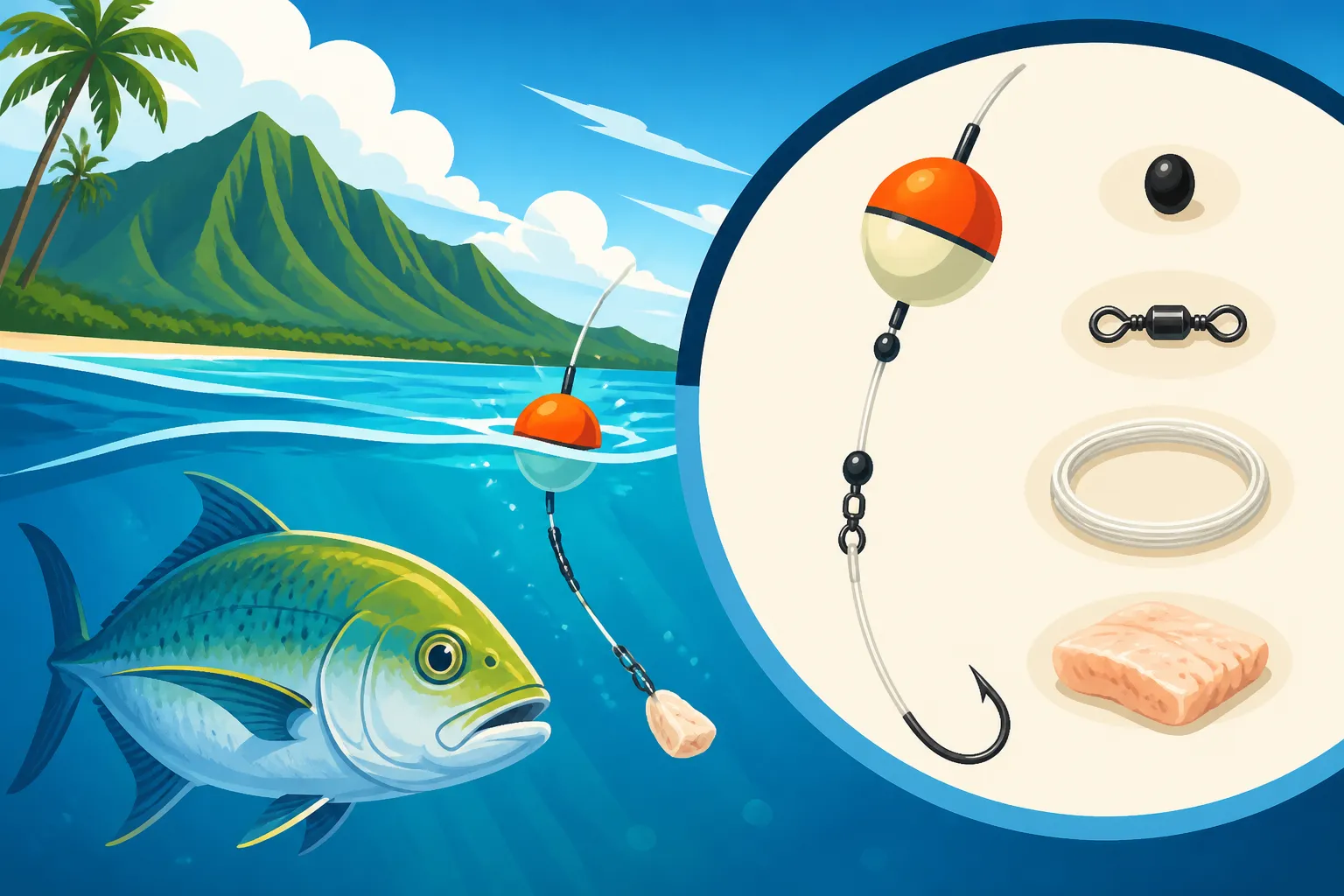
For moi, a slip bobber (or slip float) is the superior choice over a fixed float. Why? Because it allows your bait to be suspended at any depth you desire, while still letting you cast your rig easily. A fixed float would limit you to casting only as deep as your rod is long, which is rarely enough for moi.
Choose a sensitive slip float, generally 1/4 oz to 1/2 oz, depending on your bait weight and local conditions. The float should be just buoyant enough to suspend your bait and any necessary split shot, but not so large that it creates excessive drag or makes it hard to detect subtle bites. Clear or translucent floats are often preferred by seasoned anglers as they are less obtrusive to the fish. Look for floats made of balsa wood or high-density foam for maximum sensitivity.
Hooks and Terminal Tackle
The business end of your rig needs to be precise for moi.
- Hooks: Moi have relatively small mouths, so a small, sharp hook is essential for a good hook-set. Size 4 to 8 octopus hooks or circle hooks are excellent choices. Octopus hooks offer a wide gap for good bait presentation and penetration, while circle hooks are fantastic for mouth-hooking fish, increasing catch-and-release survival rates if you plan to let some go. Regardless of the type, ensure they are chemically sharpened and corrosion-resistant.
- Split Shot: You'll need a few small split shot weights, typically size 4 to 7, to properly weight your float. The goal is for your float to sit vertically in the water with just the top showing, indicating maximum sensitivity. Place the split shot on your leader, several inches above your hook, to keep the bait drifting naturally.
- Bobber Stops: These small pieces of string or rubber are crucial for slip bobber rigs. They allow you to set your desired fishing depth. Thread them onto your main line before your float.
- Swivels: A small barrel or bead swivel (size 10-14) can be used to connect your main line/float setup to your fluorocarbon leader, helping to prevent line twist.
Here’s a quick summary table for your moi float fishing gear:
| Component | Recommendation | Details |
|---|---|---|
| Rod | 7-9 ft Medium-Light to Medium Power Spinning Rod | Fast action for sensitivity and casting light rigs. Longer rods aid casting distance and line control. |
| Reel | 2500-3000 Series Spinning Reel | Lightweight, smooth drag, good retrieve ratio (5.2:1 to 6.0:1). |
| Main Line | 10-15 lb Braided Line | Zero stretch for sensitivity, thin diameter for long casts. |
| Leader | 6-10 lb Fluorocarbon Leader (3-5 ft) | Nearly invisible, abrasion-resistant. Connect with FG or double uni knot. |
| Float | 1/4 – 1/2 oz Slip Bobber | Sensitive, allows adjustable depth, often clear or translucent. |
| Hooks | Size 4-8 Octopus or Circle Hooks | Small, sharp, chemically sharpened, corrosion-resistant. |
| Split Shot | Size 4-7 | Used to weight the float for optimal sensitivity. Placed a few inches above the hook. |
| Bobber Stops | String or Rubber | Crucial for setting precise fishing depth with a slip bobber. |
| Swivel | Size 10-14 Barrel or Bead Swivel (optional) | Prevents line twist, connects main line to leader. |
Mastering the Technique: Setting Up Your Rig and Fishing for Moi
Now that you have your gear, let's talk about putting it all together and the actual fishing. This is where the magic happens, and a little precision goes a long way.
Rigging Your Float System
First things first, get your rig tied up correctly.
- Bobber Stop: Thread your bobber stop onto your main braided line. This little knot is what sets your fishing depth.
- Bead: Slide a small plastic bead onto the line after the bobber stop. This prevents the bobber stop from getting pulled into the float.
- Slip Float: Next, slide your slip float onto the line.
- Another Bead (Optional): Some anglers add another bead below the float to further protect the knot to the swivel.
- Swivel: Tie a small barrel or bead swivel to the end of your main line.
- Leader: To the other end of the swivel, tie your fluorocarbon leader (3-5 feet).
- Hook: Finally, tie your moi hook to the end of the fluorocarbon leader.
- Split Shot: Crimp one or two small split shot weights onto the leader, about 6-12 inches above the hook, to help cast and keep your bait suspended naturally. The exact amount depends on your bait size and float buoyancy. The goal is for the float to stand upright with just its brightly colored tip showing, offering minimal resistance to a biting moi.
When fishing from shore, remember that public access points are crucial. Learning about Hawaii shoreline fishing rights and public access rules can help you find suitable locations.
Baiting Up for Moi
Moi are opportunistic feeders, but they do have preferences. Fresh bait is always best!
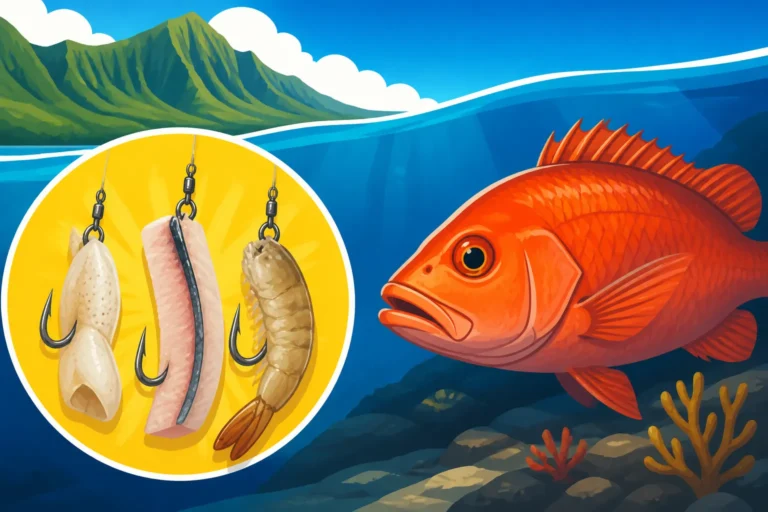
- Live Opihi: If you can legally gather and use it, small pieces of live opihi (limpet) are considered a prime moi bait. The soft, tender meat is irresistible. Just be sure to check Hawaii Opihi Harvest Limits and Size Rules.
- Shrimp: Small, fresh shrimp (peeled) are a widely effective bait. They have a natural scent and texture moi love.
- Squid: Small, cut pieces of fresh squid are also good, offering durability on the hook against smaller nibblers.
- Worms: Marine worms, if you can find them, are another excellent natural bait.
Hook your bait carefully, ensuring the hook point is exposed for a solid hook-set. For soft baits like shrimp, thread it on to cover most of the hook shank.
Fishing Strategy and Execution
With your rig ready, it's time to fish.
- Set Your Depth: Adjust your bobber stop to the desired depth. Start by setting it so your bait is about 1 to 2 feet off the bottom in the area you're targeting. Observe the water; if you see moi cruising higher, adjust accordingly.
- Cast Gently: Cast your rig out to areas where moi are likely to be found—sandy patches, edges of reefs, or current lines. A gentle, controlled cast is better than a forceful one, as it prevents your bait from flying off and keeps your leader from tangling.
- Watch Your Float: This is where the patience comes in. Keep a keen eye on your float. Moi bites are often subtle—a slight dip, a sideways movement, or the float slowly disappearing beneath the surface. Don't wait for the float to completely vanish like you might with a largemouth bass!
- The Hook-Set: When you see a bite, gently reel in any slack line until you feel resistance, then give a firm but not overpowering sweep of the rod tip upwards to set the hook. Moi have delicate mouths, so a hard jerk can tear the hook out.
- Fighting the Fish: Moi, especially larger ones, can pull surprisingly hard. Let your smooth drag do its job. Keep the rod tip up and maintain steady pressure. Avoid horsing the fish in, especially near rocks or coral, to prevent line breaks.
- Releasing or Keeping: Once you land a moi, decide if you're keeping it or releasing it. If releasing, do so quickly and carefully, minimizing handling. Ensure it meets the Hawaii Bag and Size Limits by Species.
Advanced Tips for Moi Float Fishing Success
Even with the right gear and basic technique, there are always little things that can make a big difference when targeting moi.
Reading the Water
Moi are creatures of habit and prefer specific environments. Look for areas with clean, clear water and a sandy bottom, often adjacent to rocky structure or reef lines. Incoming or outgoing tides can create current flows that bring food items, making these periods prime fishing times. Areas with a gentle wave action, creating a natural churn, are often productive. Pay attention to changes in water color or current direction; these can indicate where the moi are concentrating. Sometimes, you might even spot schools of moi cruising in the shallows, making your job much easier. Understanding the local currents and tides will give you a significant advantage. If you're new to shore fishing in general, it might be worth brushing up on some Shore Fishing Techniques for Hawaii.
Fine-Tuning Your Presentation
Moi can be incredibly finicky. If you're not getting bites, try adjusting your depth by an inch or two at a time using your bobber stop. Sometimes, they're feeding just a hair higher or lower than you've anticipated. Experiment with different amounts of split shot—if your float is lying flat, you might need more weight; if it's sinking too fast, you have too much. The ideal presentation is a slow, natural drift with the current. Consider adding a small, clear leader barrel swivel if your line is twisting, but keep all terminal tackle as minimal and discreet as possible. Small details matter a lot to these shy fish. You can find all these specialized components on Amazon with ease.
Stealth and Patience
Moi are quite skittish. Their excellent eyesight means they can easily be spooked by shadows, sudden movements, or bright clothing. Approach your fishing spot quietly and avoid stomping around. When casting, try to do so smoothly and efficiently to minimize splashing. Once your bait is in the water, resist the urge to constantly retrieve and re-cast. Let your bait drift naturally, observe your float, and practice patience. Often, the moi will eventually find your bait if it's presented correctly in their feeding zone. Fishing in areas like some of the calm coves detailed in Best Shore Fishing Spots in Hawaii can be incredibly rewarding, but patience is always a virtue.
Maintaining Your Gear
The saltwater environment is brutal on fishing gear. After every trip, rinse your rod and reel thoroughly with fresh water. Pay special attention to the reel, making sure to flush out any salt crystals. Loosen your drag before storing your reel to prolong the life of the drag washers. Periodically, apply a light coat of reel oil to moving parts and grease to the gears. Check your line and leaders for any nicks or fraying, especially after fighting a fish or getting snagged. Replace your hooks if they show any signs of rust or dullness. Sharp hooks are non-negotiable for moi fishing. Proper maintenance means your gear will be ready to go when the moi are biting, saving you headaches and potential lost fish down the line.
Catching moi on a float setup is incredibly rewarding. It’s a technique that demands a bit of finesse and patience, but the results—delicious fish and a deep satisfaction—are well worth the effort. Now get out there, rig up, and enjoy the subtle art of float fishing for moi in Hawaii!
Disclaimer
The information provided in this guide is for general informational purposes only. Fishing regulations, seasons, and bag limits in Hawaii are subject to change. Always consult the most current regulations issued by the Hawaii Division of Aquatic Resources (DAR) before fishing. Adherence to all local, state, and federal laws is the responsibility of the angler. Fishing carries inherent risks, and caution should always be exercised.