Best lure retrieve speed for papio in fall
It can be incredibly frustrating when you’re out on the Hawaiian shoreline, casting your favorite lure, but the papio just aren't hitting like they usually do. Many anglers find that their tried-and-true summer methods suddenly fall flat as autumn arrives, leaving them wondering if the fish have simply vanished. This comprehensive guide will tackle that very problem, diving deep into the nuances of papio behavior in the fall and, crucially, revealing the best lure retrieve speeds to get those elusive bites.
Understanding Papio Behavior in Hawaii's Fall Season
Fall in Hawaii doesn't bring the dramatic temperature drops you'd see on the mainland, but those subtle shifts in water conditions, combined with changes in baitfish patterns, can significantly alter how papio feed. What worked like a charm in August might barely get a look in October, and understanding why is your first step to consistent success.
The Subtle Shift in Water Temperatures and Their Effect
While Hawaii doesn't experience a harsh winter, the ocean temperatures do gradually cool down as we move through fall. These seemingly minor dips, often just a few degrees, are enough to signal a change to the papio. They might become slightly more lethargic, not quite as willing to chase down a fast-moving meal as they were in the heat of summer. Instead of being spread out and aggressively feeding across vast areas, they might start to concentrate in specific zones where the water temperature is most comfortable or where baitfish are holding.
This means that your super-fast, burn-and-retrieve tactics, which mimicked fleeing bait in warmer waters, might now be largely ignored. Papio might be more inclined to inspect a lure that stays in their strike zone longer, one that looks like an easy, injured meal rather than a healthy, escaping snack. It’s a shift from "grab it before it gets away" to "is this worth the effort?" The challenge for us as anglers is to find these new patterns and adapt our presentation accordingly, often starting with a slower, more deliberate retrieve.
Fall Forage and How It Dictates Papio Feeding Habits
Just like the water temperature, the buffet line for papio also changes with the seasons. As fall progresses, certain baitfish species might move in or out of the nearshore areas. Are there specific runs of nehu (anchovies) or 'iao (silversides) closer to shore? Or are the papio still primarily targeting smaller reef fish, crabs, or shrimp that might be less abundant or slower-moving? Observing what's around is key. If you see schools of smaller baitfish dimpling the surface, you'll want to choose a lure that mimics their size and flash. If the bait is scarce, papio might be more opportunistic, hitting anything that looks like an easy meal.
The size and movement of this dominant forage directly influence the ideal lure retrieve speed. If baitfish are schooling tightly and moving slowly, a soft plastic jig or a small spoon retrieved with a gentle flutter might be more effective than a fast-moving popper. Conversely, if larger baitfish are present and darting around, a quick, erratic retrieve might still trigger an aggressive response. Paying attention to what the papio are actually eating is crucial. Sometimes, strong fall currents or increased wave action can also affect how baitfish move and hide, making papio adjust their hunting strategy and demanding a more precise lure presentation from us. This means sometimes we need to fish slower to get down to where they are holding, or faster to make a lure appear frantic and worth chasing.
Tidal and Current Influences on Fall Papio Activity
While tides and currents are always vital components of successful fishing in Hawaii, their impact can feel even more pronounced when targeting papio in the fall. As fish adjust to slightly cooler conditions, they often become more reliant on currents to bring food to them or to position themselves strategically around structure. Stronger currents might push papio into tighter schools or make them hug the edges of reefs and channels, seeking shelter from the flow while waiting for an ambush opportunity.
Different tide stages can also create prime feeding windows. An incoming tide might push nutrient-rich water and baitfish onto shallow flats, making papio more active. An outgoing tide, conversely, could flush bait out of bays and estuaries, concentrating them along reef lines where papio lie in wait. Slack tide, often seen as a slow period, might require an extra slow retrieve to entice a bite, as fish are less active. Understanding the direction and strength of the current is paramount, as it directly influences how your lure moves through the water. If you're casting against a strong current, you'll need a faster reel speed to maintain the desired action and keep your lure from being swept away. If you're retrieving with the current, you might need to slow your reel down considerably to ensure the lure isn't simply washing out and moving too fast to be noticed. For a deeper dive into how to time your efforts, check out our guide on Hawaii Fishing Seasons by Month.
Gear Essentials and Lure Selection for Fall Papio
Having the right gear isn't just about having quality tackle; it's about having the right tackle to execute the retrieve speeds and techniques that will be most effective for fall papio. Your rod, reel, line, and especially your lure choices need to complement the subtle changes in fish behavior.
Optimizing Rod, Reel, and Line for Varying Retrieves
Let's talk about your setup, because it truly makes a difference in feeling those subtle fall bites and presenting your lure just right.
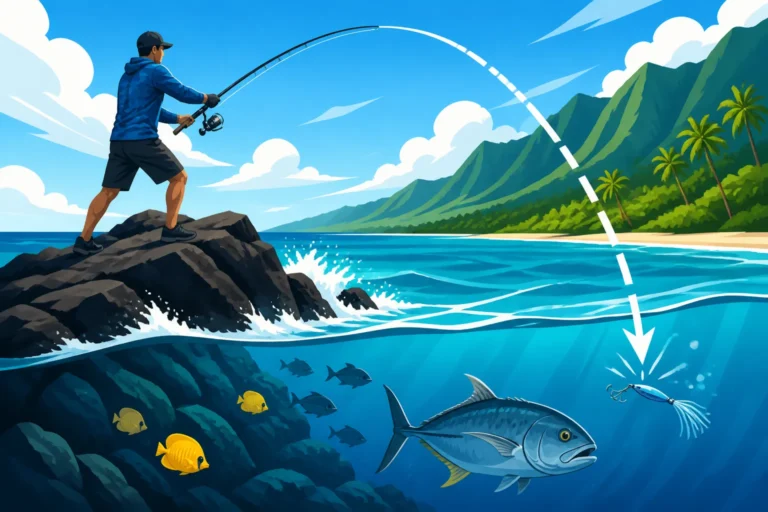
For rods, a medium-light to medium action rod is often ideal for shore-based papio fishing. What you're looking for is a rod with a sensitive tip that can detect the lightest taps and bumps, especially when you're fishing with slower retrieves. This sensitivity lets you feel your lure working, even through moderate current, and signals those tentative fall bites. However, it still needs enough backbone in the mid-section to handle the powerful, head-shaking runs of a good-sized papio. A length between 7 and 9 feet is usually versatile enough for casting from shore, allowing for good distance while maintaining accuracy. If you're looking for more general advice, our article on Best Casting Technique for Shore-based Papio has some great pointers.
When it comes to reels, a smooth drag system is absolutely non-negotiable for papio. These fish are fighters, and a sticky drag will lead to break-offs. As for gear ratio, a mid-range ratio, something around 6.0:1 or 6.2:1, offers the best versatility. This speed allows you to crank slowly and steadily for those lethargic fish, but it also provides enough retrieve speed to burn a lure back quickly if you need to trigger a reaction strike or retrieve line quickly to keep up with a fast-moving fish. While a fast reel can always be reeled slowly, a slow gear ratio reel simply can't generate the speed needed for certain presentations.
Finally, line choices are paramount. Braided line, in the 10-20 lb test range, is highly recommended for its sensitivity and casting distance. Its low stretch allows you to feel everything your lure is doing and every subtle take. Pair this with a fluorocarbon leader, typically 15-30 lb test, for a few crucial reasons. Fluorocarbon is nearly invisible underwater, which is a huge advantage in Hawaii's often clear fall waters where papio can be more wary. It also offers excellent abrasion resistance against coral and lava rock, protecting your main line during a fight. These line choices are not just about strength; they are vital for maintaining control over your lure's speed and action, and for transmitting those delicate signals when a papio decides to strike.
Selecting the Right Lures and Colors for Fall Papio
Choosing the right lure is about more than just matching the hatch; it's about selecting a lure that allows you to effectively execute the various retrieve speeds that papio respond to in the fall.
Let's consider a few types:
- Stickbaits and Walk-the-Dog Lures: These are fantastic for topwater action, especially during calmer conditions in the early morning or late evening. Their side-to-side sashay on the surface mimics a wounded baitfish, and you can vary the pace of the "walk" to get just the right action.
- Poppers: When papio are feeling more aggressive, or when you want to create a commotion to draw them up, a popper is hard to beat. The "pop" and splash can really get their attention. For specific advice, our guide on Topwater Fishing for Papio in Hawaii offers great insights.
- Jigs (metal and soft plastic): These are incredibly versatile for probing different depths. Metal jigs can be cast a mile and worked with a variety of retrieves, from a fast, erratic jigging motion to a slow, fluttering fall. Soft plastic grub-tail jigs, rigged on a lead head, can imitate a wide range of baitfish and are excellent for a slower, more deliberate presentation.
- Small Spoons and Grubs: These are classic choices that consistently catch fish. Their flash and wobble can be irresistible, and they can be worked effectively with both slow, steady retrieves and faster, more erratic actions.
As for colors, in the clearer waters often associated with fall, natural baitfish imitations tend to be very effective. Think silver, blue, green, and olive patterns that mimic local prey like 'iao or juvenile akule. However, don't shy away from brighter, high-contrast colors like chartreuse, orange, or even pink, especially if the water is a bit murky after a rain, or if you're trying to elicit a reaction strike from a hesitant fish. Sometimes a splash of unexpected color can be the trigger. I often stock up on a variety of colors and sizes, making sure I have a good selection from trusted brands. You can find a huge array of these lures on places like Amazon, which is super convenient for experimenting without having to hit multiple tackle shops.
Ultimately, the key is to match the hatch as closely as possible in terms of size and color if you can identify the primary forage. But always have a few "wild card" colors on hand for when the fish are being finicky.
Mastering Lure Retrieve Speeds for Fall Papio
This is where the rubber meets the road. Understanding how to reel your lure in is often more important than the lure itself, especially when dealing with the nuanced behavior of fall papio. It’s all about finding that sweet spot between enticing and overpowering.
Slow to Moderate Retrieves for Subsurface Appeal
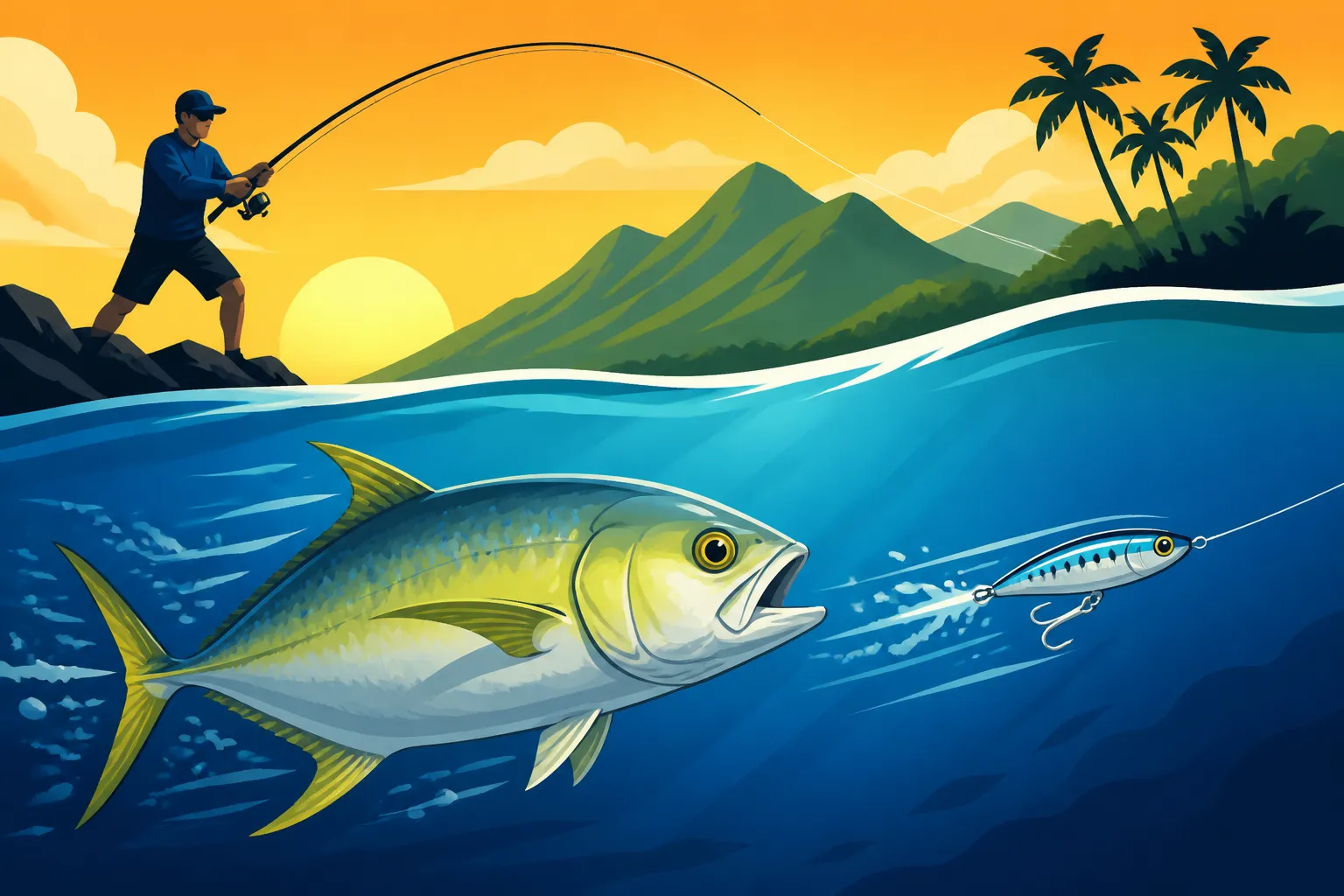
When the water starts to cool down, even slightly, papio can become a bit less inclined to chase a lure that's zooming by. This is precisely when a slow to moderate retrieve shines. It’s especially effective when fish are less active, perhaps holding tight to reef structure, or when the water is crystal clear and they have ample time to inspect your offering. The goal here is to keep the lure in the strike zone longer, giving the papio more opportunity to commit without feeling rushed or threatened.
Lures that excel with a slow retrieve include soft plastic jigs, which can be allowed to sink and flutter enticingly, mimicking an injured or dying baitfish. Small metal jigs can also be slow-rolled or "bottom-hopped," allowing them to flash and settle near the seafloor where papio might be feeding on crustaceans or smaller benthic fish. Even small crankbaits or lipless crankbaits can be slow-rolled, their subtle wobble drawing attention without excessive speed.
The technique involves a consistent, slow turn of the reel handle, focusing on maintaining contact with your lure. Imagine your lure is gently swimming or fluttering. Incorporate subtle twitches of the rod tip or short pauses – just a second or two – to simulate a baitfish struggling or resting. Often, a papio will strike right as the lure begins to move again after a pause. This approach demands patience and a keen sense of feel, as the bites can be very subtle, sometimes feeling like just a slight pressure or a tick.
Fast Retrieves for Reaction Strikes and Topwater Explosions
Don't write off speed entirely just because it's fall! Even when overall activity might be down, there are still times and situations where a fast retrieve is your best bet for aggressive papio. This is particularly true during periods of high feeding activity, often around sunrise or sunset, or when strong tidal currents are pushing baitfish through a concentrated area. A fast, erratic retrieve triggers a "reaction strike" – the papio sees a rapidly fleeing meal and strikes instinctively without much thought, even if they aren't actively hunting.
This technique is a go-to for topwater presentations. Rapidly working a popper or a walk-the-dog style stickbait across the surface can create an irresistible commotion that draws papio up from surprising depths. Think about the energy and splash of a fleeing baitfish and try to replicate that. For subsurface options, quickly reeled metal jigs, often "whipped" with a fast retrieve and rod tip snaps, can simulate a panicked baitfish darting through the water column. Small spoons can also be retrieved at high speeds, their erratic flash often too much for an opportunistic papio to ignore.
The technique for fast retrieves involves rapid, consistent turning of the reel handle, often combined with aggressive rod tip action. For stickbaits, it’s that rhythmic twitch-and-reel to make it "walk." For poppers, it's sharp downward snaps of the rod tip to make it splash. The goal is to make your lure appear panicked, trying desperately to escape. This can be especially effective when you see papio actively busting bait on the surface or when fishing around a churning current. Our dedicated guide on Best Techniques for Whipping for Papio goes into more detail about these aggressive retrieve styles.
The Dynamic Art of Varying Retrieve Speed and Cadence
If there's one secret weapon for catching fall papio, it's mastering the art of varying your retrieve speed and cadence. Rarely will a single, consistent speed work all day long. Papio, like most predators, are often triggered by changes in a lure's behavior. They might follow a steady retrieve out of curiosity, but only strike when the lure suddenly changes direction, pauses, or speeds up.
Here are some strategies for dynamic retrieves:
- Start Varied, Then Adapt: Don't commit to one speed immediately. Make a few casts with a slow retrieve, then a few with a moderate one, then a few with a faster pace. Pay close attention to any follows, bumps, or short strikes. The fish will tell you what they prefer.
- Stop-and-Go: This is a classic for a reason. Reel for a few seconds, then pause for 1-3 seconds, letting the lure flutter or sink, then resume reeling. Many strikes occur on the pause or right as the lure starts moving again. This works wonders for jigs, soft plastics, and even some hard baits.
- Burn and Kill: This is a more aggressive version of stop-and-go. Reel your lure back at a very fast pace for a few cranks, then abruptly "kill" the retrieve, letting the lure fall or glide. The sudden change from frantic escape to helpless fall can often trigger an immediate, violent strike.
- Twitch and Retrieve: Integrate subtle twitches of your rod tip into a steady retrieve. This adds an erratic, darting motion to your lure, making it look like a nervous baitfish. This is particularly effective for small spoons, jerkbaits, and even some lipless crankbaits.
The key here is observation and adaptability. If you're getting follows but no bites, try speeding up or slowing down. If you're getting short strikes (fish nipping at the tail), try a quicker pause or a more erratic twitch. Sometimes, even just one extra half-crank of the reel can make all the difference. Remember, the fish are always experimenting, and so should you.
Real-World Applications and Troubleshooting for Fall Papio
Knowing the theory is one thing, but applying it successfully on the water when you're facing real-world conditions is another. Fall in Hawaii can bring a mix of beautiful calm days and periods of blustery weather, and each scenario demands a slight tweak to your approach.
Adjusting for Diverse Fall Conditions
The beauty of fall fishing in Hawaii is its variety, but that also means you need to be prepared to adjust your tactics on the fly.
- Windy Conditions and Chop: When the trade winds pick up and create chop on the water, it can sometimes be a blessing in disguise. The broken surface camouflages your line and presence, and the papio can be less wary. In these conditions, a slightly faster, more erratic retrieve can often be beneficial. The wind and waves add natural movement to your lure, and a little extra speed ensures it stands out and gets noticed amidst the surface commotion. Sometimes, using a heavier lure is key to cutting through the wind and reaching your desired depth effectively. For example, a heavier metal jig that sinks quickly can be worked efficiently even in a stiff breeze.
- Calm, Clear Water: Ah, those postcard-perfect days with glassy, clear water. While beautiful, these conditions can make papio incredibly skittish. They have excellent eyesight and can easily spot your line, your shadow, and anything unnatural. Here, stealth is your best friend. Opt for a slower, more deliberate retrieve with natural-colored lures and a light fluorocarbon leader. A slow-rolling soft plastic or a gently twitched stickbait that stays subsurface might be more effective than a loud popper. Minimize your movements on shore and make longer casts to avoid spooking the fish.
- Murky Water After Rain: After a significant rain event, especially on islands with larger stream systems, the nearshore waters can become murky with runoff. This changes the game entirely. Papio will rely less on sight and more on vibration and scent. In these conditions, don't be afraid to use brighter, more contrasting lure colors (think chartreuse, white, or firetiger patterns) and lures that displace a lot of water. A soft plastic grub or a metal jig retrieved slowly enough to allow its action to be felt by lateral lines can be deadly. A moderate retrieve with a noisy popper or a lure that creates strong vibrations can also help fish locate your offering.
Remember, fishing is all about adapting. Observe the conditions, start with a retrieve speed that you think matches, and be ready to change it up based on the fish's reaction.
When to Switch Lures, Colors, and Retrieve Strategies
The most important rule in fishing, especially for papio, is "don't be afraid to change." If you're not getting bites, it's not the fish's fault; it's probably yours for not adapting! Many experienced anglers live by a "ten-cast rule" – if you've made 10-15 good casts with a particular lure, color, and retrieve speed, and haven't had a single bite, it's time to change something.
Prioritize your changes. Often, the retrieve speed is the first thing to adjust. If you've been burning a popper, try slowing it down dramatically, adding pauses. If you've been slowly twitching a jig, try speeding it up with more aggressive hops. If that doesn't work, then consider changing your lure color. Maybe the bright chartreuse isn't working today; switch to a natural silver or a subtle green. Finally, if you're still not getting action, consider changing the lure type entirely. If topwater isn't working, go subsurface with a jig or a spoon.
Observation is your golden ticket. Are there baitfish schooling nearby? Are birds diving? Are other anglers down the beach catching fish on a particular lure or with a specific technique? These clues are invaluable and should guide your decisions. For instance, imagine you're out at dawn, aggressively working a popper, expecting those explosive topwater strikes based on your summer experience. But nothing. You slow your pops down, still nothing. Then you notice a school of 'iao flickering just beneath the surface. You switch to a small metal jig, let it sink for a few seconds, and retrieve it with a slow, almost vertical jigging action, mimicking an injured baitfish. Bam! That’s the kind of adjustment that turns a slow morning into a successful one. For more insights on how to adjust to different conditions, you might find our article on Fishing after a big surf swell in Hawaii helpful, even though it focuses on a specific condition, the principles of adaptation are universal.
Having a well-stocked tackle box with a variety of lures suitable for different depths, sizes, and colors is crucial for these quick adjustments. Brands like Amazon make it easy to stock up on a range of jigs, plastics, and hard baits so you're never caught unprepared. Always be willing to experiment, pay attention to the subtle cues from the environment and the fish, and you'll dramatically increase your chances of finding that perfect retrieve speed for fall papio. Don't forget to review the Hawaii Bag and Size Limits by Species for anything you intend to keep!
Essential Information for Hawaii Anglers
| Retrieve Speed | Lure Types Typically Used | Ideal Fall Conditions | Papio Behavior Target |
|---|---|---|---|
| Slow & Steady | Soft Plastics, Flutter Jigs, Small Crankbaits | Cooler water, less active fish, clear water, near structure, after cold front | Lethargic, holding tight, seeking easy meal |
| Moderate with Pauses | Small Spoons, Hard Jigs, Stickbaits | General conditions, searching, slight chop, varying depths | Curious, somewhat active, opportunistic |
| Fast & Erratic | Poppers, Walk-the-Dog, Metal Jigs, Spoons | Active feeding, dawn/dusk, strong currents, baitfish schools | Aggressive, reaction strikes, chasing fleeing bait |
| Burn & Kill | Metal Jigs, Spoons | When fish are following but not committing, deeper water | Initiating reaction strike, simulating injured bait |
Fall fishing for papio in Hawaii truly rewards the adaptable angler. By understanding the subtle changes in water temperature, baitfish availability, and current influences, you can fine-tune your lure retrieve speeds and significantly improve your success rate. Remember to start by observing the conditions, experiment with different speeds and lures, and always be ready to change your approach. Patience and versatility are your best assets when targeting these feisty fish during the autumn months. Before heading out, make sure you're familiar with all local regulations, including needing a Hawaii Fishing License Guide for 2026 and understanding all Hawaii Fishing Regulations Explained.
Disclaimer
Please remember that fishing conditions in Hawaii can change rapidly, and adherence to all local fishing regulations is essential. This guide is for informational purposes only and does not replace official guidelines from the Hawaii Department of Land and Natural Resources (DLNR). Always prioritize safety and environmental responsibility when fishing.