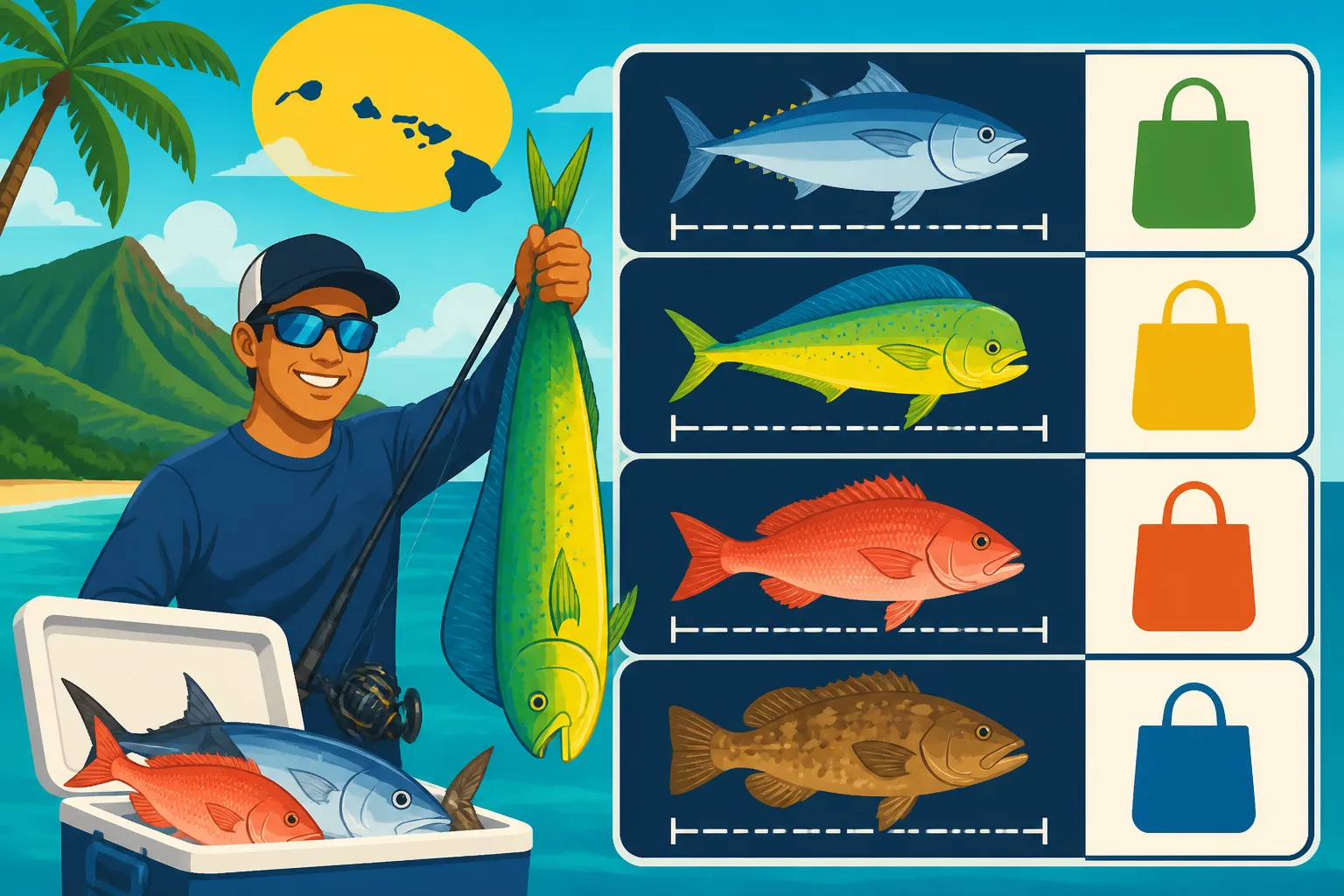
Hawaii Bag and Size Limits by Species
There’s nothing quite like the thrill of fishing in Hawaii, is there? The sun on your face, the sound of the waves, and the incredible diversity of marine life beneath the surface. But let's be honest, trying to navigate the maze of Hawaii's fishing regulations – especially the ever-changing bag and size limits – can feel like a daunting task, turning a relaxing day into a stressful scramble to avoid a fine. This comprehensive guide is here to untangle that complexity, providing clear, in-depth explanations of the bag and size limits for a multitude of species, ensuring your fishing adventures are both bountiful and compliant.
Understanding the "Why" Behind Hawaii's Bag and Size Limits
It’s easy to feel frustrated by fishing regulations, especially when you’re out on the water and just want to enjoy your time. But Hawaii's Division of Aquatic Resources (DAR), under the Department of Land and Natural Resources (DLNR), doesn't create these rules just to make things difficult. Every single bag limit, size restriction, and closed season is meticulously designed with a crucial purpose: to safeguard our precious marine ecosystems for generations to come. Without these limits, the vibrant fisheries we cherish could quickly collapse, leaving empty reefs and barren oceans for our keiki (children).
The Importance of Sustainable Fishing Practices
At its core, sustainable fishing is about ensuring that we take only what the ocean can replenish. Imagine a bank account where you keep making withdrawals without ever making deposits. Eventually, the account goes dry. Our ocean resources are exactly the same. Bag and size limits are foundational to this approach, acting as guardrails to prevent overexploitation. They are developed based on scientific research, population assessments, and traditional ecological knowledge, all aimed at finding that delicate balance between human enjoyment and environmental health.
These practices consider the reproductive cycles of different species, their growth rates, and their roles within the broader ecosystem. For instance, allowing fish to reach a certain size ensures they've had the chance to spawn multiple times, contributing new life to the population. Similarly, limiting the total number of fish an angler can keep prevents a small group of highly active individuals from depleting local stocks. It’s a collective responsibility, and every angler plays a part in honoring these limits to keep Hawaii’s waters teeming with life.
Protecting Juvenile Fish and Spawning Stocks
One of the most critical aspects of bag and size limits is the protection of juvenile fish and the vital spawning stocks that produce them. Think of the smallest fish as the future of the fishery. If too many young fish are caught before they even have a chance to reproduce, the population can’t recover, and the overall health of the species plummets. Minimum size limits are specifically put in place to ensure that fish have reached reproductive maturity, allowing them to contribute at least once, and ideally multiple times, to the next generation before they are harvested.
Similarly, protecting spawning aggregations is paramount. Some species gather in specific areas at certain times of the year to reproduce, making them particularly vulnerable to overfishing. While not always directly covered by "size and bag limits" in the daily sense, many species have specific closed seasons during these critical periods (like the Moi or Uhu Ahuula closures) or restrictions on targeting them in known spawning grounds. These measures safeguard the parent fish, ensuring a steady supply of eggs and larvae to sustain future populations. Understanding these limits is key to being a responsible angler and helps ensure you're not inadvertently harming the future of Hawaii's incredible aquatic life.
Adapting to Environmental Changes
Hawaii's marine environment is dynamic, constantly influenced by natural cycles and, increasingly, by climate change. Warming ocean temperatures, changing ocean currents, and even local weather patterns can impact fish populations. The DLNR Division of Aquatic Resources (DAR) doesn't set these limits in stone and forget about them; they are regularly reviewed and updated based on new scientific data, monitoring efforts, and observed trends. This adaptive management approach is crucial for responding to new challenges, whether it's a decline in a particular species, the emergence of an invasive one, or shifts in migration patterns.
For example, a species that was abundant decades ago might now be showing signs of stress, prompting stricter limits. Conversely, if a population rebounds strongly, the regulations might be adjusted to allow for a slightly higher sustainable harvest. This responsiveness ensures that the rules remain relevant and effective in protecting our marine resources amidst an ever-changing world. It underscores the importance of staying informed and checking the most current regulations, as what was true last year might have changed this year.
General Rules and Where to Find Official Information
Navigating the specifics of Hawaii's fishing regulations can feel like a full-time job. With various agencies, different rules for freshwater versus marine, and species-specific nuances, it's easy to get lost. However, knowing where to find the authoritative information and understanding the basic principles of how these rules are structured will empower you to fish confidently and legally.
Navigating the DLNR Division of Aquatic Resources (DAR)
The official source for all Hawaii fishing regulations is the DLNR Division of Aquatic Resources (DAR). Their website is the central hub for up-to-date information, including the specific administrative rules that govern all aspects of fishing in the islands. It’s not always the easiest site to navigate, but making it your first stop is essential. You can typically find detailed PDFs of the rules, specific advisories, and contact information for DAR offices on each island. Taking the time to familiarize yourself with their structure, perhaps by starting with their general Hawaii Fishing Regulations Explained section, can save you a lot of headaches down the line.
Many local tackle shops, community centers, and even some harbors might have printed summaries or posters of common regulations, but these should always be cross-referenced with the official DAR site if you have any doubts. Sometimes, local nuances or emergency closures aren't widely publicized immediately, making the official online channels the most reliable. Consider printing out relevant sections for your specific target species or fishing area and keeping them in a waterproof bag, perhaps one you picked up from Amazon, to reference while you’re out on the water.
Interpreting Minimum and Maximum Size Limits
Size limits are a cornerstone of responsible fishery management, but they can sometimes be confusing. Most often, you'll encounter minimum size limits, which mean a fish must be at least a certain length to be legally harvested. This ensures that the fish have had a chance to grow and reproduce before being taken. For instance, a common example is a 9-inch minimum for Papio in many areas, allowing them to mature into Ulua. You can learn more about how different fish grow into their trophy sizes in our guide to Papio Growth Stages Into Trophy Ulua.
Less common, but equally important, are maximum size limits. These are typically implemented for very large, old fish that are considered prime breeding stock, or sometimes for species that accumulate higher levels of toxins like mercury over their long lives. While not prevalent for many recreational species in Hawaii, it's always something to be aware of. The critical point for all size limits is how to measure. Always measure from the tip of the nose to the tip of the tail, with the tail compressed, unless otherwise specified. Having a sturdy, clearly marked measuring device, readily available from retailers like Amazon, is a must-have for any angler in Hawaii.
Understanding Daily Bag and Possession Limits
Daily bag limits refer to the maximum number of a specific species (or group of species) an individual angler can legally harvest and keep in a single day. These limits are designed to distribute the catch more equitably among anglers and to prevent rapid depletion of local fish stocks by a few individuals. For example, if the limit for a certain reef fish is five, you cannot keep more than five of that particular species in one 24-hour period, regardless of how many you catch and release.
Possession limits are a bit different, often referring to the total number of fish you can have in your possession at any given time, whether it's in your cooler, your freezer at home, or in your vehicle. In Hawaii, for many species, the daily bag limit is the possession limit. This means you can't accumulate multiple days' worth of limits. However, there can be exceptions, especially for certain pelagic species or during specific tournaments, so it’s always crucial to check. These limits apply to every individual angler, so if you're fishing with a group, each person's catch counts towards their individual limit. Going over these limits, even accidentally, can lead to serious penalties, as outlined in our article on Fishing Without a Required License in Hawaii: Penalties.
Key Pelagic Species: Ahi, Marlin, Ono, and Mahimahi
When most people dream of fishing in Hawaii, they're picturing the thrill of battling a powerful pelagic species out in the deep blue. These offshore giants are iconic, but their populations require careful management to ensure they continue to thrive. The regulations for these species often differ from those for reef fish, reflecting their migratory nature and importance to both recreational and commercial fisheries.
Yellowfin Tuna (Ahi) Regulations
Yellowfin Tuna, known locally as Ahi, are highly prized for their fighting prowess and delicious meat. While often targeted by commercial operations, recreational anglers also pursue them with great enthusiasm. The regulations for Ahi can sometimes feel a bit less restrictive than for other species, primarily because their populations are generally more widespread and migratory. However, they are not without limits, particularly concerning commercial harvest, and recreational anglers should still be aware.
As of current regulations, there's often no specific recreational daily bag limit for Ahi in Hawaii waters, particularly for smaller "schoolie" Ahi. However, larger Ahi might fall under broader pelagic species guidelines, and it's always best practice to only take what you can reasonably consume or share. It's crucial to be aware of Hawaii Ahi Bag Limit Rules that apply to commercial fishing, as these are much stricter and are designed to prevent large-scale depletion. For recreational anglers, the emphasis is more on responsible take rather than strict numerical limits, but staying updated on any changes from DAR is paramount, especially regarding any potential federal regulations that might impact highly migratory species.
Marlin Blue, Striped, Spearfish Guidelines
Marlin fishing off the Kona Coast is legendary, drawing anglers from around the globe in pursuit of a "grander" Blue Marlin. While the focus in marlin fishing is often on catch and release, especially for world-record hopefuls or those seeking the ultimate sporting experience, there are still rules around retention. For Pacific Blue Marlin, Black Marlin, and Striped Marlin, there is no minimum size limit or daily bag limit for recreational anglers in Hawaii state waters. However, federal waters (beyond 3 miles) may have different rules, so it's essential to be aware of your location.
For Spearfish, a smaller but equally thrilling billfish, there are typically no recreational bag or size limits either. The lack of specific recreational limits for marlin and spearfish often reflects a management strategy that encourages selective harvest and catch-and-release, recognizing the iconic status of these fish and the economic value of sportfishing tourism. However, any fish you do decide to retain should be utilized responsibly. For more details on the big ones, check out our piece on Hawaii Marlin Bag Limit Rules.
Wahoo (Ono) and Dolphinfish (Mahimahi) Rules
Ono, or Wahoo, are speed demons of the open ocean, known for their blistering runs and razor-sharp teeth. Mahimahi, also known as Dolphinfish or Dorado, are equally popular, famous for their vibrant colors and acrobatic fights. Both are fantastic table fare and highly sought after by recreational anglers. For these incredibly popular pelagic species, Hawaii does have some general guidelines, though they may not always be as restrictive as for reef fish.
Generally, there are no specific recreational daily bag or size limits for Ono or Mahimahi in Hawaii state waters. Anglers are encouraged to practice responsible harvest, only taking what they intend to eat or share. However, as with all pelagic species, it’s wise to keep an eye on DAR announcements, as conditions can change, and new data might lead to updated guidelines. Remember that these "no limit" scenarios for recreational anglers still carry an implicit expectation of ethical angling – don't fill your boat to the brim just because you can. Our comprehensive guide on Hawaii Pelagic Species Bag Limits provides even more detail on these and other offshore species.
Reef and Bottomfish Species: Uhu, Moi, Opakapaka, Onaga
The vibrant reefs and deep-sea slopes surrounding Hawaii are home to an incredible array of fish that are just as vital to the ecosystem as their pelagic cousins. These species, from the colorful Uhu grazing on algae to the deep-dwelling Opakapaka, are particularly sensitive to fishing pressure due to their more localized habitats and often slower growth rates. Consequently, regulations for reef and bottomfish are often more stringent, including specific size limits, bag limits, and even seasonal closures.
Parrotfish (Uhu) Specific Regulations
Uhu, or Parrotfish, are a staple of Hawaii's reefs, playing a critical role in maintaining coral health by grazing on algae. Their unique vibrant colors make them instantly recognizable. Due to their ecological importance and vulnerability to overfishing, Uhu have very specific and often complex regulations, including size limits and seasonal closures. It’s not uncommon to hear about anglers getting into trouble for not understanding these rules.
Currently, for most Uhu species, there is a minimum size limit of 10 inches (fork length). However, there's also a maximum size limit of 18 inches (fork length), specifically for certain species, to protect the larger, mature breeding individuals. Furthermore, some Uhu species are subject to a seasonal closure, known as the "ahuʻula" closure, which protects them during their spawning season. This typically runs from June through August, but it's crucial to check the exact dates each year with the DLNR. You can dive deeper into these specifics in our guide on Hawaii Uhu (Parrotfish) Size and Bag Limits and Hawaii uhu ahuula closed season dates. Understanding these nuances is vital for anyone planning to target Uhu, or even if you accidentally catch one while targeting other reef species.
Pacific Threadfin (Moi) Closures and Limits
Moi, or Pacific Threadfin, were once reserved for Hawaiian royalty and are still considered a delicacy. Their sweet, flaky flesh makes them a highly sought-after fish, which has led to their populations being carefully managed. Moi are particularly vulnerable to overfishing, and as a result, they are subject to strict regulations, including a closed season and specific size limits.
The most important regulation for Moi is the annual closed season, which runs from June 1st to August 31st. During this period, it is illegal to take, possess, or sell Moi. This closure is designed to protect Moi during their peak spawning period, giving them a chance to reproduce unmolested. Outside of the closed season, there is a minimum size limit of 11 inches (fork length). There is also a daily bag limit of 10 Moi per person. These rules are strictly enforced to ensure the recovery and sustainability of this culturally significant species. Always consult our article on Hawaii Moi Closed Season, Explained for the most current information, as these dates and limits are fundamental to responsible Moi fishing.
Deepwater Snappers Opakapaka, Onaga, and Groupers
The deeper waters off Hawaii's coasts are home to a remarkable array of bottomfish, including highly prized snappers like Opakapaka (Pink Snapper) and Onaga (Ruby Snapper), as well as various groupers. These species typically inhabit rocky ledges, seamounts, and deep reefs, often at depths ranging from hundreds to over a thousand feet. Their slow growth rates and often late maturity make them particularly susceptible to overfishing, necessitating robust management strategies.
For most deepwater bottomfish, including Opakapaka and Onaga, Hawaii has implemented a system of seasonal closures and catch limits, often determined at the federal level due to their offshore habitat. While specific recreational bag limits can vary and are subject to change, it's common for there to be combined daily bag limits for certain complexes of bottomfish, such as the Deep 7 bottomfish species. These limits are frequently adjusted based on stock assessments and can sometimes include emergency closures if populations show signs of decline. For example, during certain seasons, there might be a limit of 5 Opakapaka or 5 Onaga per person, or a combined limit for the entire group of species. It's imperative for bottomfish anglers to stay informed through DAR and NOAA Fisheries, as these rules are some of the most dynamic and critical for sustaining these deep-sea treasures. Using a fishing app or regularly checking the official websites before each trip is highly recommended.
Nearshore and Estuarine Species: Papio, Ulua, Akule, Oio
The shorelines, bays, and estuaries of Hawaii offer incredible fishing opportunities for species that live closer to the coast. From the feisty Papio and its larger counterpart, the Ulua, to schooling Akule and the elusive Bonefish, these species provide accessible and exciting angling. Because they are so accessible, they often face significant fishing pressure, leading to specific regulations designed to ensure their continued abundance.
Trevally Papio and Ulua Size and Bag Limits
Papio (juvenile Giant Trevally and other trevally species like Bluefin Trevally and Dobe) and Ulua (adult Giant Trevally) are iconic Hawaiian game fish, known for their immense power and challenging fights. Catching a trophy Ulua from shore is considered one of the pinnacles of Hawaiian angling. To protect these magnificent fish and allow them to grow into their full potential, specific size and bag limits are in place.
For Giant Trevally (the species that grows from Papio into Ulua), there is a minimum size limit of 10 inches (fork length). However, the most critical regulation for this species is a slot limit in some areas and for specific fishing methods. For example, in certain areas, there might be a rule that states no Ulua between 10 inches and 24 inches may be kept. The general rule for most of Hawaii is a minimum size limit of 10 inches and a daily bag limit of two Ulua/Papio over 10 inches per person. Anglers often practice catch and release for larger Ulua, especially the "grandmas and grandpas" that are important breeders. Knowing the specific rules for Hawaii Papio and Ulua Size Rules is crucial for anyone targeting these powerful fish.
Bigeye Scad (Akule) and Mackerel Scad (Opelu) Rules
Akule (Bigeye Scad) and Opelu (Mackerel Scad) are schooling baitfish that are also popular table fare in Hawaii. They are often caught using throw nets or small hooks, and their presence is vital to the entire food chain, supporting larger predatory fish. While their sheer numbers might suggest less stringent regulations, they are still managed to prevent localized depletion, especially by commercial or subsistence netters.
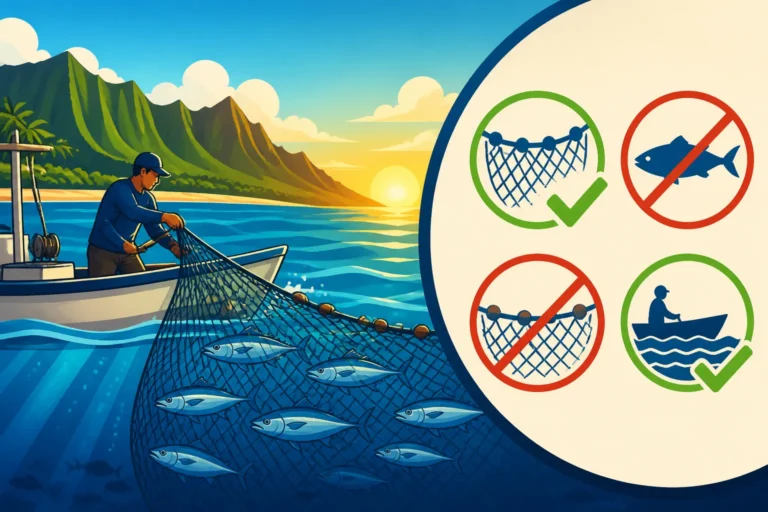
For Akule, there is generally no recreational daily bag limit or size limit, but there are strict rules regarding fishing methods, particularly net fishing. For example, there are restrictions on the mesh size of nets and specific areas where net fishing is prohibited or limited. Our article on Hawaii Akule Net Fishing Rules delves into these specifics. Similarly, for Opelu, recreational anglers typically do not have a specific bag or size limit, but again, traditional and commercial fishing methods like surround netting have regulations. The emphasis for both species is often on the sustainability of harvest methods and ensuring enough baitfish remain to support the ecosystem. Always be mindful of local advisories, especially concerning schools near harbors or popular shorelines.
Bonefish (Oio) Regulations for Flats Anglers
Bonefish, known as Oio in Hawaii, are highly prized by flats anglers, particularly fly fishermen, for their incredible speed and elusive nature. These "ghosts of the flats" inhabit shallow sand and mudflats, providing a thrilling challenge for sight-fishing enthusiasts. While they are a popular target, Oio are not often consumed, with most anglers practicing catch and release. This practice, combined with a robust population, often means that specific size and bag limits are less stringent compared to some other reef fish.
Currently, there are no specific recreational bag or size limits for Bonefish (Oio) in Hawaii. The prevailing ethic among those who target Oio is almost exclusively catch and release, often with barbless hooks to minimize harm. This approach inherently contributes to the sustainability of the fishery, ensuring these incredible sport fish remain abundant for future anglers. While you can technically keep them, most anglers understand the value of letting these fighters go to swim another day. Always ensure proper handling techniques to maximize survival rates if you choose to release your catch.
Invertebrates and Other Aquatic Life: Opihi, Tako, Crabs
Fishing in Hawaii isn't just about finfish; it also encompasses a rich tradition of gathering invertebrates, from the delectable Opihi to the cunning Tako. These resources are deeply ingrained in Hawaiian culture and diet, but their accessibility and slow growth rates make them highly vulnerable to overharvesting. Consequently, these species are often subject to some of the most precise and rigorously enforced regulations, including strict size limits, bag limits, and often highly localized rules.
Limpet (Opihi) Harvest Rules
Opihi, or limpets, are a culinary delicacy in Hawaii, found clinging to rocky shorelines exposed to wave action. Gathering Opihi is a dangerous but cherished tradition, and their populations have suffered significantly from overharvesting. As a result, Opihi are subject to very strict regulations to allow their populations to recover.
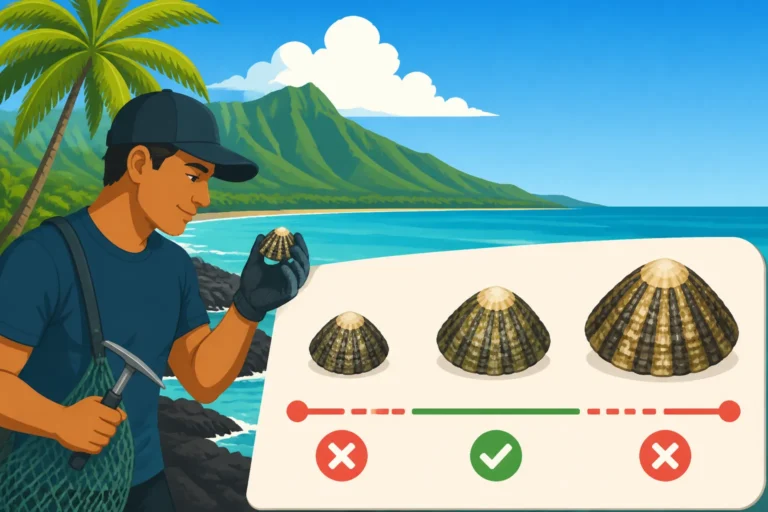
The regulations for Opihi include a minimum size limit of 1.25 inches for the shell length for some species (like ʻopihi makaiauli and ʻopihi koʻele), measured along the longest diameter of the shell. Additionally, there is a daily bag limit of two pounds of Opihi per person per day. It is also illegal to use any tool other than your bare hands or a blunt instrument to remove Opihi from the rocks, preventing damage to the shell and the rock itself. Furthermore, taking Opihi from designated Marine Life Conservation Districts (MLCDs) or other protected areas is strictly prohibited. Understanding these rules, which are detailed in our guide on Hawaii Opihi Harvest Limits and Size Rules, is not just about legality but also about respecting a culturally significant and ecologically vulnerable resource.
Octopus (Tako) and Squid Regulations
Octopus, known as Tako in Hawaii, and various species of squid are popular targets for both food and bait. Tako are particularly clever and challenging to catch, often found hiding in rocky crevices and reef structures. Given their intelligence and the desire to maintain healthy populations, there are specific regulations governing their harvest.
For Tako (octopus), there is generally a daily bag limit of two per person. There is no specific size limit, but anglers are encouraged to take only what they need and to consider releasing smaller individuals. The use of certain tools for extraction, like chemicals or explosives, is strictly prohibited. For squid, recreational anglers typically face no specific daily bag or size limits, but similar to Tako, responsible harvesting practices are encouraged. It's always a good idea to check for any local area restrictions, especially within protected bays or near sensitive reef ecosystems. Some areas might have specific rules about night gathering or the use of lights.
Crab and Lobster Rules Spiny, Slipper, Samoan
Crabs and lobsters are highly sought after for their delicious meat and are an important part of Hawaii's seafood culture. However, due to their vulnerability during spawning and molting cycles, and the ease with which they can be overharvested, these crustaceans are among the most heavily regulated marine species.
For Spiny Lobsters and Slipper Lobsters, there are several critical rules:
- Minimum Size Limits: A carapace length of 3.25 inches for Spiny Lobsters and 3.5 inches for Slipper Lobsters, measured from the rear of the eye socket to the rear of the carapace.
- Daily Bag Limit: A combined limit of six lobsters (Spiny and Slipper combined) per person per day.
- Closed Season: From May 1st to August 31st, it is illegal to take, possess, or sell any Spiny or Slipper Lobster.
- No Taking of Berried Females: It is illegal to take any female lobster carrying eggs (often called "berried" or "piko").
- No Spearing: It is illegal to spear lobsters.
For Samoan Crabs (also known as mud crabs), there is a minimum size limit of 6 inches (carapace width, measured across the back from tip to tip of the longest spines). There is also a daily bag limit of 10 Samoan Crabs per person. It is illegal to take any female crab carrying eggs.
These rules are strictly enforced to protect these valuable resources. Always double-check the current regulations before heading out, especially for seasonal closures, as they are non-negotiable and designed to protect the breeding stock.
Freshwater Species: Trout, Bass, Tilapia
While Hawaii is famous for its ocean fishing, the islands also offer unique freshwater angling opportunities, primarily in reservoirs and designated public fishing areas. These freshwater fisheries are entirely managed by the state and provide a different kind of angling experience, often for introduced species. Understanding their specific regulations is just as important as knowing the marine rules.
Kokee Rainbow Trout Regulations
Believe it or not, Hawaii has a trout fishery! Rainbow Trout were introduced to the streams of Kokee Public Fishing Area on Kauai, offering a truly unique experience. This fishery is entirely managed through stocking and is open only for a very specific season each year, usually from August to September, with precise regulations to ensure its sustainability.
The Kokee Rainbow Trout fishery operates under strict rules. There is a daily bag limit of seven trout per licensed angler. All trout caught must be 7 inches or larger in length. Importantly, the fishery is only open for a limited season, which varies slightly year to year but typically runs for just a few weeks. Anglers must possess a valid Hawaii Freshwater Fishing License and Rules to participate. Checking the official DAR announcements for the exact Hawaii Kokee Trout Fishing Season Dates is absolutely critical before planning your trip, as fishing outside of these dates or without a license will result in significant penalties.
Bass and Tilapia Limits in Reservoirs
Hawaii's freshwater reservoirs, primarily on Oahu and Kauai, are home to various introduced species, including Largemouth Bass, Peacock Bass, Tilapia, and Channel Catfish. These species provide excellent sportfishing opportunities, especially for those looking for a break from saltwater. While not as heavily regulated as some marine species, these freshwater fisheries still have bag and size limits designed to maintain healthy populations and prevent overfishing.
For Largemouth Bass and Peacock Bass, there is typically a daily bag limit of 10 fish per person, with no specific size limit. This encourages anglers to keep a reasonable number while allowing the larger trophy fish to be caught and released. For Tilapia, which are often very abundant and can even be considered an invasive species in some contexts, there is generally no bag or size limit. Anglers are often encouraged to keep as many as they like to help control their populations. For Channel Catfish, a daily bag limit of 10 fish per person often applies, with no specific size limit. As with all freshwater fishing, a valid Hawaii freshwater fishing license is required for anyone 15 years and older. Always confirm the specific regulations for the particular reservoir you plan to fish, as rules can sometimes vary by location.
Common Misconceptions and Enforcement
Even with the best intentions, it's easy to make mistakes when navigating complex regulations. Understanding how to properly measure your catch, the potential consequences of violations, and how to report illegal activities are all crucial aspects of being a responsible and informed angler in Hawaii. Knowledge is your best defense against accidental infringements and helps you contribute to the overall health of our fisheries.
How to Properly Measure Your Catch
Measuring your catch accurately is one of the most common points of confusion and a frequent source of accidental violations. Getting it wrong, even by an inch, can lead to fines. Here's how to do it right:
- Total Length (TL): Unless otherwise specified, fish are measured for total length from the most forward point of the head (usually the tip of the jaw or snout) to the farthest tip of the tail, with the tail compressed or squeezed together. Lay the fish flat on a measuring board or tape, ensuring the mouth is closed, and gently pinch the tail to get the maximum length.
- Fork Length (FL): For many pelagic species and some reef fish, fork length is used. This is measured from the tip of the nose to the center of the fork in the tail. This measurement is more consistent for fish with deeply forked tails, as tail compression can vary.
- Carapace Length/Width: For crustaceans like crabs and lobsters, measurements are taken across the carapace (the main body shell). For lobsters, it's typically the carapace length from the eye socket to the rear edge. For crabs, it's often the widest part of the carapace.
Always carry a reliable, waterproof measuring tape or a dedicated fish ruler. You can find durable options at local tackle shops or online at Amazon. If you're unsure, it's always best to err on the side of caution. A fish that is borderline might be better off released.
Penalties for Violating Regulations
The consequences of violating Hawaii's fishing regulations can range from significant fines to the forfeiture of gear, and in serious cases, even jail time. The DLNR takes resource protection very seriously, and ignorance of the law is generally not considered an excuse. The penalties are designed to be a strong deterrent against actions that could harm the state's natural resources.
For minor infractions, such as being slightly under the size limit or slightly over the bag limit for a single fish, you might face administrative fines ranging from hundreds to thousands of dollars per violation, depending on the species and severity. Repeat offenses or more egregious violations, such as fishing in a closed area, using illegal gear, or selling illegally harvested fish, can lead to much higher fines, criminal charges, and the seizure of your boat, vehicle, and fishing equipment. It's not just about the money; a violation can also tarnish your reputation within the fishing community and negatively impact future fishing privileges. Always consult official sources like the DLNR website for the most current information on penalties.
Reporting Violations and Protecting Our Resources
A crucial part of sustainable fishing is helping to protect our resources from those who disregard the rules. If you witness a fishing violation, whether it's someone taking undersized fish, exceeding bag limits, fishing in a closed area, or using illegal gear, it's your kuleana (responsibility) to report it. The DLNR Enforcement Division (DOARE) relies on public assistance to monitor Hawaii's vast coastline and offshore waters.
You can report violations by calling the 24-hour DLNR hotline at 643-DLNR (643-3567) or contacting the Division of Conservation and Resources Enforcement (DOCARE) directly. When reporting, try to provide as much detail as possible: the date, time, location (GPS coordinates if possible), description of the vessel or individuals involved, the nature of the violation, and any photographic or video evidence. Your identity can remain anonymous. By actively participating in the enforcement of these regulations, you're doing your part to ensure that Hawaii's incredible fishing heritage continues to thrive for everyone.
Disclaimer
The information provided in this guide is intended for general informational purposes only and is subject to change. While we strive to provide accurate and up-to-date content, fishing regulations in Hawaii are complex and can be updated at any time by the Department of Land and Natural Resources (DLNR) Division of Aquatic Resources (DAR) or federal agencies. It is the angler's sole responsibility to consult the most current official Hawaii Administrative Rules and federal regulations before engaging in any fishing activity. Always verify specific bag limits, size limits, and closed seasons with the official DLNR DAR website or by contacting their offices directly. Failure to do so may result in legal penalties.