Night Fishing for Ulua in Hawaii
You know that feeling, right? You’ve spent a beautiful day under the Hawaiian sun, casting your line, hoping for that epic tug, but the elusive ulua—the giant trevally—just isn't cooperating. It’s easy to get discouraged when the daytime bite is slow. But what if I told you the real magic, and the best chance at landing one of these powerful fighters, happens after the sun dips below the horizon? Night fishing for ulua in Hawaii isn't just a different approach; it's a completely transformative experience that taps into the primal instincts of these incredible fish, and this guide is here to walk you through everything you need to know to succeed in the dark.
Why Night Fishing for Ulua is a Game-Changer
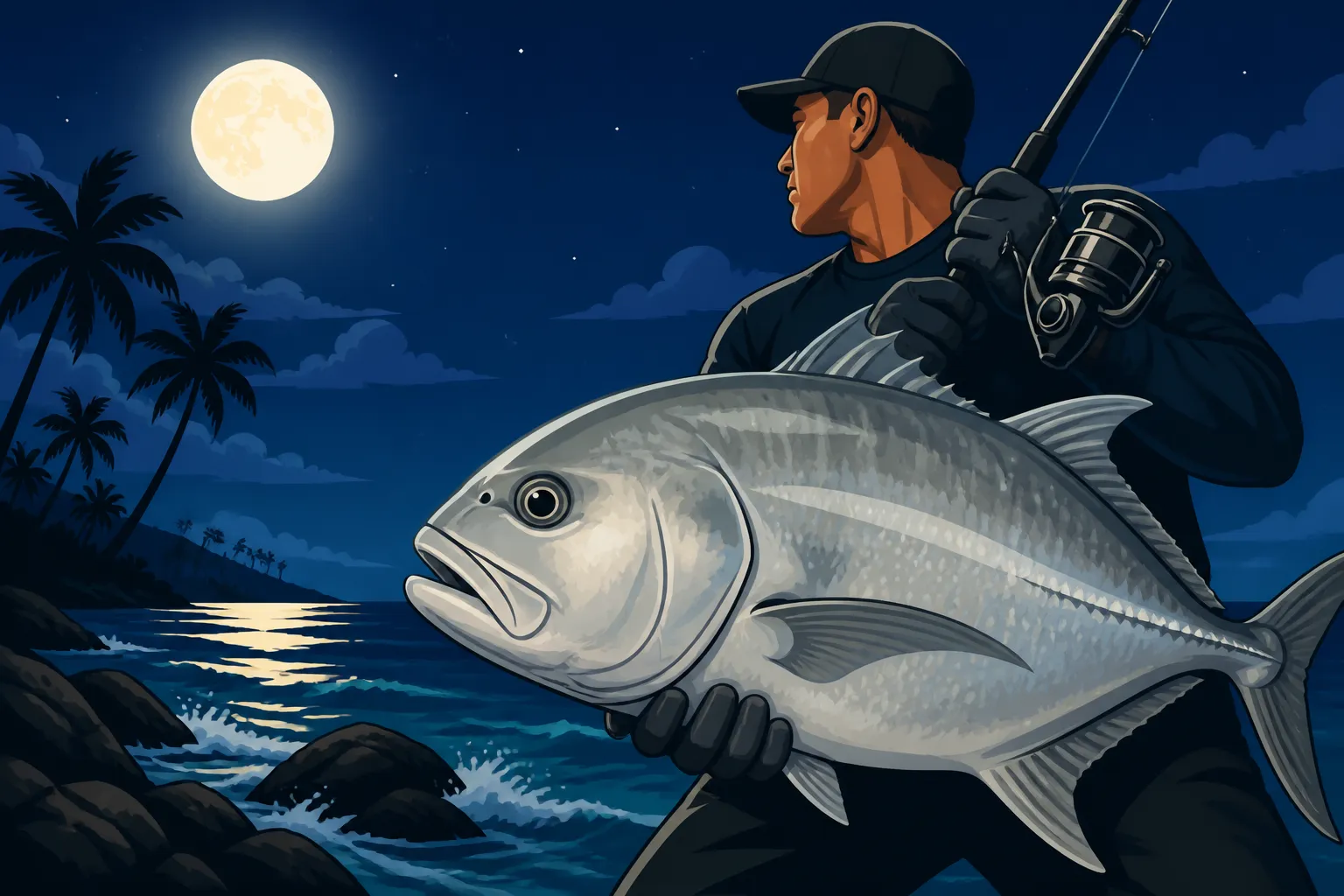
When the sun sets over the Hawaiian Islands, a whole new world awakens beneath the waves. For many anglers, the thought of fishing in the dark can be intimidating, but for targeting ulua, it's often the most productive time. These powerful predators, known locally as ʻōmilu when smaller and pāpio in their juvenile stages, become significantly more active under the cloak of night. It's not just about preference; it's about pure, raw predatory instinct and opportunity.
Nocturnal Habits of Ulua
Ulua are primarily nocturnal or crepuscular hunters, meaning they are most active during twilight hours and throughout the night. Think about it: the reef fish they prey on, like small goatfish, squirrelfish, and crabs, are often seeking shelter as darkness falls, making them more vulnerable. The ulua, with its keen senses, uses the cover of darkness to its advantage, ambushing unsuspecting prey that might be less cautious than during the bright light of day. This change in behavior is hardwired into their DNA, making them formidable hunters in low-light conditions.
During the day, ulua can be quite skittish, especially in heavily fished areas. They might stick to deeper ledges or shaded areas, conserving energy. But when night falls, their confidence soars. They move into shallower water, patrol reef edges, and venture into areas they'd typically avoid during daylight hours. This means that a spot you fished all day with no luck could explode with action once the moon rises. The whole dynamic of the hunt shifts, giving you, the angler, a much better chance at encountering these magnificent fish.
Less Pressure, Bigger Fish
One of the biggest advantages of night fishing for ulua is the sheer lack of human pressure. Most recreational anglers pack up their gear as soon as the sun starts to set. This leaves the prime fishing grounds largely undisturbed, creating a more natural and less stressed environment for the ulua. With fewer boats, fewer lines in the water, and less noise, the fish are often bolder and more willing to strike. This isn't just about catching more fish; it's often about catching bigger fish.
Trophy-sized ulua, the kind that can truly test your tackle and your resolve, are particularly wary. They've seen it all, and they've survived for a reason. These larger, more experienced fish are often more comfortable feeding aggressively at night, away from the hustle and bustle. The quiet solitude of night fishing allows them to drop their guard, presenting a unique opportunity for serious anglers to connect with that fish of a lifetime. Plus, the reduced competition means you often have your chosen spot all to yourself, allowing you to fish more strategically and methodically.
The Thrill of the Unknown
There's an undeniable allure to night fishing that goes beyond just catching fish. It's an immersive experience that heightens your senses. The stars shine brighter, the sound of the waves crashing on the shore becomes more profound, and every rustle, every splash, is amplified. When an ulua finally takes your bait in the darkness, the strike is often more sudden and violent, sending an electrifying jolt through your rod and down to your core. You can't see the fish; you can only feel its immense power as it tries to strip line from your reel.
This adds an extra layer of excitement and challenge to the fight. You have to rely entirely on your feel, your experience, and the subtle cues your tackle provides. The anticipation builds with every minute, knowing that a monster could hit at any moment. It’s a truly raw, primal encounter between angler and fish, unhindered by visual distractions. Many veteran Hawaii anglers consider night fishing for ulua to be the pinnacle of shore fishing, a testament to the unparalleled thrill it offers.
Essential Gear for Night Ulua Fishing
Successfully landing a big ulua at night requires more than just a sturdy rod and reel; it demands a well-thought-out arsenal of gear designed to handle the darkness, the powerful fish, and the rugged Hawaiian coastline. Skimping on quality here can mean the difference between triumph and a frustrating, lost fish.
Rods, Reels, and Line Considerations
For night fishing for ulua, you need serious tackle. These aren't small fish, and they fight dirty, often trying to run into jagged coral or lava rock.
- Rods: Look for heavy-action surf rods, typically 10 to 14 feet long. Brands like Lamiglas, Shimano, or Daiwa make excellent options. The longer rod provides better casting distance to reach those deeper channels and kelp beds, and the heavy action gives you the backbone to turn a large fish away from structure. A sensitive tip is also a plus, helping you detect subtle bites in the dark.
- Reels: Pair your heavy rod with a large, robust spinning reel or conventional reel. A minimum size of 8000 for spinning reels is a good starting point, but many serious ulua anglers go for 10000 to 20000 series reels for their line capacity and drag power. Make sure your reel has a smooth, powerful drag system, as an ulua will test it immediately. Look for reels with strong, sealed components to withstand saltwater corrosion.
- Line: This is not the time to be shy with line strength. Spool your reel with heavy braided line, typically 60 to 100 lb test. Braid offers superior strength, sensitivity, and casting distance compared to monofilament. However, its lack of stretch means you'll need a robust leader system to absorb shocks and protect against abrasion. A 100-200 lb fluorocarbon or monofilament leader, often several feet long, is crucial. If you're looking for durable, high-visibility braided line options, you can often find a good selection on Amazon.
Lighting and Visibility Tools
Fishing in complete darkness without proper lighting is not only ineffective but incredibly dangerous.
- Headlamps: A good quality, waterproof headlamp with multiple brightness settings and a red-light option is non-negotiable. The red light preserves your night vision, which is essential for tying knots or baiting up without blinding yourself or spooking fish.
- Lanterns/Area Lighting: For setting up your gear, preparing bait, or simply illuminating your immediate fishing station, a small, portable LED lantern can be a lifesaver. These provide ambient light without being too harsh.
- Glow Sticks/LEDs: Attaching a chemical glow stick or a small battery-operated LED light to your rod tip is incredibly helpful. This allows you to easily see bites, as the rod tip will dip or twitch. You can also use glow sticks to mark your lines if you're fishing multiple rods. Sometimes, a subtle glow near your bait, like a small, waterproof LED that clips to your leader, can even attract curious ulua without scaring them.
Terminal Tackle and Bait Presentation
The business end of your line needs to be as tough as the fish you're targeting.
- Hooks: Circle hooks are highly recommended for ulua fishing, typically sizes 10/0 to 16/0. They are safer for the fish, reducing gut-hooking, and often result in a solid hookup in the corner of the jaw. Gamakatsu, Owner, and Mustad are popular brands known for their strength and sharpness. Ensure they are heavy-duty, rust-resistant, and can withstand immense pressure.
- Leaders: As mentioned, a heavy leader is paramount. 100 to 200 lb test fluorocarbon or monofilament provides crucial abrasion resistance against rocks and the ulua's powerful jaws. The length can vary from a few feet to ten feet, depending on your preferred rigging method.
- Weights: Depending on the current and how far you need to cast, you'll need heavy sinkers, often pyramid or bank sinkers ranging from 6 to 12 ounces or even more. The goal is to hold your bait firmly on the bottom without it drifting into snags. You'll want a variety of sizes to adapt to different conditions.
- Swivels and Snaps: Use heavy-duty, high-quality swivels and snaps rated for similar or higher pound test than your leader. Barrel swivels help prevent line twist, and strong snaps make changing rigs easier. Ball bearing swivels are generally superior but also more expensive.
To learn more about the specifics of setting up your gear for these powerful fish, check out our guide on Best rod setup for surfcasting ulua and Best line for surfcasting from a rocky shore.
Safety and Comfort Essentials
Being prepared for the unexpected is key when you're fishing under the stars.
- First Aid Kit: A compact, well-stocked first aid kit is essential. Accidents happen, especially in the dark. Include bandages, antiseptic wipes, pain relievers, and any personal medications.
- Appropriate Clothing: Dress in layers, as Hawaiian nights can sometimes get cooler, especially with a breeze. Long sleeves and pants can also protect against mosquitoes and accidental scrapes. Waterproof outerwear is always a good idea.
- Footwear: Closed-toe, sturdy shoes with good grip are crucial for navigating uneven, slippery, and potentially jagged lava rock terrain in the dark. Wading boots or hiking shoes are often preferred over sandals.
- Hydration and Snacks: Bring plenty of water and some easy-to-eat snacks. Night fishing sessions can be long, and staying hydrated and energized is important.
- Communication Device: A fully charged cell phone is a must for emergencies. Consider a power bank to keep it charged.
- Knife/Pliers: A sharp knife for cutting bait and strong pliers for hook removal or cutting heavy leader are indispensable. Many multi-tools available on Amazon combine these functions.
Prime Locations and Conditions for Night Ulua
Locating ulua at night isn't about guesswork; it's about understanding their habitat preferences and how environmental factors influence their behavior. By reading the water, the moon, and the tides, you can significantly increase your chances of finding these formidable predators.
Identifying Productive Night Spots
Ulua are opportunistic predators, and their night hunting grounds often reveal themselves once you understand what they're looking for.
- Reef Channels and Drop-offs: These are classic ulua haunts. Channels act as natural highways for baitfish moving on and off the reef, and ulua lie in wait to ambush them. Drop-offs, where shallow reef meets deeper water, provide excellent cover and access to both shallow-water prey and larger pelagic bait. During the day, they might hang in the deeper water, but at night, they'll often venture up the drop-off to hunt. Look for areas where the reef structure creates distinct edges or sudden changes in depth.
- Rocky Points and Lava Flows: The rugged, volcanic coastline of Hawaii offers countless rocky points and lava flows. These areas create turbulent water, strong currents, and underwater caves and ledges that serve as perfect ambush points and hiding spots for ulua. The rougher water around these points also disorients baitfish. When choosing a rocky point, look for areas with deep water access close to shore and minimal shallow reef flats directly in front, which might prevent you from getting a good cast or fighting a fish effectively.
- Harbor Mouths and Inlets: While less natural, harbor mouths and other man-made inlets can be hotspots. These areas often concentrate baitfish seeking shelter, and the deeper channels leading into and out of harbors are prime patrol routes for ulua. Just be mindful of local regulations and vessel traffic. For more insights into specific locations, consider exploring guides on Best Shore Fishing Spots in Hawaii or Best Rocky Point Fishing Spots in Hawaii.
When scouting spots during the day, pay attention to current patterns, areas where baitfish congregate, and any visible structure that might hold a predatory fish. The clearer you can visualize the underwater landscape in daylight, the better you'll be able to fish it effectively at night.
Reading the Tides and Moon Phases
Tides and moon phases play a critical role in ulua behavior, particularly at night.
- Tidal Flow: Moving water is almost always better for fishing, especially for predators like ulua. Strong incoming or outgoing tides often stimulate feeding activity by concentrating baitfish and washing out food from the reef. Slack tide, when the water movement is minimal, can sometimes lead to a slower bite, though there are exceptions. Ideally, you want to fish the period leading up to and just after the peak of a strong tidal flow.
- Moon Phases: Many experienced ulua anglers swear by specific moon phases, though opinions can vary.
- New Moon (Dark Moon): This is often considered the best time for night fishing. With minimal moonlight, the water is darkest, providing ulua with maximum cover for ambushing prey. Their senses of smell and lateral line detection are heightened, and they often feed aggressively.
- Full Moon: Some anglers avoid full moons, believing the brighter light makes ulua more cautious. However, others find success, especially during strong tides. The increased light can also make it easier for ulua to spot larger prey.
- Quarter Moons: These phases offer a balance, with moderate light and often good tidal movement.
The key is to observe and experiment. What works well at one spot might be different at another, so keeping a fishing log can help you identify patterns specific to your local haunts. Understanding the impact of the moon can also apply to other species; you might also want to read up on Best Time of Day to Catch Ulua or even Best Night Fishing Spots in Hawaii for broader applications.
Weather Conditions and Their Impact
While Hawaii is known for its generally pleasant weather, certain conditions can either enhance or hinder your night ulua fishing efforts.
- Swell and Surf: A moderate swell can be beneficial. It creates white water and turbulence that disorients baitfish and provides cover for ulua. However, too much swell can make fishing dangerous and unproductive, washing out your baits or creating hazardous shore conditions. Always prioritize safety over catching fish. Avoid fishing during periods of very large or dangerous surf.
- Wind: Light to moderate winds can be good, creating a ripple on the water that breaks up the moon's reflection and provides some cover. Strong winds, however, can make casting difficult, create excessive line belly, and make it hard to feel subtle bites. It can also kick up chop, making boat fishing uncomfortable and shore fishing challenging due to spray.
- Rain: Light rain can sometimes trigger a bite, as it can wash terrestrial insects and small creatures into the water, creating an easy meal. However, heavy rain can muddy the water, reduce visibility, and make conditions miserable. It's usually best to avoid heavy downpours.
Always check local marine forecasts before heading out, paying close attention to swell heights, wave periods, and wind speeds. A beautiful, calm night with a slight ripple and a strong tide under a new moon is often the ideal scenario for targeting ulua.
Effective Night Fishing Techniques and Baits
Night fishing for ulua isn't just about showing up in the dark; it's about employing specific techniques and presenting the right baits in a way that appeals to their nocturnal predatory instincts. Success hinges on a combination of strategic bait choice and meticulous rigging.
Sliding Bait Rigs for Ulua
The sliding bait rig is arguably the most popular and effective technique for targeting large ulua from shore in Hawaii, especially at night. It allows you to cast a heavy sinker out into deep water or a productive channel, then slide a live or large cut bait down your main line to that specific location. This minimizes the risk of your valuable bait being torn off during a heavy cast.
- Cast Your Sinker: Use a heavy surf rod to cast a pyramid or bank sinker (6-12 oz, sometimes more) as far out as you can, aiming for deep water, reef channels, or just beyond the breaking waves. Once it hits the bottom, tighten your line.
- Prepare Your Bait: While your sinker is deployed, rig your bait (live fish or a large chunk of cut bait) on a heavy-duty circle hook, typically 10/0 to 16/0, tied to a tough fluorocarbon leader (100-200 lb test).
- Attach the Slider: Use a specialized sliding clip or a large snap swivel to attach your leader to your main line. The design allows your baited leader to "slide" down the main line.
- Send it Down: Gently drop or lower your baited leader into the water. The current and gravity will carry it down your main line to where your sinker is holding bottom. The beauty of this rig is that the fish doesn't feel the weight of the sinker when it picks up the bait, leading to a more natural presentation and fewer dropped baits.
- Engage the Reel: Once the bait reaches the bottom or your desired depth, lightly engage your reel's drag and place your rod in a sturdy rod holder. Wait for the strike.
This technique is particularly effective at night because it keeps your bait in the strike zone longer and presents it naturally to patrolling ulua. For a detailed breakdown of how to set this up, check out our guide on Sliding Bait Techniques for Ulua.
Live Bait vs. Cut Bait Strategies
The choice between live bait and cut bait often comes down to availability and personal preference, but each has its advantages for night ulua fishing.
- Live Bait: There's nothing quite like a struggling live baitfish to entice a predatory ulua. The natural movement and vibrations sent out by a live bait are incredibly attractive, especially in the dark when visual cues are limited.
- Pros: Highly effective, strong natural appeal, often leads to more aggressive strikes.
- Cons: Can be difficult to acquire (often requiring a separate effort to catch baitfish like opelu, akule, or mackerel scad), requires a livewell or bucket to keep them fresh, and can be more prone to getting "picked apart" by smaller reef fish.
- Best Options: Oio (bonefish) up to 1-2 lbs, Moi (Pacific threadfin), Akule (bigeye scad), Opelu (mackerel scad). Check out What ulua eat around Hawaii's reefs for more insights into their natural diet.
- Cut Bait: Large chunks of fresh, oily fish are also incredibly effective, especially when scent is the primary attractor in the dark.
- Pros: Easier to acquire and store, less effort to keep alive, scent trail can be powerful in attracting fish from a distance, can be tougher and stay on the hook better than some live baits.
- Cons: Lacks the natural movement of live bait, may attract non-target species.
- Best Options: Large chunks of Mackerel, Aku (skipjack tuna), Opelu, or even the head and guts of a smaller reef fish. The oilier the fish, the better the scent trail.
A useful table comparing the pros and cons of live vs. cut bait:
| Feature | Live Bait | Cut Bait |
|---|---|---|
| Attraction | Movement, vibration, natural appearance | Strong scent trail, oils |
| Effectiveness | Often superior for aggressive strikes | Very effective for scent-oriented hunters |
| Acquisition | Requires bait catching/keeping gear | Easier to buy or prepare in advance |
| Durability | Can be picked off by small fish, dies | Generally tougher, stays on hook longer |
| Cost | Free if caught, can be expensive to buy | Can be economical from fish markets |
| Ease of Use | More complex, requires live bait care | Simpler, no special care needed |
Chumming for Night Ulua
Chumming (throwing small pieces of bait into the water to attract fish) can be incredibly effective for night ulua fishing, especially when using cut bait. The scent trail created by the chum acts like a dinner bell, drawing ulua from deeper water or nearby structures to your fishing spot.
- Chum Pot or Bag: A mesh chum bag or a dedicated chum pot tied to a rope can be deployed near your fishing area. This allows the scent to slowly disperse without overloading the water with too much food.
- Chum Material: Small pieces of oily fish (Aku, Mackerel), crushed crab, or even stale bread mixed with fish guts can work. The goal is to create a constant, subtle stream of scent, not to feed the fish.
- Placement: Deploy your chum up-current from your baited lines. This allows the scent to drift naturally over your baits, guiding the ulua directly to them.
- Moderation: Don't overdo it! Too much chum can fill the fish up or make them wary. A steady, minimal release of scent is the key.
Chumming, when done correctly, significantly increases the chances of an ulua encountering your main bait. It creates a feeding zone, making your area irresistible to patrolling predators.
Safety First: Navigating the Night Shoreline
Night fishing for ulua in Hawaii offers incredible rewards, but the unique challenges of darkness, rugged terrain, and powerful ocean swells demand an unwavering commitment to safety. Neglecting precautions can turn an exciting adventure into a dangerous ordeal.
Pre-Trip Planning and Communication
Before you even think about stepping out onto the shoreline at night, thorough planning is essential.
- Research Your Spot: Even if you've fished a location during the day, it looks and feels completely different at night. Study charts or satellite maps for potential hazards like sudden drop-offs, treacherous paths, or areas prone to rogue waves. Understand the Hawaii shoreline fishing rights and public access rules for your chosen spot.
- Check Conditions: Always check the marine forecast before heading out. Pay close attention to swell height, wave period, wind speed, and tide charts. A small change in conditions can drastically alter the safety of a location. Never fish in high surf or during strong currents if you are not absolutely confident in your abilities and gear.
- Tell Someone Your Plan: This is non-negotiable. Inform a friend or family member exactly where you're going, when you expect to be back, and what your backup plan is. Provide a specific location, not just "the coast." Let them know if you're alone or with others. A simple text message or phone call can be a lifesaver if something goes wrong.
- Pack Smart: Beyond your fishing gear, ensure you have essential safety items: a fully charged cell phone (and a portable charger!), a whistle, a powerful headlamp (and spare batteries), a first-aid kit, plenty of water, and sturdy, non-slip footwear.
Personal Safety and Awareness
Once you're on the shoreline, constant vigilance is your best defense against accidents.
- Buddy System: Whenever possible, fish with a partner. An extra set of eyes and hands can make a huge difference in an emergency, whether it's helping land a fish, navigating tricky terrain, or responding to an injury.
- Footing is Everything: The rocks and shoreline in Hawaii can be incredibly sharp, uneven, and slippery due to algae, spray, or recent rain. Wear sturdy, closed-toe shoes with excellent traction. Take your time, especially when moving between spots or setting up. Use your headlamp to constantly scan the ground in front of you. Avoid rushing, even when you're excited about a bite.
- Never Turn Your Back on the Ocean: This is a golden rule in Hawaii. Rogue waves can appear without warning, even on seemingly calm nights, and can easily sweep you off your feet or into the water. Always be aware of the ocean's rhythm and keep an eye on incoming sets. Position yourself in a spot where you can retreat quickly if a large wave approaches.
- Be Aware of Your Surroundings: Listen for unexpected sounds, observe any unusual changes in the water, and be mindful of other anglers if they are present. Keep your fishing area tidy to avoid tripping hazards in the dark.
Emergency Preparedness
Even with the best planning and awareness, emergencies can happen. Being prepared to respond can mitigate serious consequences.
- First Aid Training: Consider taking a basic first aid course. Knowing how to treat cuts, sprains, or even more serious injuries can be invaluable.
- Communication: Your charged cell phone is your primary communication tool. Know the local emergency number (911 in Hawaii). Consider carrying a personal locator beacon (PLB) or satellite messenger for truly remote locations where cell service is unreliable. These devices can alert rescue services to your exact location.
- Survival Gear: For longer, more remote trips, consider a small survival kit that includes a space blanket, fire starter, and signal mirror.
- Know Your Limits: Never push yourself beyond your physical capabilities or comfort level. If conditions deteriorate or you feel unsafe, pack up and head home. An ulua is never worth risking your life for.
By taking these safety measures seriously, you can ensure your night fishing adventures for ulua are not only successful but also safe and enjoyable. For further details on navigating the legal aspects of fishing, be sure to consult resources like the Hawaii Fishing License Guide for 2026 and Reading the Hawaii DLNR Fishing Regulations.
Understanding Ulua Behavior at Night
To consistently catch ulua at night, it's not enough to simply show up with the right gear; you need to think like an ulua. Understanding their nocturnal routines, feeding preferences, and movements gives you a significant edge.
Feeding Patterns Under the Cover of Darkness
Ulua are visual predators, but at night, their other senses become paramount. They rely heavily on their lateral line system to detect vibrations in the water and their acute sense of smell to track down prey. This is why live baits, which generate movement and scent, and oily cut baits, which create a strong scent trail, are so effective.
- Ambush Predators: At night, ulua often position themselves strategically in areas where baitfish are likely to pass, such as along reef edges, in drop-off zones, or near rocky structures that create current breaks. They will lurk in the shadows, waiting for an opportune moment to burst out and engulf unsuspecting prey. This is why knowing the underwater topography of your fishing spot is so crucial; you're looking for their hidden hunting blinds.
- Opportunistic Feeders: While they have preferred prey, ulua are not picky. If an easy meal presents itself, they will take it. This includes crabs, squid, smaller fish, and even crustaceans that become dislodged by the surf. This opportunistic nature is why a wide variety of baits can be effective.
- Tidal Influence: As mentioned earlier, feeding activity often peaks during strong tidal flows at night. The moving water brings food to them and disorients their prey. They'll often move into shallower areas during high tide to forage, then retreat to deeper water as the tide recedes.
By understanding these patterns, you can place your baits precisely where an ulua is likely to be hunting and when it's most likely to be feeding. Think about the path a baitfish might take, and position your bait there.
Habitat Preferences at Night
During the day, ulua might be scattered, but at night, they tend to move into more predictable areas to hunt.
- Shallow Reefs and Flats: While deeper water offers refuge, at night, ulua will often venture onto shallow reef flats and into channels that connect to deeper water. They do this to target sleeping reef fish or crustaceans that emerge from hiding. Fishing the edges of these shallow areas, especially where they drop off into deeper channels, can be incredibly productive.
- Wash Zones: The turbulent "wash zone" where waves break against the shore is a prime hunting ground. The churning water disorients baitfish and washes out food, creating an easy target for ulua. Large ulua will brave significant surf to feed in these areas, making it essential for anglers to cast into or just beyond these breaking waves.
- Transition Zones: Ulua love areas where different habitats meet—sandy bottom next to rocky reef, or a deep channel running parallel to a shallow flat. These transition zones offer a diverse food source and excellent ambush opportunities. They are constantly patrolling these boundaries under the cover of darkness.
For an even deeper dive into what attracts these powerful fish, you might want to read our article on Ulua (Giant Trevally) Fishing in Hawaii. Knowing the specific dimensions and characteristics of the ulua you might encounter is also helpful, so check out Ulua Average Size in Hawaii and Hawaii Papio and Ulua Size Rules.
Seasonal Influences on Night Activity
While ulua can be caught year-round in Hawaii, their activity levels and presence in certain areas can be influenced by seasons.
- Warmer Months (Summer/Fall): During Hawaii's warmer water months, ulua are generally more active across all habitats. Baitfish are more abundant, and the overall metabolism of the fish is higher. This often leads to more consistent night fishing opportunities.
- Cooler Months (Winter/Spring): In the cooler months, while still present, ulua might be a bit more lethargic or hold in slightly deeper, more stable waters during the day. However, they will still venture into the shallower, turbulent feeding zones at night, especially during strong swells. The key during these months might be to focus on periods of stable weather and strong tides.
- Spawning Cycles: Like many fish, ulua have spawning cycles, which can influence their feeding behavior. While exact spawning locations and times are not always widely publicized for game fish, general aggregations for spawning might lead to temporary changes in their normal feeding grounds. Generally, they are believed to spawn offshore, so shore-based anglers might not see a direct impact on night fishing unless it's a dramatic shift in inshore presence.
Ultimately, the best approach is to adapt your techniques and chosen spots based on the current conditions and your observations. The ulua is a formidable opponent, but by understanding its nocturnal world, you can significantly increase your chances of connecting with one of these magnificent fish under the starry Hawaiian sky.
Disclaimer
Fishing, especially at night and from shore, involves inherent risks. This guide is for informational purposes only and does not guarantee safety or success. Always prioritize personal safety, adhere to all local fishing regulations, including bag and size limits (you can learn more from Hawaii Bag and Size Limits by Species), and respect the marine environment. Be aware of your surroundings, never turn your back on the ocean, and inform someone of your fishing plans. We recommend checking the official Hawaii Department of Land and Natural Resources (DLNR) Division of Aquatic Resources (DAR) website for the most current regulations and safety advisories before any fishing trip.